Important English 18K gold and enamel verge watch Circa 1710
- Kenmerk
- PD0561
- Diameter
- 40 mm
- Estimate
- € 35.000 - 60.000
- Price sold
- € 65.000
Gold watch with polychrome enamel paintings
–
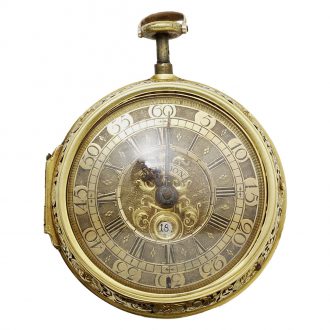
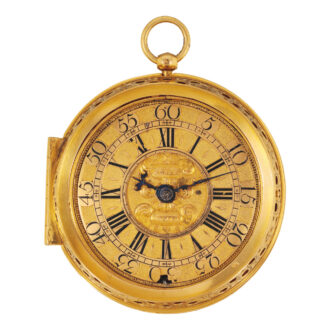
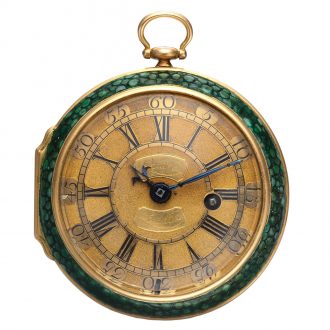
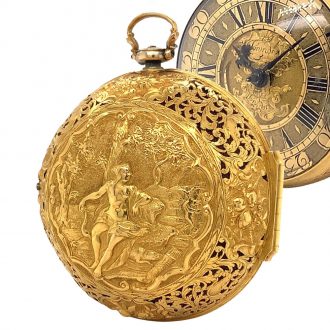
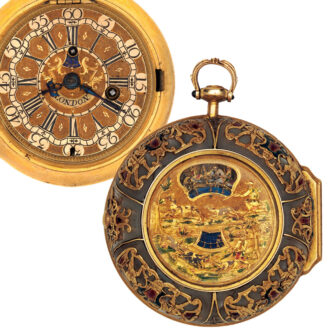
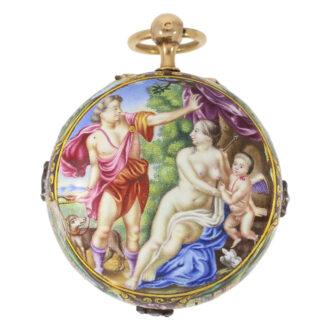
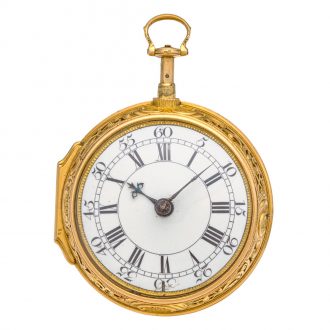
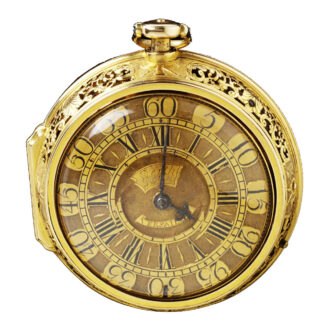
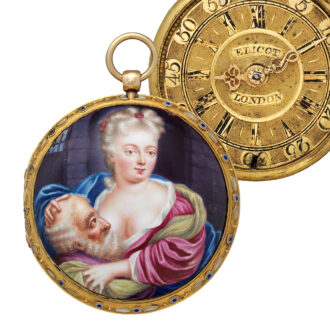
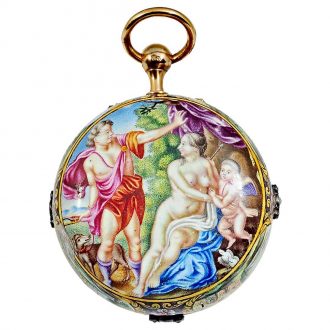
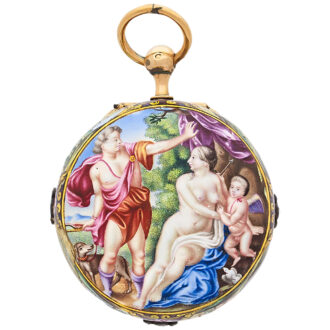
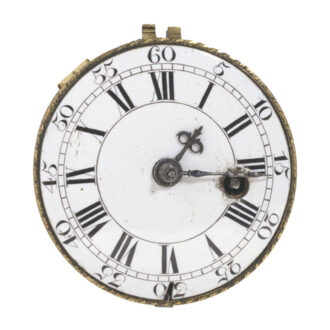
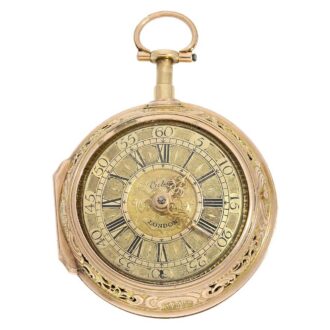
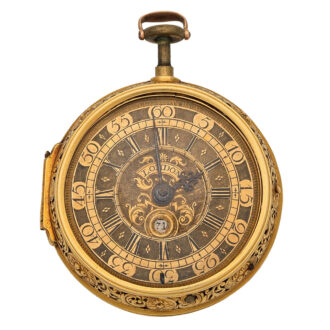
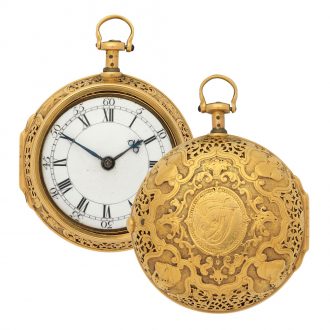
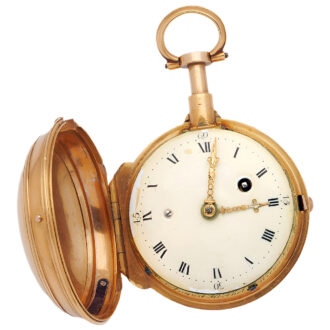
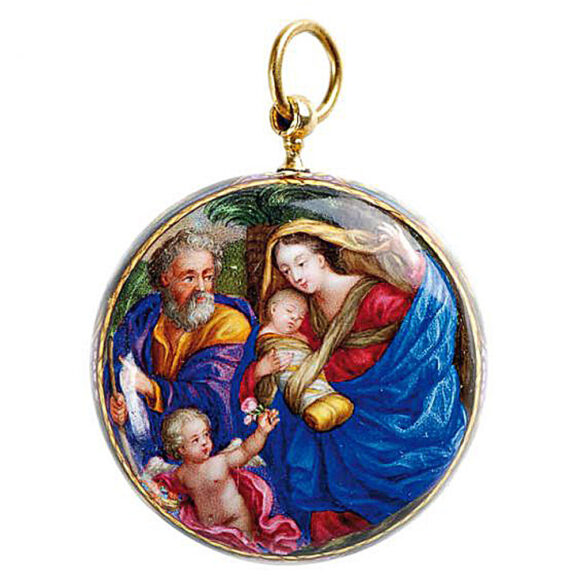
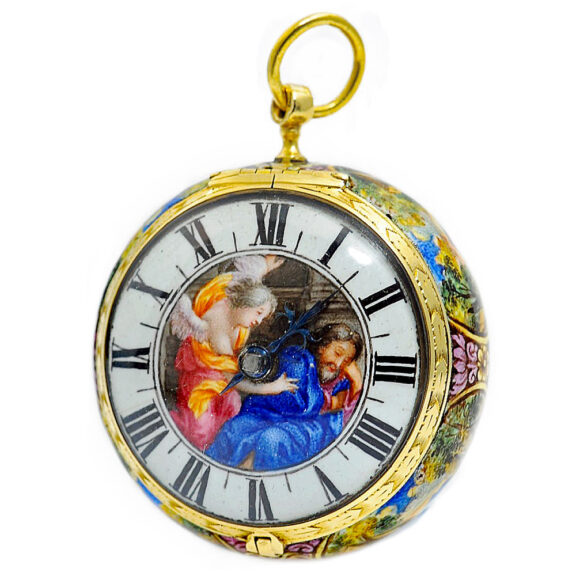
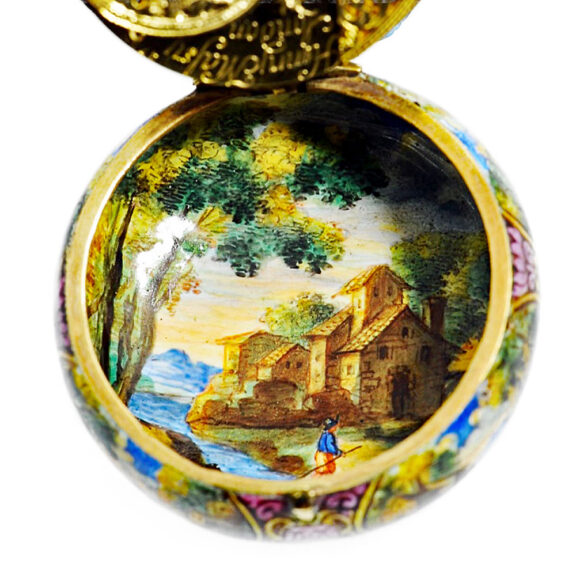
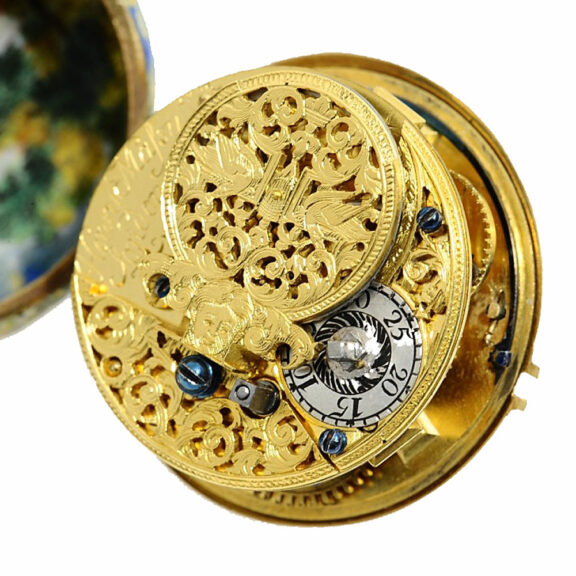
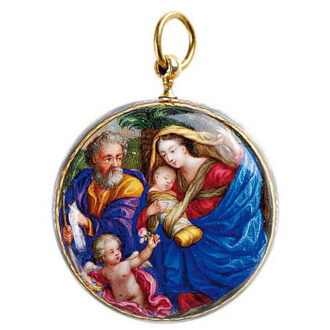
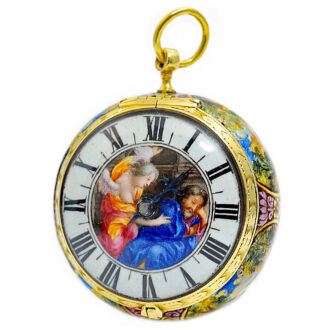
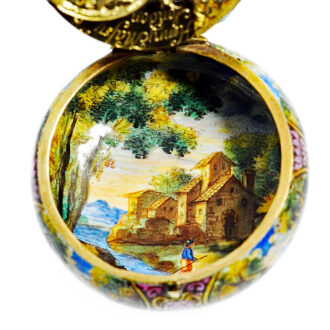
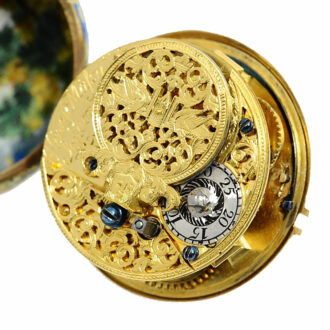
An important English 18K gold and enamel open faced verge pocket watch, The Flight into Egypt, circa 1710. Fire gilt full plate movement, key-winding, applied florally engraved and pierced ornaments, chain and fusee, Egyptian movement pillars, three-arm steel balance, engraved and florally pierced balance cock decorated with two birds and cherub face. White enamel chapter ring with radial Roman hours, the centre of the dial with a polychrome enamel scene showing an angel appearing to Joseph in his sleep, telling him to get up and flee with his family, single blued fleur-de-lys hand. Polychrome enamel painting on the case back depicting the biblical scene of Joseph fleeing to Egypt with Mary and Jesus, four lateral cartouches with landscape motifs separated by yellow and purple ornamental flower bands, a cartouche near the lower edge monogrammed HLP for Jean Pierre Huaud, the inside with an idealized landscape scene showing a walking man, probably after a painting by the Dutch painter Paul Bril. Movement signed.
–
Diameter: 40 mm
–
Weight: 58 g
–
Signed: Huaud & Massy London
–
Les Frères Huaut (or Huaud). The cases painted on enamel by ‘Les deux Frères Huaut’ were among the finest examples of their kind from the Geneva School and were not only highly valued when originally made, but remained as art treasures in the centuries that followed. Pierre I was the founder of the Huaud dynasty. He was born in 1612 in Geneva as the son of a French goldsmith Jean Huaud. He settled in Geneva in 1630 and three of his 11 children became famous enamellists like their father: Pierre II (1647-1698), Jean-Pierre (1655-1723) and Ami (1657-1724). The brothers were most likely trained by their father and worked with him. Pierre II started his own business around 1680. Jean-Pierre and Ami became partners in 1682 and were appointed painters to the Prussian court in 1686 when they moved to Berlin and started working for Elector Frederick William of Brandenburg (1620-1688). Among their most well-known works are Diana and Actaeon, The Judgement of Paris, The Holy Family, St. John the Baptist, The Nativity and The Adoration of the Shepherds.
–
Paul Bril was born in Antwerp in 1554 and died in Rome on October 7th, 1626. He was a Southern Netherlandish painter of landscapes from the Baroque period.
An important English 18K gold and enamel open faced verge pocket watch, The Flight into Egypt, circa 1710. Fire gilt full plate movement, key-winding, applied florally engraved and pierced ornaments, chain and fusee, Egyptian movement pillars, three-arm steel balance, engraved and florally pierced balance cock decorated with two birds and cherub face. White enamel chapter ring with radial Roman hours, the centre of the dial with a polychrome enamel scene showing an angel appearing to Joseph in his sleep, telling him to get up and flee with his family, single blued fleur-de-lys hand. Polychrome enamel painting on the case back depicting the biblical scene of Joseph fleeing to Egypt with Mary and Jesus, four lateral cartouches with landscape motifs separated by yellow and purple ornamental flower bands, a cartouche near the lower edge monogrammed HLP for Jean Pierre Huaud, the inside with an idealized landscape scene showing a walking man, probably after a painting by the Dutch painter Paul Bril. Movement signed.
–
Diameter: 40 mm
–
Weight: 58 g
–
Signed: Huaud & Massy London
–
Les Frères Huaut (or Huaud). The cases painted on enamel by ‘Les deux Frères Huaut’ were among the finest examples of their kind from the Geneva School and were not only highly valued when originally made, but remained as art treasures in the centuries that followed. Pierre I was the founder of the Huaud dynasty. He was born in 1612 in Geneva as the son of a French goldsmith Jean Huaud. He settled in Geneva in 1630 and three of his 11 children became famous enamellists like their father: Pierre II (1647-1698), Jean-Pierre (1655-1723) and Ami (1657-1724). The brothers were most likely trained by their father and worked with him. Pierre II started his own business around 1680. Jean-Pierre and Ami became partners in 1682 and were appointed painters to the Prussian court in 1686 when they moved to Berlin and started working for Elector Frederick William of Brandenburg (1620-1688). Among their most well-known works are Diana and Actaeon, The Judgement of Paris, The Holy Family, St. John the Baptist, The Nativity and The Adoration of the Shepherds.
–
Paul Bril was born in Antwerp in 1554 and died in Rome on October 7th, 1626. He was a Southern Netherlandish painter of landscapes from the Baroque period.
Signed: Huaud & Massy London
Share this page: