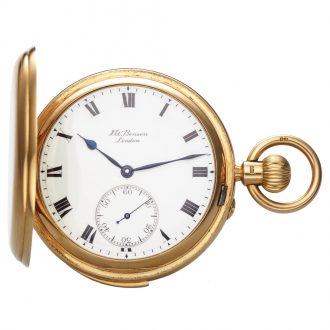
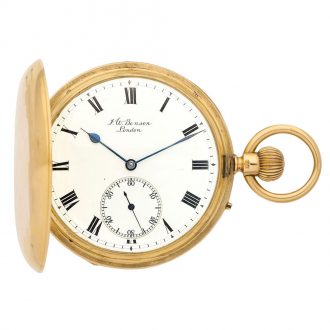
English gold repeating chronograph with linear calendar Circa 1896
- Kenmerk
- AD8379
- Diameter
- 51 mm
- Estimate
- € 12.500 - 22.500
- Price sold
- -
Gold complicated pocket watch
–
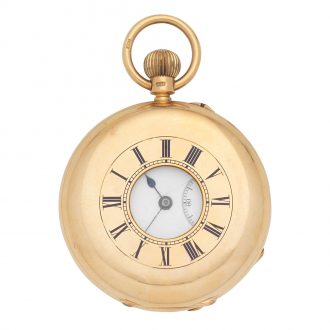
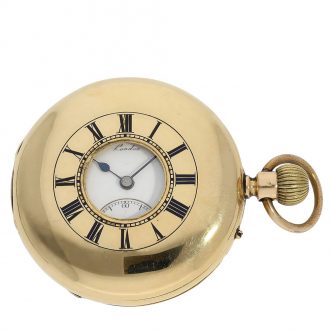
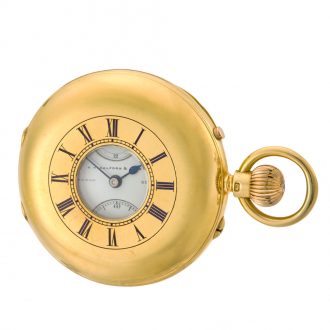
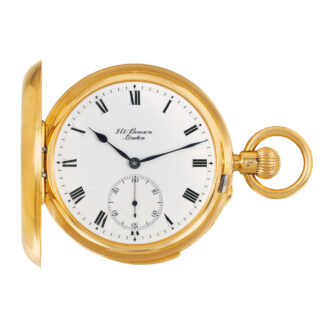
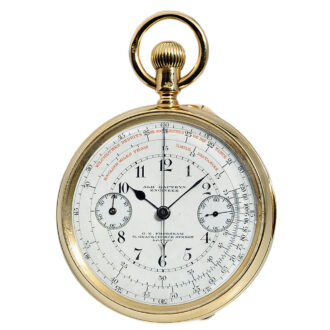
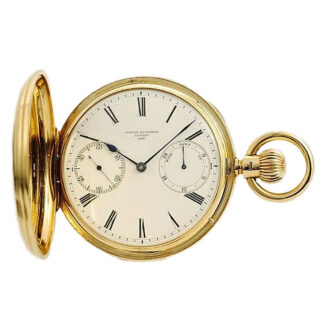
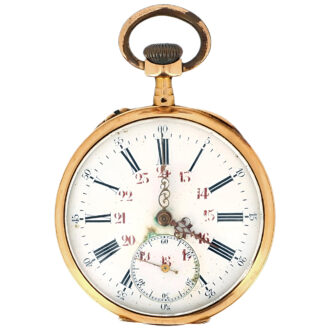
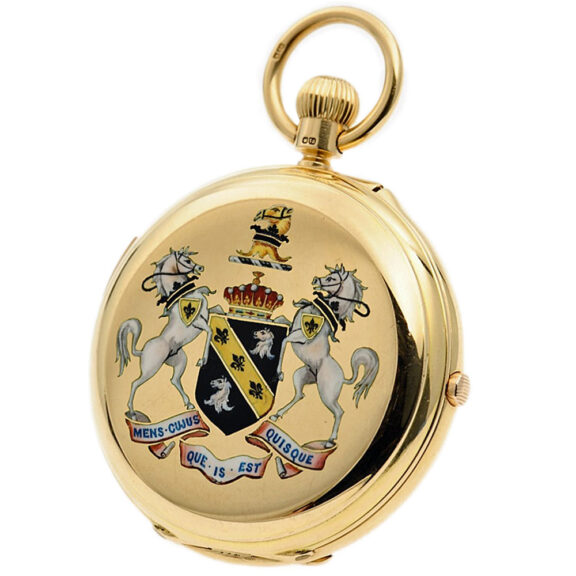
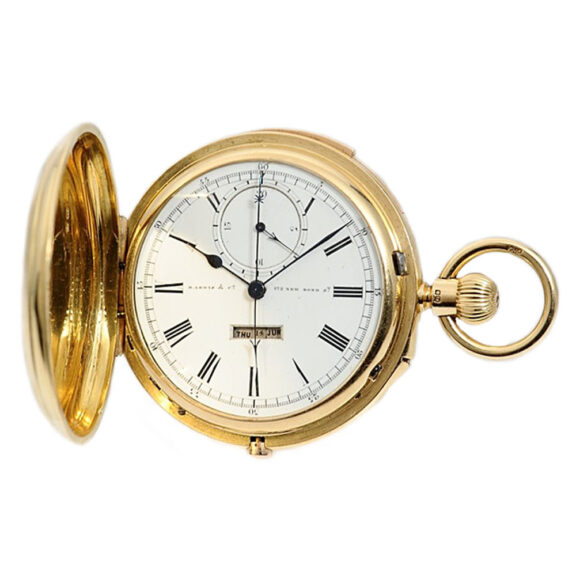
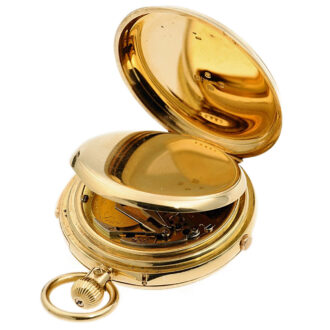
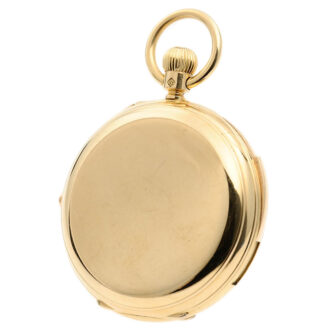
An extraordinary, heavy English 18 carat gold hunting cased minute repeating lever pocket watch with chronograph and linear calendar, circa 1896. The former property of the grandnephew of Samuel Pepys, Lord Chancellor Kenelm Charles Edward Pepys.
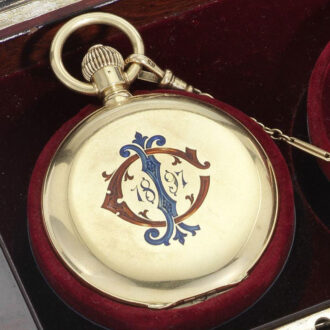
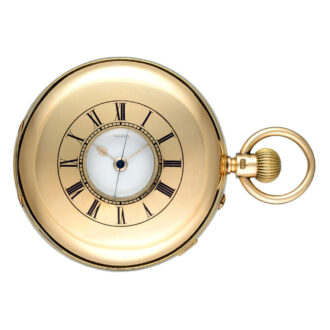
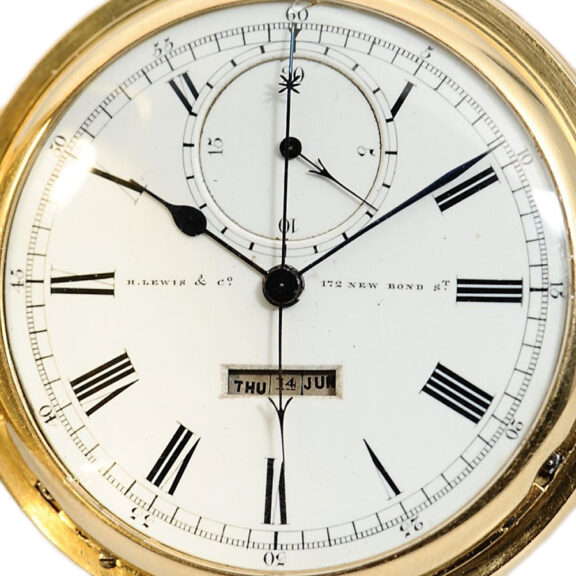
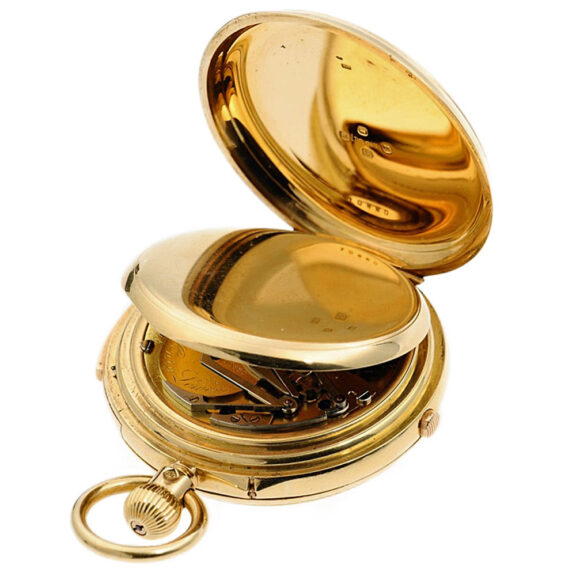
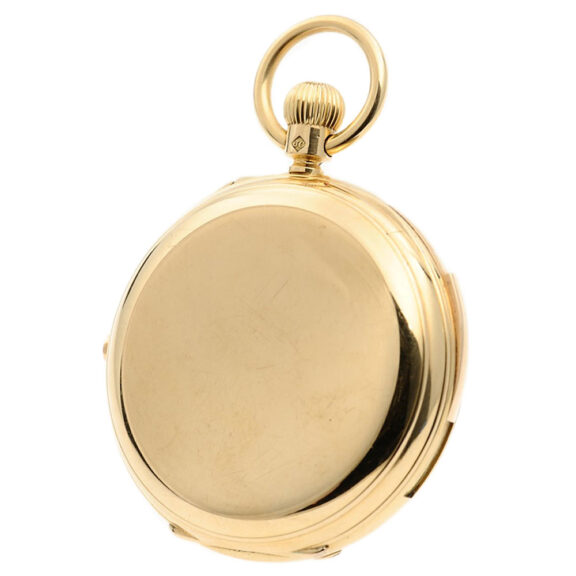
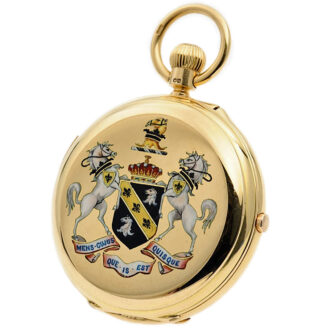
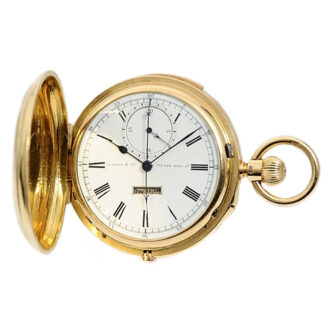
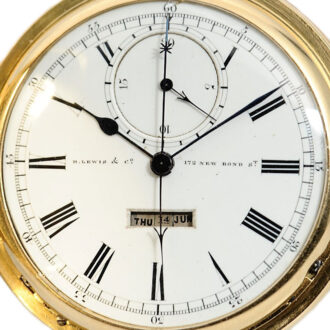
The polished, tiered case with on the front cover a polychrome enamelled coat of arms and a banner reading: mens cujus que is est quisque (As the mind of each, so is the man), the motto of Kenelm Charles Edward Pepys, maker’s mark EN for Emil Nielsen who was a partner in Nicole, Nielsen & Co., a pusher for the chronograph at 6 o’clock and a slide for the repeating mechanism. White enamel dial with radial Roman hours, an outer minute and fifth of a second track with Arabic five minute numerals, a 20 minute counter at 12 o’clock, a rectangular aperture for the indication of the days of the week, date and months of the year, and blued spade hands.
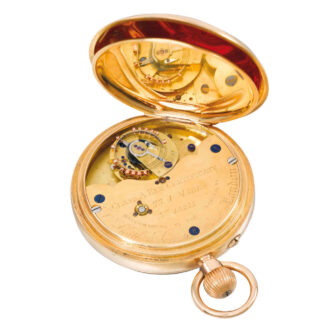
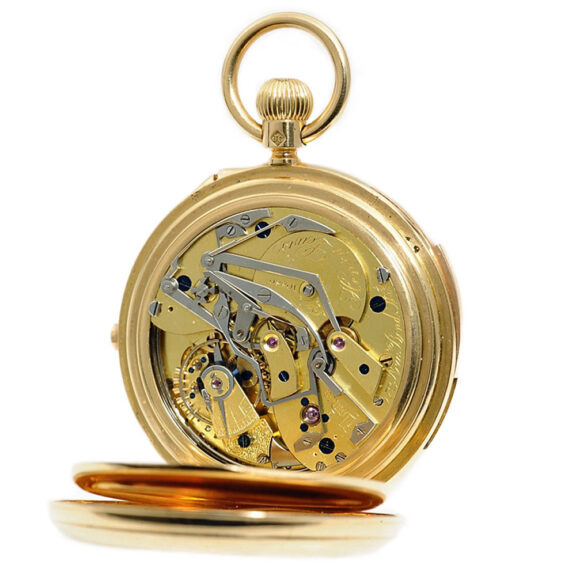
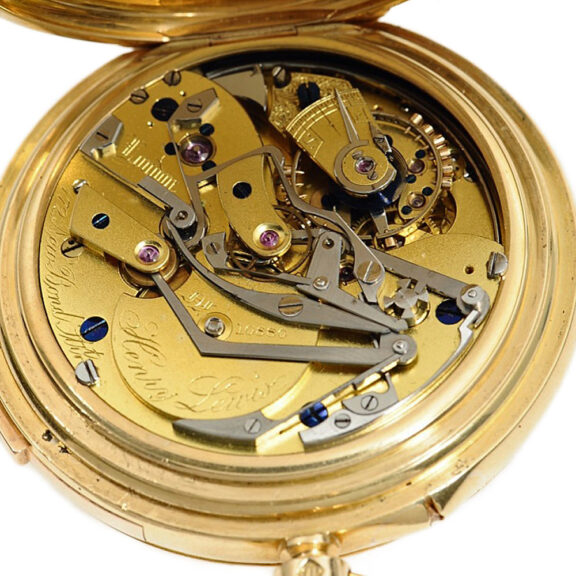
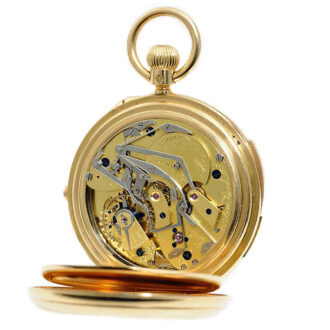
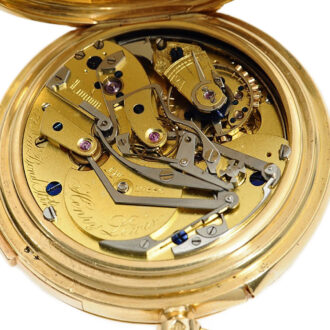
Frosted gilt ¾ plate movement with an English lever escapement, finely ground and bevelled steel chronograph parts, a ratchet wheel, two hammers, two gongs, a raised barrel, gold screw compensation balance and fine florally engraved balance cock.
Dial signed, case numbered, movement signed and numbered.
–
Diameter: 51 mm
–
Weight: 149 g
–
Signed: H. Lewis & Co 172 New Bond St.
–
This timepiece is a fine example of late 19th Century English watchmaking. One of the more complex movements made by the firm of Nicole Nielsen with the rare inclusion of an unusual form of the linear digital calendar. No other piece is known that is comparable to the one at hand.
Nicole Nielsen manufactured for many eminent watchmaking firms in the second half of the 19th century. Some were also retailed in other countries such as Australia and America, Tiffany’s being one of their main customers.
Kenelm Charles Edward Pepys (1874-1919) was the fourth Earl of Cottenham and succeeded his father in 1881. He was the grandnephew of Samuel Pepys, the 17th century diarist.
Samuel Pepys (1633-1703) was an English naval administrator and Member of Parliament who is now most famous for the diary he kept for a decade while still a relatively young man. Although Pepys had no maritime experience, he rose by patronage, hard work and his talent for administration to be the Chief Secretary to the Admiralty under both King Charles II and subsequently King James II. His influence and reforms at the Admiralty were important in the early professionalization of the Royal Navy. The detailed private diary Pepys kept from 1660 until 1669 was first published in the 19th century and is one of the most important primary sources for the English Restoration period. It provides a combination of personal revelation and eyewitness accounts of great events, such as the Great Plague of London, the Second Dutch War and the Great Fire of London.
Signed: H. Lewis & Co 172 New Bond St.
Share this page: