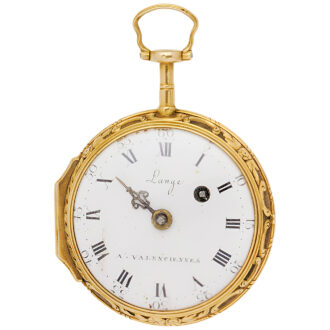
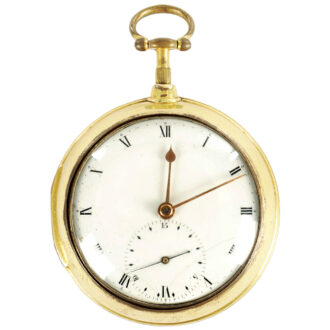
French 18K gold and painted enamel pocket watch Circa 1750
- Kenmerk
- AL3485
- Diameter
- 49 mm
- Estimate
- € 6.000 - 11.000
- Price sold
- € 5.000
Gold open faced key winding verge watch
–
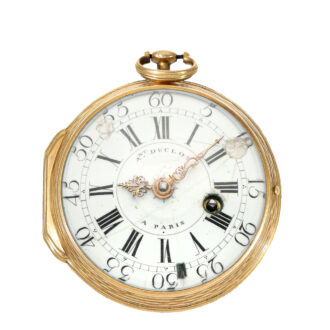
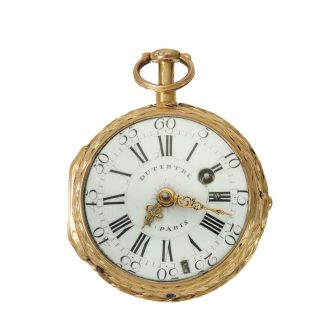
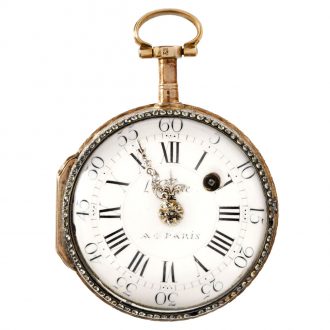
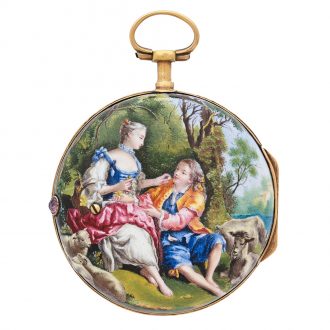
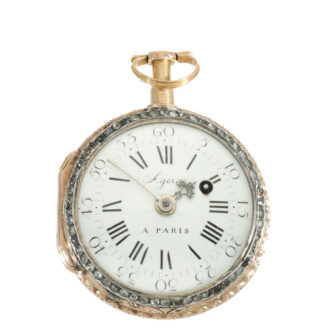
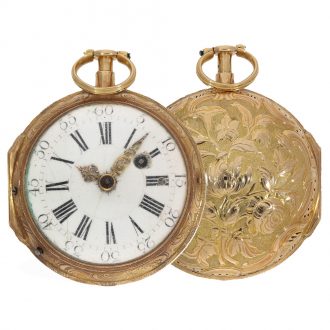
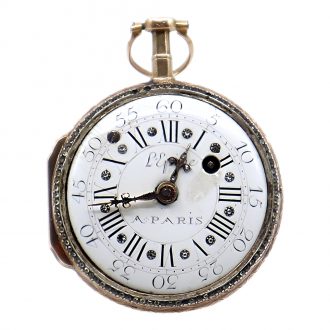
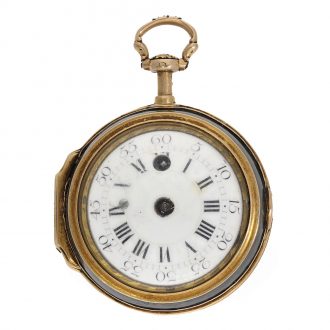
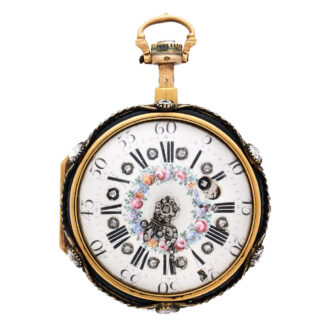
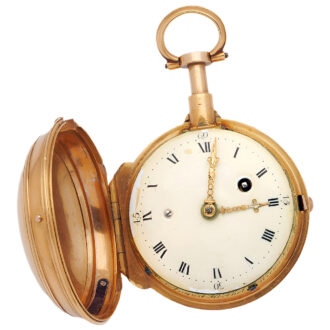
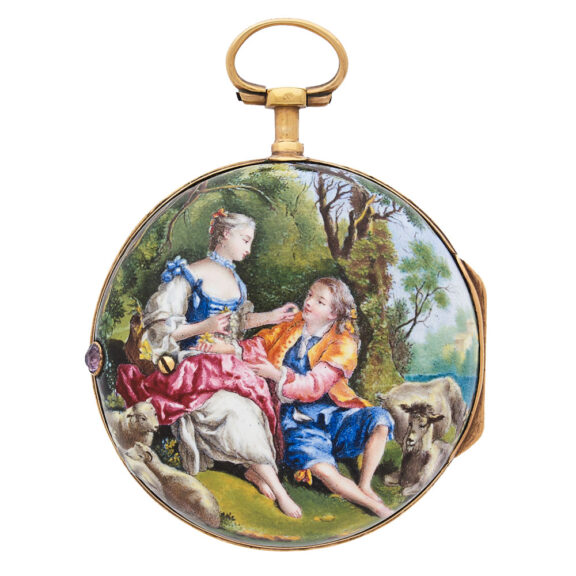
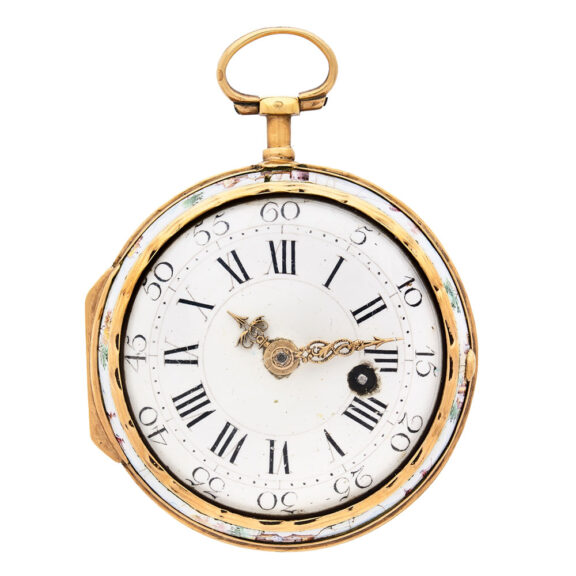
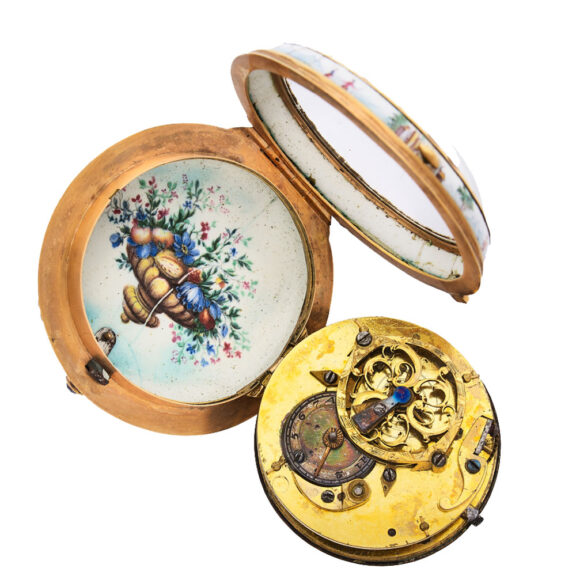
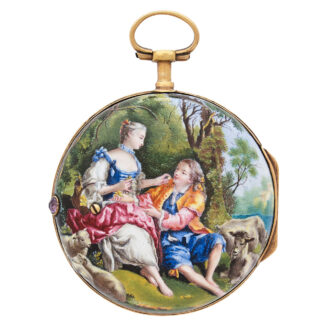
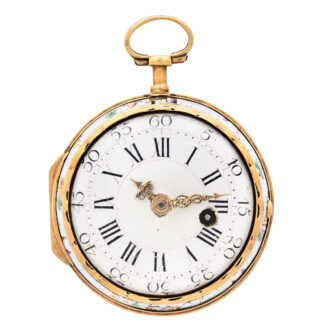
A magnificent French 18 carat gold open faced timepiece featuring a finely painted enamel scene after François Boucher’s painting Pensent-ils au raisin, circa 1750. This watch has a mechanical key winding movement with a verge escapement, chain fusee, spiral balance, an advance/retard adjustment disc, and stylized pillars between the two plates. It features an intricately chased and pierced continental balance cock, unsigned on the backplate. The white enamel dial shows black Roman numerals for the hours, outer Arabic numerals for the five minute marks from 5 to 60, a minute track, ornate gold hands, and a winding aperture near 4 o’clock.
–
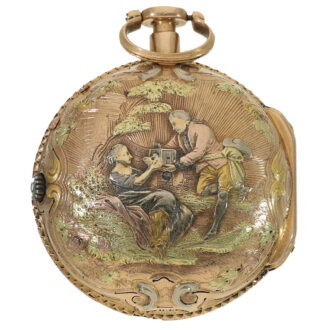
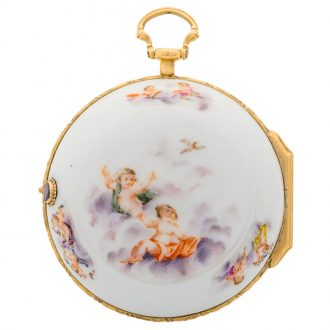
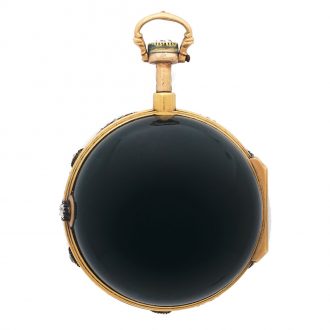
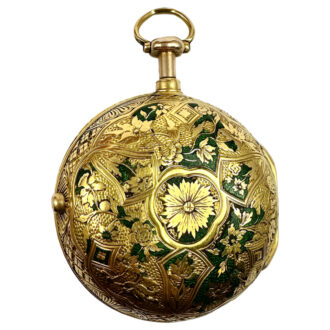
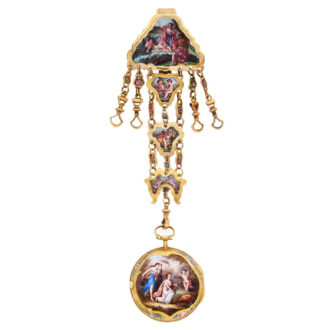
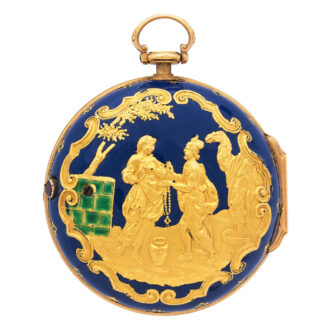
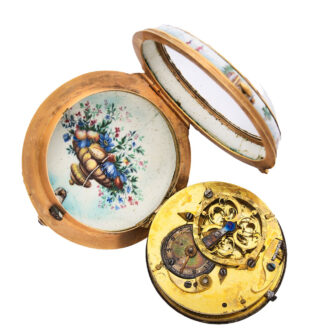
The timepiece is housed in an exceptionally fine, hinged, round, 18 carat gold case, masterfully decorated with painted enamels. The bezel is adorned with a continuous painted pastoral landscape, while the reverse back cover features a breathtaking polychrome enamel miniature depicting a young shepherd couple accompanied by sheep, directly inspired by François Boucher’s famous composition. When the case is opened, the interior of the back cover reveals a vibrant, hand painted polychrome enamel horn of plenty overflowing with a rich bouquet of summer flowers and grapes against a light background, facing the fire gilded mechanical movement.
–
Diameter: 49 mm
–
Weight: 85.6 g
–
Signed: No name
–
The exceptional miniature enamel painting on the reverse of this watch is a masterful adaptation of François Boucher’s celebrated 1747 masterpiece, Pensent-ils au raisin? (Do They Think About Grapes?) The painted scene on the case is reversed compared to Boucher’s original oil painting (now preserved in the Art Institute of Chicago). The 18th century master enameler almost certainly copied the design from a contemporary print engraving, such as the widely distributed Parisian plates produced by the famous engraver Jacques Philippe Le Bas (1707–1783).
–
During the high Rococo period, wealthy European aristocrats were captivated by idealized, pastoral galante themes that celebrated youth, rustic innocence, and romantic courtship. French watchmakers and elite enamel artists regularly adapted these popular contemporary fine art prints into miniature luxury objects, merging advanced mechanical horology with the peak artistic fashions of the Parisian court.
Share this page: