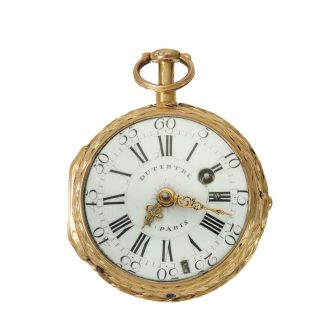
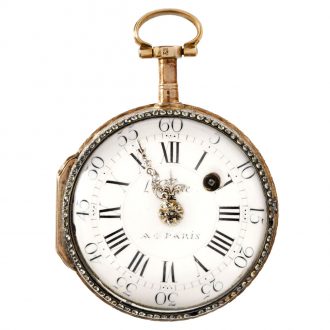
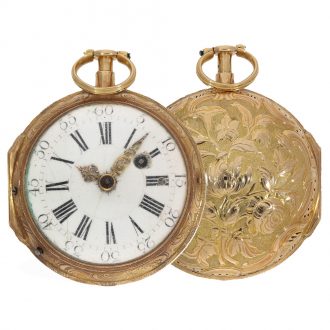
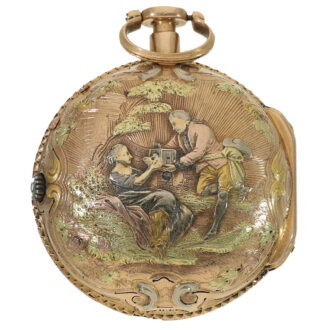
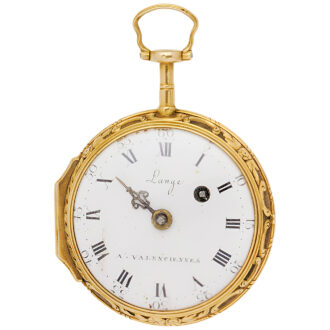
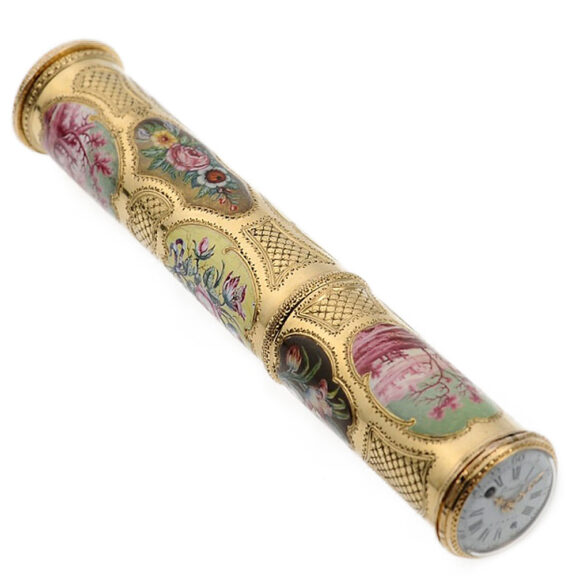
French étui with watch, compass and date indicator Circa 1750
- Kenmerk
- AD9113
- Diameter
- 40 mm
- Estimate
- € 60.000 - 100.000
- Price sold
- -
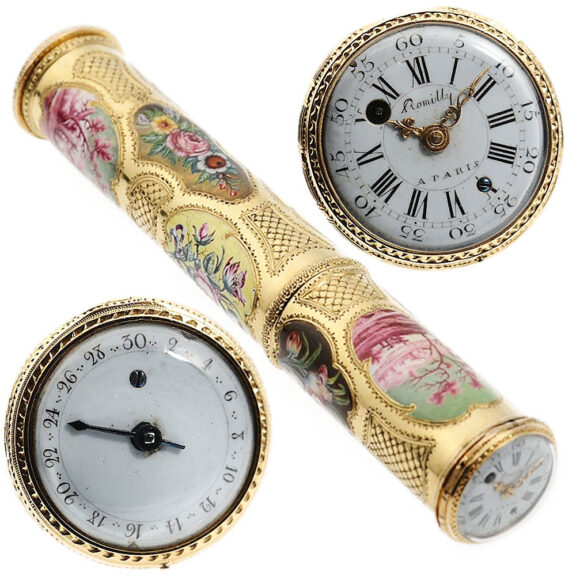
Cylindrical étui with watch, date indicator and compass by Jean Romilly
–
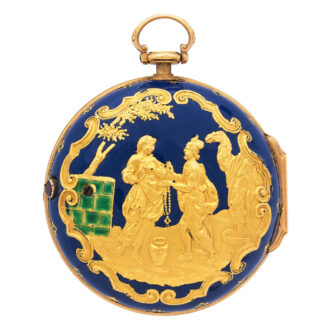
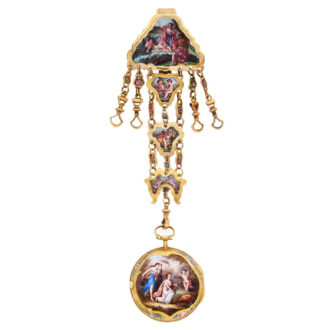
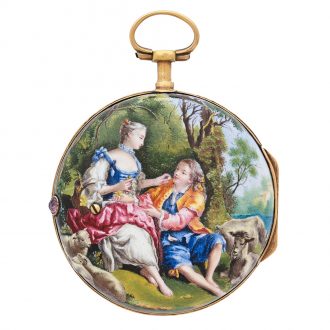
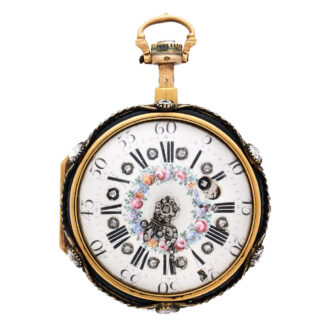
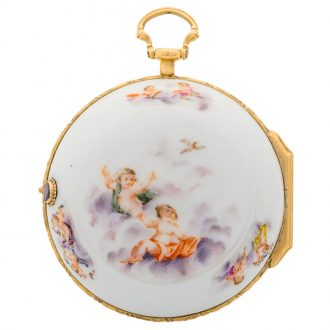
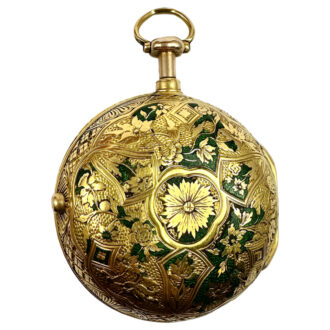
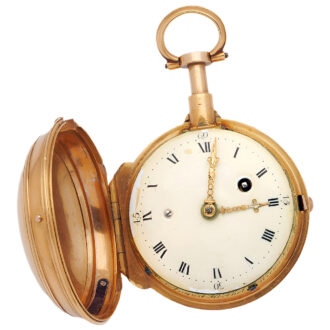
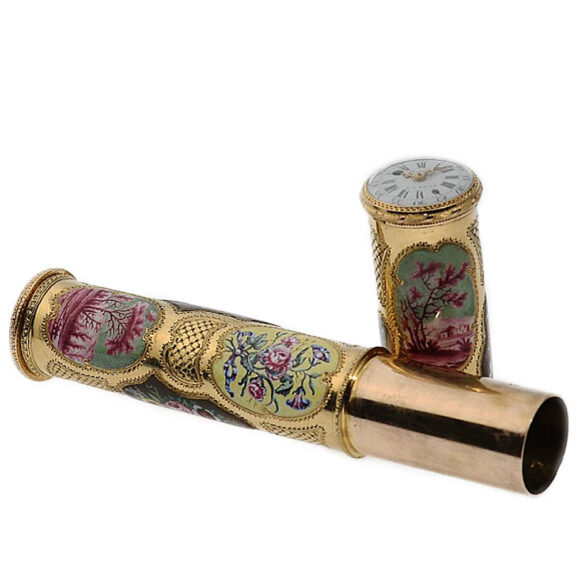
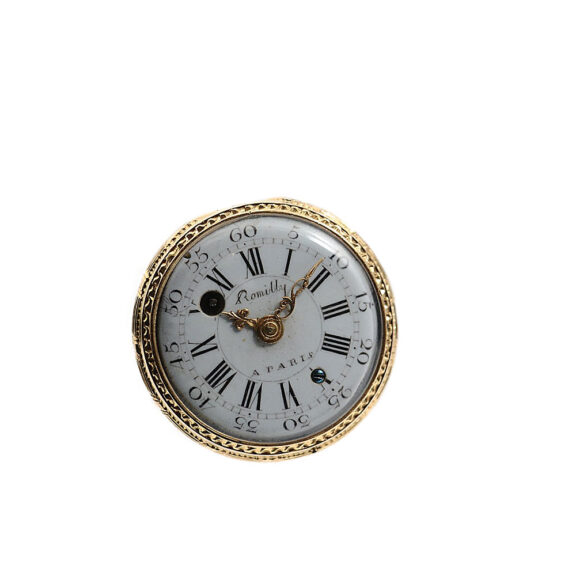
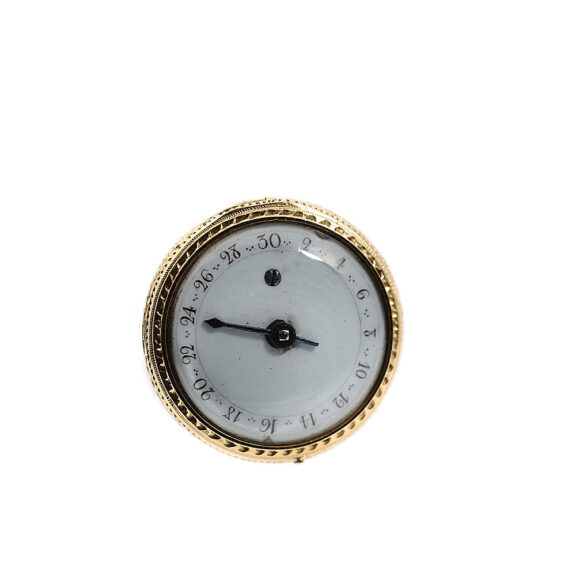
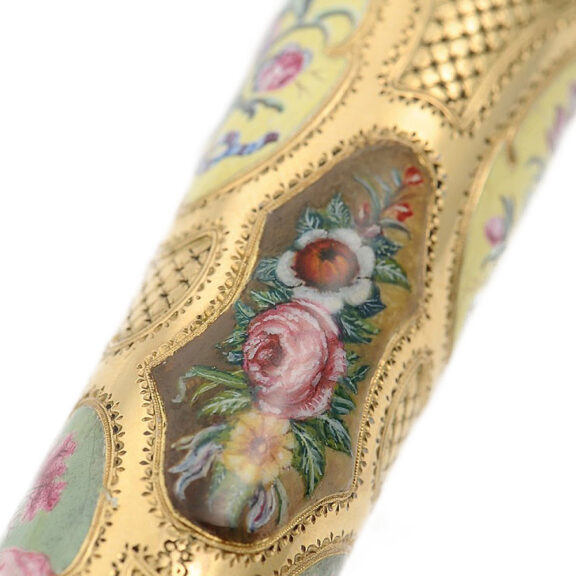
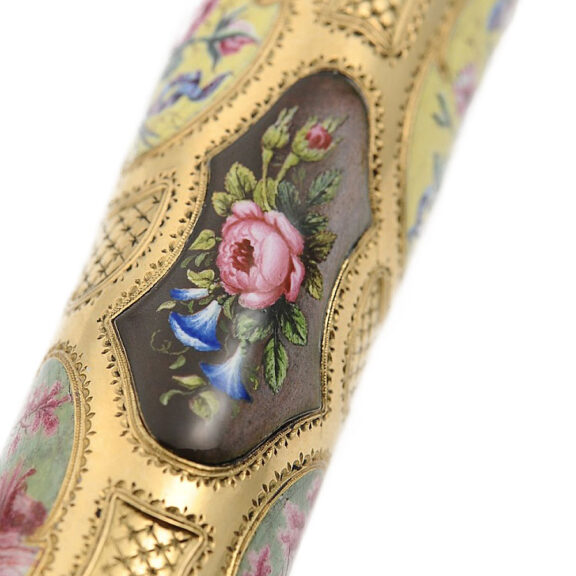
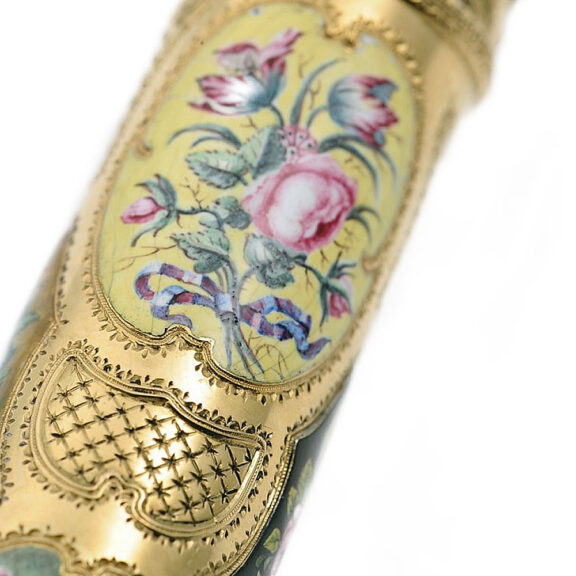
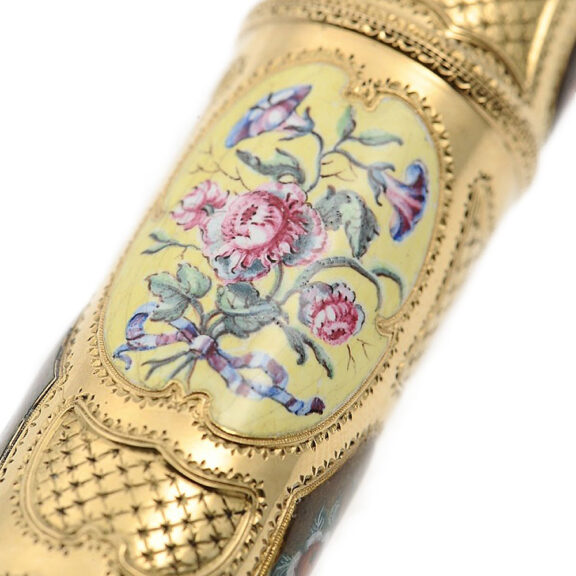
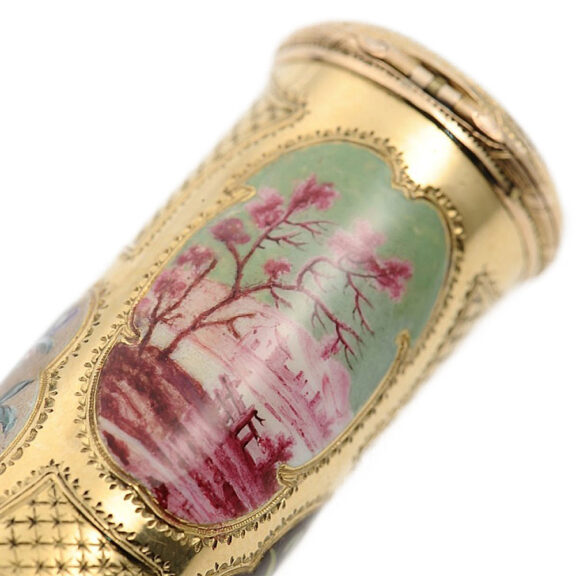
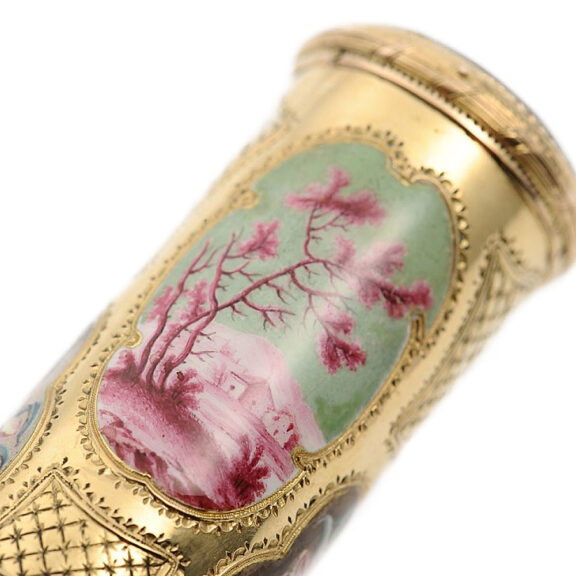
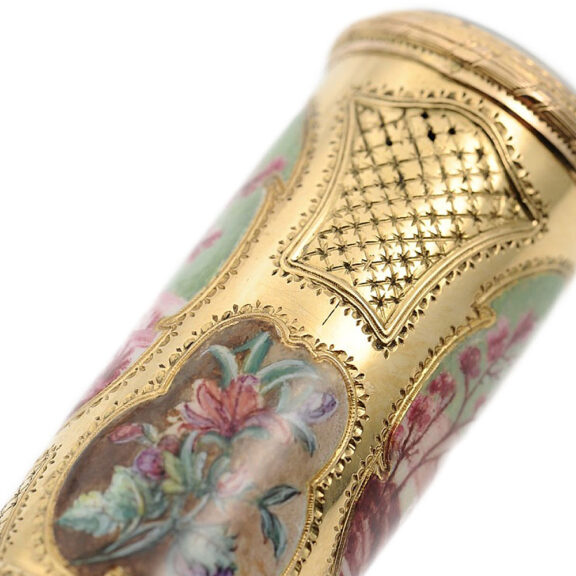
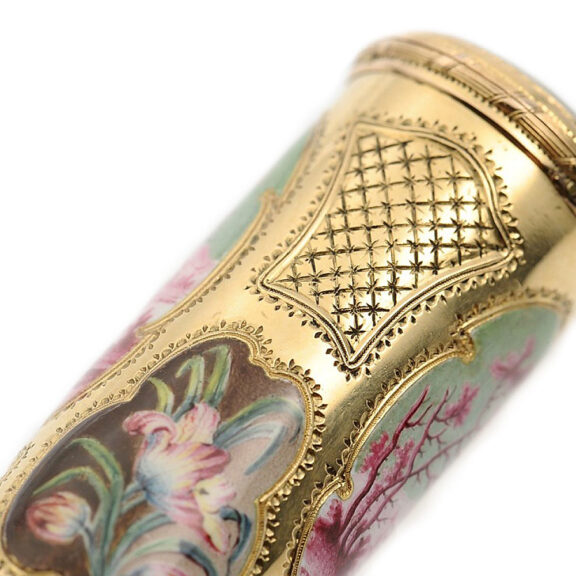
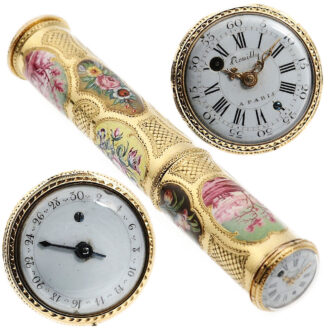
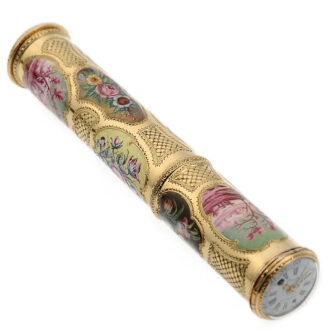
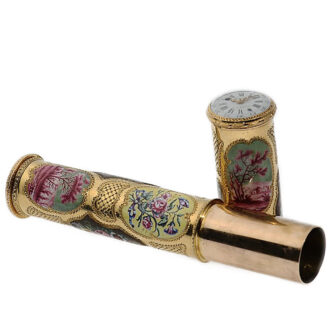
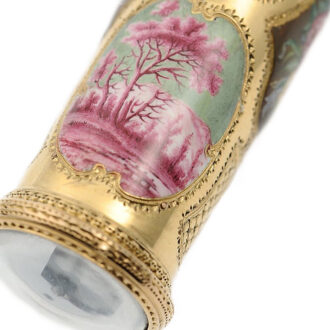
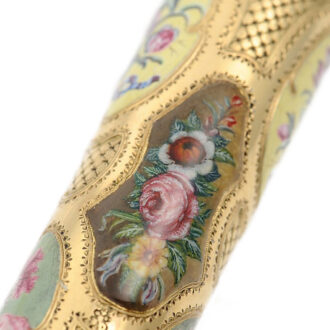
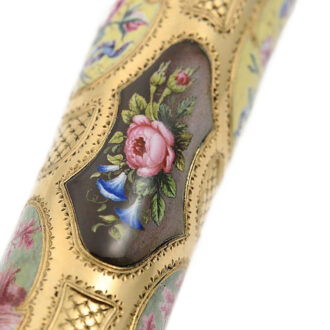
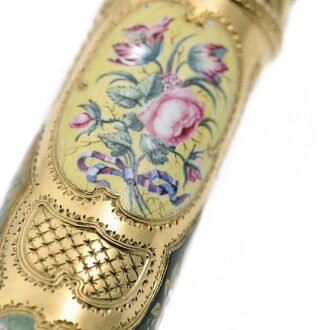
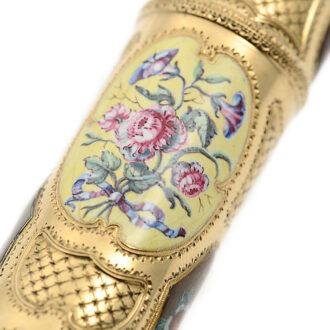
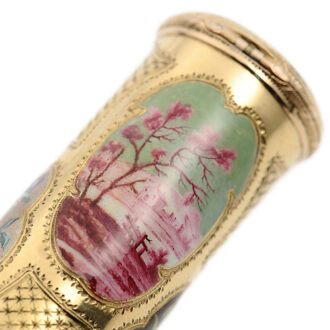
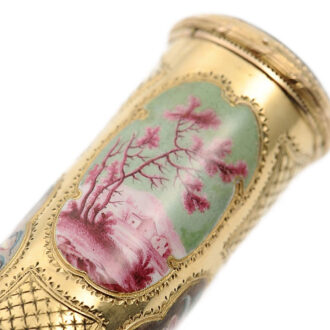
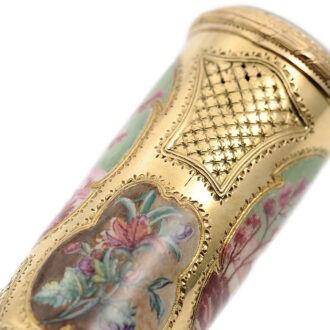
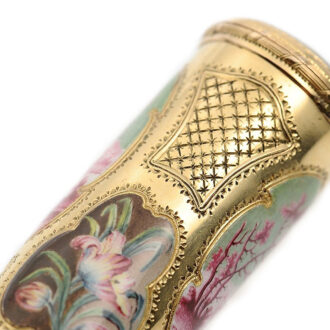
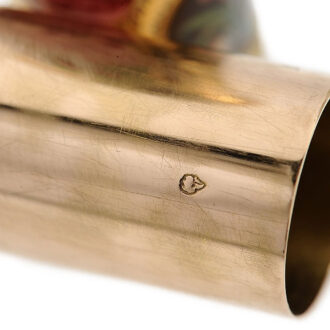
A very fine French 22K gold and enamel cylindrical Louis XV étui with an integrated watch, date indicator and compass, circa 1750.
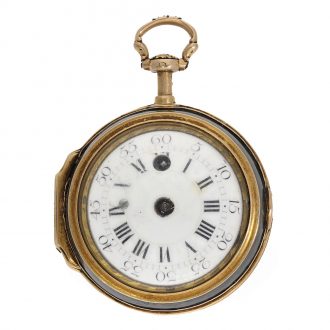
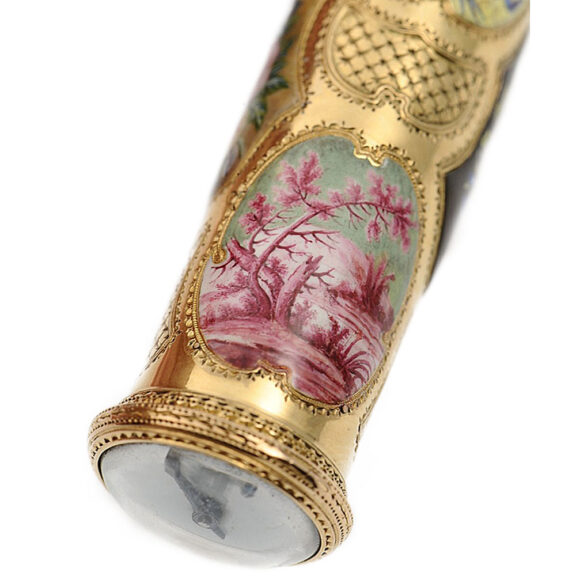
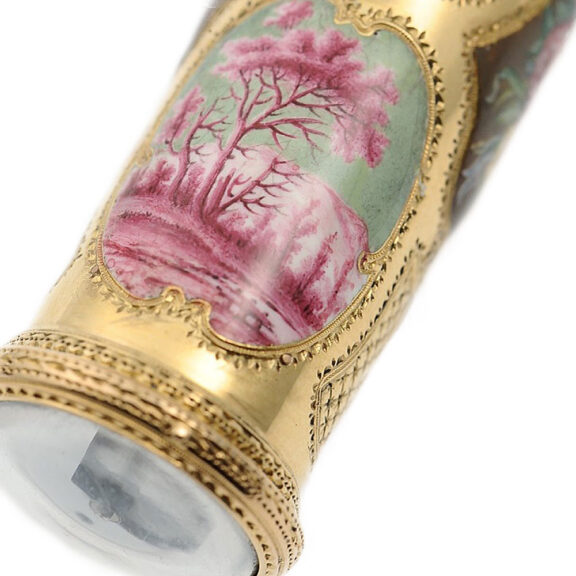
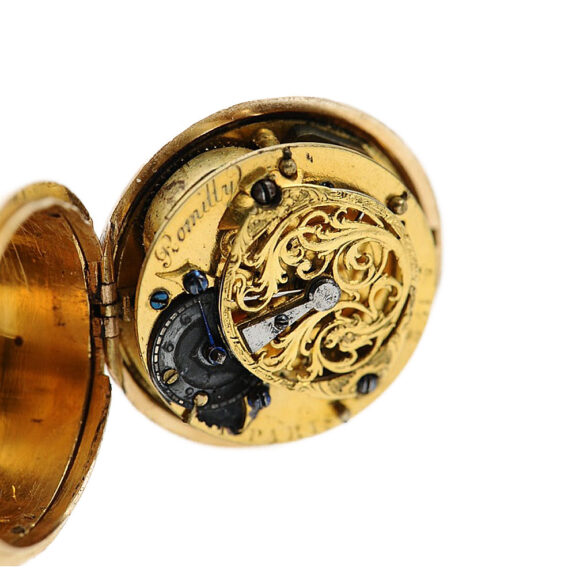
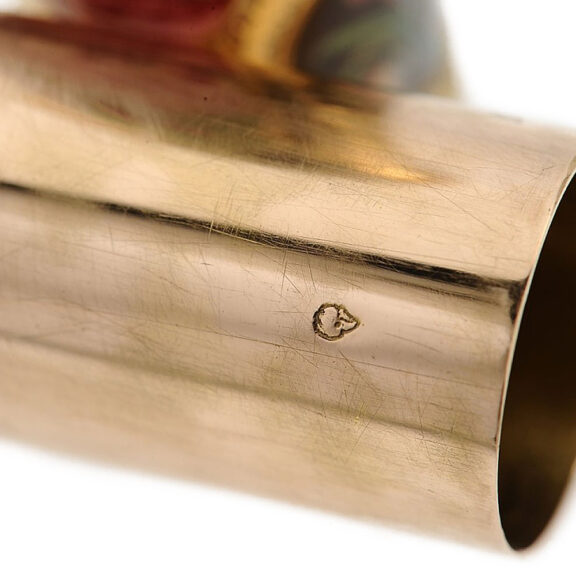
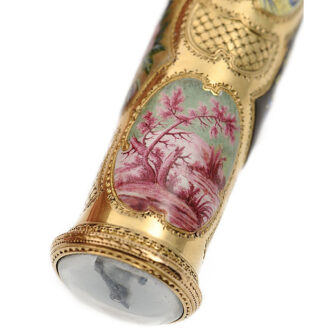
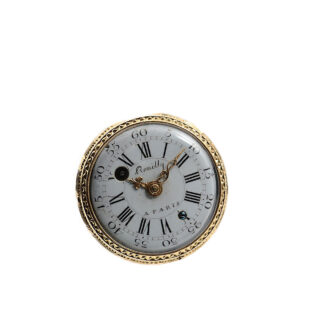
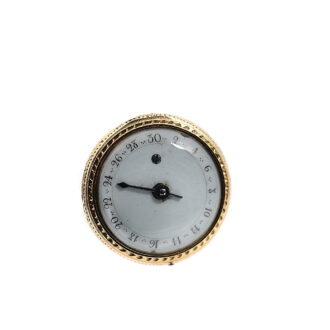
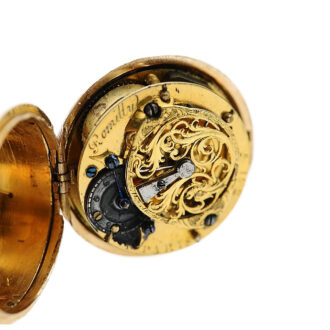
The case is decorated with painted polychrome enamel compositions of summer flowers and crimson camaïeu landscapes divided by engraved cartouches. The upper part with integrated watch, the unscrewable base with an adjustable date indicator on the top, a finely engraved and glazed compass on the inner backside. The signed white enamel dial of the watch with radial Roman hours, Arabic five-minute numerals and gold Louis XV hands. The white enamel calendar dial with Arabic numerals and a blued single spade hand. Signed fire gilt full plate movement, keywind, one barrel, cylinder escapement, three-arm steel balance, florally engraved and pierced balance bridge.
–
lenght: 125 mm
–
Signed: Romilly à Paris
–
Jean Romilly (1714-1796) was a Swiss watchmaker, journalist and encyclopedist. He was born in Geneva as one of the four sons of watchmaker Pierre Romilly and his wife Jacqueline Balexert. The family originally came from Gien-sur-Loire in France and had emigrated to Switzerland after the revocation of the Edict of Nantes. Jean first worked in his father’s family business with his uncle and his three brothers. He left Geneva in 1734 and went to Paris, where he settled at the Place Dauphine and became a master in 1752. Romilly wrote several horological books. He knew Denis Diderot and Jean-Baptiste le Rond d’Alembert and penned about 12 articles for the Encyclopédie, for example on the technical aspects of watchmaking. In 1754 he presented a paper on escapements to the Académie des Sciences in Paris. Jean-Jacques Rousseau was a friend of Romilly and they were in close contact all through his life. In addition to watchmaking, he was also interested in meteorology. He is said to have presented a marine chronometer to the Académie des Sciences around 1766, more or less at the same time as Pierre Le Roy and Jean-Pierre Tavernier (1714-1795). However, the chronometer was allegedly damaged during a revision in the country and Jean Romilly was forced to withdraw it from the test. In 1777 Romilly and his son-in-law Guillaume Ollivier de Corancez (1780-1816) founded the first French daily newspaper, the Journal de Paris, considered “the organ of the enlightened bourgeoisie”.
–
Camaïeu is a technique that employs two or three tints of a single colour, other than grey, to create a monochromatic image without regard to local or realistic colour.
Signed: Romilly à Paris
Share this page: