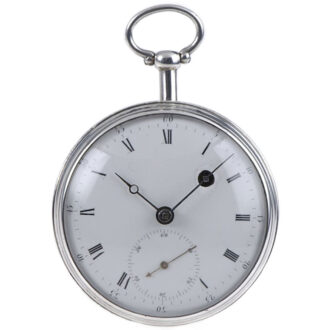
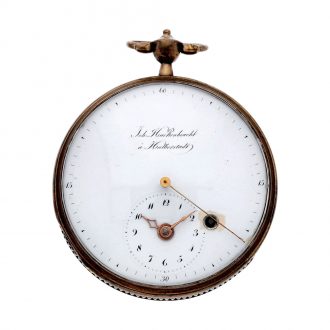
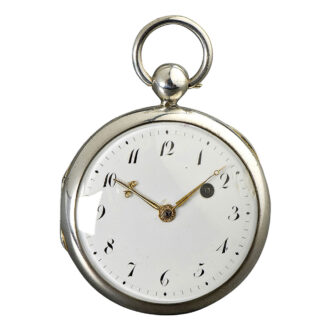
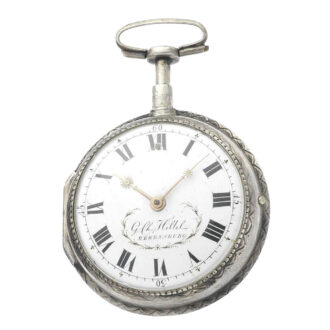
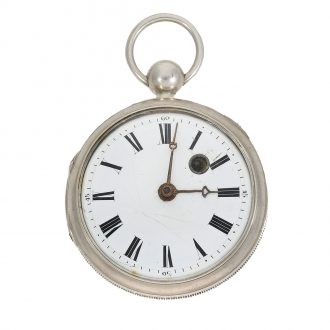
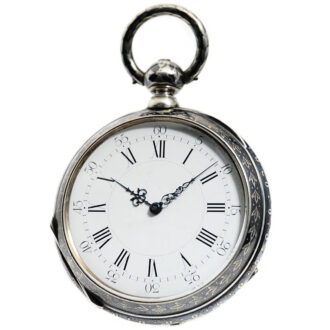
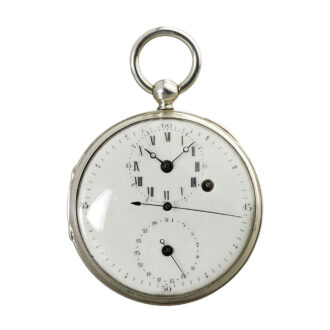
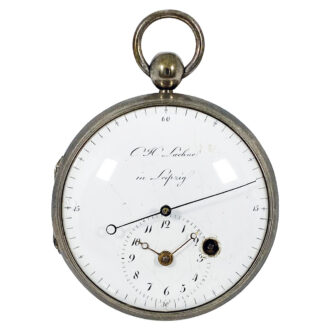
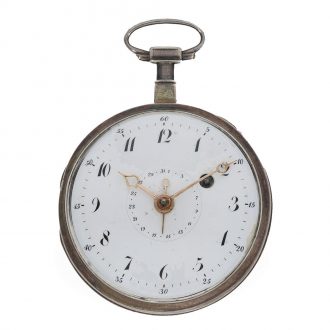
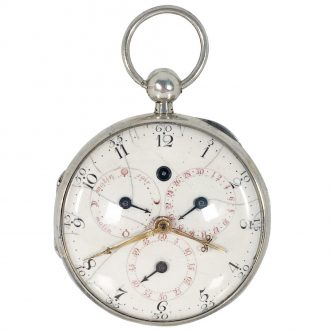
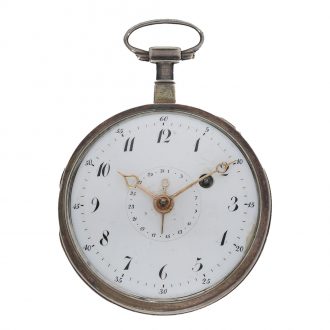
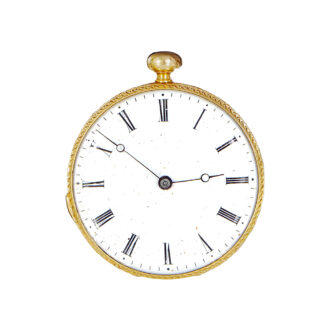
German electrotype oval verge pendant watch Circa 1800
- Kenmerk
- AM0285
- Diameter
- -
- Estimate
- € 2.000 - 4.000
- Price sold
- -
Silver on-base metal pendant watch by Christofle & Cie
–
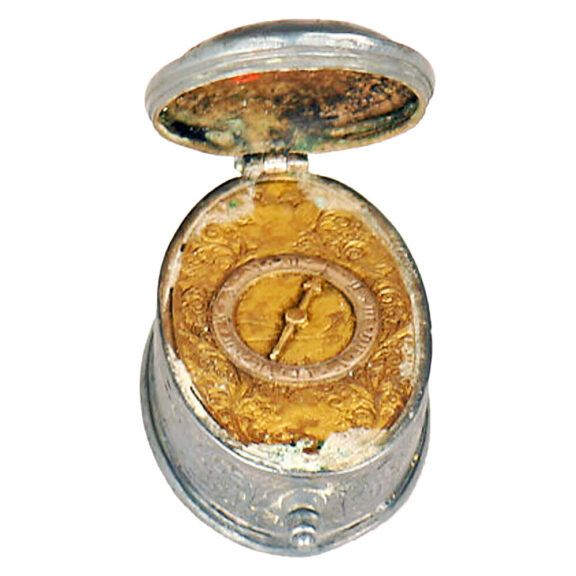
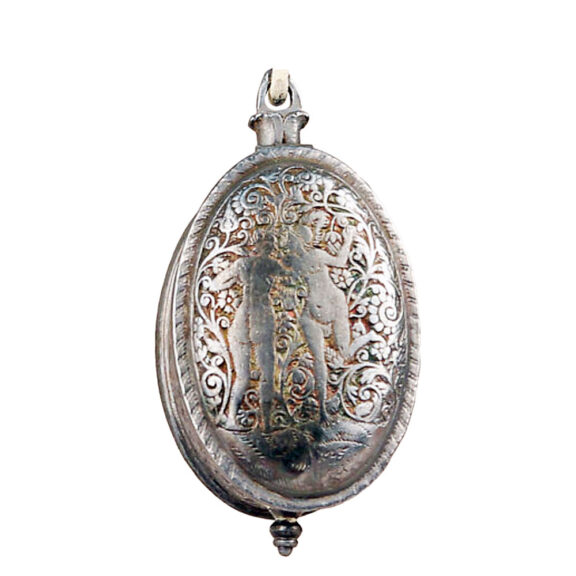
A German oval single-handed pendant watch from the 19th century, after the late 16th century original. This watch has a silver on-base metal engraved case with a gilt movement featuring a verge escapement. The electrotyped engraved dial has Roman radial hours and a single hand. The electrotype is a reproduction of a late sixteenth-century original silver case from the Louvre collection in Paris.
–
Dimensions: Length 51 mm
–
Signed: No name
–
Electrotyping, or galvanoplasty, is a chemical process used to create metal parts that are a replica of an original model. It was invented by Moritz von Jacobi in Russia in 1838 and was quickly adopted for printing and other industries. Electrotyping can produce an accurate copy of an object with an irregular surface, such as an engraved steel or copper plate, a woodcut, a set-up type, a medal, a medallion, a statue, a bust, or even a natural object used for art purposes.
–
Interestingly, some of the most significant “bronze” sculptures created in the 19th century were made of electrotyped copper and not bronze. Electrotyping was used for sculpting up until at least the 1930s. For printing, electrotyping became a standard method for producing plates for letterpress printing by the late 1800s. It was used together with the older technology of stereotyping, which involved metal casting. By 1901, unions for stereotypes and electrotypers had been formed in several countries. These unions persisted until the 1970s. However, by the late 20th century, the transition to offset printing and new techniques for preparing printing plates had bypassed these two technologies, which had been used for over a century in preparing plates.
Share this page: