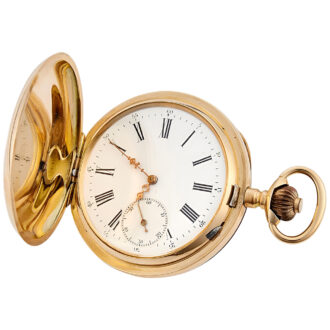
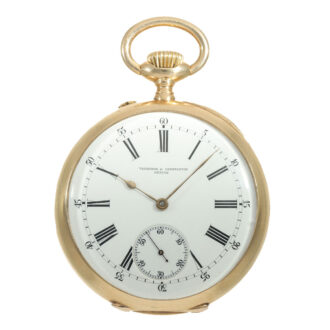
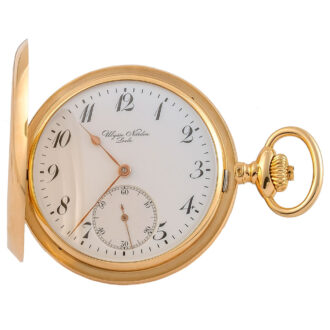
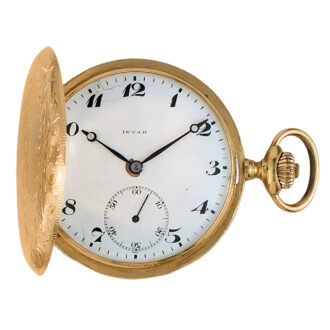
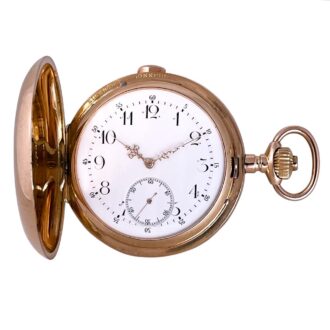
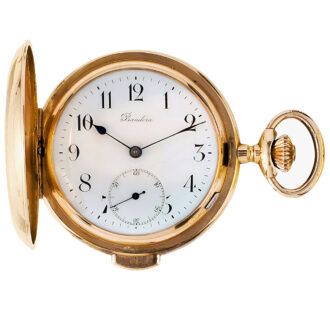
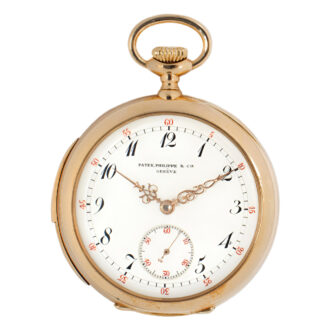
Historically important Swiss Royal presentation watch Circa 1905
- Kenmerk
- TA2025
- Diameter
- 50 mm
- Estimate
- € 5.000 - 10.000
- Price sold
- € 5.050
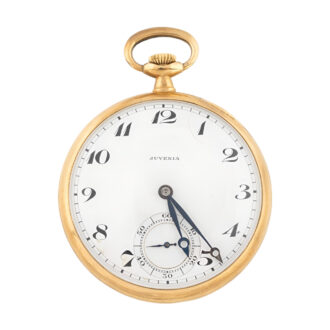
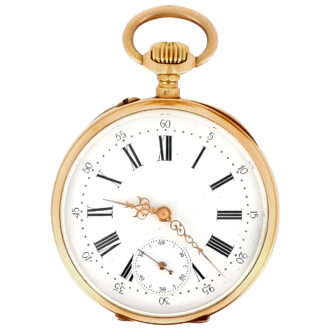
Gold open faced lever dress watch
–
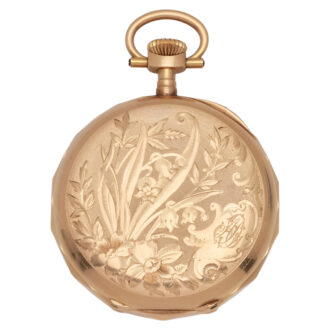
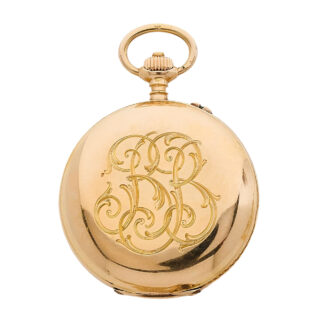
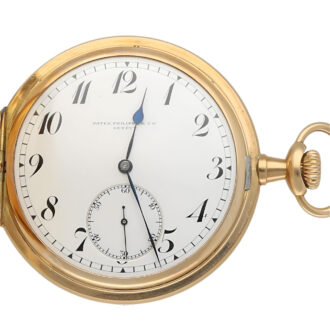
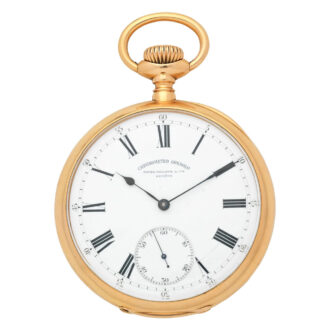
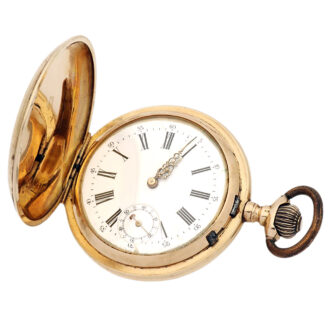
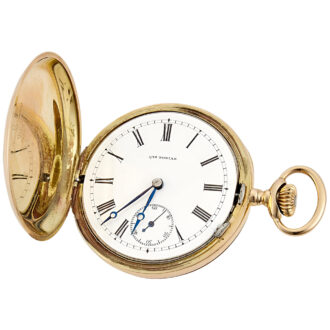
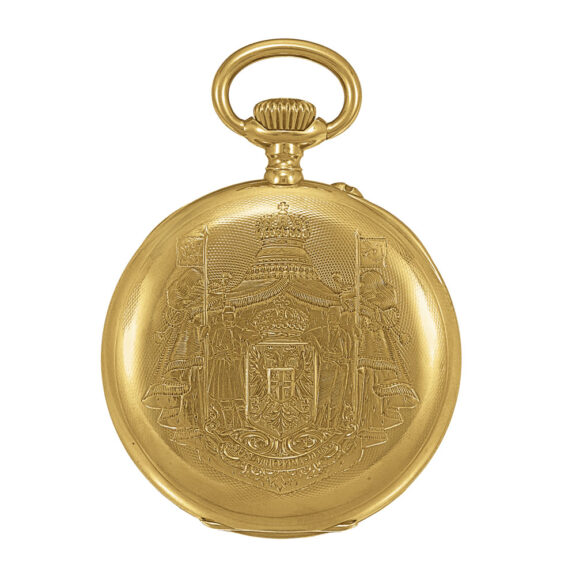
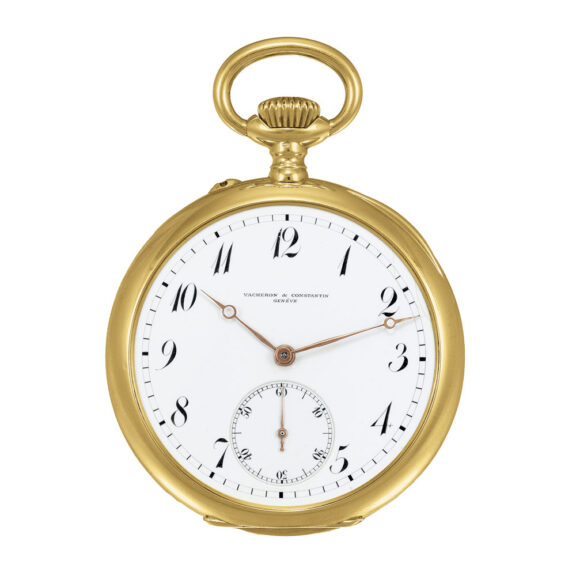
A very fine and historically important Swiss, keyless 18K yellow gold Royal presentation dress watch, circa 1905. Peter the First, King of Serbia by Vacheron & Constantin, Genève. One of a series of twelve watches made for Peter the First, King of Serbia. Case back engine-turned and engraved with Peter the First’s coat of arms. Hinged gold cuvette. White enamel dial with Breguet numerals, outer minute track, subsidiary seconds. Yellow gold Breguet hands. A frosted gilt movement, 15 jewels, straight-line lever escapement, cut bimetallic compensation balance, blued steel Breguet balance spring, index regulator. Dial, case and movement signed.
–
Diameter: 50 mm
–
Signed: Vacheron & Constantin Genève
–
The case is slightly rusted.
–
Peter I, King of Serbia (1844-1921): King of Serbia (1903-1918) and king of the Serbs, Croats, and Slovenes (1918-21), Peter I was the son of Prince Alexander of Serbia (Alexander Karadjordjevi). He was brought up in exile in Geneva and Paris while the Obrenovi line ruled Serbia, and he fought on the French side in the Franco-Prussian War (1870-71). In 1875, he joined the Bosnian insurrection against the Ottomans. The 1903 assassination of King Alexander of Serbia brought Peter to the throne. Peter proved an able and conscientious ruler and restored dignity to the court of Belgrade. He reformed the constitution, the army, and the school system and fostered improved methods of agriculture. The outstanding figure of his reign was Nikola Pai, who directed Serbian policy in the Balkan Wars (1912-13) and in World War I. Early in 1914 Peter, by then in poor health, retired from the active rule and his son, later King Alexander of Yugoslavia became regent. Peter took part in the retreat (1915-16) of the Serbian troops through Albania to Corfu. In 1918 he was chosen to rule the Kingdom of the Serbs, Croats, and Slovenes (later Yugoslavia), while his son and successor remained regent.
Signed: Vacheron & Constantin Genève
Share this page: