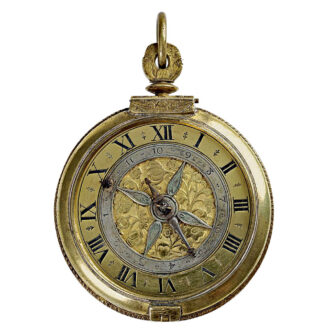
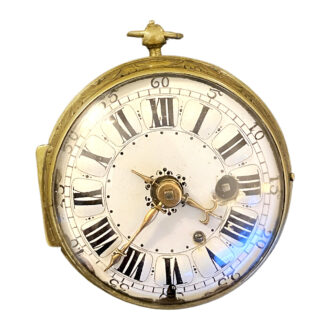
Rare French octagonal Renaissance pendant watch Circa 1620
- Kenmerk
- AS1611
- Diameter
- -
- Estimate
- € 22.500 - 45.000
- Price sold
- € 43.900
Unsigned silver and gilt metal octagonal watch
–
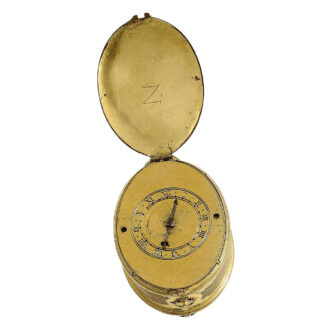
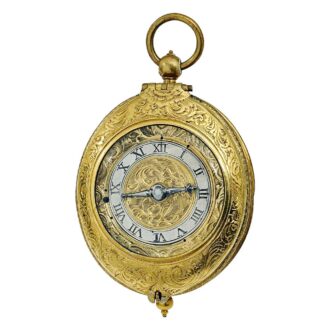
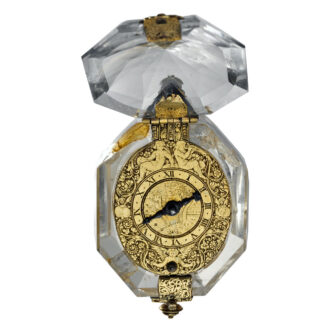
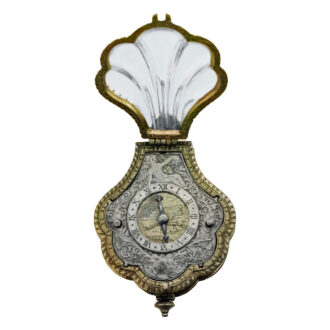
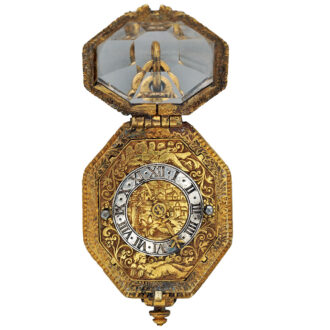
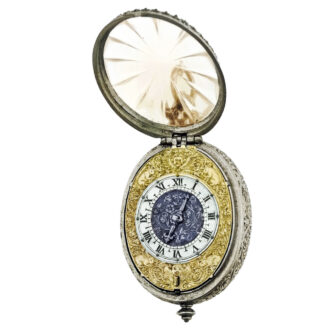
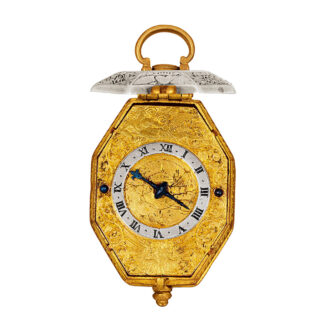
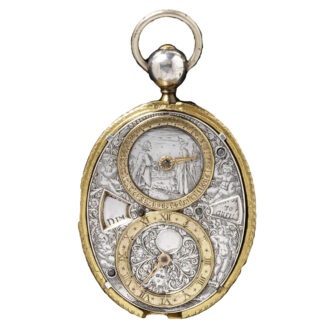
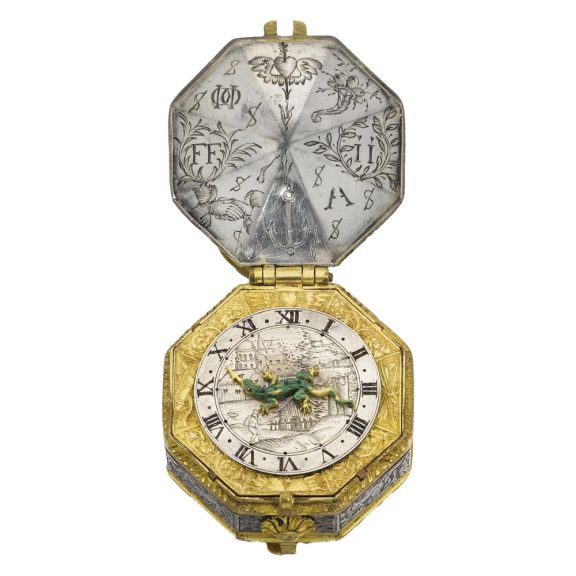
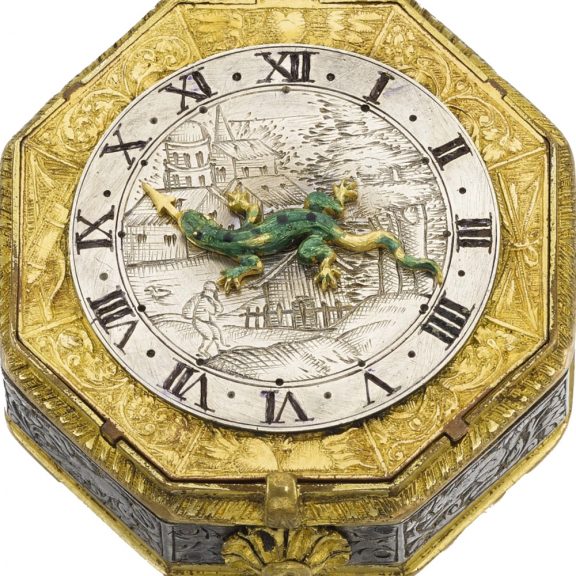
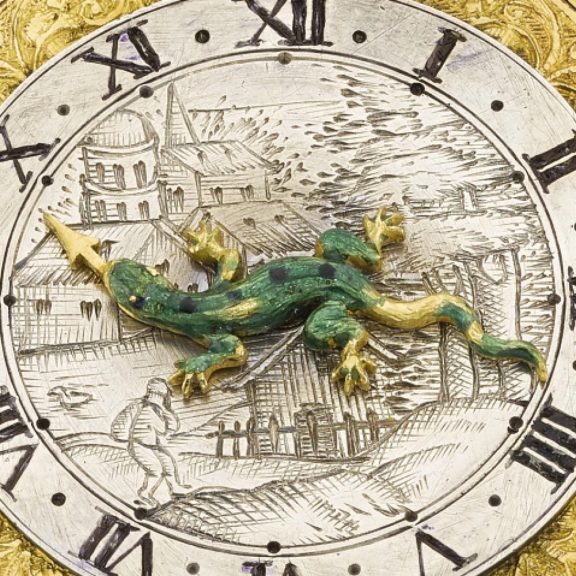
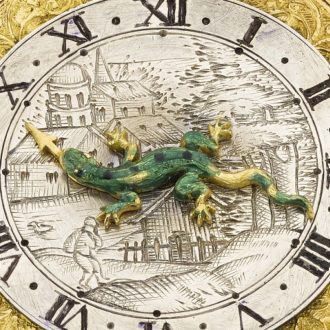
A superb and extremely rare French silver and gilt metal octagonal watch with a single hand in the form of a lizard circa, 1620. This timepiece showcases a gold-plated full plate octagonal movement with a verge escapement, intricately pierced and floral engraved pinned-on balance cock and foot, simple flat steel balance, wheel and click set-up with additional floral engraved cock and foot, fusee and gut line, round baluster pillars, and the posts and arbours finished as flowerheads.
–
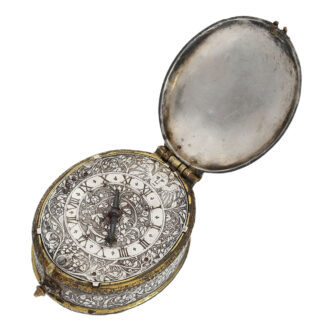
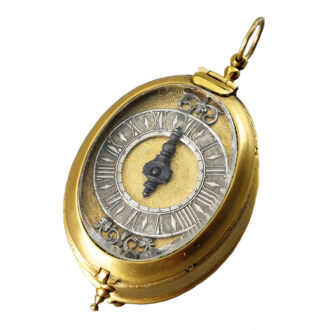
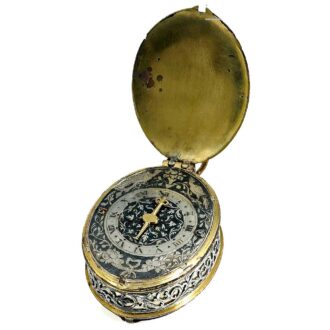
The silver dial depicts an engraved townscape beside a river, with a figure in the foreground carrying a sack. The chapter ring is engraved with Roman numerals and half-hour divisions, and it features a gold and green enamel single hand in the form of a lizard. The silver dial is placed upon a gilded plate engraved to the edge with foliage and trophies of love.
–
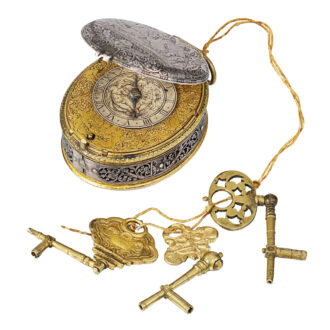
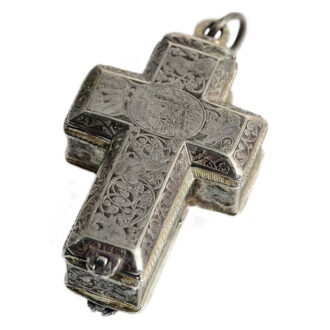
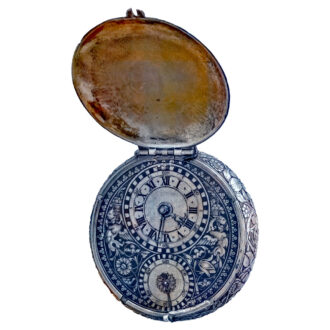
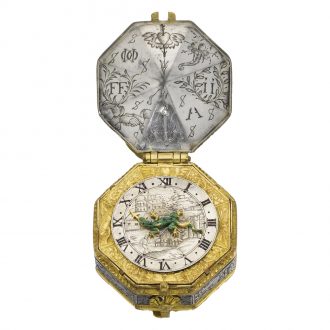
The case is made of silver and gilt metal with a hinged bimetallic panel mounted above the movement. One side is silver engraved with a village scene within love trophies and dated 1597, while the other side is gilt metal engraved with a coat of arms. The outside of the silver covers are engraved with putti playing musical instruments and carrying emblems of love, while the inside of the covers are engraved with monograms surrounded by amatory emblems including flaming and pierced hearts, a quiver of arrows, caduceus, cornucopia, and an anchor. The silver band is engraved with rabbits, hounds, and a stag, with a foliate pendant and short boss-form terminal.
–
Dimensions: 42,5 x 31 mm
–
Signed: No name
–
This watch is charming and beautifully crafted, with an unsigned case and movement that are likely of French origin. However, due to the significant number of French makers working in England at the time, it is also possible that the watch was made in London. An unusual feature of this watch is the hinged inner panel that covers the movement when the back cover is opened. Although the inner panel is dated 1597, the shape of the case and the style of decoration suggest a production date around the early to mid-1620s. The watch is adorned with love tokens and features a coat of arms on the inside of the dated panel, indicating that the year 1597 held significance for the original owner. The presence of the coat of arms, which appears to be English, suggests that the watch may have been a form of anniversary token made some 25 years after 1597. It is noteworthy that the watch has hands in the form of animals, which is especially rare. According to Baillie in his book “Watches, their History, Style and Decoration” (1929, p.117), only three watches with hands in the form of lizards were known to him, one of which (in the collection of the Louvre) also has a translucent green enamel covering the lizard.
Share this page: