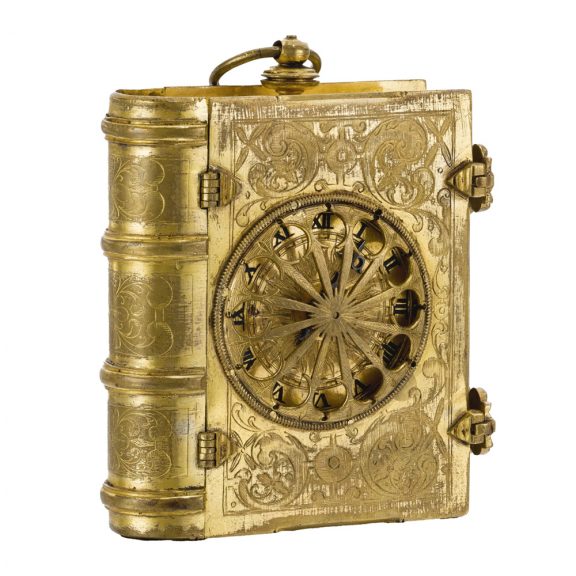
Rare German gilt metal book form verge watch Circa 1580
- Kenmerk
- AS1608
- Diameter
- -
- Estimate
- € 10.000 - 25.000
- Price sold
- € 19.000
Unsigned gilt metal form pocket watch
–
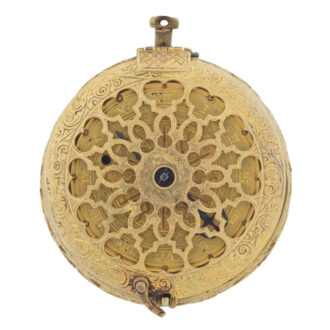
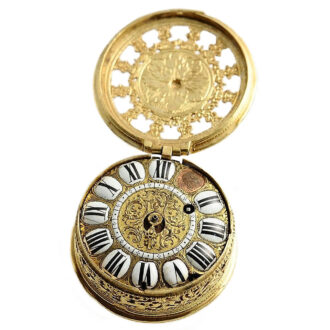
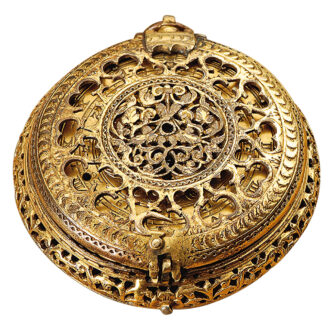
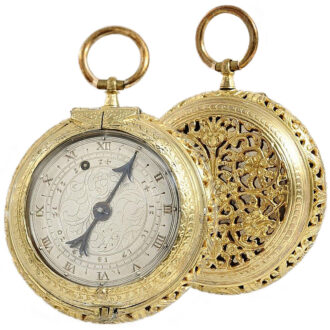
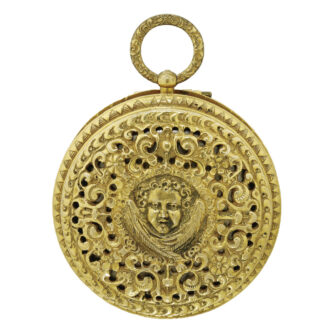
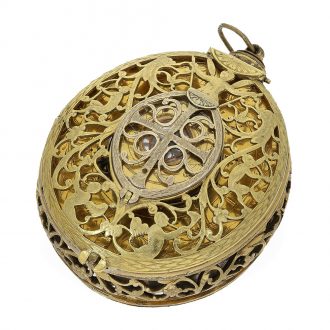
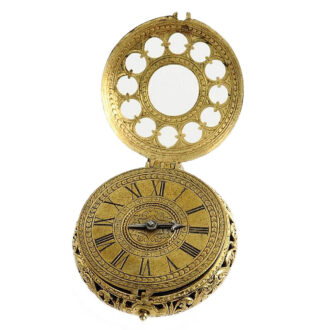
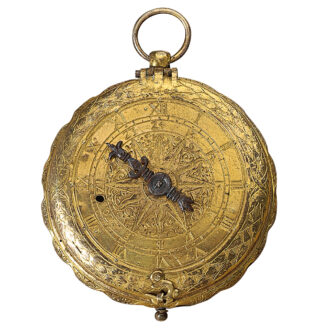
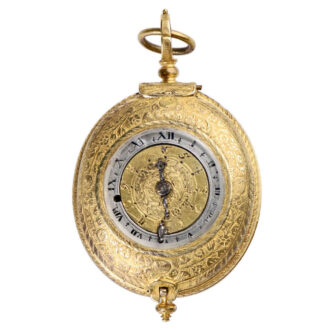
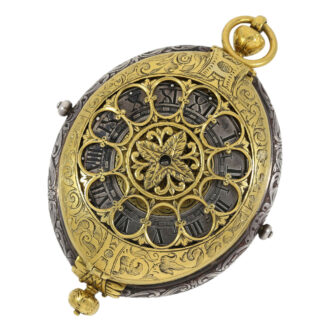
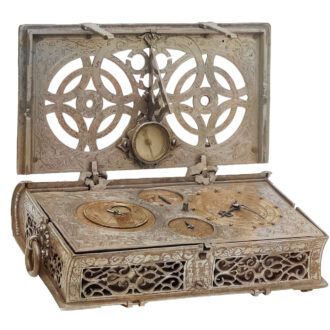
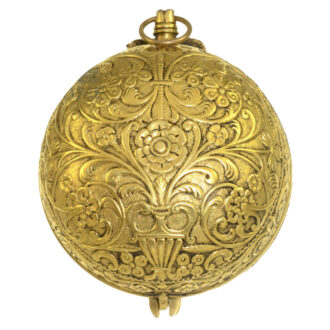
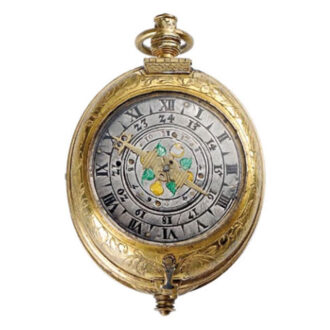
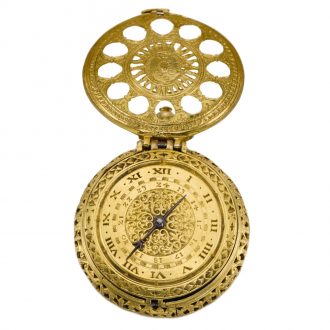
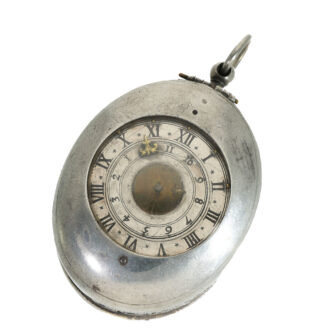
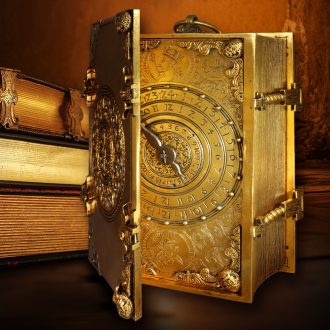
A very rare German gilt metal book shape stack freed clock watch, circa 1580. The watch has a unique gilt metal book-shaped design with intricate foliate scrollwork and geometric patterns. The hinged strap catches may have been added later, and there is a rounded grill above the dial with feather-shaped engraved decorations and roundels above each numeral. Additionally, there is a similar cover above the bell to the case back. The gilt metal dial features an engraved chapter ring with Roman numerals and raised touch pins above each hour. The centre is engraved with a blazing sun. The dial surround is decorated en suite with the case.
–
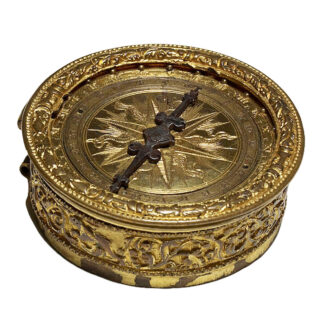
The movement features alterations, a gilt metal back plate, verge escapement, a later dumb-bell balance, a hogs bristle regulator possibly added later with a regulation scale to the movement edge, a later stackfreed spring and roller mounted on the backplate, and an inset countwheel with open springs to both trains.
–
Dimensions: 107 x 92 x 48 mm
–
Signed: No name
–
The movement has been restored and repaired, with the recent replacement of both springs and the hour wheel. The bell, countwheel, stackfreed spring, roller, hog’s bristle regulator, and contrate wheel may have been replaced or added later. Overall, the wheelwork and pillars appear to be in good condition.
–
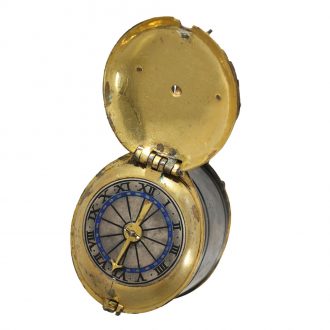
In the 16th century, the main centres for watchmaking were Augsburg, Munich, and Nuremberg. Although not signed, this watch is almost certainly of German origin. Watches from this period were most commonly drum or tambour-shaped and made of gilded brass. Examples in the form of books are rare. A spectacular example by Hans Koch, one of the leading makers in South Germany, can be found in the Ashmolean Museum, Oxford. This clock watch with an astronomical compendium perfectly demonstrates the fashion for portable luxury timepieces in this period. For more information, refer to David Thompson’s Watches in the Ashmolean Museum, pp. VIII-X & 8-11.
Share this page: