Rare Swiss pair of pocket watches for the Chinese market Circa 1825
- Kenmerk
- AS1987
- Diameter
- 59 mm
- Estimate
- € 75.000 - 140.000
- Price sold
- € 118.550
Set of gold and enamel pocket watches by Bovet
–
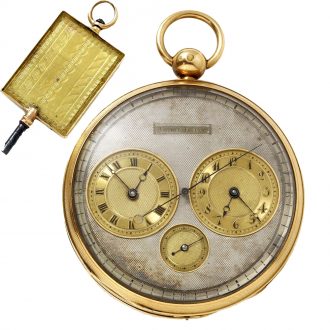
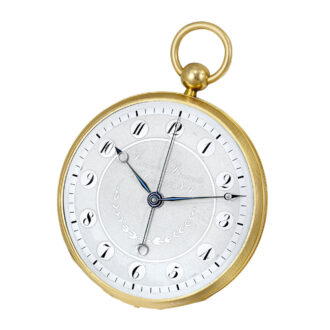
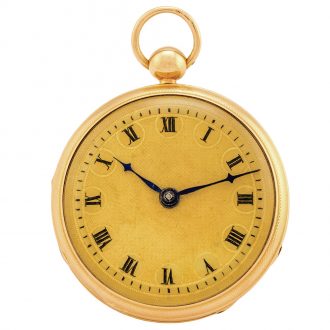
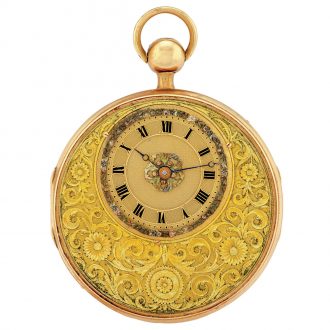
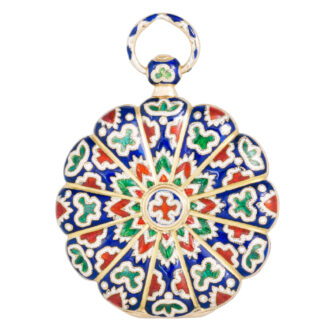
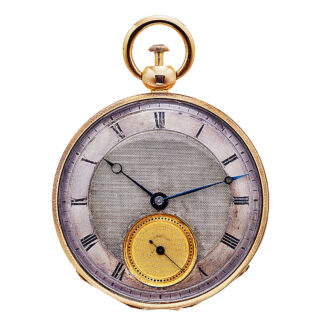
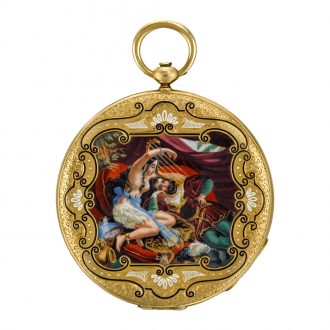
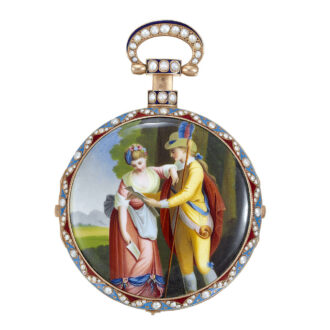
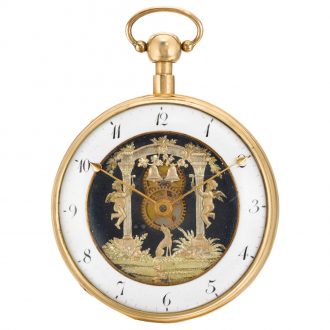
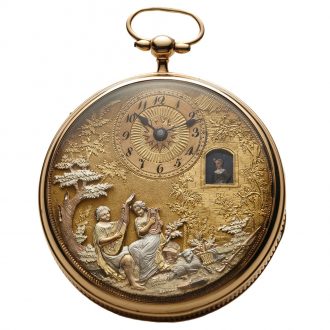
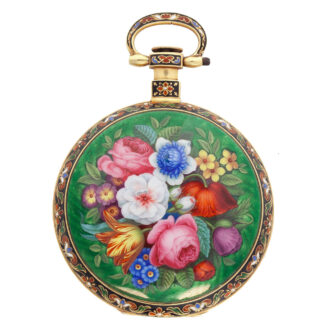
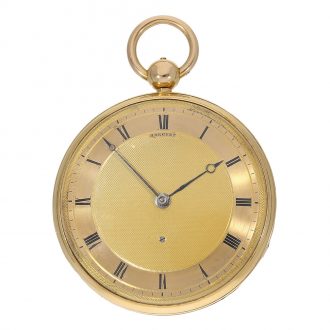
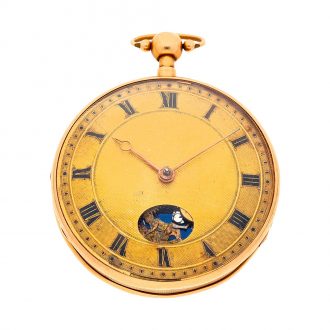
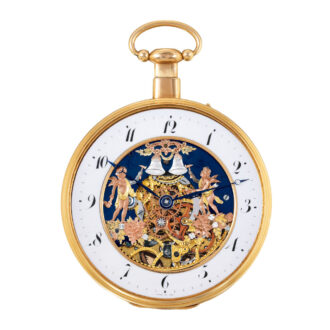
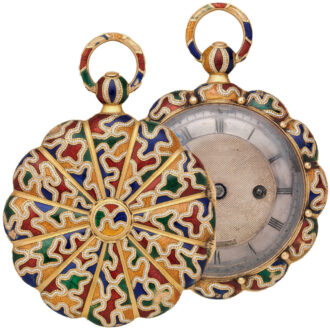
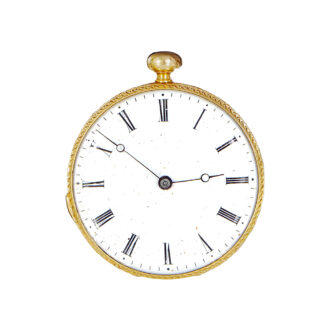
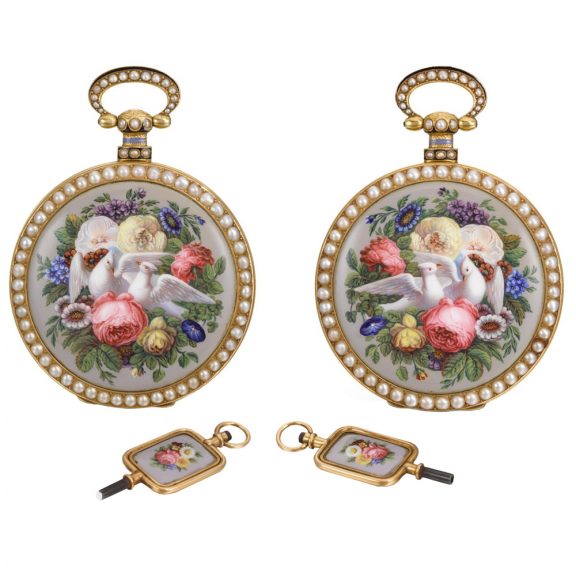
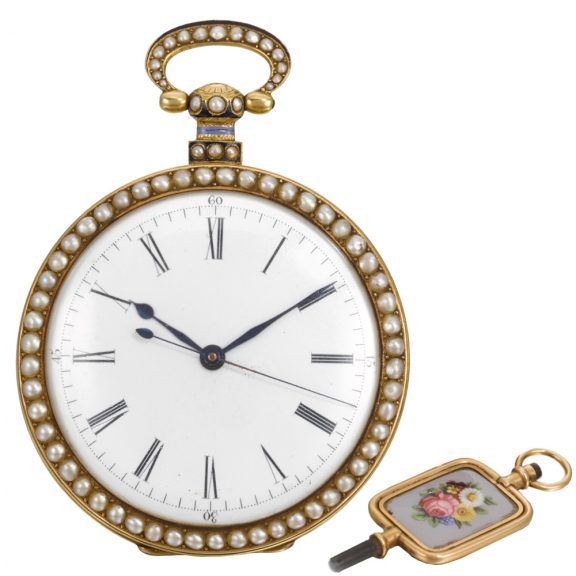
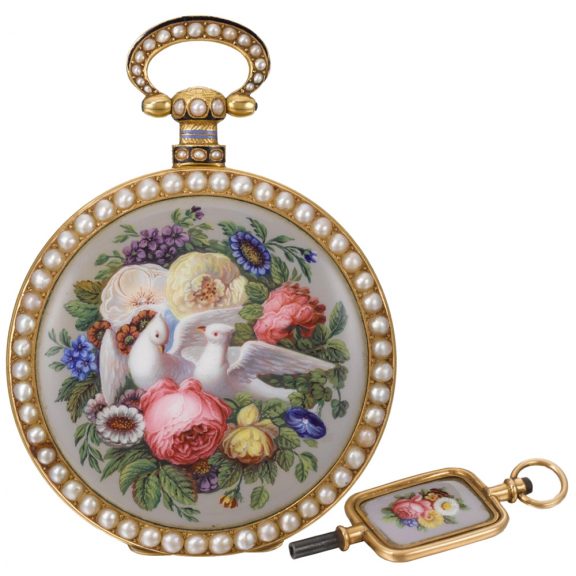
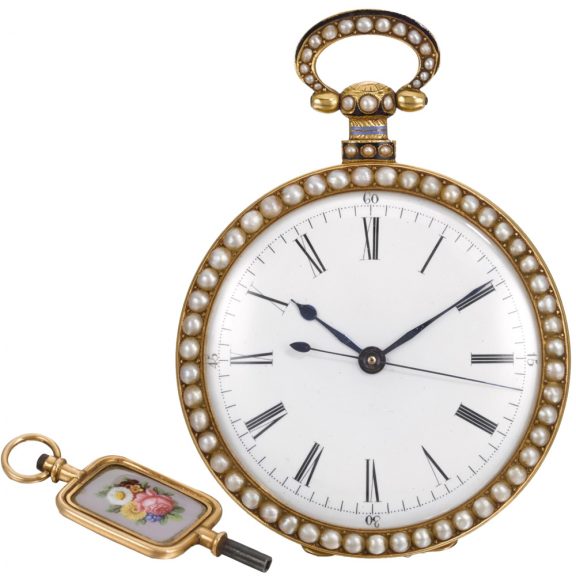
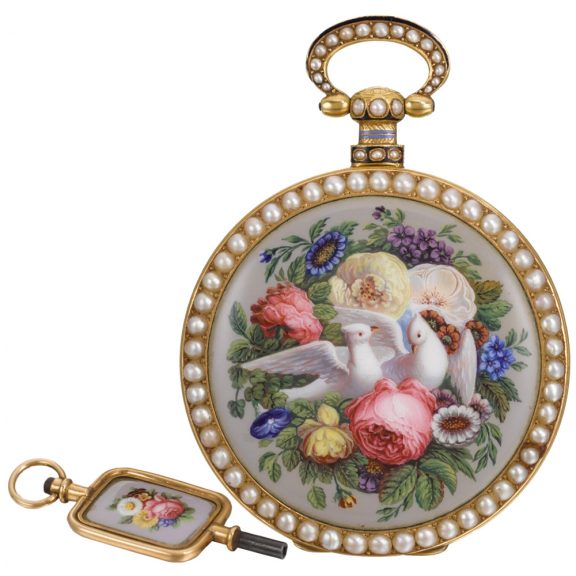
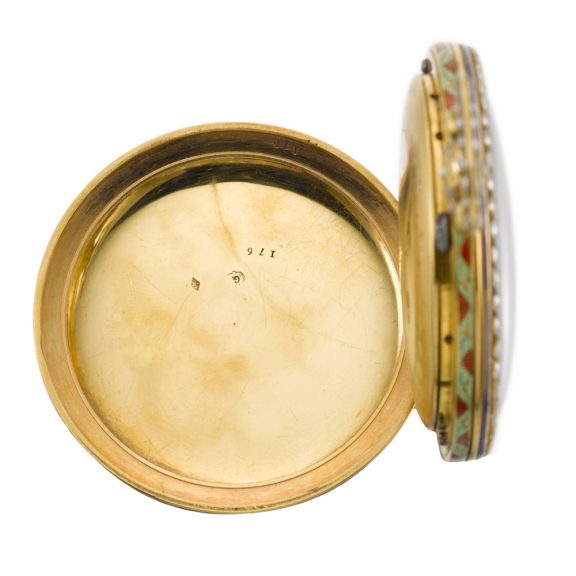
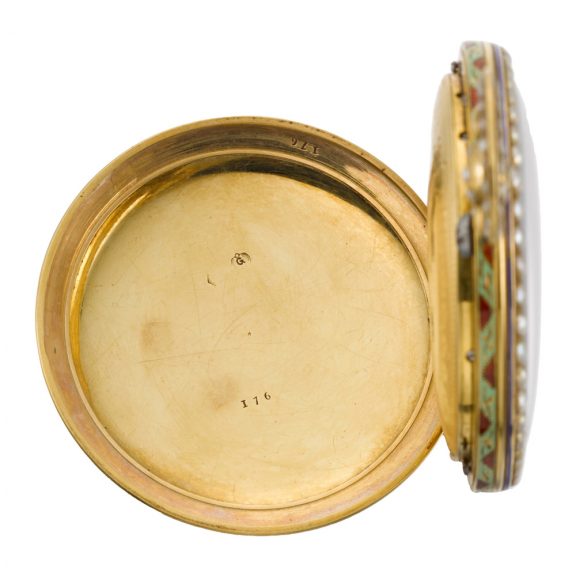
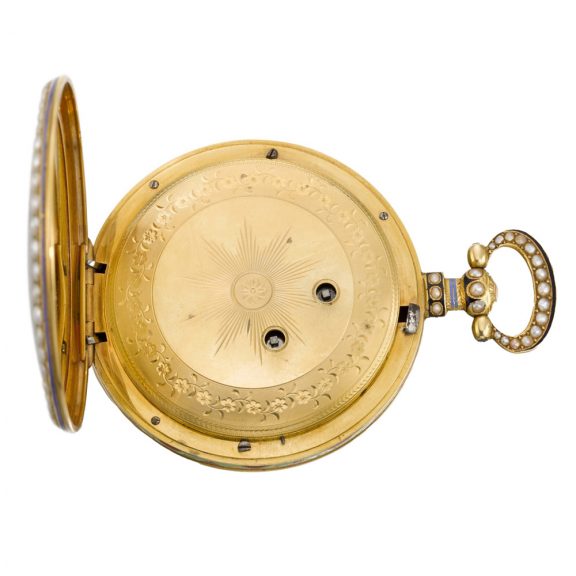
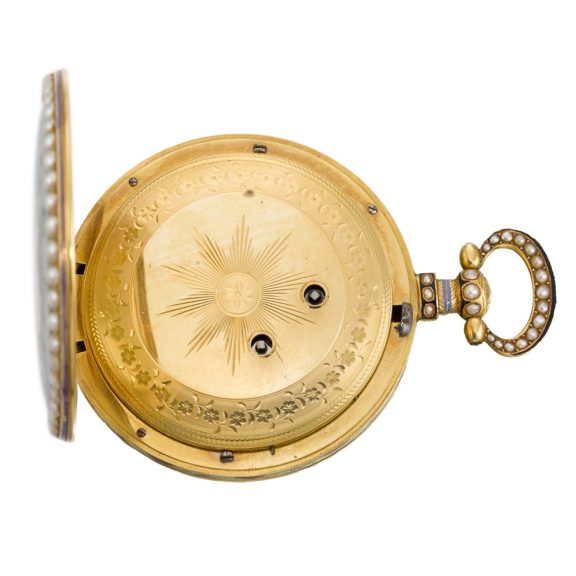
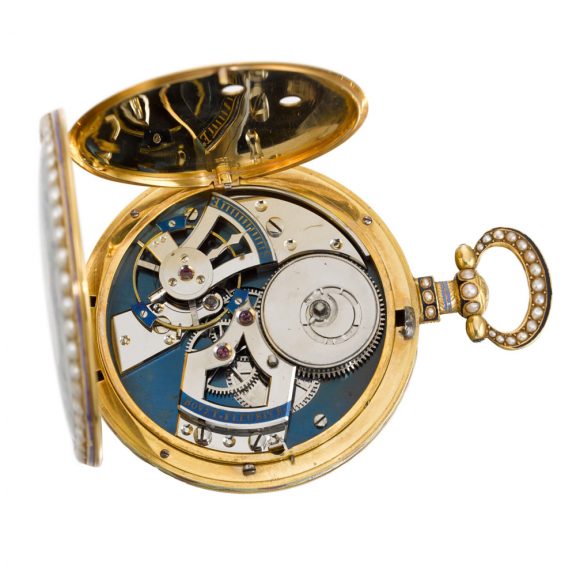
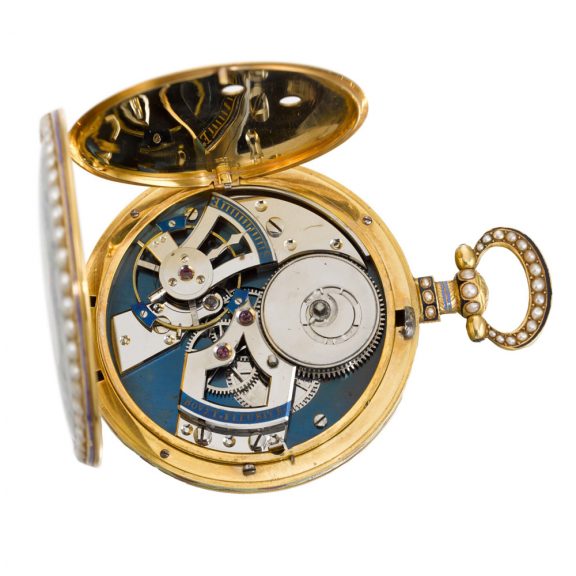
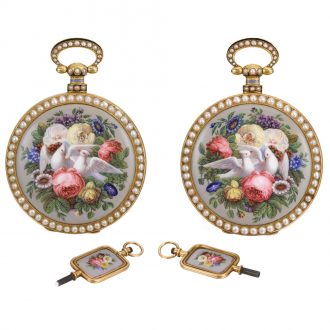
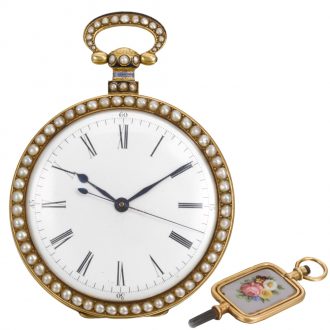
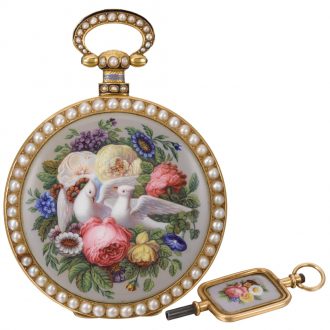
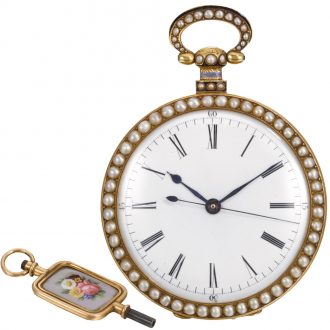
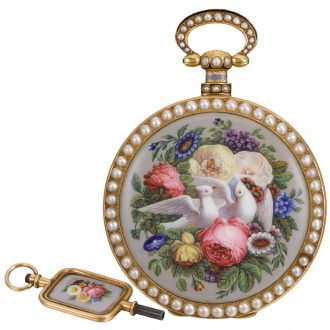
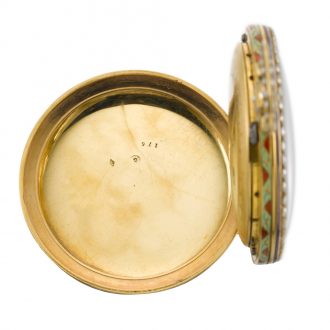
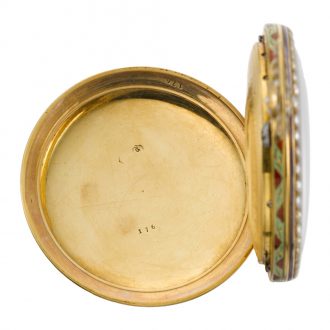
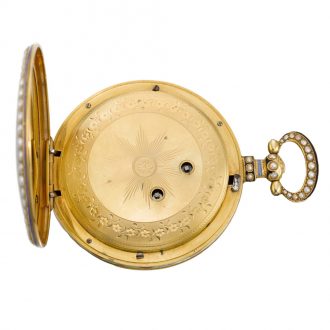
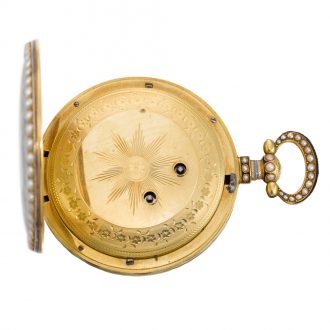
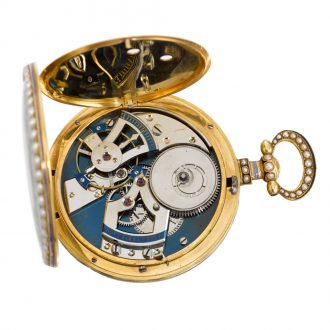
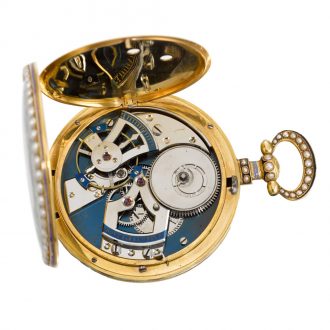
An important and rare pair of Swiss gold, enamel, and pearl set pocket watches produced for the Chinese market, circa 1825. These watches feature polished and blued steel Chinese calibre movements with duplex escapements and ruby end stones, each signed Bovet, Fleurier. They have white enamel dials with Roman numerals, blued steel hands, and centre seconds. The gold cases are adorned with polychrome enamel painted panels depicting two doves surrounded by flowers and foliage, pearl set bezels, stems and bows, and gold engraved cuvettes. The cases are stamped G within a fancy form cartouche and B within a lozenge shaped cartouche surmounted by a crown, and the inside of the case backs and bezels are numbered.
–
Additionally, they come with gold polychrome enamel keys with floral bouquets and are accompanied by an associated fitted presentation case.
–
Diameters: 59 mm & 58.5 mm
–
Signed: Bovet Fleurier
–
The movement is not functioning. One dial has a small chip visible near the hands, while the other is in good condition. The enamel panels on the case have light scratches, and there are small chips on the enamel of the band near the hinge. There is also restoration work on the enamel of the stem.
–
Between 1807 and 1815, the watchmaking industry in Fleurier experienced a significant decline due to the Continental Blockade, forcing many watchmakers to pursue different careers. During this period, in 1814, three Bovet brothers—Frédéric (b.1786), Alphonse (1788-1850), and Edouard (1797-1849)—left Fleurier for London. In 1818, Edouard joined Maison Magniac, a company dealing in watches in Canton, China. Upon arriving in Canton in August 1818, Edouard quickly saw the trade potential with China and informed his brothers about expanding their business interests there. The brothers began establishing their company in January 1820, with Edouard in Canton, Frédéric and Alphonse in London, and another brother, Gustave (1790-1835), in Fleurier. On May 1, 1822, the Bovet company was officially registered in London, but operations soon moved back to Fleurier, where their sister Caroline (b. 1807) later joined the firm.
–
Maison Bovet’s successful introduction of a new watch style for the Chinese market quickly secured a dominant position in this export sector. Consequently, Bovet revitalised Fleurier’s watchmaking industry, ushering in a period of prosperity for the town. From the beginning, Edouard Bovet aimed to offer not only high quality watches but also exceptional luxury timepieces, adorned with the finest techniques and materials, targeting affluent Chinese clients. These watches featured a distinctive Chinese calibre with a duplex escapement and a glazed cuvette, allowing owners to admire the movement. Enamel painted decorative scenes, often featuring floral arrangements and pairs of doves, were popular. The two watches also reflect the Chinese market’s demand for complementary pairs with mirror image scenes. It is increasingly rare to find pairs from this era that remain intact, as many have been separated over generations.
–
In 1824, Edouard was joined in China by his brother Charles-Henri (b. 1802), who served as Maison Bovet’s main representative in China from 1830 to 1836 before returning to Switzerland in 1839. Meanwhile, Edouard returned to Fleurier and established another factory in Besancon with Charles Lorimier, producing watches for the Chinese market alongside Bovet’s other products. The sons of Alphonse, the second eldest founding brother, continued the Bovet firm: Frédéric, known as Fritz (1824-1914), Alphonse (1828-1918), Gustave, born in Shanghai (1835-1906), and Charles (b.1838). They were joined by Louis (1818-1882), Gustave the elder’s son, who travelled to Canton in 1836 to work with his uncle Charles and was joined in 1838 by his childhood friend, Auguste Jeanneret, when Charles returned to Europe. In 1880, the firm was renamed Bovet Frères. For a detailed history of the firm, see A. Chapuis, “La Montre Chinoise,” 1919.
Signed: Bovet Fleurier
Share this page: