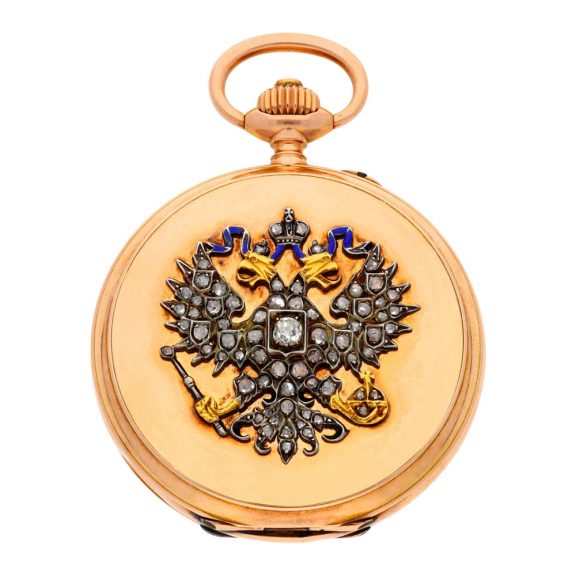
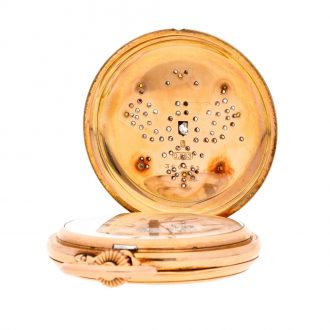
Russian gold and diamond set presentation watch Circa 1900
- Kenmerk
- AS2379
- Diameter
- 49 mm
- Estimate
- € 5.500 - 9.500
- Price sold
- € 6.200
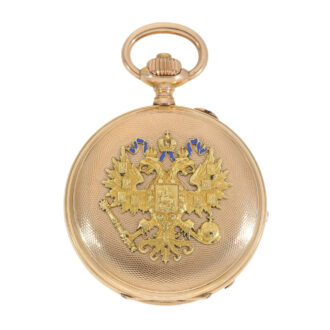
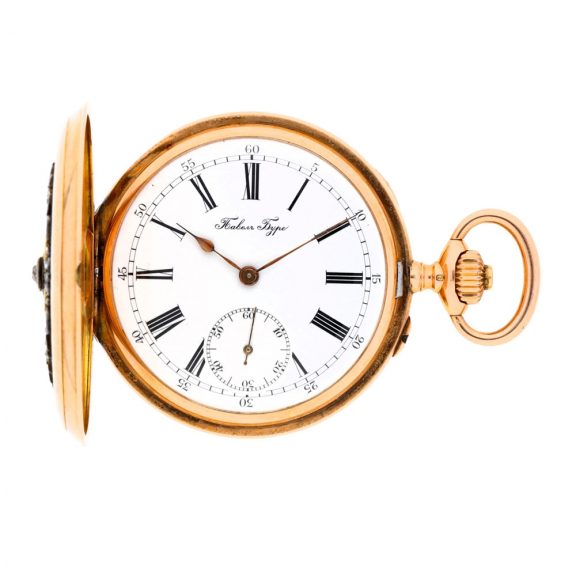
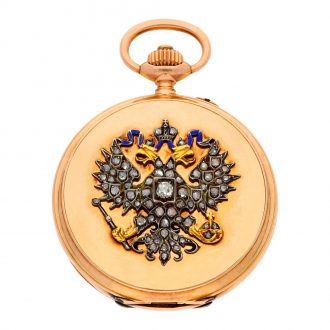
Hunting cased pocket watch with imperial arms by Paul Buhré
–
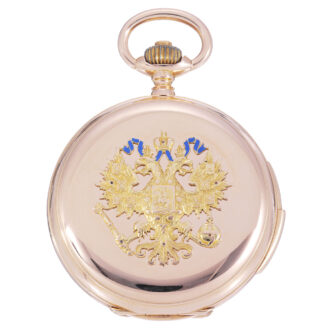
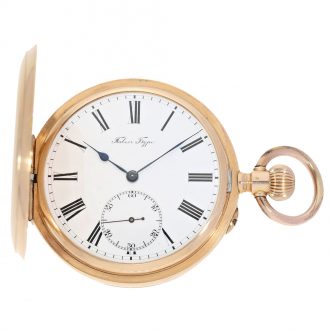
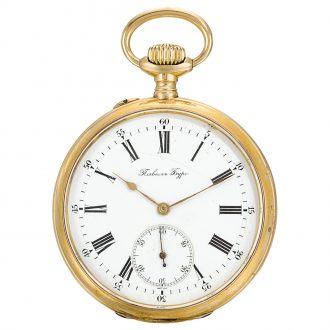
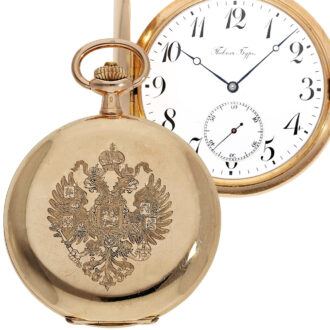
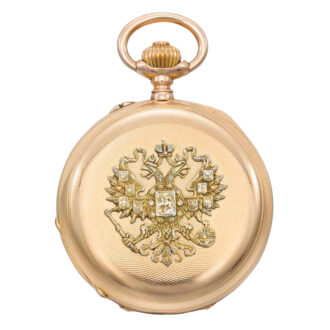
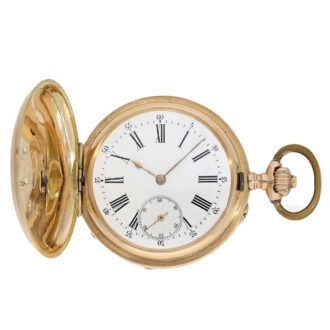
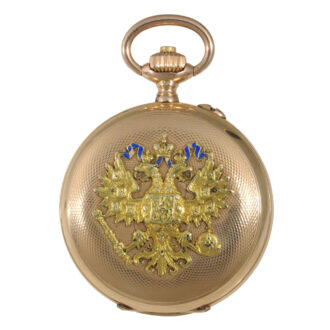
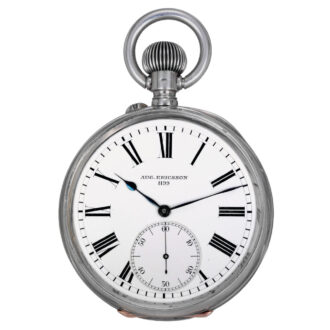
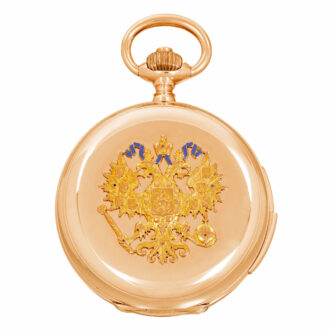
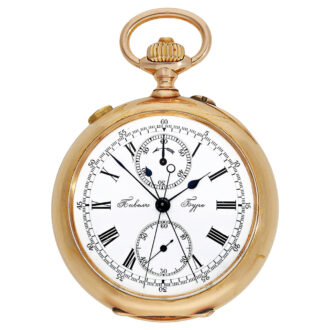
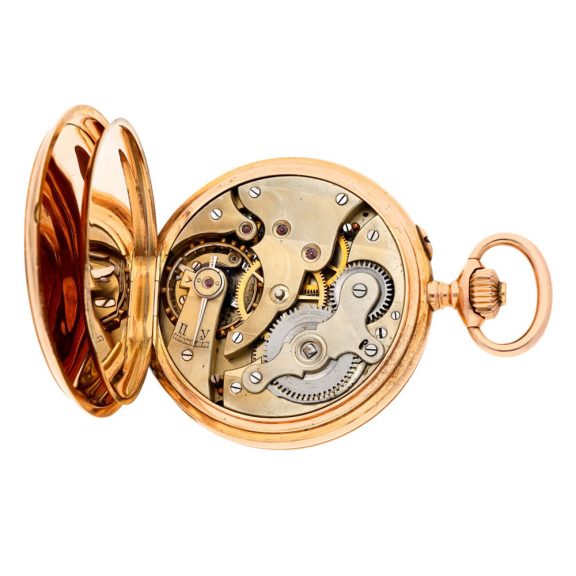
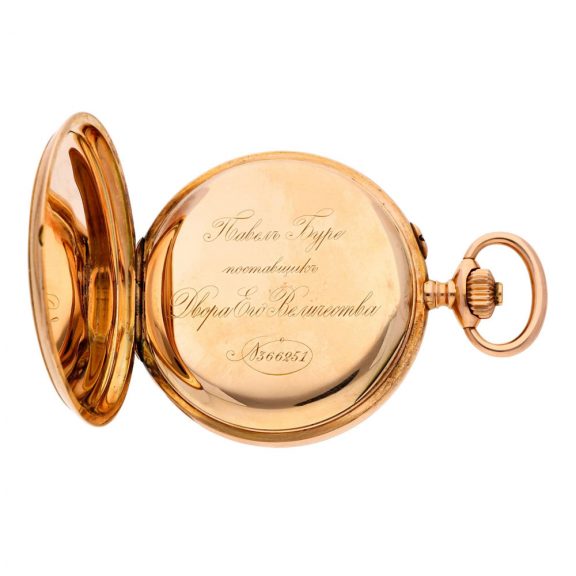
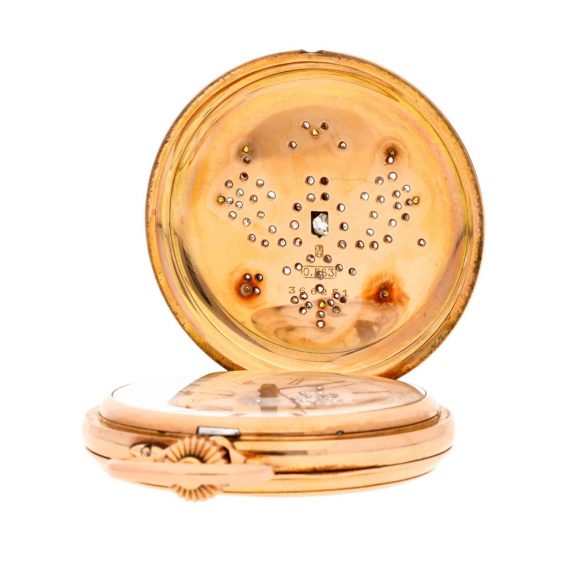
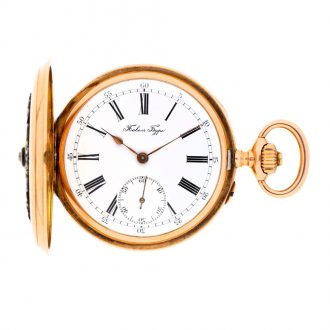
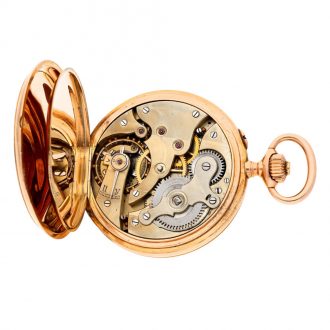
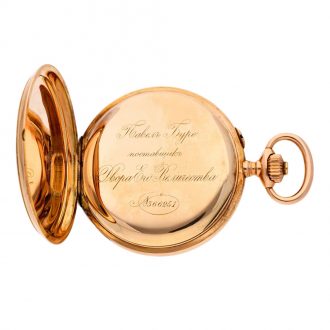
A Russian gold hunting cased presentation watch adorned with diamonds, crafted for the Russian market and featuring imperial arms, circa 1900. The watch features an unsigned damascened nickel movement with lever escapement, a bimetallic compensation balance, and a blued steel overcoil hairspring. It has a white enamel dial, inscribed with Paul Buhré in Russian, showcasing Roman numerals, an outer minute ring, and subsidiary seconds. The polished 14 carat gold case presents an applied imperial doubleheaded eagle enhanced with rosecut diamonds and blue enamel banners, a plain case back, and a polished gold cuvette inscribed in Cyrillic Paul Buhre and Supplier to the Court of His Imperial Highness. It bears Swiss goldmarks indicating 14 carat gold, with the case and cuvette numbered.
–
Diameter: 49 mm
–
Signed: Paul Buhré in Russian
–
The movement is functional but exhibits some dirt and tarnishing. Minor scuffs and surface scratches are present. The winding and hand setting are smooth. The dial is in good condition, although the hands show signs of tarnish. The case has a large dent on the band near 11 o’clock, along with additional dents on the case back. There are some losses to the blue enamel of the Imperial Eagle banners.
–
Montres Paul Buhré. The Buhré watch company was founded in 1815 in St. Petersburg by Karl Buhré, a Russian businessman of German descent. He moved from Revel with his son Pavel Karlovich, who grew up in his father’s watch business and eventually became his assistant and successor. His eldest son, Pavel Pavlovich Buhré, graduated from the Petropavlovsk Commercial College and became his father’s partner at the age of 26 in 1868. In 1874, he acquired a large watchmaking factory in the heart of the Swiss watchmaking industry in the town of Le Locle. By 1880, he was an appraiser under the Cabinet of His Imperial Majesty, a technician at the Imperial Hermitage, a supplier of the Supreme Court since 1879, and a Merchant of the First Guild since 1884. In the last 30 years before the revolution, Pavel Buhré became integral to the history of Russian watchmaking. The company opened stores in Moscow and later in Kiev to expand its business.
–
In 1899, the company was awarded the title of Supplier to the Imperial Court. Furthermore, Buhré supplied watches to the railways and the army. Between 1881 and 1894, under the reign of Alexander III, watches were made with simple metal cases. These were prize watches for the army and railway, and the world’s first authentic wristwatches. At a time when luxury accessory watches became essential, Pavel Buhré offered timepieces for everyone. Prices for their watches began at just two rubles. The company held 50 per cent of the Russian market for affordable watches. For wealthier customers, the same mechanisms were housed in silver and gold cases, and complex mechanisms were sourced from the most reputable Swiss watch companies. In 1916, Buhré obtained a Swiss patent No. 74144 for a chronograph mechanism of its own design. The firm received top honours at numerous national and international exhibitions, including a silver medal at the World Expo in Paris in 1889 and a gold medal in 1900.
–
The Revolution of 1917 brought an end to business operations in Russia; however, the firm did not cease to exist. The fact that its main production facilities were situated in Switzerland, along with the transfer of its headquarters from Petrograd (St. Petersburg) to Le Locle, Switzerland, saved the company. Despite losing its primary market in Russia, the first few years were extremely challenging. Nevertheless, the company not only survived but also significantly expanded its supply geography, becoming one of the leading watch companies in Switzerland. To enhance its recognisability among consumers worldwide, the name was changed from Pavel Buhré to Paul Buhré. The brand returned to Russia in 2004, thanks to the efforts of a trade house striving to revive the traditions of Pavel Karlovich Buhré, the watchmaker, and the following year marked the 190th anniversary of the firm.
Signed: Paul Buhré
Share this page: