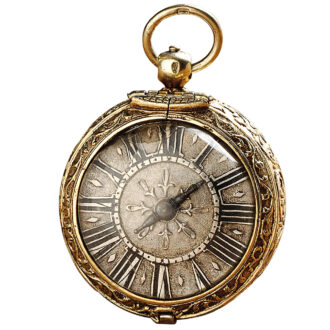
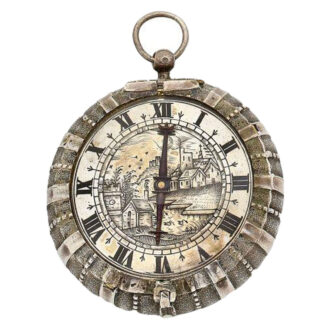
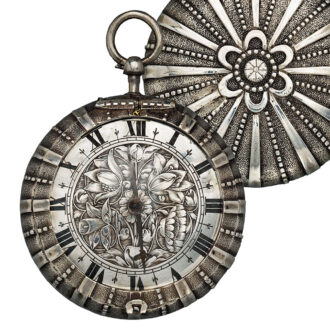
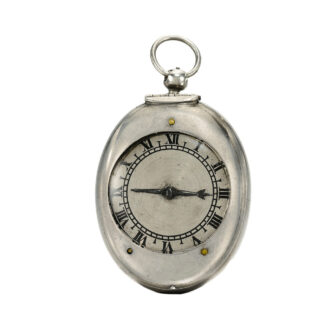
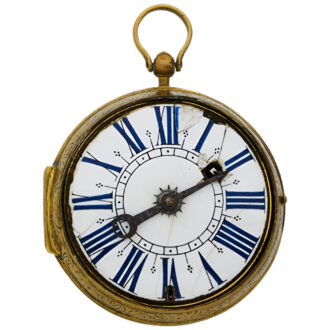
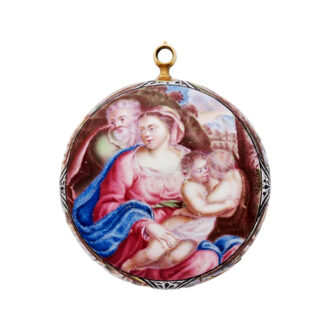
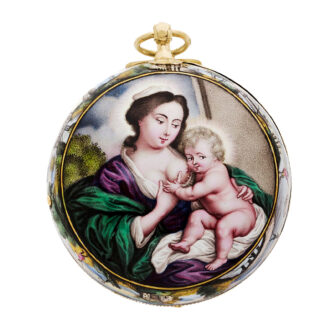
Rare, early English silver pair cased Puritan watch Circa 1650
- Kenmerk
- SB0154
- Diameter
- 56 mm
- Estimate
- € 12.500 - 20.000
- Price sold
- € 16.950
Rare early silver Puritan watch by Edwardus East
–
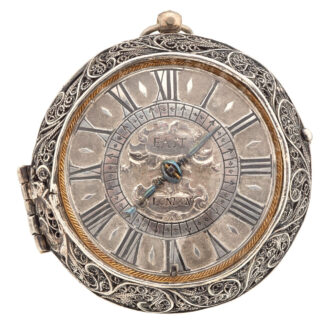
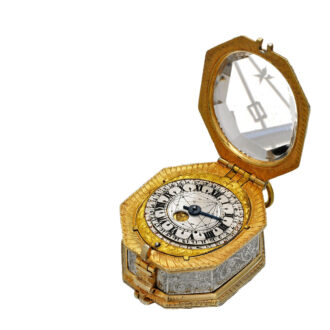
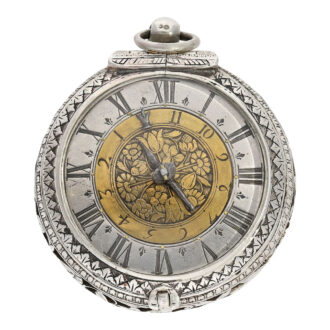
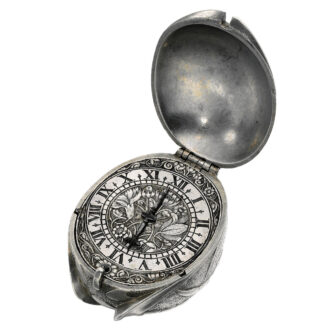
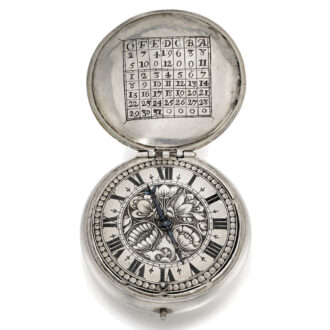
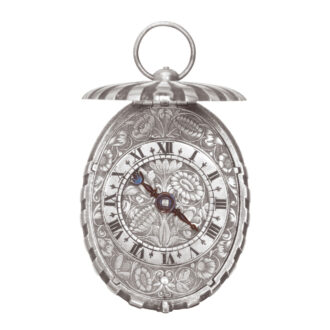
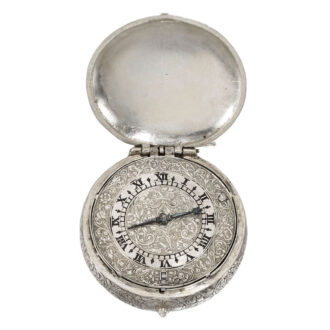
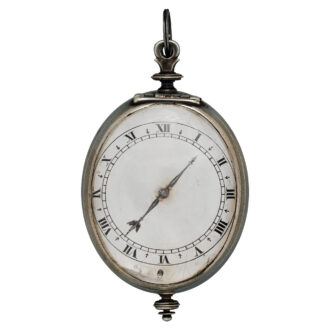
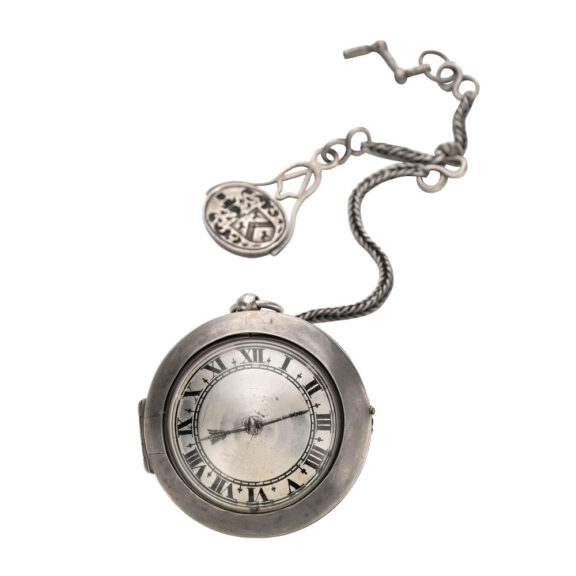
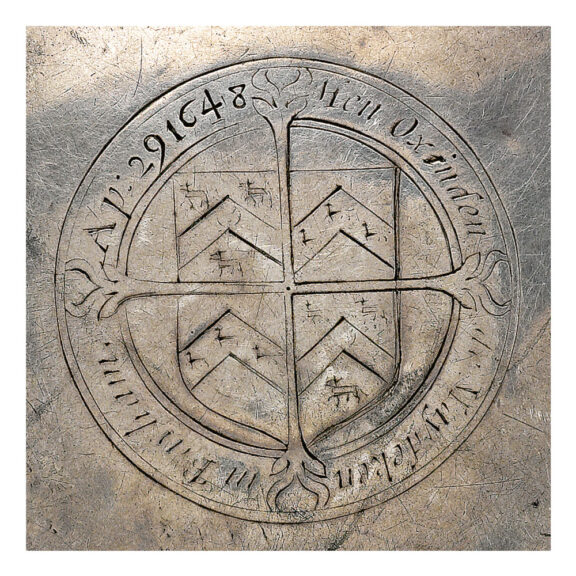
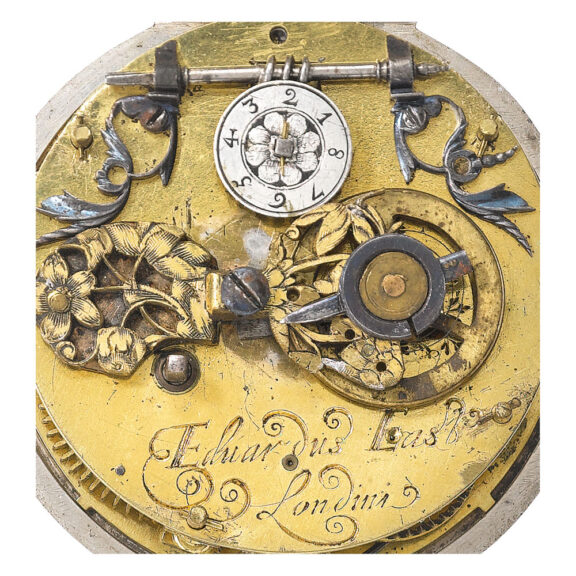
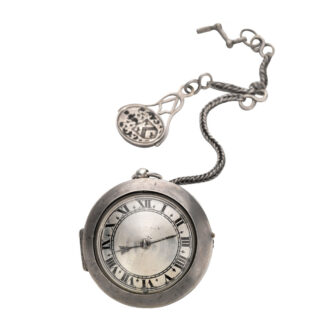
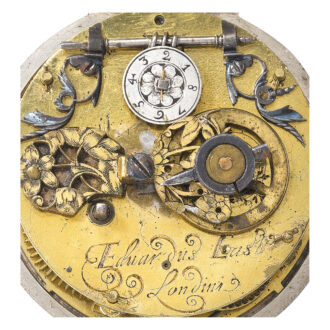
A rare and early English silver pair cased Puritan pocket watch, circa 1650. Gilt verge movement, the balance cock with irregular foot, cock pierced and engraved with flowers, the table now partly lacking, later regulator, blued steel worm and wheel set-up, split Egyptian pillars. Inner case, back engraved with perpetual calendar. Silver dial, blued steel tulip form single hand and black enamel champlevé Roman numerals. Plain silver outer case engraved with a Coat-of-Arms of Henry Oxenden of Medekin, dated April 29th, 1648. With a silver chain terminating in a seal engraved with matching Coat-of-Arms and an early jointed silver crank key.
–
Diameter: 56 mm
–
Signed: Edwardus East Londini
–
This watch is considered a Puritan watch, a style typified by a sober design. The Puritan period in England followed the political and religious turbulence of the 1640’s. The silver case and flat dial are typical design features found during this period.
–
Edward East, a fine early English watch and clockmaker, was born in 1602. He was one of the ten original assistants at the time of the incorporation of the Charter of the Clockmaker’s Company in 1631. He was elected Master twice in 1645 and again in 1652. In November 1660, following the restoration of the monarchy, East was appointed Chief Clockmaker to King Charles II. It is not known exactly when Edward East died, but he lived to a great age and his will was proved on 3rd February 1697. The Coat of Arms engraved on the case and seal belong to Henry Oxenden (1609-1670), an English poet. His first two published books, Riligionis Funs and Hypocritae Finish, were printed in 1647. It is further recorded that his next work, Jobus Triumphans, was circulating among colleagues for criticism in April 1649. It is interesting to note that the present lot is engraved with April 29th, 1648, falling between these major milestones in Oxenden’s literary career. In 1663, he became rector of Radnage in Buckinghamshire, and held that title until his death in 1670.
–
A rare and early English silver pair cased Puritan pocket watch, circa 1650. Gilt verge movement, the balance cock with irregular foot, cock pierced and engraved with flowers, the table now partly lacking, later regulator, blued steel worm and wheel set-up, split Egyptian pillars. Inner case, back engraved with perpetual calendar. Silver dial, blued steel tulip form single hand and black enamel champlevé Roman numerals. Plain silver outer case engraved with a Coat-of-Arms of Henry Oxenden of Medekin, dated April 29th, 1648. With a silver chain terminating in a seal engraved with matching Coat-of-Arms and an early jointed silver crank key.
–
Diameter: 56 mm
–
Signed: Edwardus East Londini
–
This watch is considered a Puritan watch, a style typified by a sober design. The Puritan period in England followed the political and religious turbulence of the 1640’s. The silver case and flat dial are typical design features found during this period.
–
Edward East, a fine early English watch and clockmaker, was born in 1602. He was one of the ten original assistants at the time of the incorporation of the Charter of the Clockmaker’s Company in 1631. He was elected Master twice in 1645 and again in 1652. In November 1660, following the restoration of the monarchy, East was appointed Chief Clockmaker to King Charles II. It is not known exactly when Edward East died, but he lived to a great age and his will was proved on 3rd February 1697. The Coat of Arms engraved on the case and seal belong to Henry Oxenden (1609-1670), an English poet. His first two published books, Riligionis Funs and Hypocritae Finish, were printed in 1647. It is further recorded that his next work, Jobus Triumphans, was circulating among colleagues for criticism in April 1649. It is interesting to note that the present lot is engraved with April 29th, 1648, falling between these major milestones in Oxenden’s literary career. In 1663, he became rector of Radnage in Buckinghamshire, and held that title until his death in 1670.
Signed: Edwardus East Londini
Share this page: