Gold keyless pocket watch
–
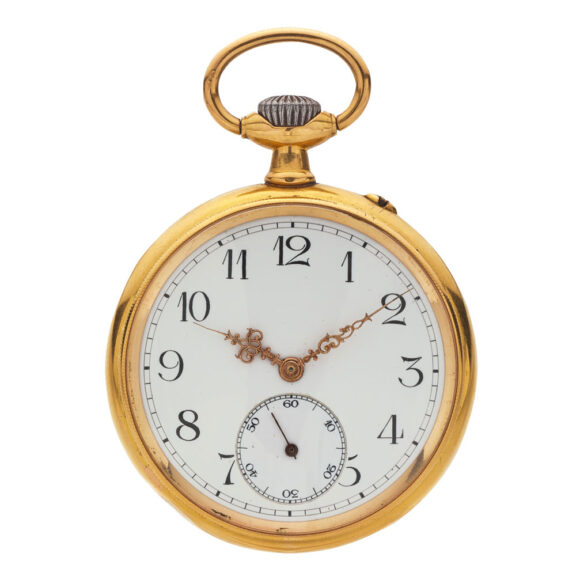
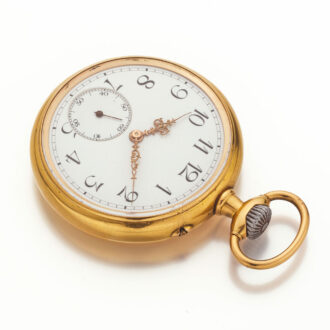
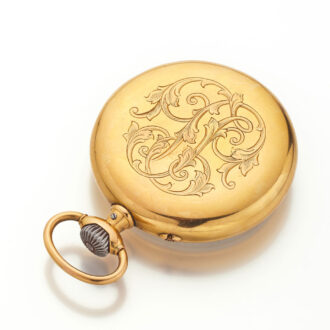
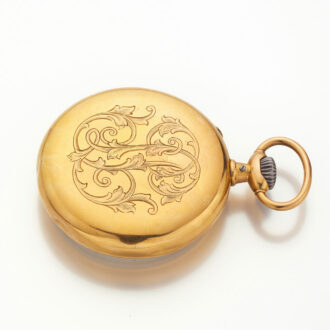
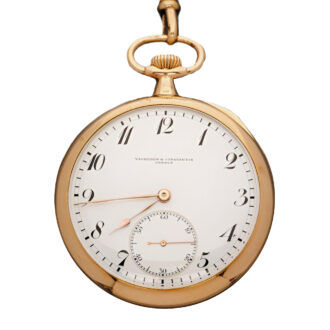
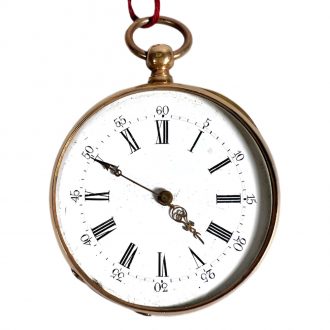
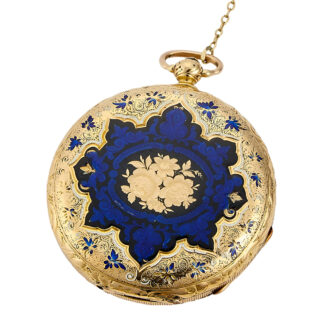
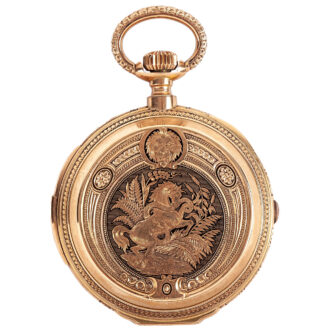
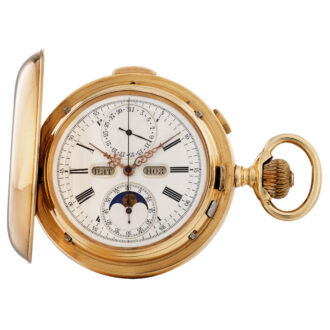
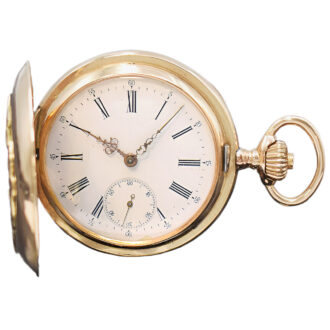
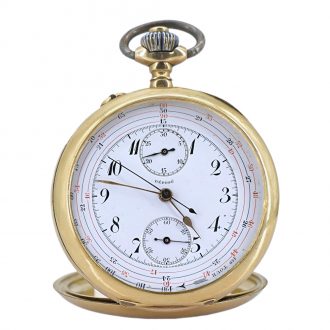
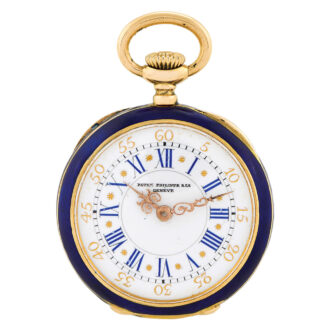
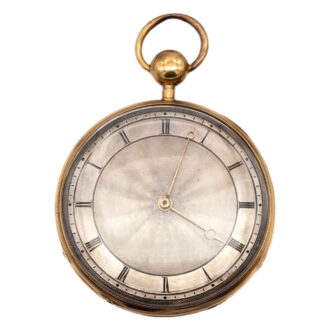
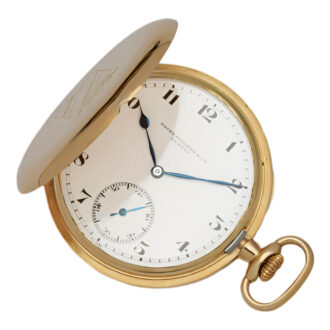
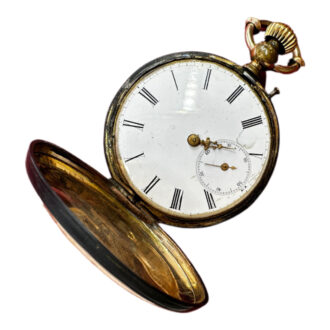
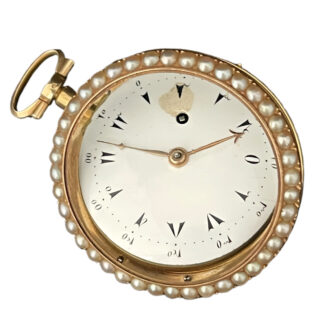
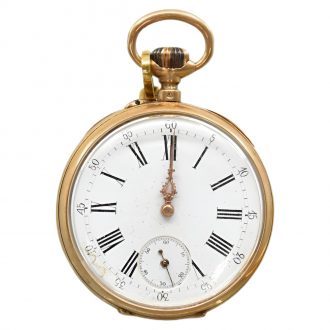
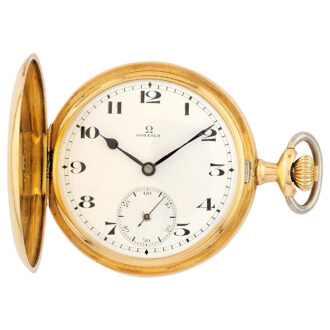
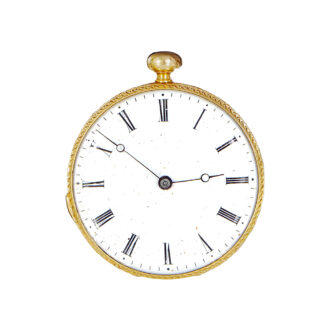
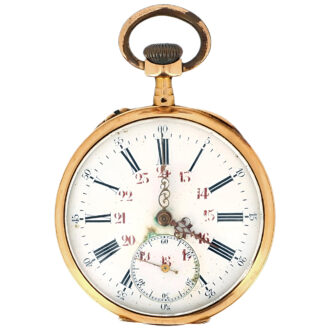
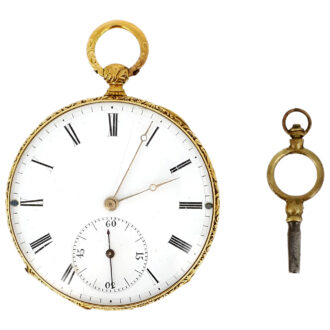
A fine Swiss 18 carat gold open faced keyless lever pocket watch, circa 1895. Nickel finished jewelled lever movement in a Francois Borgel case, bimetallic compensation balance. White enamel dial with Arabic numerals, outer minute track, sunken subsidiary seconds and decorative gilt hands. Engine turned case with monogram.
–
Diameter: 47 mm
–
Weight: 81 g
–
Signed: No name
–
Lever movement in a Francois Borgel case.
Francois Borgel was born in Geneva in 1856. In 1880, at the age of 24, he started business as a watch case fitter. Borgel was a talented inventor and successful businessman. The Borgel mark, officially recorded in 1887, is formed by the initials of the founder (FB) above the Geneva key. This mark is visible in all Borgel cases. One other important note is that Borgel only made watch cases. Despite reports suggesting otherwise, Borgel did not make jewellery or watch movements. I have noted that there has been a recent attempt to resurrect the ‘brand’ as a watchmaker. This is a little misleading as the heritage is all in the cases, not in the actual watch movement.Borgel lodged his first Swiss patent in 1888. This was for a process to apply a layer of gold onto a steel plate. Some of the gold was then removed with an engraving tool to expose the steel below. Depending on the amount of gold removed, this could give the appearance of a gold-plated item with the base metal showing through or a steel item with pieces of gold attached.Patent 4001
Borgel’s most famous patent was for the one-piece screw-in watch case design that now bears his name. The case was designed to be dustproof and more importantly, waterproof. Borgel designed these cases and patented them in October 1891 in Geneva. The Swiss Brevet or patent number was 4001. Additionally, they were patented in London in November 1891 with the patent number 20422. The Borgel case was an early design to try to make pocket watches resistant to dust and moisture. It is a one-piece case, where the movement and bezel are mounted on a threaded ring, which screws into the case from the front. Early adopters of the Borgel screw case included Longines and the International Watch Co. (IWC). Borgel cases continued to be manufactured after his death in 1912, by his daughter Louisa.
Several dents at the band.
–
Reference 0017000