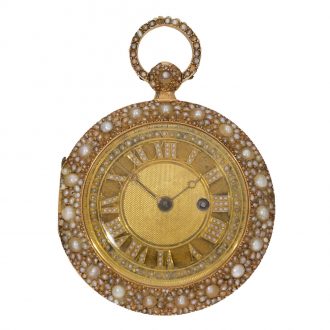
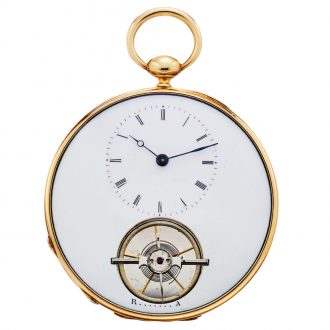
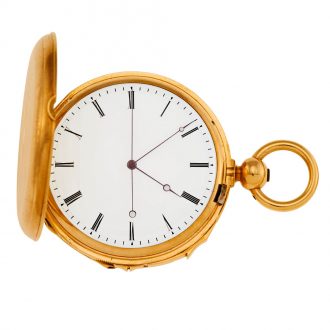
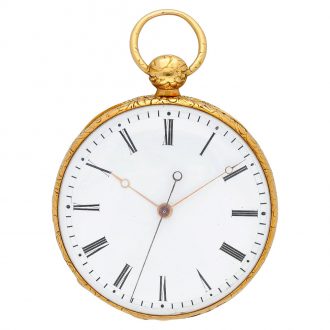
Splendid Swiss gold duplex watch for Chinese market Circa 1840
- Kenmerk
- GF0937
- Diameter
- 56 mm
- Estimate
- € 30.000 - 60.000
- Price sold
- € 44.000
Gold and enamel painted centre seconds watch by Bovet
–
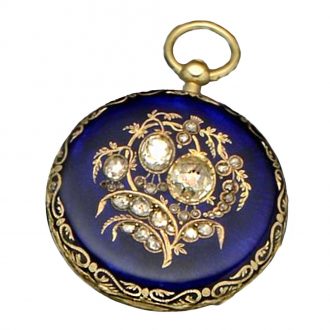
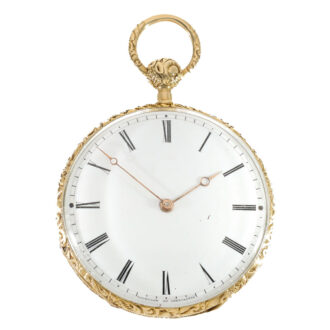
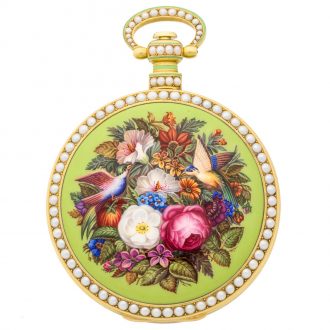
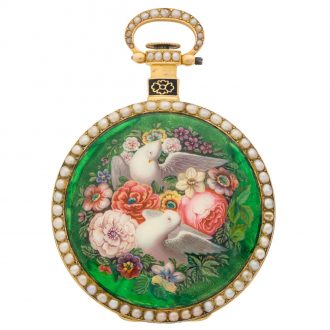
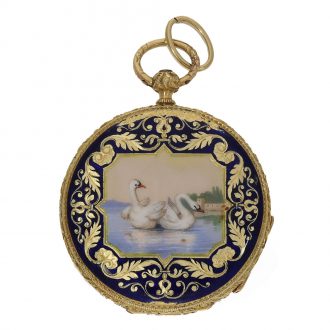
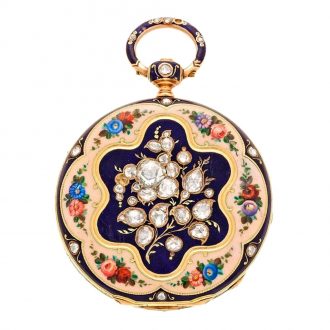
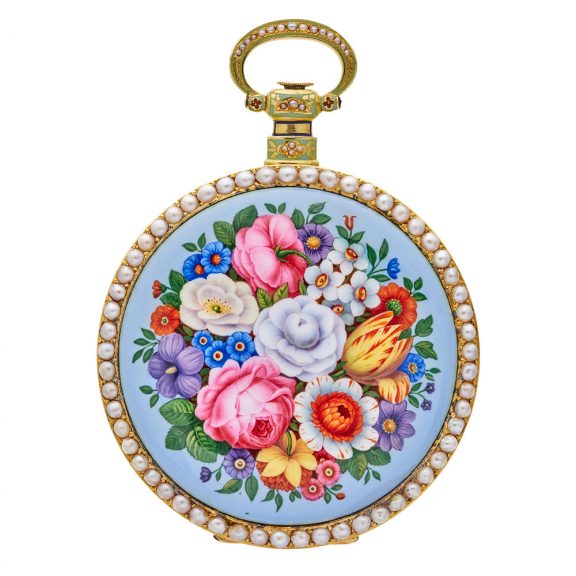
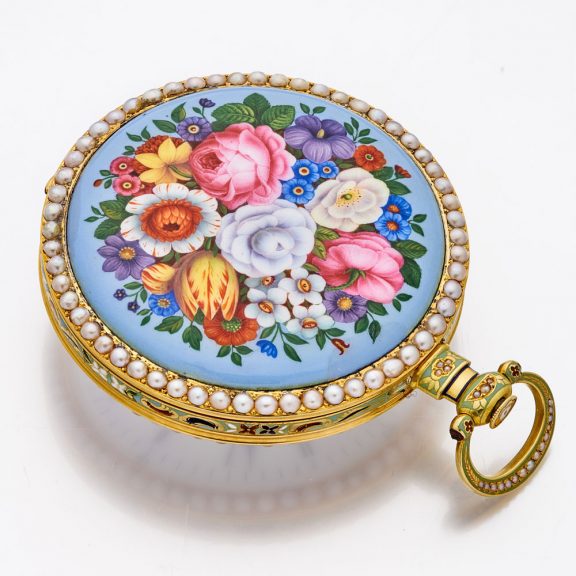
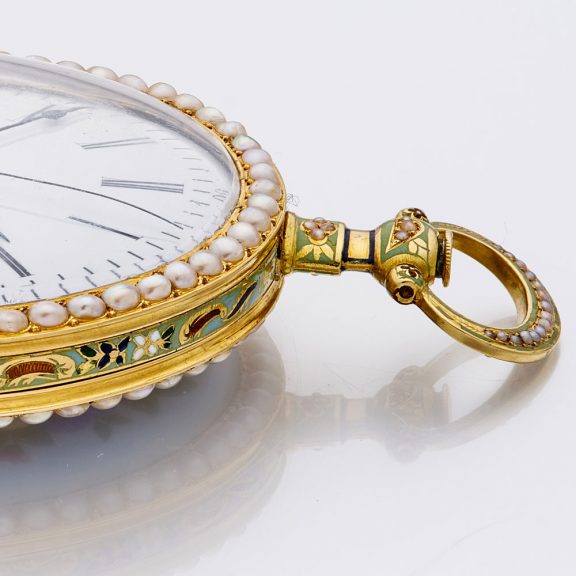
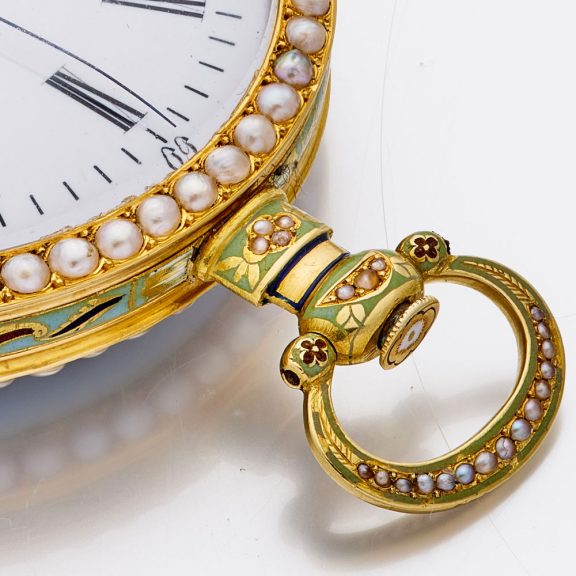
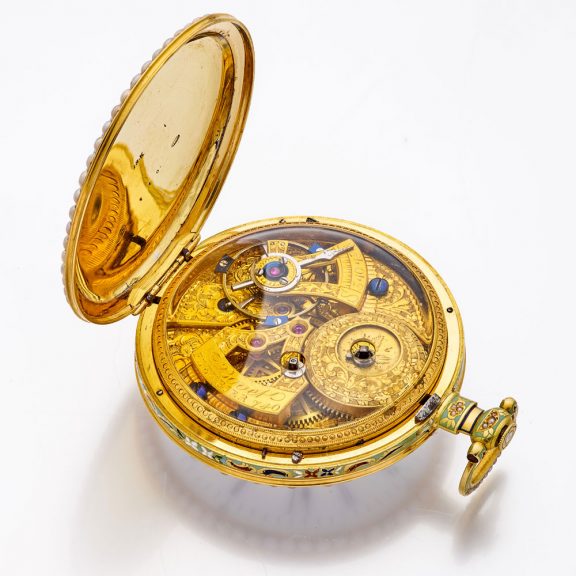
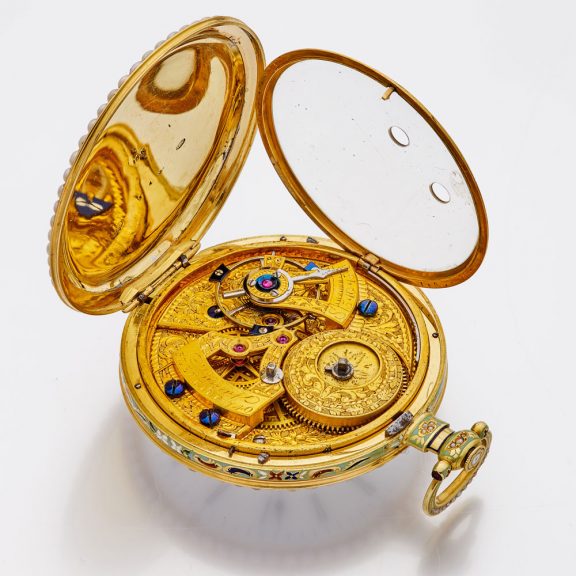
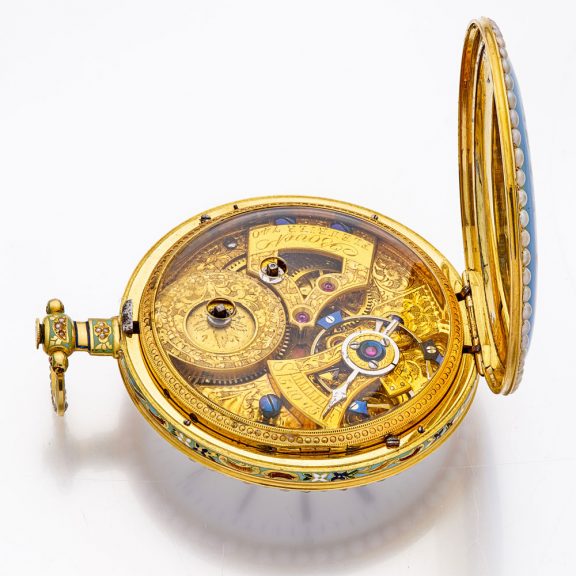
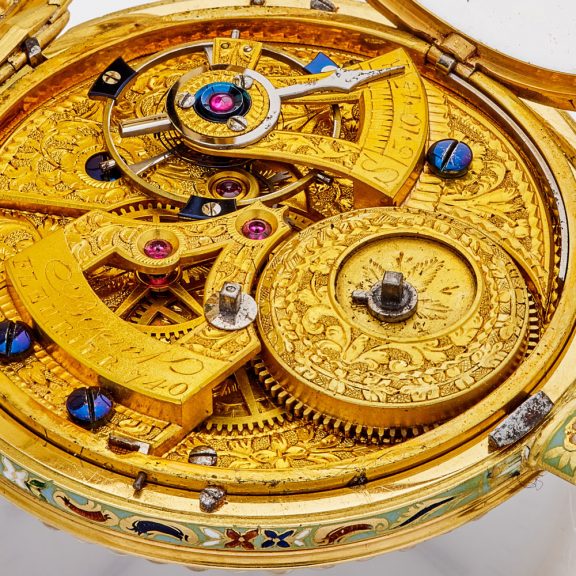
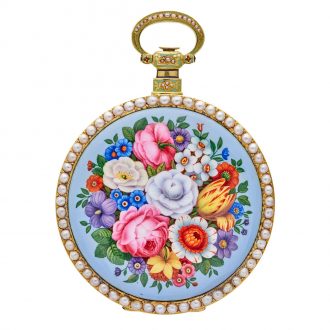
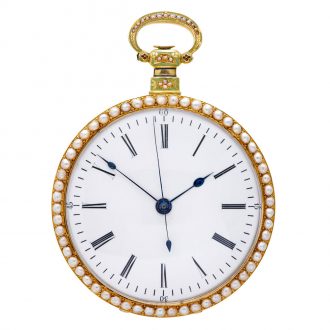
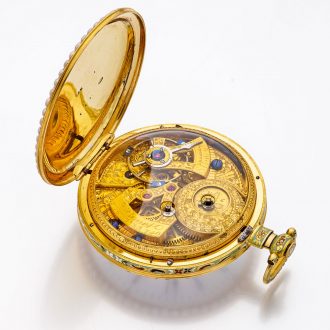
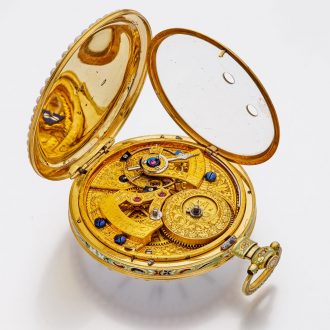
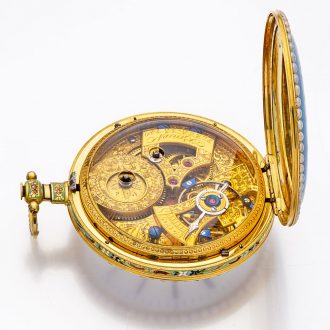
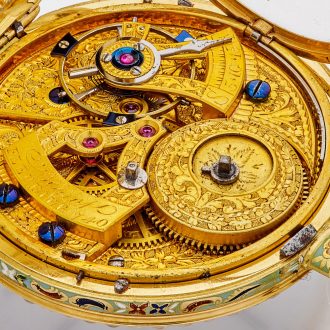
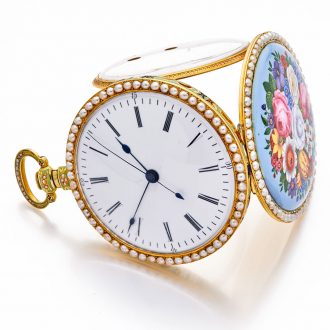
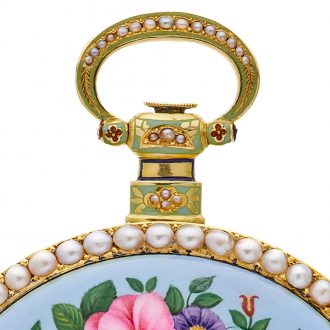
This splendid Swiss gold, pearl, and polychrome enamel painted Bouquet of Summer Flowers duplex watch, crafted for the Chinese market around 1840, is a testament to exquisite craftsmanship. The gilded Chinese duplex movement, adorned with intricately engraved scrolling flowers and foliage against a serene blue backdrop, reflects the artistry of the era. The watch features a skeletonized balance cock, duplex escapement, bimetallic compensation balance, and blued steel devils, all meticulously designed for precision timekeeping. Signed and numbered by Bovet, Fleurier, the watch bears the mark of quality and excellence.
–
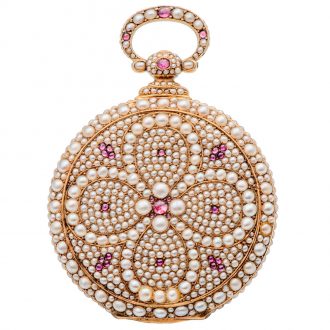
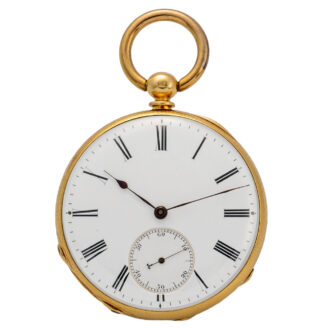
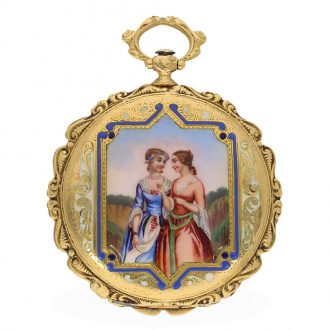
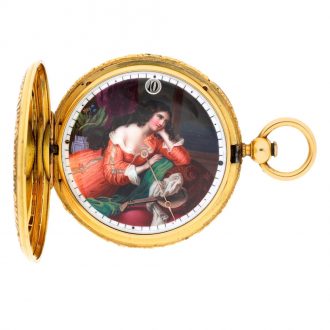
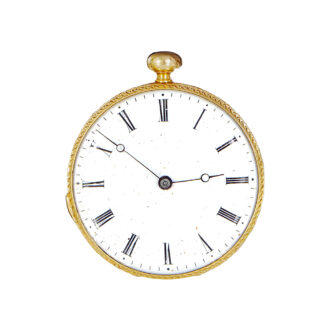
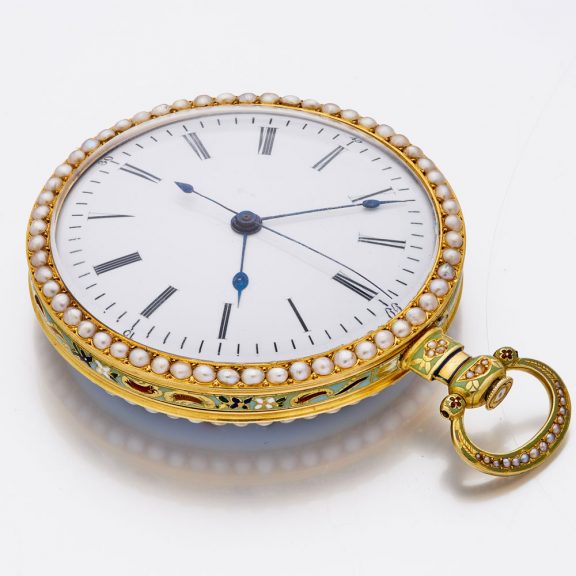
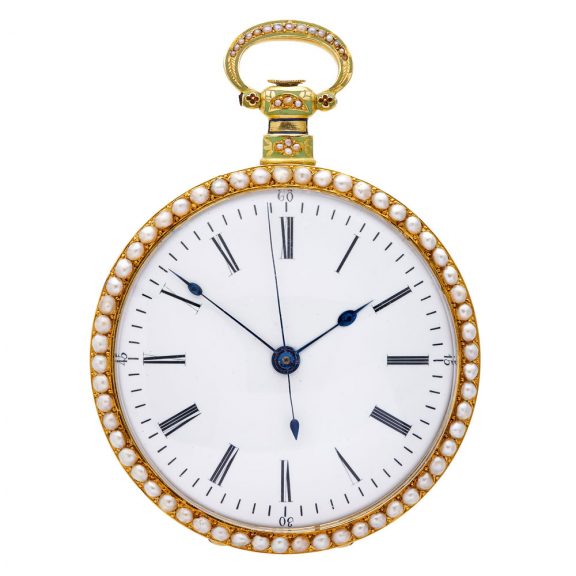
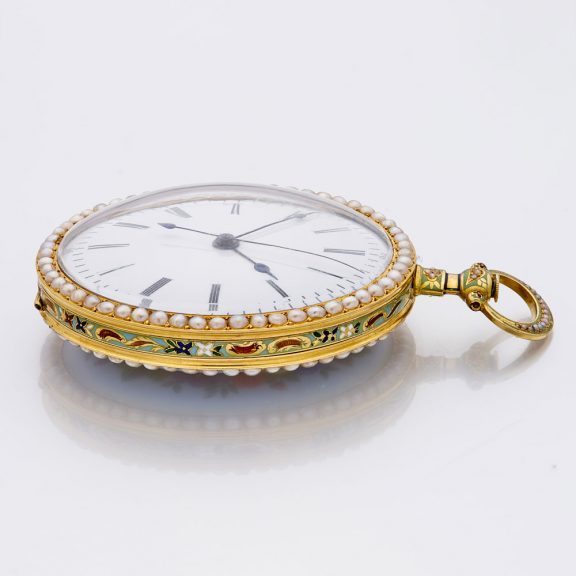
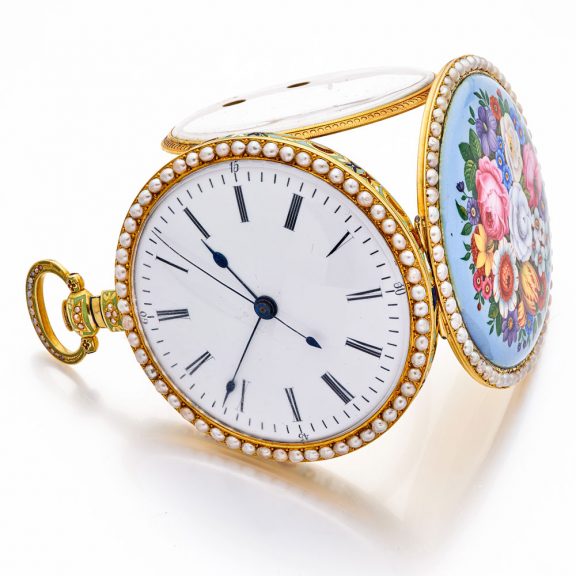
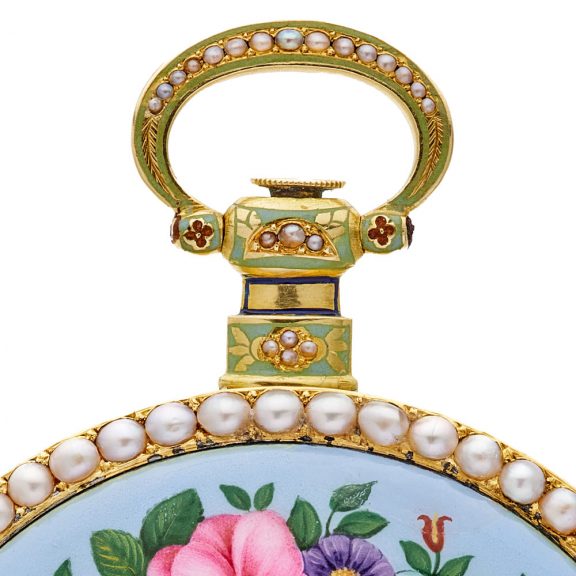
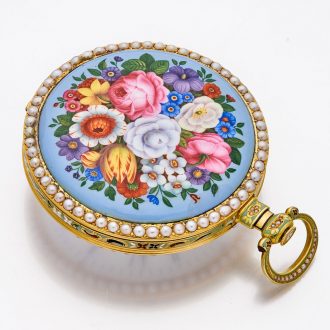
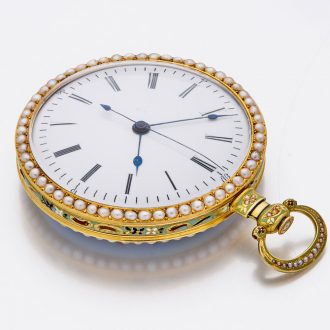
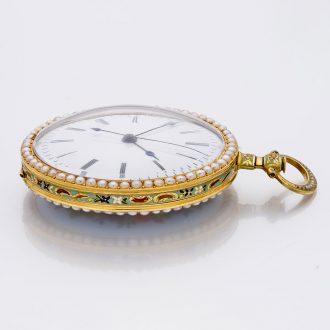
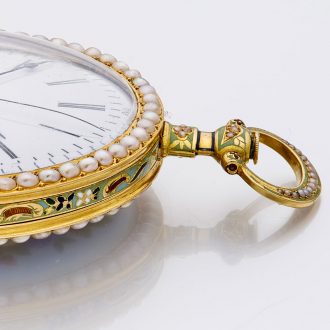
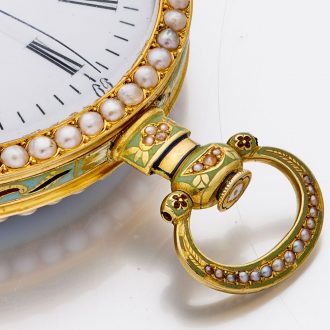
The white enamel dial with Roman numerals, blued steel hands, and a jumping centre seconds hand offers both elegance and functionality. The gold case, embellished with a polychrome enamel painted Bouquet of Summer Flowers and split-pearl set bezels, exudes opulence. The intricately decorated band with cloisonné enamel further enhances its aesthetic appeal. The watch is not only a marvel to behold but also a feat of engineering, with a pusher through the pendant for easy opening and a glazed hinged cuvette for added protection. Numbered 740, both the case and movement exemplify the attention to detail that defines this exceptional timepiece.
–
Diameter: 56 mm
–
Weight: 116 g
–
Signed: Bovet, Fleurier
–
Between 1807 and 1815, the watchmaking industry in Fleurier experienced a significant decline in trade due to the Continental Blockade. Many skilled watchmakers, including the Bovet brothers – Frédéric, Alphonse, and Edouard – were compelled to seek alternative careers. In 1814, the three brothers relocated to London. Edouard later secured a position as a watchmaker with Maison Magniac, a firm involved in the watch trade in Canton, China. Recognizing the trade potential in China, Edouard contacted his brothers to discuss expanding their interests in the region. The Bovet company was officially registered in London on 1 May 1822, but operations were eventually relocated to their hometown of Fleurier, where their sister Caroline also joined the firm.
–
Maison Bovet successfully introduced a new style of watch tailored for the Chinese market, allowing the company to establish a dominant position in this export market. This transformation brought new vitality to the watchmaking trade and ushered in a prosperous era for the town of Fleurier. In addition to offering high-quality watches, Edouard Bovet was committed to providing a range of exceptional and luxurious timepieces adorned with the finest techniques and materials, targeting the affluent Chinese clientele. These watches featured highly decorated movements with duplex escapement and a glazed cuvette, allowing the owner to admire the so-called Chinese calibre. Among the popular decorative scenes skillfully painted in enamel on the backs of the cases, flower arrangements were particularly favoured.
–
In 1824, Edouard was joined in China by his brother Charles-Henri (b.1802). Charles-Henri served as the Maison Bovet’s main representative in China from 1830 to 1836, before returning to Switzerland in 1839. Meanwhile, Edouard returned to Fleurier and later established a factory in Besancon with Charles Lorimier. The factory produced watches for the Chinese market, which were exported along with Bovet’s other products. The Bovet firm was continued by the sons of the second eldest founding brother, Alphonse, including Frédéric (known as Fritz) (1824-1914), Alphonse (1828-1918), Gustave (1835-1906), and Charles (b.1838). They were later joined by Louis (1818-1882), the son of Gustave the Elder. In 1880, the firm changed its name to Bovet Frères.
–
An almost invisible small professional enamel restoration on the top.
–
Reference 0218000
Signed: Bovet, Fleurier
Share this page: