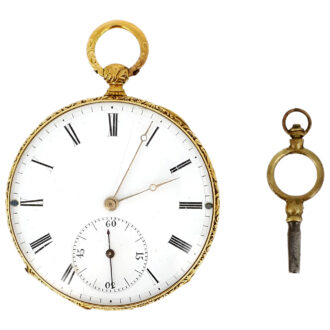
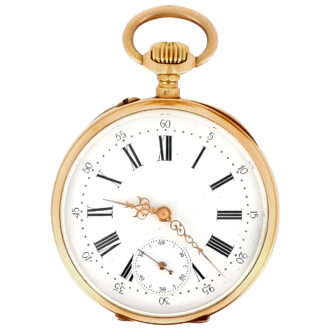
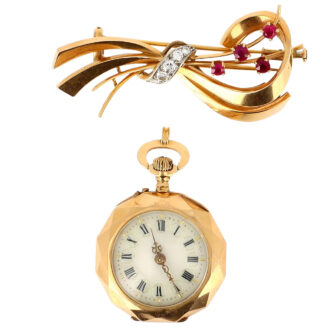
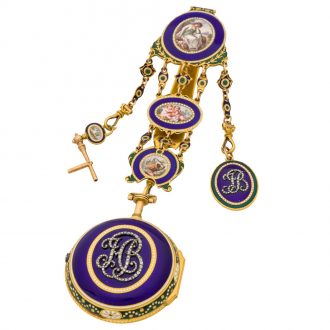
Swiss gold duplex watch for the Chinese market Circa 1840
- Kenmerk
- AS1817
- Diameter
- 48 mm
- Estimate
- € 20.000 - 40.000
- Price sold
- € 25.800
Gold and enamel painted centre seconds watch by Bovet
–
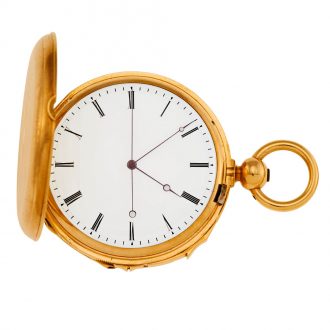
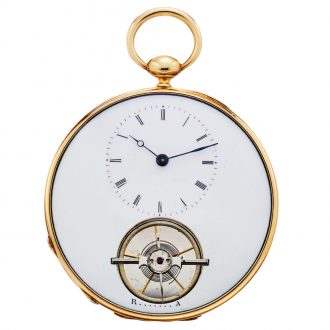
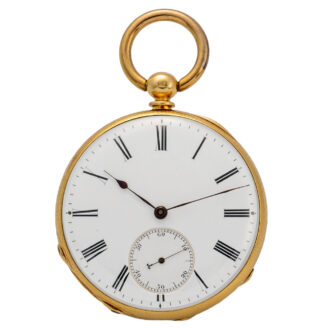
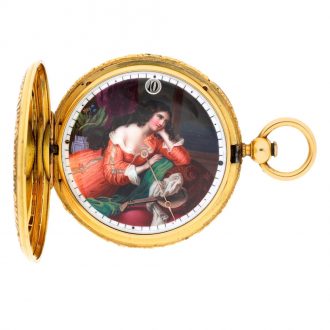
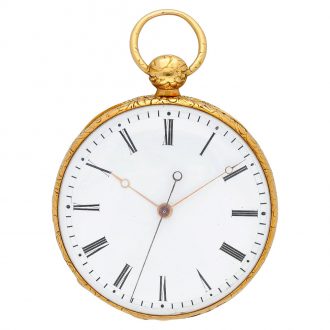
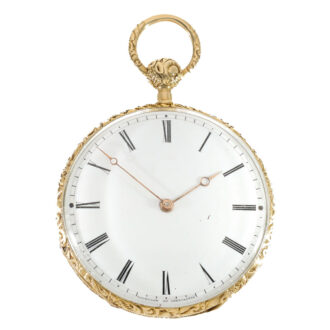
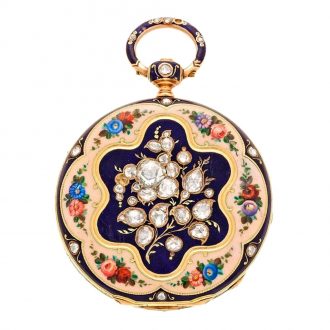
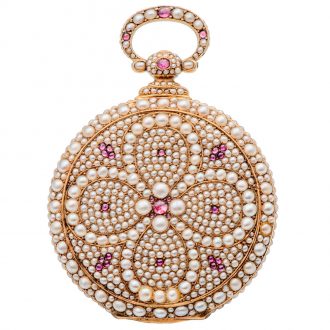
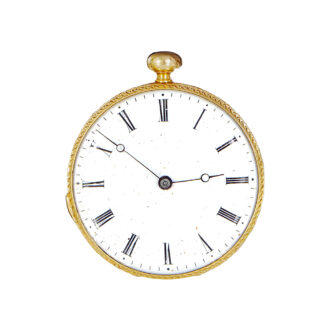
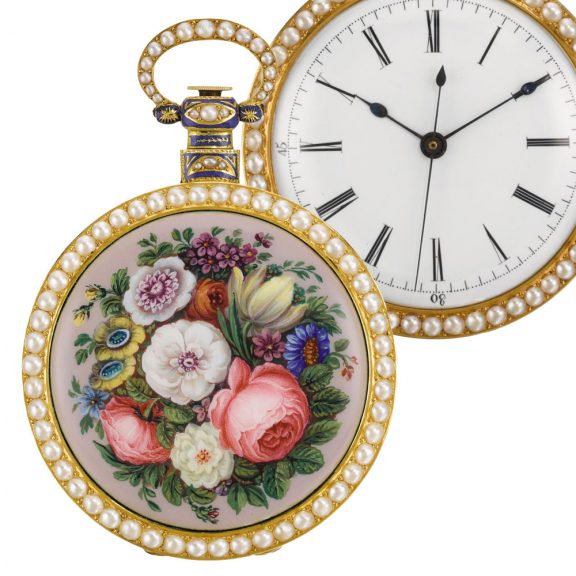
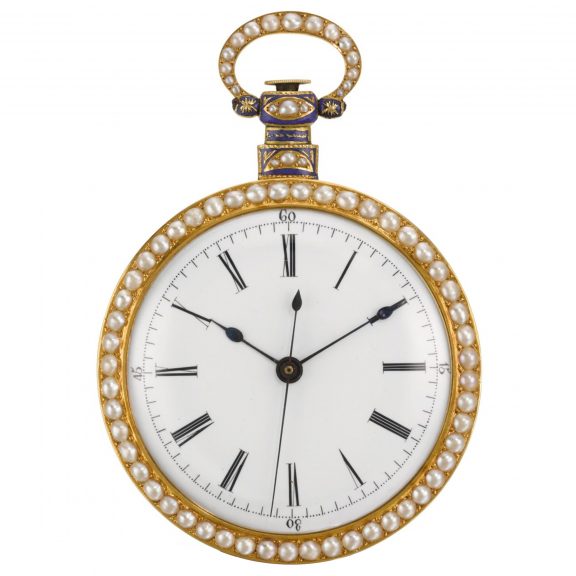
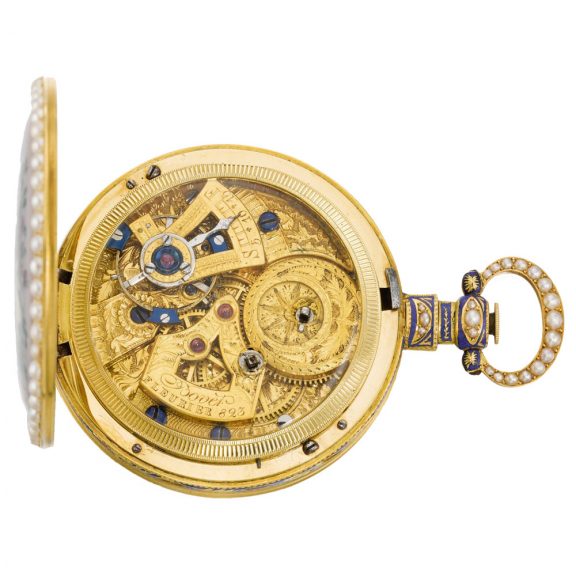
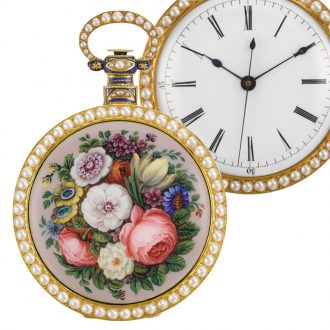
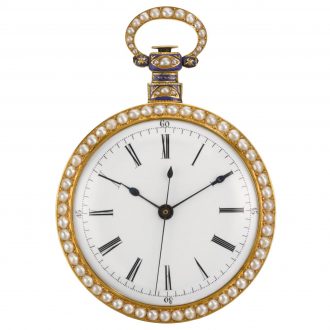
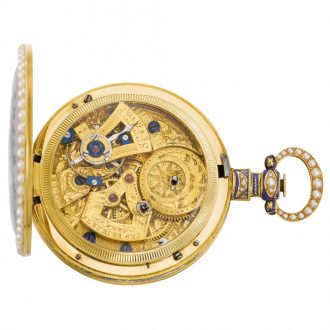
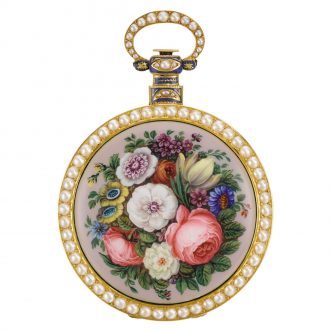
A fine Swiss gold, pearl, and polychrome enamel painted duplex watch made for the Chinese market, circa 1840. This watch features a gilded, decoratively engraved Chinese movement with scrolling flowers and foliage against stippled ground. It also includes a similarly decorated hanging barrel, skeletonized balance cock and central bridge, duplex escapement, bimetallic compensation balance with timing screws, blued steel devils, ruby endstone, and is signed and numbered Bovet, Fleurier, no. 823. The white enamel dial showcases Roman numerals, blued steel hands, and a centre seconds hand, with an outer ring for minutes/seconds and Arabic quarter-hour divisions.
–
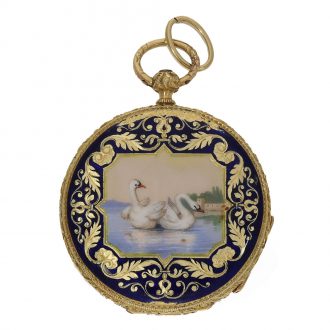
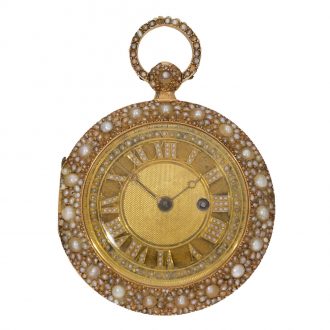
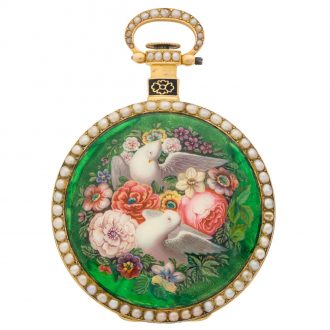
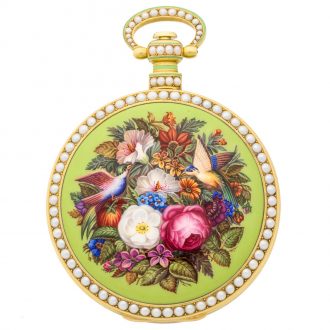
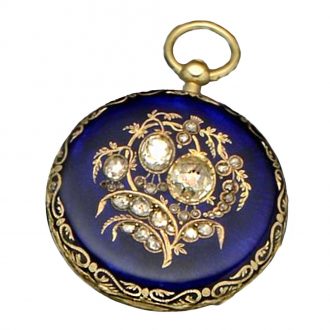
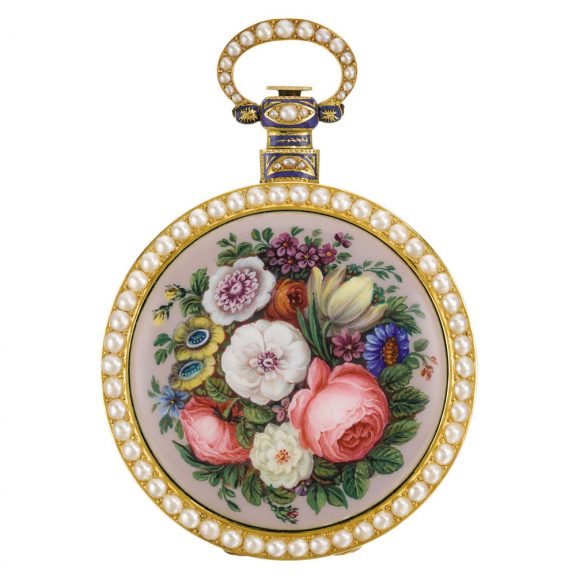
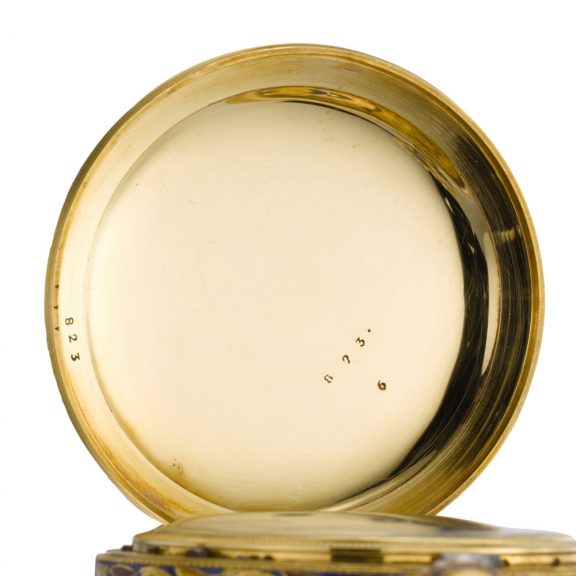
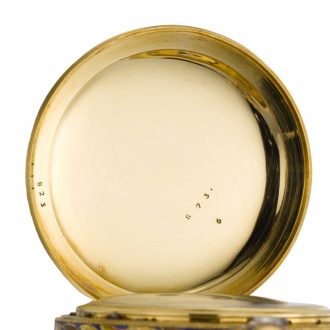
The gold case has a back with a polychrome enamel-painted bouquet, split-pearl-set bezels, and a bow, and the band is decorated with stylized foliage highlighted with translucent red and amber enamel. The case can be opened using a pusher through the pendant, and it has a glazed hinged cuvette with a milled bezel. The case is numbered 823 on the bezel and the back of the main case panel, with the panel additionally numbered 6.
–
Diameter: 48 mm
–
Signed: Bovet, Fleurier
–
Movement is currently not running, but with a slight impulse given to the balance, it will briefly run and engage the escapement, causing the centre-second hand to move as expected. This issue is likely due to old oil and could be resolved with a thorough cleaning and overhaul. The dial appears to be in good condition, although the tip of the minute hand is broken. The case features an enamel panel in good overall condition, with the band showing a few small chips and scratches. Additionally, approximately half a dozen of the pearls seem to have been drilled for stringing and have presumably been replaced. There is a small pusher at the edge of the cuvette for opening the hinged cuvette, but the release is currently a little stiff.
–
Between 1807 and 1815, the watchmaking industry in Fleurier experienced a significant decline in trade due to the Continental Blockade. Many skilled watchmakers, including the Bovet brothers – Frédéric, Alphonse, and Edouard – were compelled to seek alternative careers. In 1814, the three brothers relocated to London. Edouard later secured a position as a watchmaker with Maison Magniac, a firm involved in the watch trade in Canton, China. Recognizing the trade potential in China, Edouard contacted his brothers to discuss expanding their interests in the region. The Bovet company was officially registered in London on 1 May 1822, but operations were eventually relocated to their hometown of Fleurier, where their sister Caroline also joined the firm.
–
Maison Bovet successfully introduced a new style of watch tailored for the Chinese market, allowing the company to establish a dominant position in this export market. This transformation brought new vitality to the watchmaking trade and ushered in a prosperous era for the town of Fleurier. In addition to offering high-quality watches, Edouard Bovet was committed to providing a range of exceptional and luxurious timepieces adorned with the finest techniques and materials, targeting the affluent Chinese clientele. These watches featured highly decorated movements with duplex escapement and a glazed cuvette, allowing the owner to admire the so-called Chinese calibre. Among the popular decorative scenes skillfully painted in enamel on the backs of the cases, flower arrangements were particularly favoured.
–
In 1824, Edouard was joined in China by his brother Charles-Henri (b.1802). Charles-Henri served as the Maison Bovet’s main representative in China from 1830 to 1836, before returning to Switzerland in 1839. Meanwhile, Edouard returned to Fleurier and later established a factory in Besancon with Charles Lorimier. The factory produced watches for the Chinese market, which were exported along with Bovet’s other products. The Bovet firm was continued by the sons of the second eldest founding brother, Alphonse, including Frédéric (known as Fritz) (1824-1914), Alphonse (1828-1918), Gustave (1835-1906), and Charles (b.1838). They were later joined by Louis (1818-1882), the son of Gustave the Elder. In 1880, the firm changed its name to Bovet Frères.
Signed: Bovet, Fleurier
Share this page: