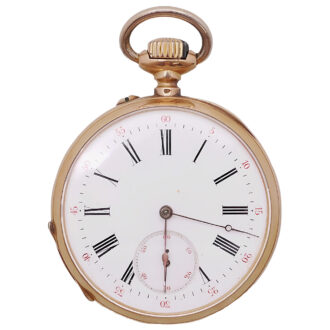
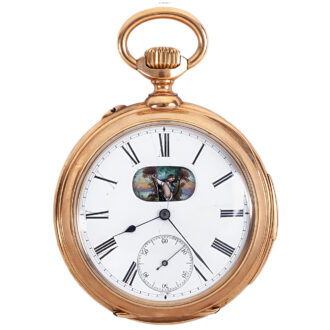
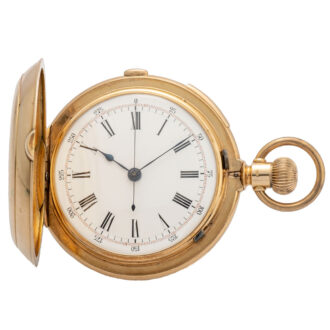
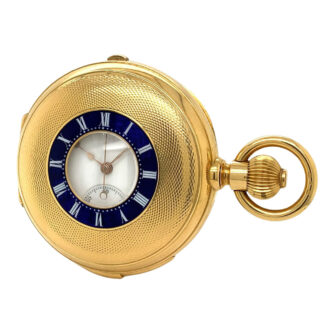
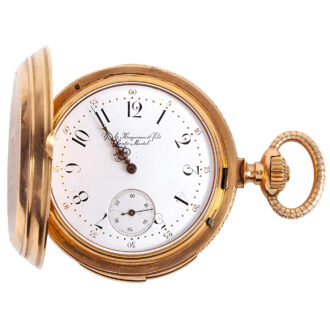
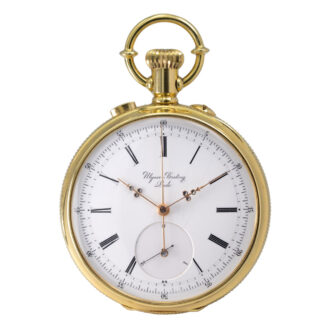
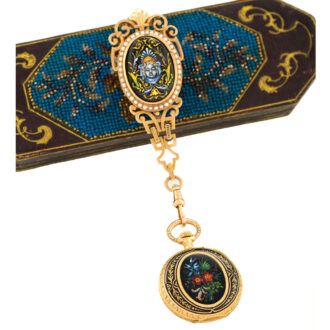
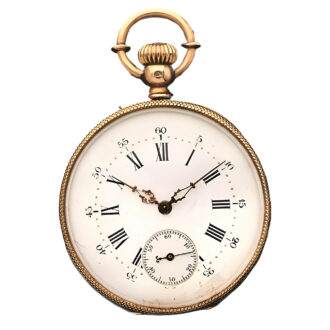
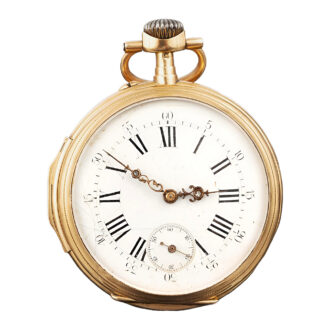
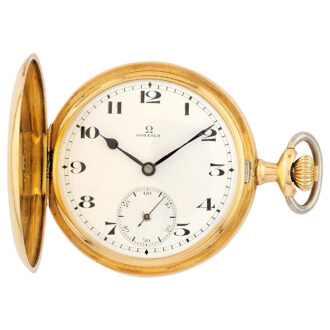
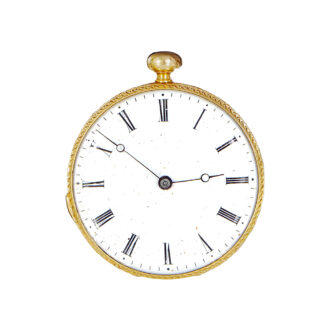
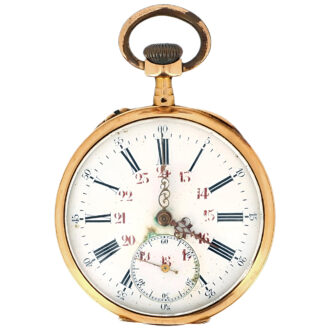
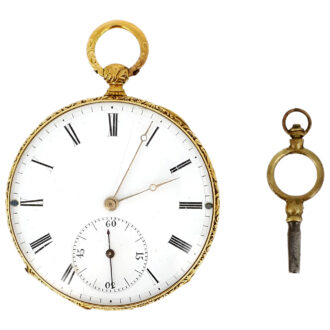
Swiss independent deadbeat centre seconds repeater Circa 1890
- Kenmerk
- AS2415
- Diameter
- 52 mm
- Estimate
- € 50.000 - 100.000
- Price sold
- € 111.200
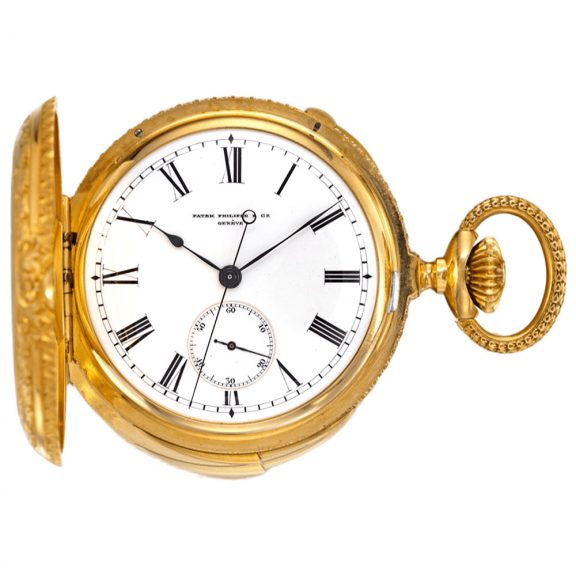
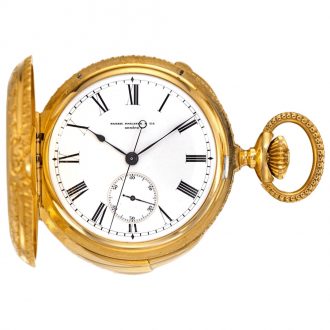
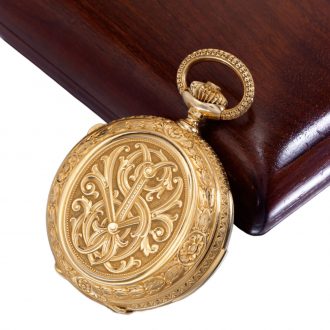
Gold hunting cased lever repeating watch by Patek Philippe & Co.
–
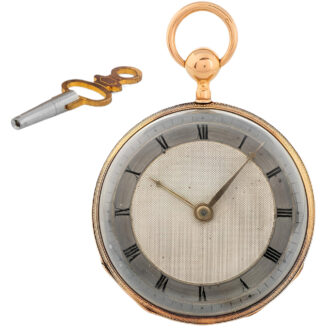
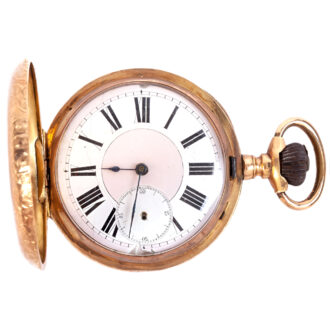
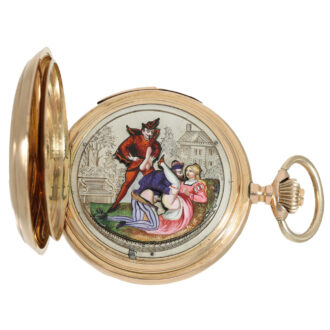
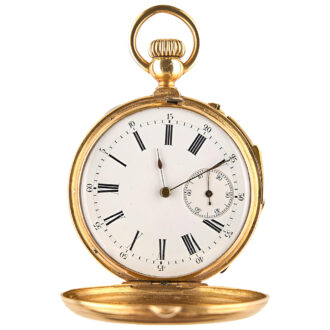
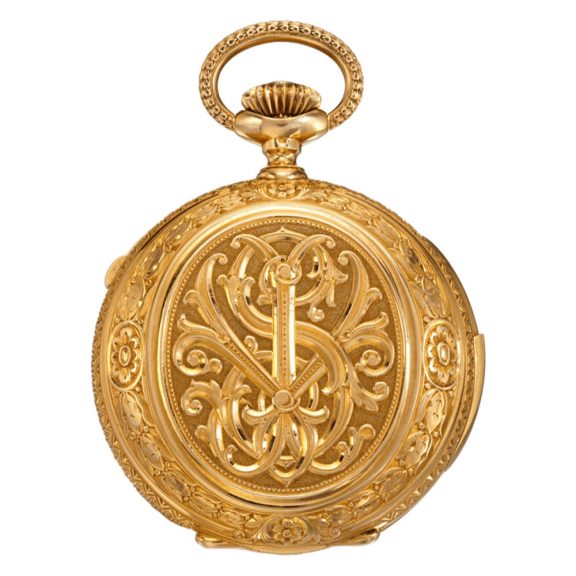
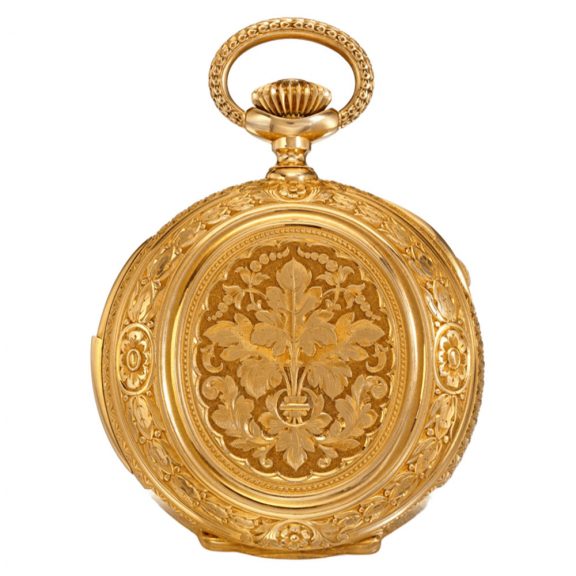
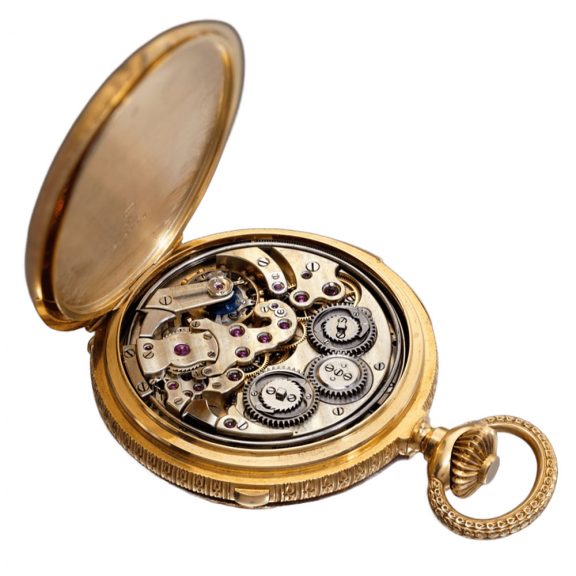
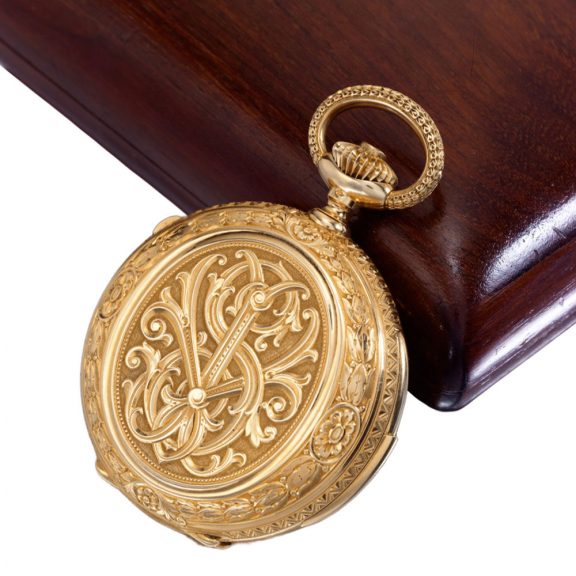
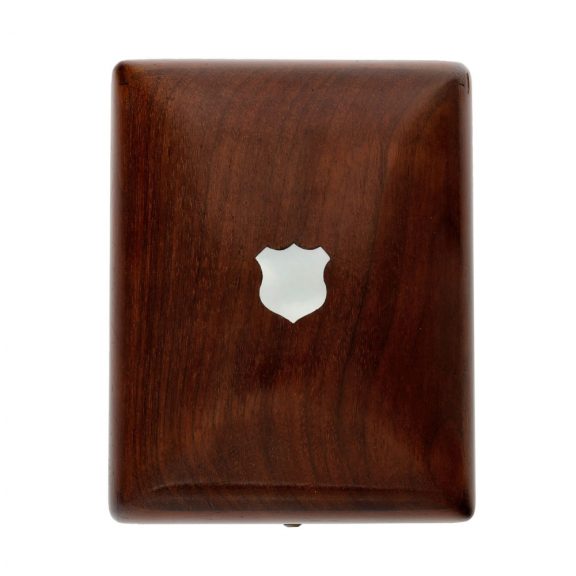
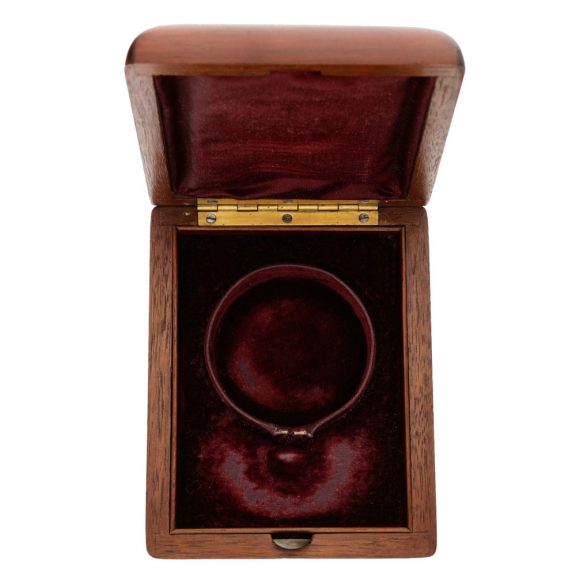
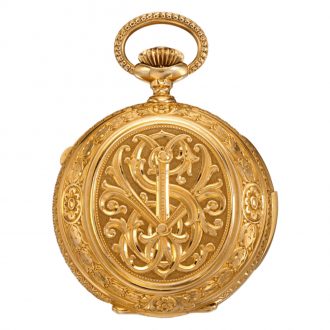
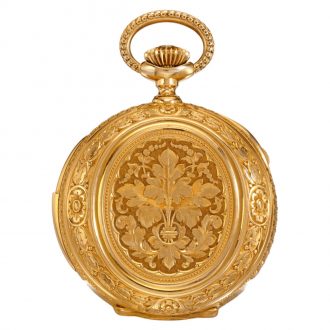
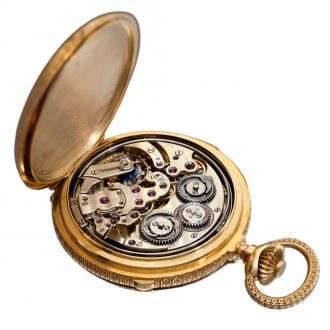
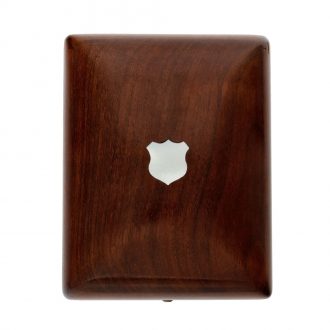
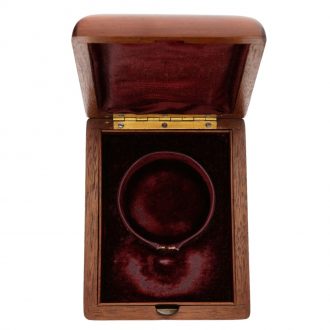
A fine and rare Swiss yellow gold hunting cased minute repeating pocket watch with independent deadbeat seconds, made for the Latin market, circa 1890. Retailled by F. Sauter & Co. Havana. This watch features a 19-20″ mechanical lever movement with 17 jewels. It has a white enamel dial adorned with Roman numerals, blued steel spade hands, an independent deadbeat centre second, and a subsidiary seconds dial. It has 18 carat yellow gold chased and engraved hinged hunting cases with a signed cuvette. The case, dial, and movement are all signed. It comes with a fitted presentation box.
–
Diameter: 52 mm
–
Signed: Patek Philippe & Co. Genève
–
The case is in excellent condition, featuring a robust structure, strong hinges on the covers, and sharp definition in the finely chased and engraved details. There is a warm and attractive patina throughout. The white enamel dial remains intact, showing only light dust and some scratches. The blued steel hand displays a bit of patina. The movement is functioning well.
–
Patek Philippe’s deadbeat seconds function is the outcome of nearly 25 years of research, making it a rare complication in their collection. This watch is one of only six known with a minute repeater complication, featuring a chased and engraved hunting case, retailed by F Sauter & Co., Havana, Cuba.
–
Research indicates only 400 deadbeat seconds watches were ever made, with about 60 currently identified, five of which have a minute repeater. This piece is the 6th identified minute repeater with deadbeat seconds by Patek Philippe and is fresh to the market.
–
The dead seconds mechanism was first created by Moise Pouzait in Geneva in 1776. It employs two going trains, one for the movement and one for the sweep seconds, allowing the seconds to stop without affecting timekeeping.
–
Adrien Philippe improved this design over decades, earning Swiss patent No. 1017 on May 23, 1889. His complication allows for a larger balance spring and enhanced accuracy by moving the seconds train over the centre bridge.
–
Philippe’s mechanism is detailed in Patek Philippe Pocket Watches by Martin Huber & Alan Banbery.
–
A similar movement with a single independent centre seconds, lacking a minute recorder, is depicted in the 1993 edition of Patek Philippe Pocket Watches.
Signed: Patek, Philippe & Co Genève
Share this page: