Swiss pocket watch with a one-minute tourbillon Circa 1868


- Kenmerk
- AD9316
- Diameter
- 54 mm
- Estimate
- € 25.000 - 50.000
- Price sold
- -
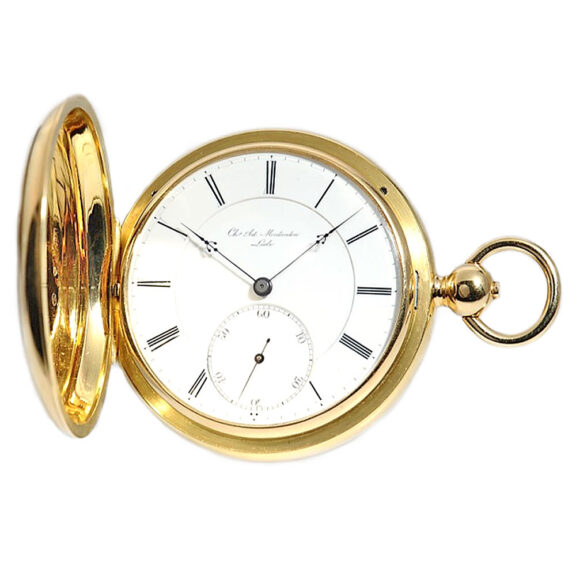
Heavy gold hunting cased pocket watch by Charles Adolphe Montandon
–
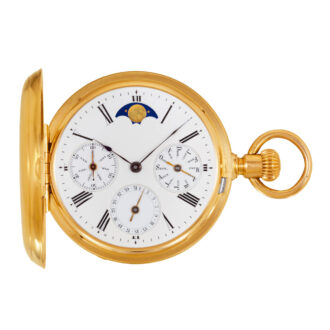
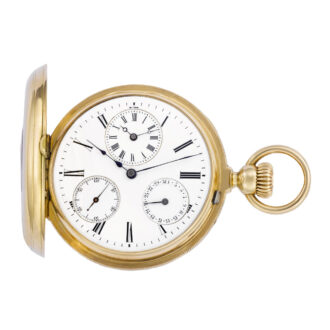
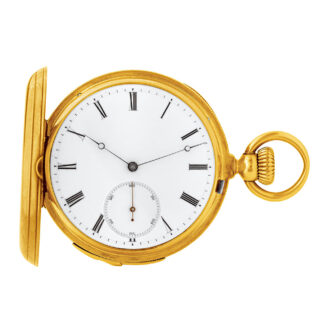
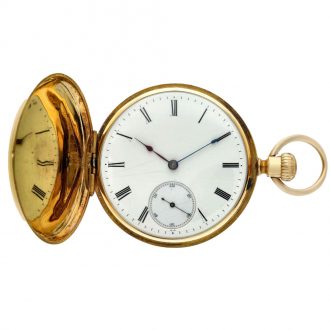
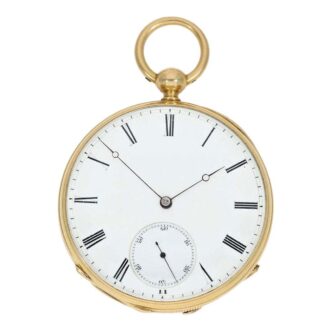
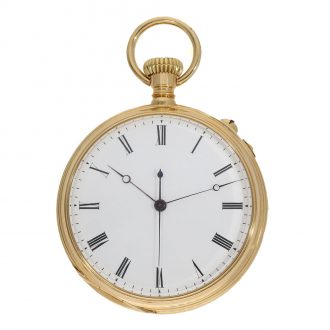
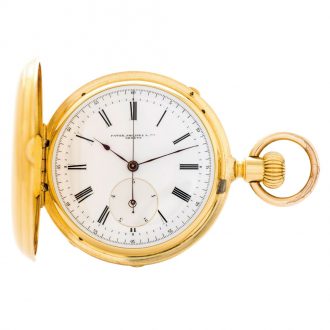
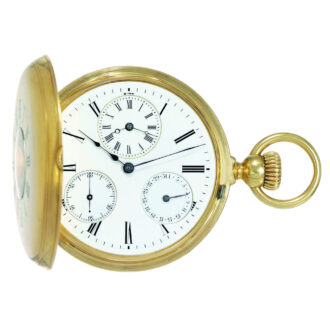
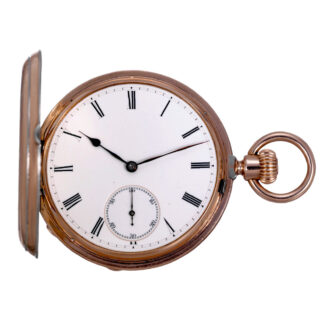
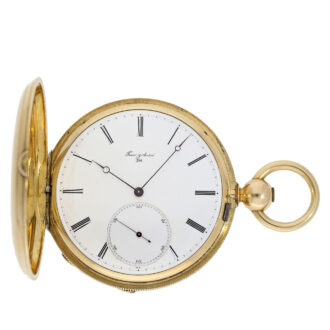
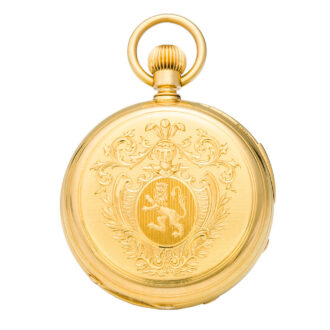
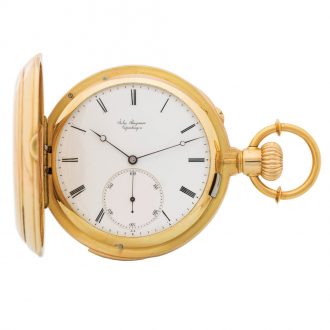
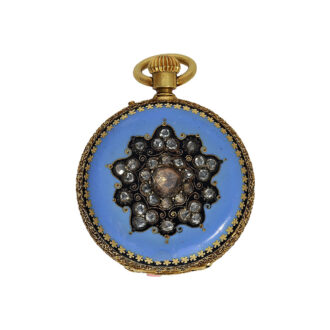
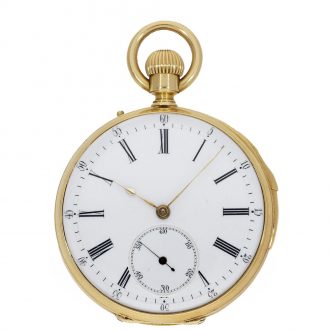
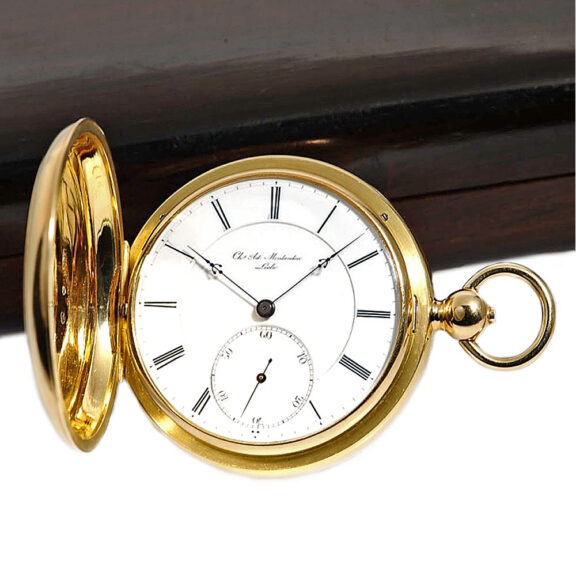
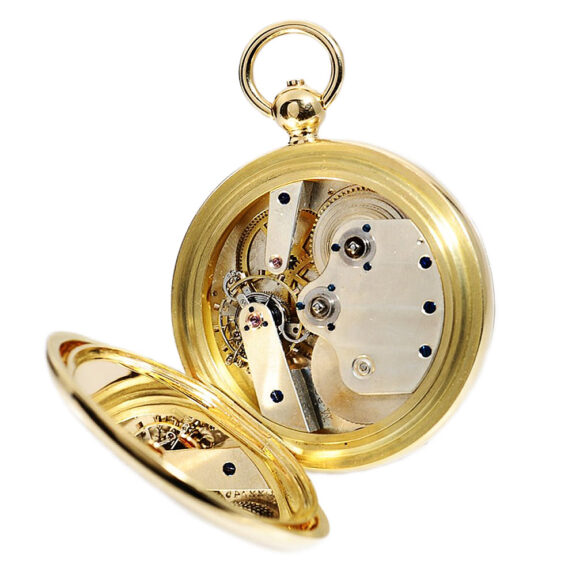
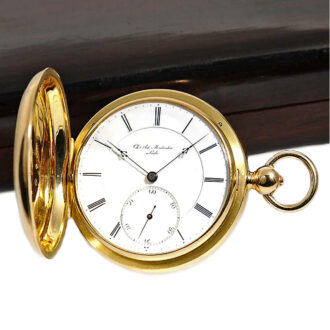
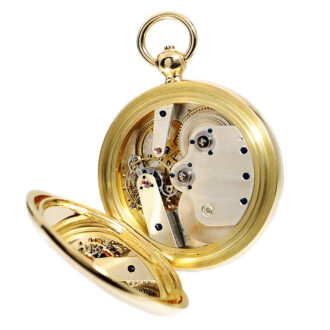
A heavy Swiss hunting cased pocket watch with a one-minute tourbillon and mahogany box, circa 1868.
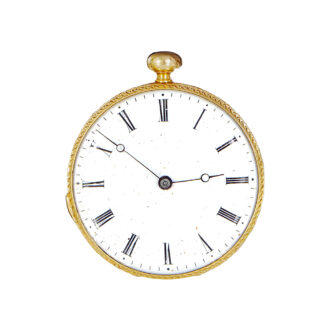
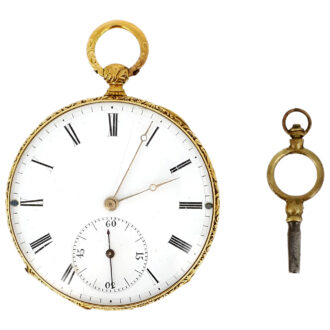
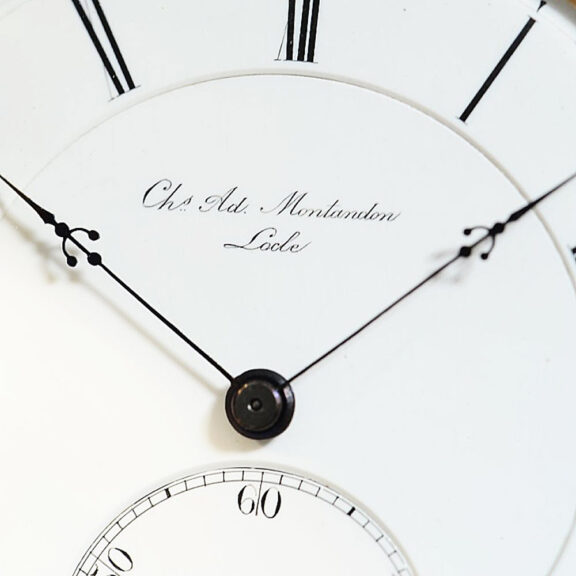
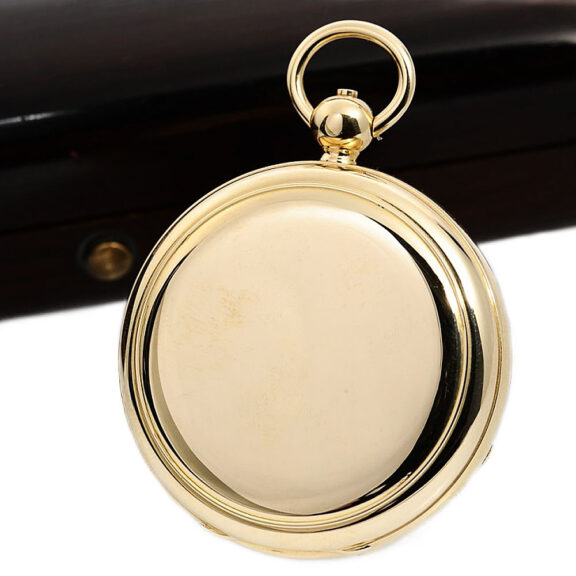
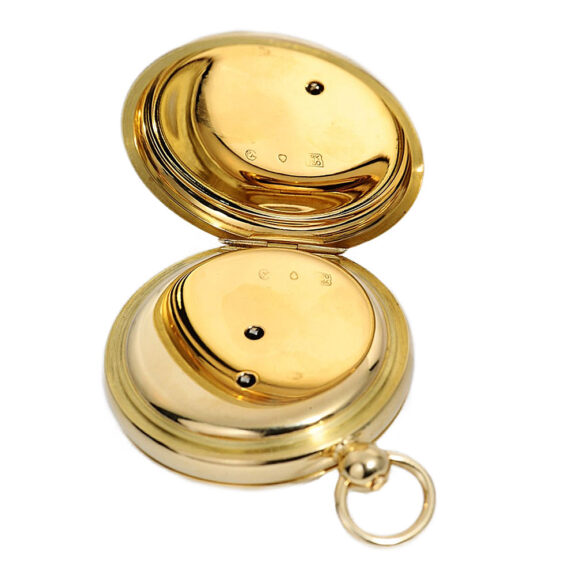
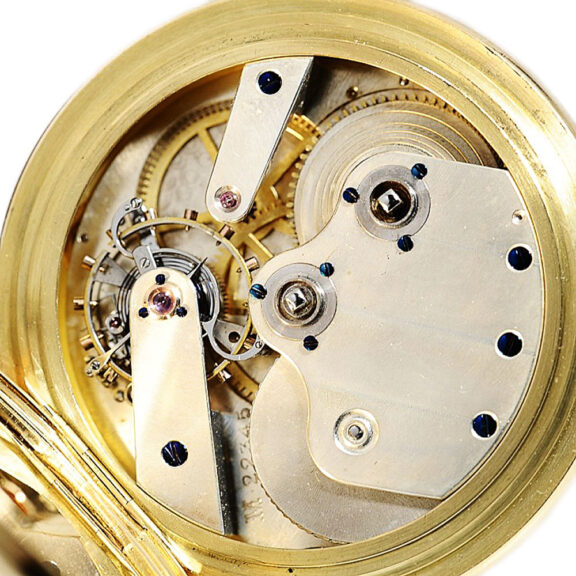
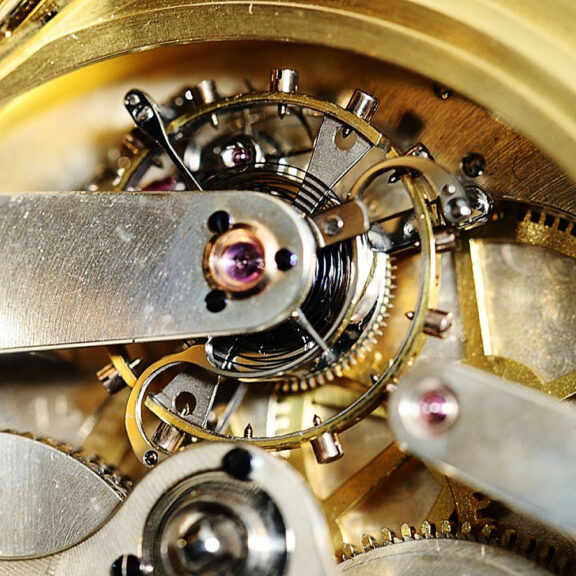
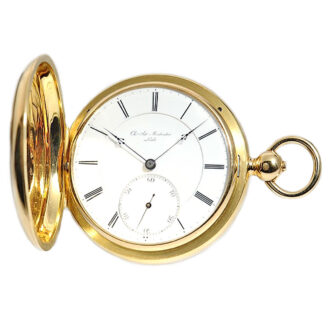
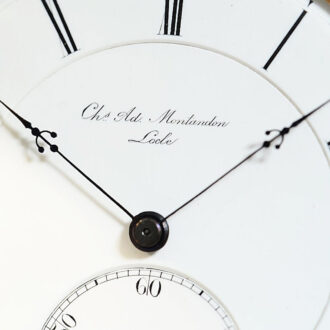
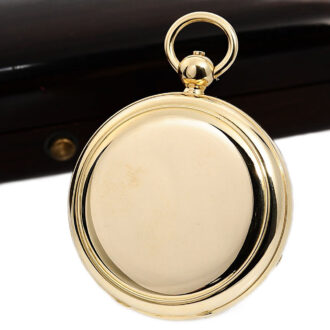
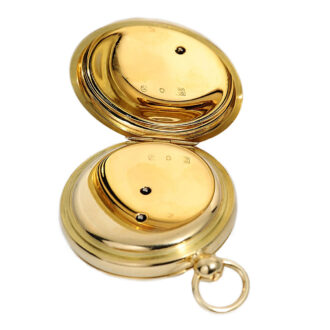
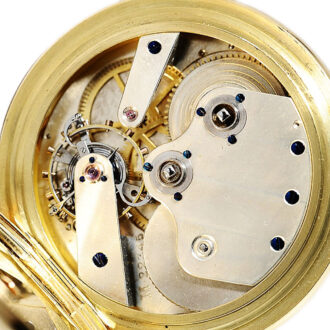
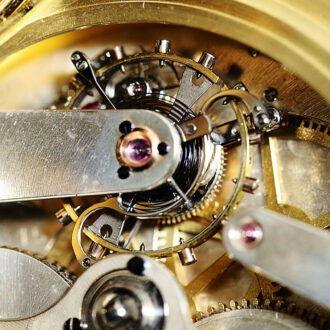
18-Carat gold, tiered, polished case with a gold dome. Signed enamel dial with radial Roman hours, auxiliary seconds, and filigree blued steel hands. Keywind, nickel-plated bridge movement, stripe-decorated, with chain/fusee, mirror-polished tourbillon steel cage, screwed gold chaton, club-tooth lever escapement, gold screw compensation balance, and blued balance spring.
–
Diameter: 54 mm
–
Weight: 188 g
–
Signed: Charles Adolphe Montandon
–
Charles Adolphe Montandon
The manufacturer Charles Adolphe Montandon in Le Locle evidently had relations to the American market, as indicated by an 1873 US patent for one of his watch designs. There is another chronometer tourbillon no. 18643 in a hunting case by the same maker that emerged at an auction in Geneva in 1984; it was produced around 1865 and its description resembles this piece quite closely. Both watches belong to the so-called second generation that developed in the early 1960s in Switzerland with the creation of the Neuchâtel observatory – these timepieces are characterized by lighter cages and balances, which obviously had a strong effect on the precision of the watches: the daily rate of drift was reduced to up to a quarter of that common at the time of Breguet. There is no doubt that the design and the making of this watch are not by Montandon but by one of the few tourbillon specialists at the time, such as Ernest Guinand of Le Locle or Auguste Grether of Les-Ponts-de-Martel.
–
Tourbillon
A system devised and patented by Abraham-Louis Breguet in 1801 to compensate for errors of rate caused by the Earth’s gravitational force in upright positions. The escapement is mounted in a revolving cage with the regulating organ (balance) at the centre.
The escape-wheel pinion turns about the fixed fourth wheel. The cage generally revolves once a minute and, in doing so, compensates for errors of rate caused by the vertical position in which pocket watches spend most of their time.
This delicate and complex structure is one of watchmaking’s most ingenious mechanisms. A simplified and more robust alternative is the carousel where the cage is driven not by the fourth wheel but by the third wheel. A Tourbillon can contain a lever or a detent escapement.
Signed: Charles Adolphe Montandon
Share this page: