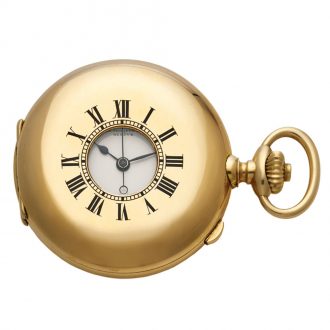
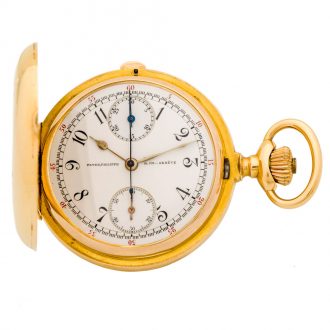
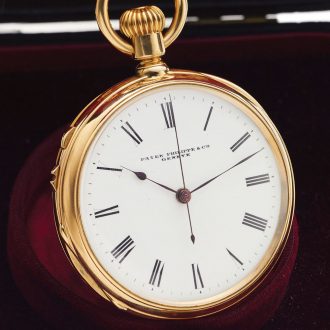
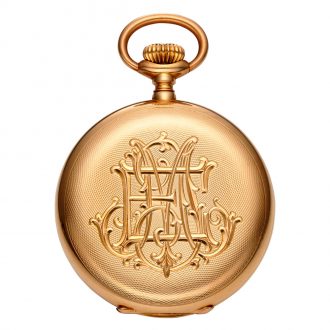
Swiss rifleman’s watch with 18 Carat gold open faced case Circa 1904
- Kenmerk
- HC0488
- Diameter
- 52 mm
- Estimate
- € 2.000 - 4.000
- Price sold
- € 3.350
Chronometer watch for Federal Rifle Festival St. Gallen
–
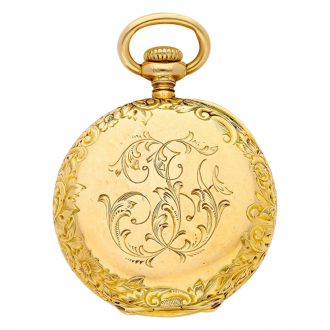
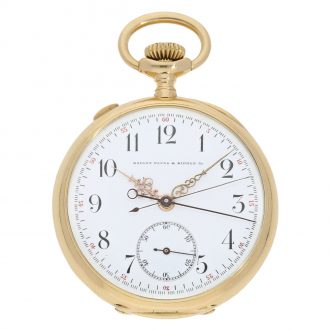
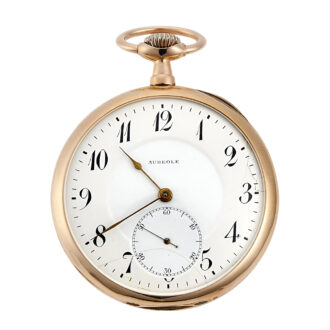
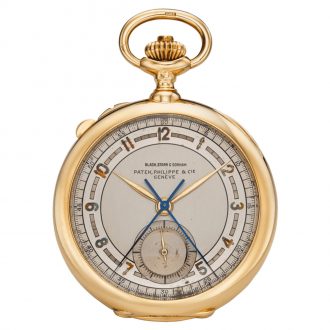
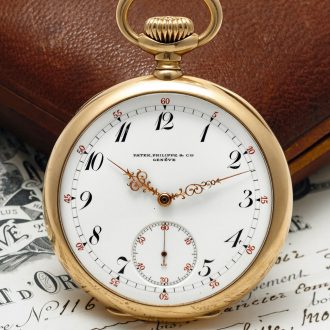
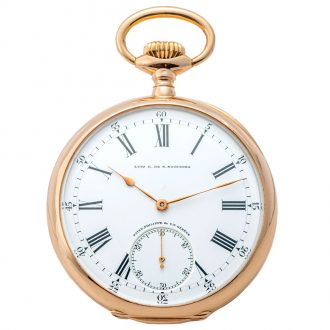
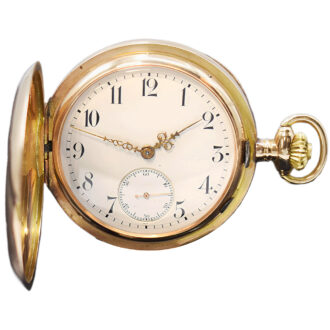
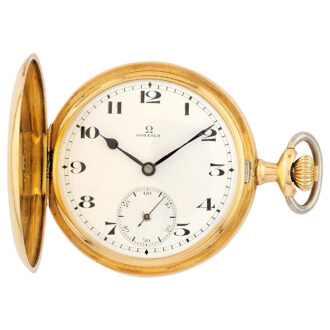
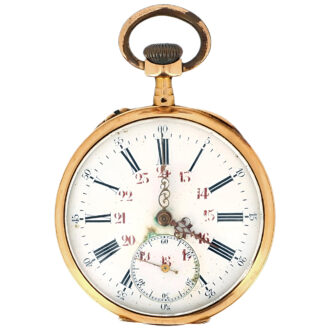
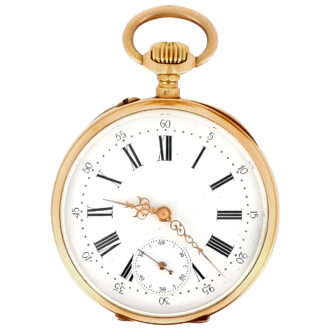
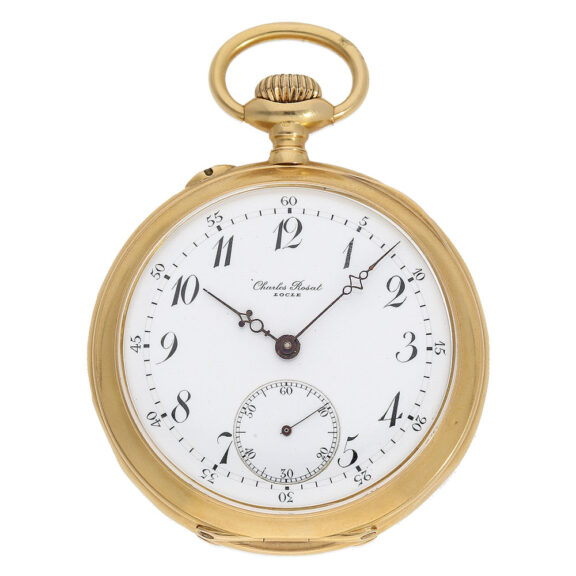
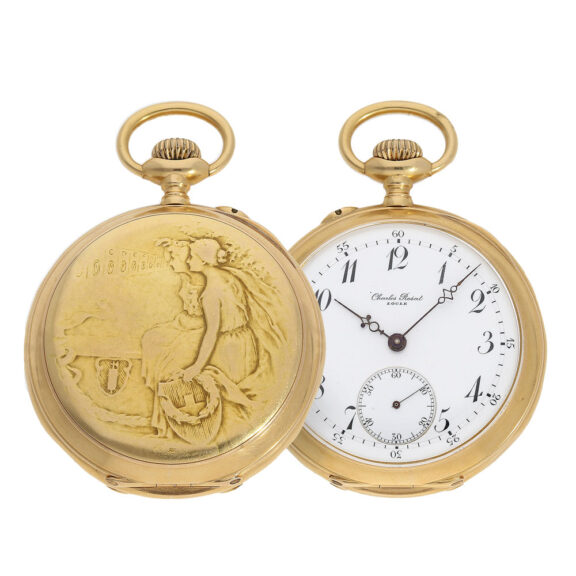
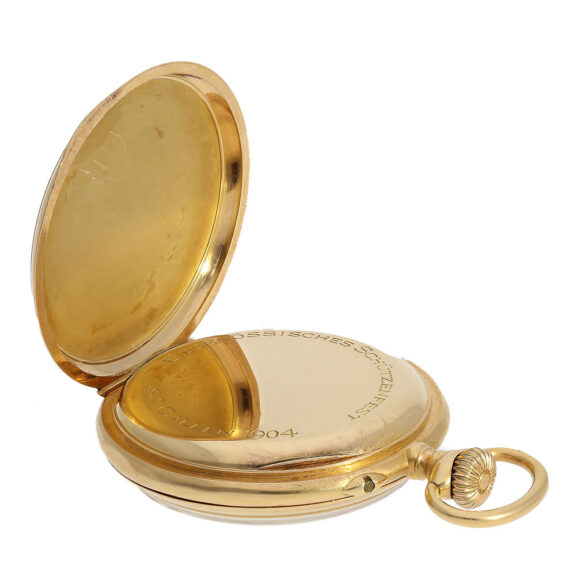
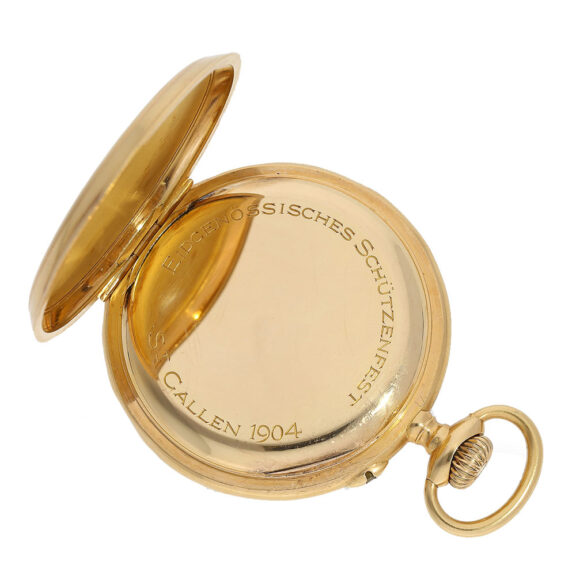
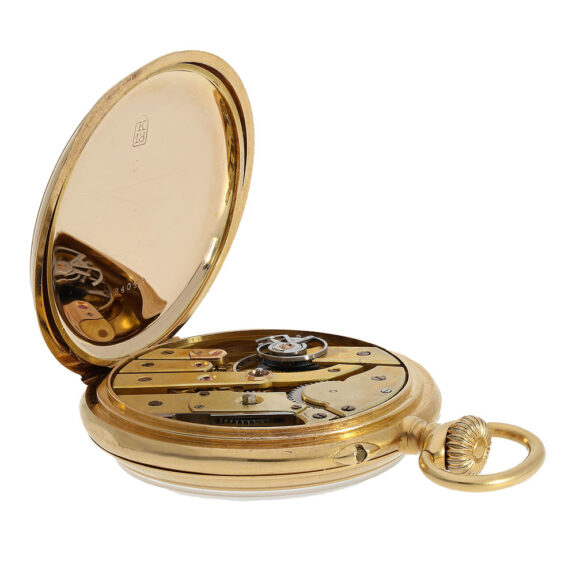
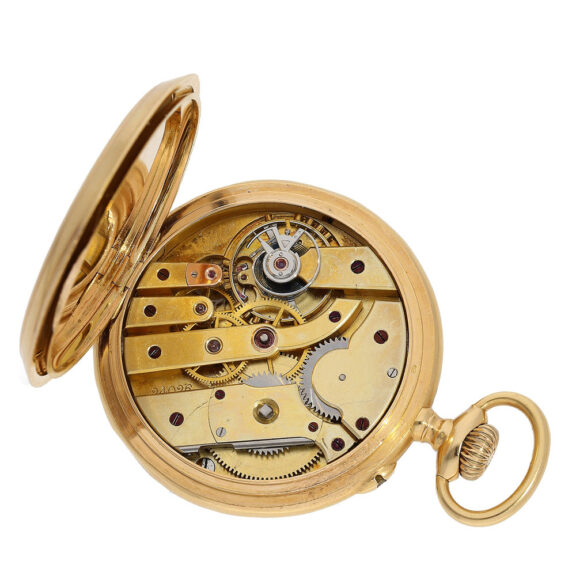
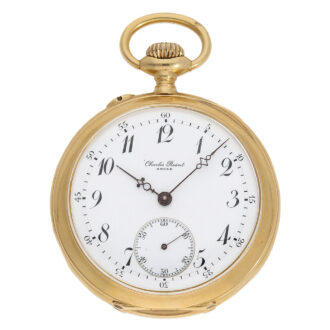
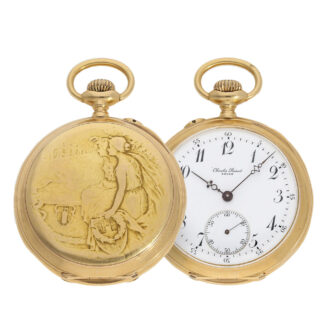
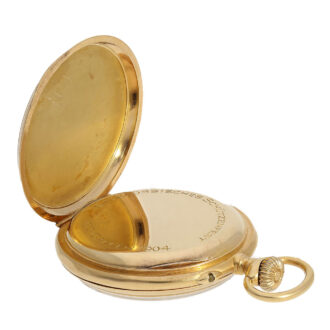
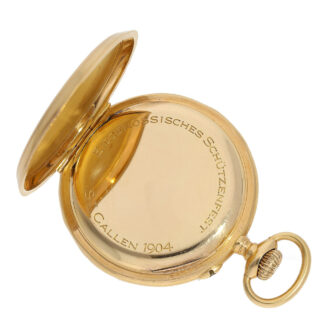
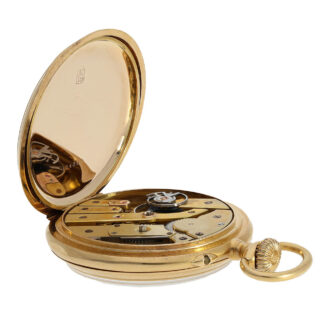
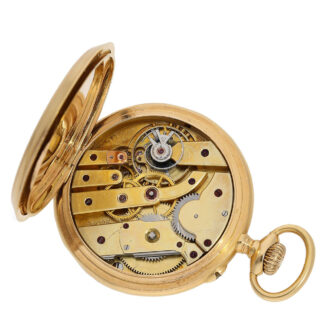
A rifleman’s observatory chronometer watch number 26024, with gold case for the Federal Rifle Festival St. Gallen 1904, made by Charles Rosat in Locle, Switzerland, circa 1904. The watch features an open faced case made of 18 Carat gold which has an Art Nouveau relief on the back and a dust cover, which bears the inscription “Eidgenössisches Schützenfest St. Gallen 1904” (Federal Shooting Festival St. Gallen 1904). This unique feature adds a touch of historical significance to an already exceptional timepiece. The white enamel dial is a sight to behold, with outer rings displaying Arabic numerals for hours and minutes. A subsidiary dial, also adorned with Arabic numerals, indicates the seconds. The steel hands are a marvel of design, adding a touch of grace and precision to the watch’s overall aesthetic. The movement is equipped with a rare chronometer escapement, it boasts the special Rosat fine adjustment, Wolf’s teeth and an anchor chronometer. These features were meticulously crafted and tested at the observatory in Neuchâtel in 1904, as evidenced by the patent numbers 24677/21639. This rigorous testing ensures that the watch maintains exceptional accuracy and reliability.
The dial is signed.
–
Diameter: 52 mm
–
Weight: 95 g
–
Signed: Charles Rosat, Locle
–
Gold observatory chronometers with “Schützenfest” (shooting festival) cases are extremely rare and were often only produced in very small numbers for these special events.
–
Charles Rosat was born in Le Locle on May 26, 1874, the son of watchmaker William-Charles-Frédéric Rosat and Louise Egger. As a regulator, he received several first prizes in chronometer competitions. On November 3, 1900 he received a patent no. CH21639A / “Coq avec piton porte-spiral mobile” and another patent no. 24677 from February 22, 1902 for his very special fine regulation. Shortly thereafter, this mechanism was used in watches by Georges Favre-Jacot & Cie., H. Moser & Cie. and Caesar Racine. His good contacts with the Neuchâtel Observatory and the particular successes in the chronometer competitions prompted him to deliver precision pendulum clocks to the observatory. He was asked to work on the observatory clocks. For example, in Joseph Thaddäus Winnerl’s pendulum clock, the oxidized rust pendulum was replaced by a pendulum with mercury compensation. In addition, all watches were equipped with electrical contacts, five of them with the Charles Rosat system. CH21639A / “Coq avec piton porte-spiral mobile” and another patent no. 24677 dated February 22, 1902 for its very special fine adjustment. Shortly thereafter, this mechanism was used in watches by Georges Favre-Jacot & Cie., H. Moser & Cie. and Caesar Racine.
Signed: Charles Rosat, Locle
Share this page: