Swiss gilt duplex watch made for the Chinese market Circa 1880
- Kenmerk
- DT1024
- Diameter
- 56 mm
- Estimate
- € 12.500 - 20.000
- Price sold
- € 12.400
Gilt, enamel and pearl set pocket watch
–
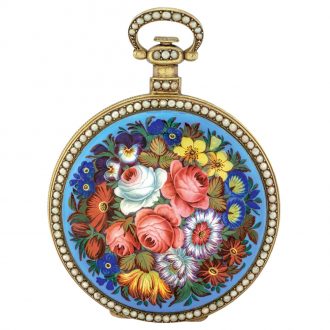
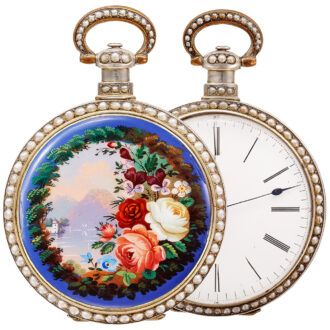
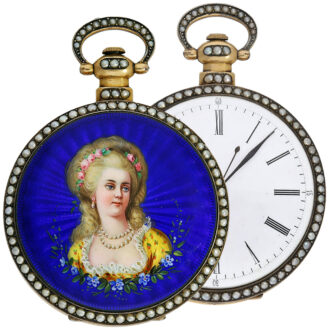
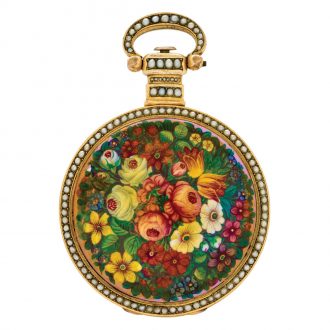
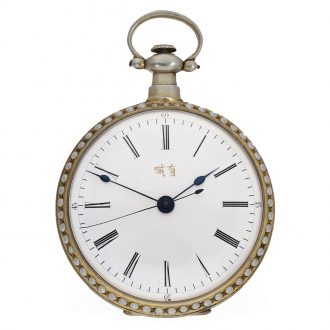
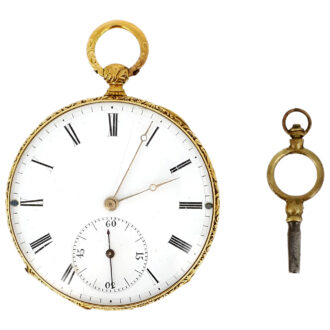
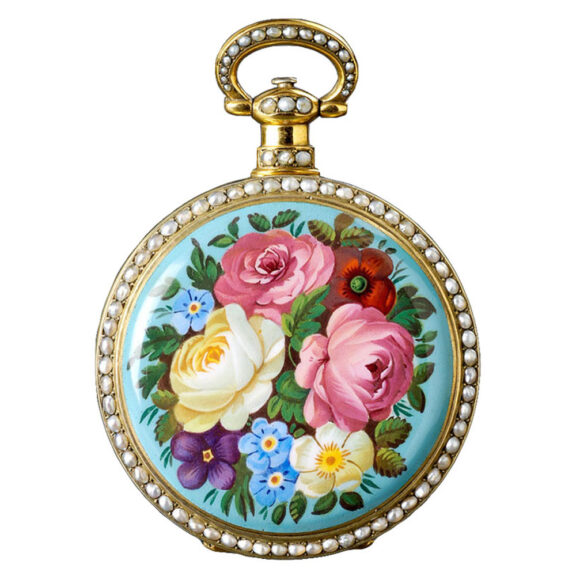
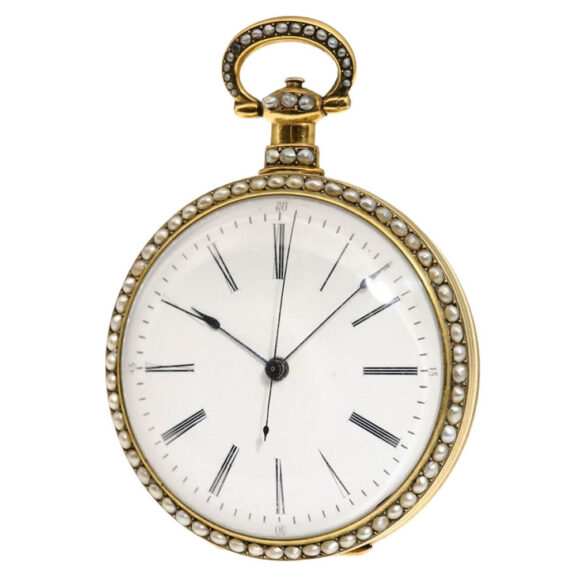
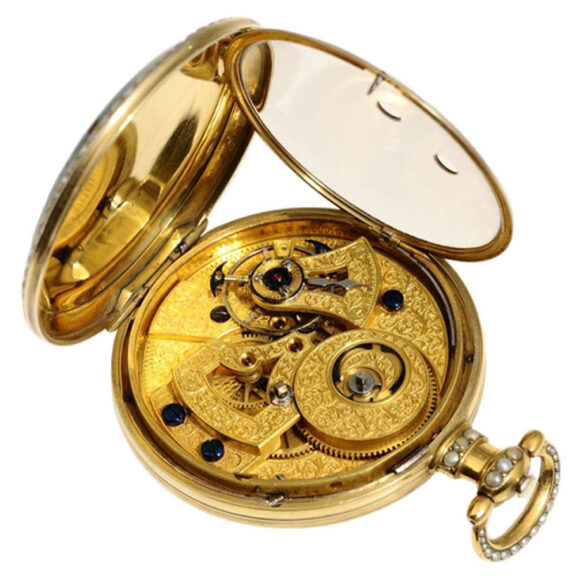
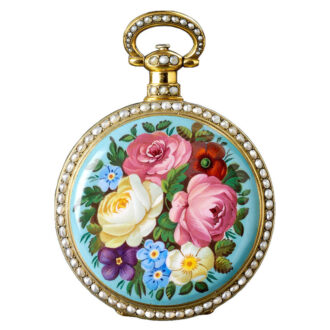
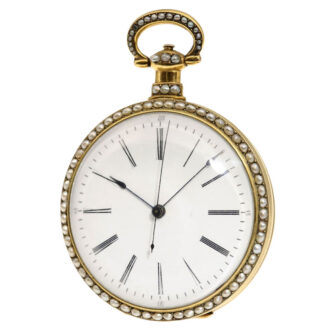
A rare Swiss gilded silver, enamel and pearl set open faced key wound duplex pocket watch with jumping center seconds made for the Chinese market, circa 1880.
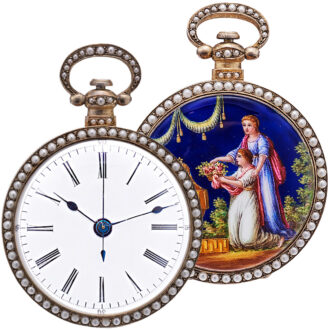
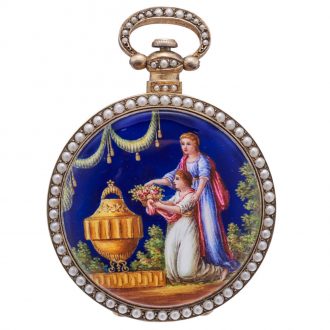
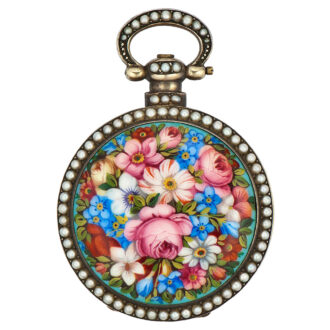
White enamel dial with Roman hour numerals, outer minute divisions, Arabic quarter hours and blued spade hands. A very fine painted polychrome enamel bouquet of flowers on the case back, both bezels, pendant and bow are set with pearls.
The glazed bridge movement with a Chinese duplex escapement according to Edouard Jacot and a monometallic balance with blued steel weights.
–
Diameter: 56 mm
–
Weight: 122 g
–
Signed: Leo Juvet Fleurier
–
Watches for the Chinese Market
Imperial China was at its height in the 18th century. Not only the wealthy imperial couple but prosperous merchants and civil servants too were affluent enough to afford high priced luxury goods. They often bought watches to extend their collections or pay tribute to the emperor by presenting him with valuable gifts. Europe recognized the burgeoning financial power in Chinese society and, in addition to exporting their high value Swiss timepieces, companies opened branches in China. To ensure that contemporary tastes were met and the cultural demands of the time satisfied, the preferences of the new clientele were carefully investigated. The lavishly decorated watch cases always stood out for their distinctive ornamentation. Shapes, colours and motifs were taken from nature, and quality and design were second to none. Flower arrangements were prevalent because they offered various body and colour possibilities.
–
Edouard & Léo Juvet à Fleurier
The Juvet family was one of the essential Swiss horological families which produced pieces for the Chinese market. In 1842, Edouard Juvet (1820-1883) opened his workshop in Buttes and moved to Fleurier in 1844. In 1856, Edouard started making watches for the Chinese market. Both his sons Ami-Louis and Léo eventually went to China to work in the family firm there.
After Ami-Louis died, Léo (1848-1891) travelled to China to take his place. Only the Bovets rivalled the Juvets in Shanghai, however, the two families always maintained friendly relations. The Juvets flourished with branches in Beijing and Tianjin, to the extent that in 1872 Léo wrote: “Our watches sell like salt”.
Edouard registered a trademark in Chinese characters to be used on the company’s products in 1873. In November 1875, he granted his son Léo power of attorney. After Edouard’s death in February 1883, Léo succeeded him as head of the firm.
The pocket watches by Juvet, with their finely handcrafted and unique artistic style, were welcomed by the royal family members of the Qing Dynasty. Juvet has since become the emperor’s watch brand. Owning a Juvet pocket watch is a symbol of nobility.
Signed: Leo Juvet Fleurier
Share this page: