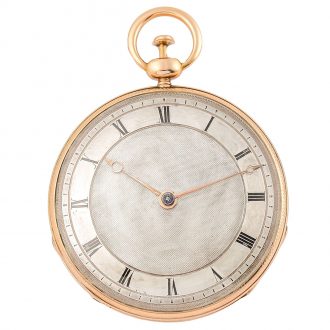
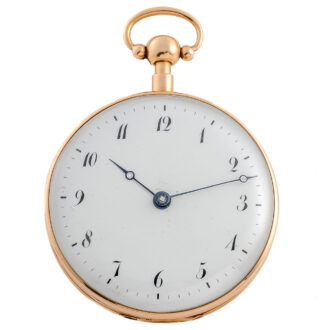
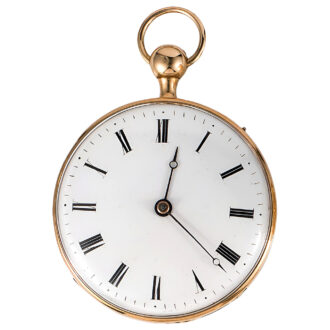
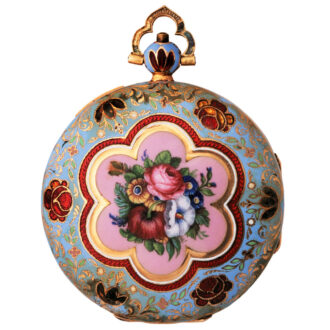
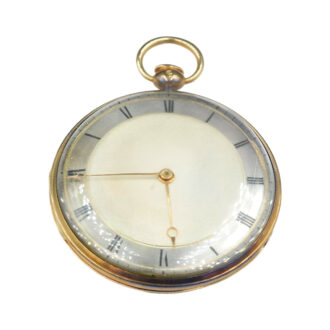
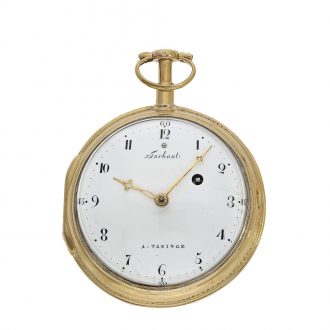
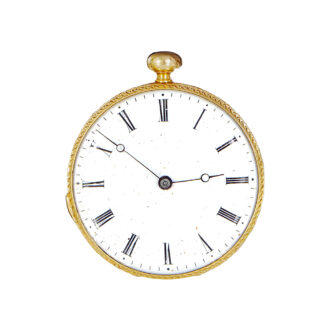
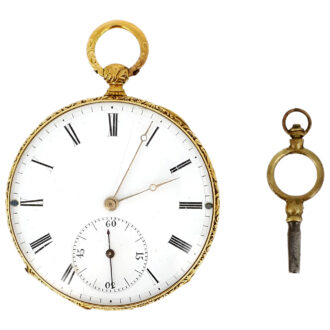
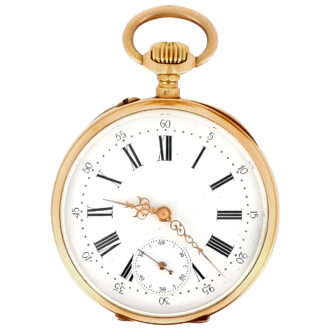
France/Italian open faced souscription type watch Circa 1820
- Kenmerk
- DB0901
- Diameter
- 63 mm
- Estimate
- € 12.500 - 25.000
- Price sold
- € 11.500
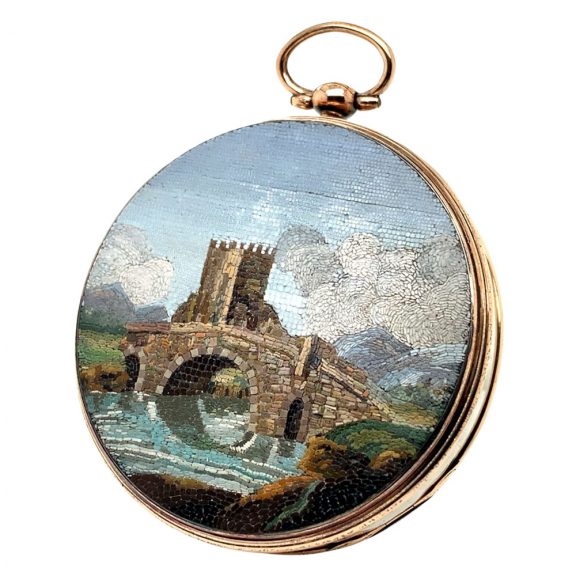
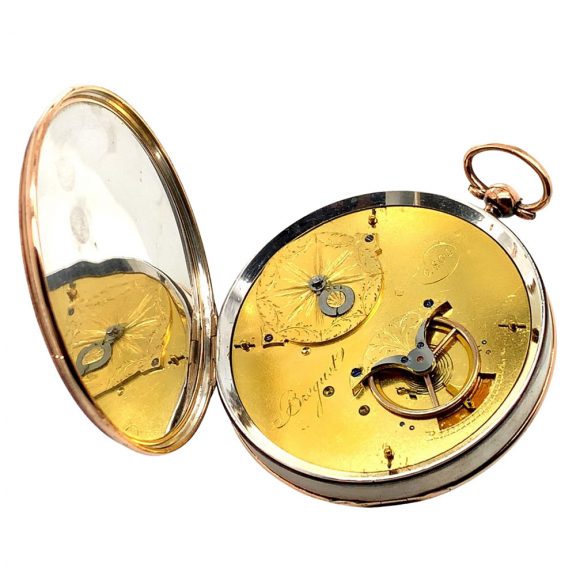
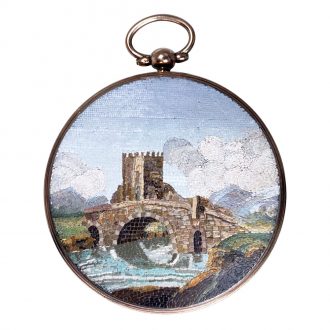
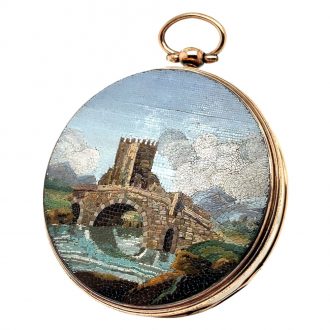
Silver and rose gold watch with micro mosaic attributed to Antonio Aguatti
–
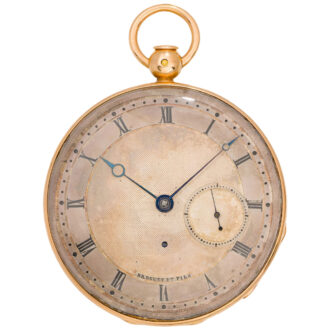
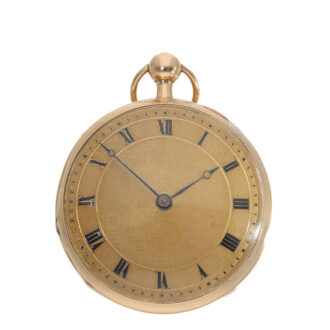
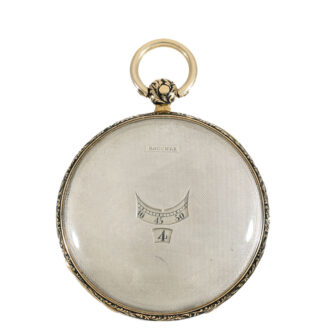
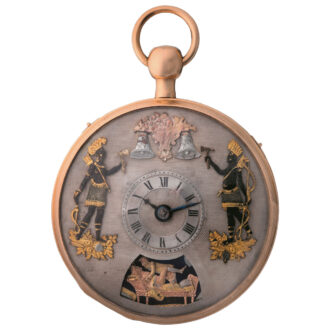
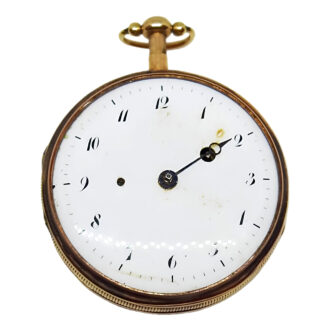
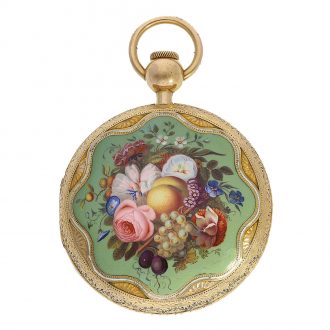
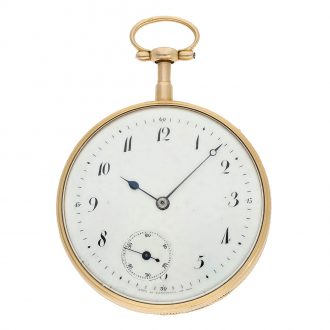
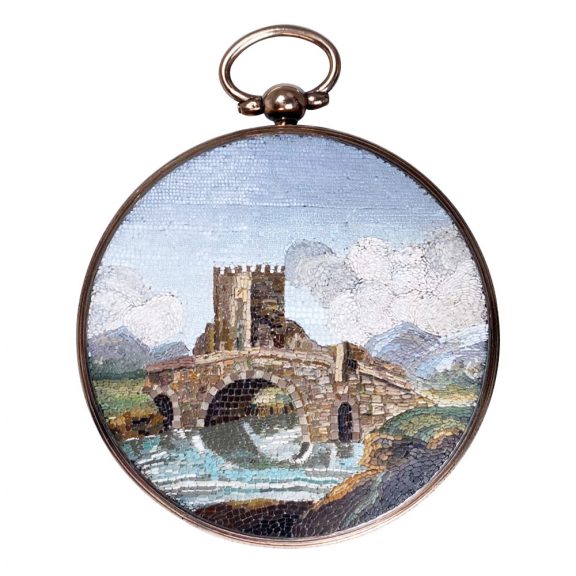
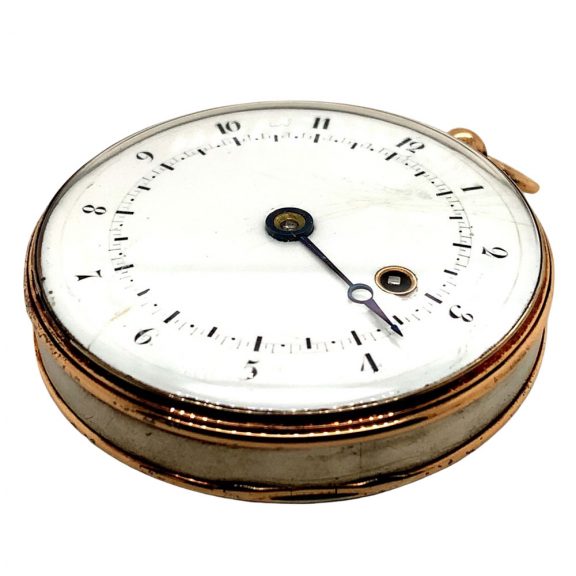
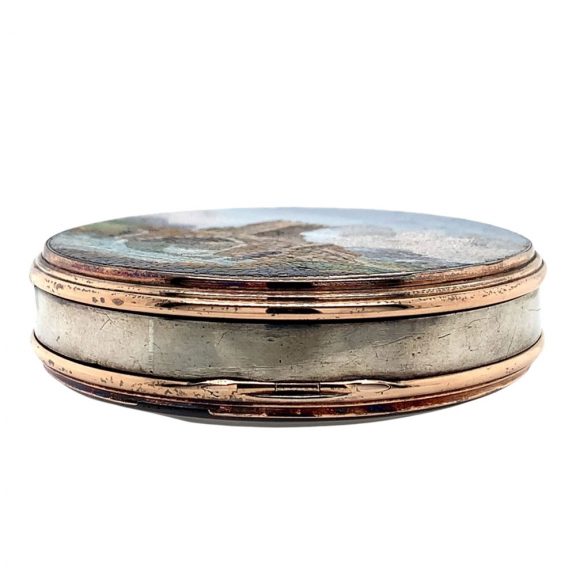
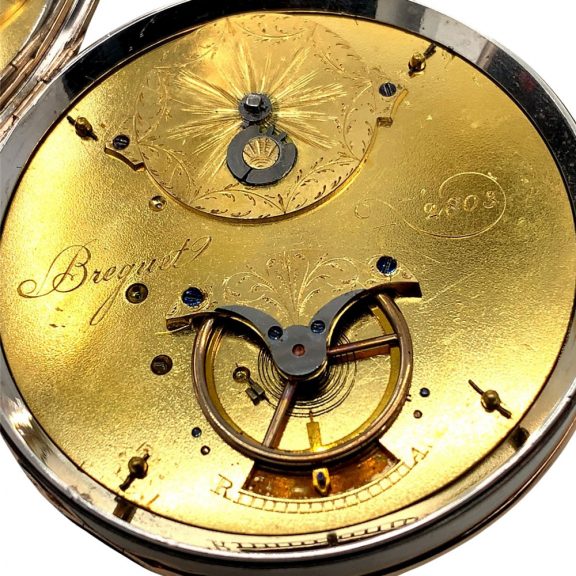
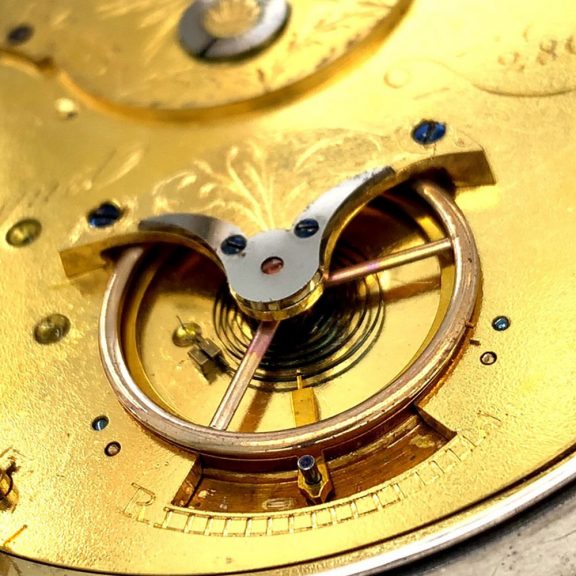
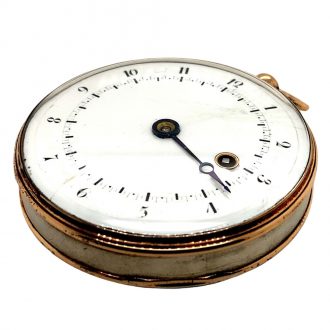
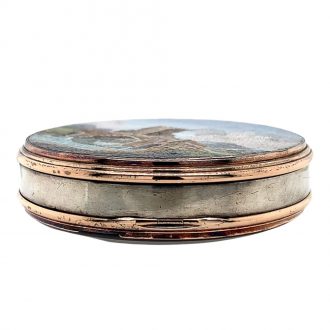
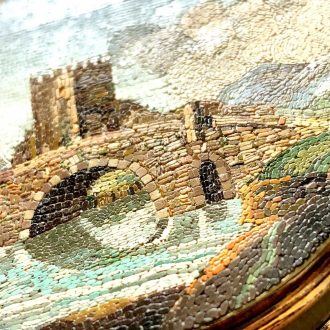
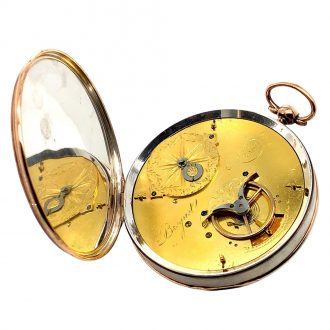
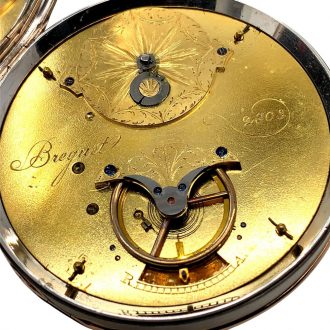
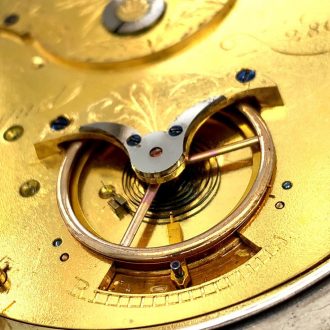
An exceptional, extremely rare France/Italian silver and rose gold open faced montre de souscription type watch, circa 1820. Full plate movement, key wind, a flying barrel, cylinder escapement and three arm ring balance. White enamel dial with Arabic hours, an inner minute track, a secret signature below the 12 Breguet No. 2803 and one Breguet hand. The case with a polychrome micro mosaic on the back depicting the Ponte Salario with its distinctive bridge tower on the Aniene River, a tributary of the Tiber, a smooth band. Movement signed and numbered.
–
Diameter: 63 mm
–
Weight: 157 g
–
Signed: Breguet
–
The numbering of this watch does not match the Breguet archives. It is therefore not a watch from Breguet’s workshop, but may have come from his environment.
–
An engraving by Giuseppe Vasi (1710-1782) from 1754 served as a template for the micro mosaic on the case back.
–
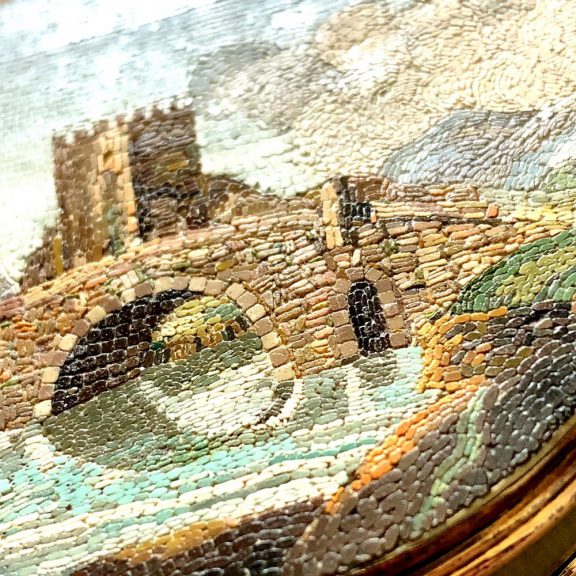
Micro mosaics consist of tiny pieces of glass, fragments of coloured enamel or small hard stones, assembled on a very small area, often just a few square centimetres. Micro mosaics flourished from the late 18th to early 19th centuries. The first documented exhibition of micro mosaics was held in 1775 by Giacomo Raffaelli (1753-1836) in his private studio in Piazza di Spagna. Raffaelli came from a family of workshop mosaicists. Many innovations are credited to him, although some were probably developed a little earlier. Most significant was the invention of the ‘smalti filati’. These are narrow, thin glass rods that are stretched and cut vertically, creating very fine, small mosaic stones. Raffaelli primarily produced micromosaics depicting views of ancient Rome, which were purchased by the wealthy European nobility as small travel souvenirs. This repertoire of images proved to be extremely successful commercially and continued to be produced for a long time. In 1820, there were more than twenty workshops in Rome. Antonio Aguatti (?-1846), another scion of a dynasty of successful Italian mosaic artists, further refined this imagery. He achieved greater naturalness in his work by increasing the variety of shapes in the tesserae, including curves and curves. These changes allowed him to make his work look like it was painted with brushstrokes. In 1834, he was appointed professor at the Studio Vaticano del Mosaico.
Signed: Breguet
Share this page: