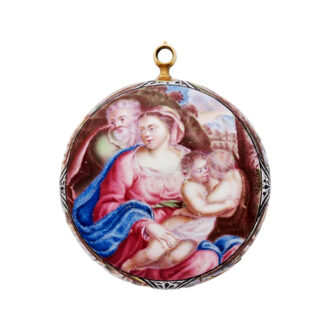
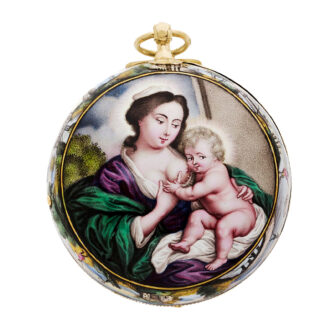
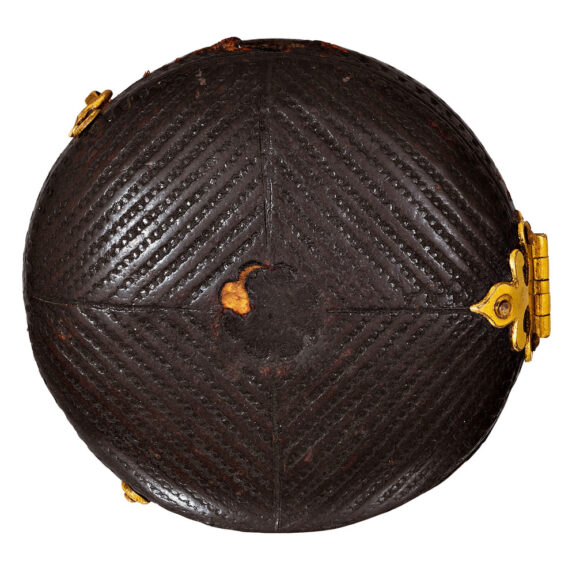
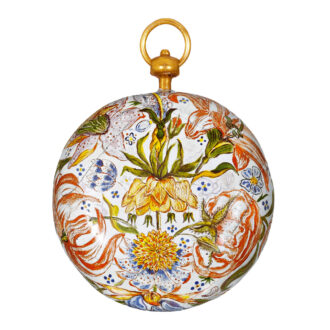
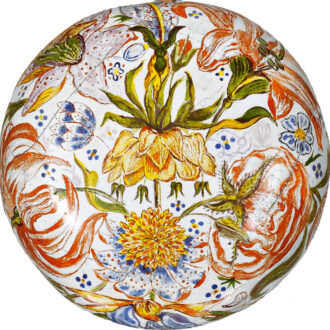
Dutch gold and enamel watch with leather box Circa 1670
- Kenmerk
- FA0243
- Diameter
- 38 mm
- Estimate
- € 10.000 - 20.000
- Price sold
- € 13.850
Gold in leather cased pocket watch
–
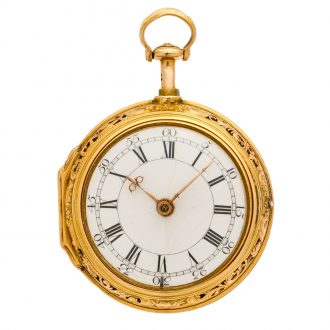
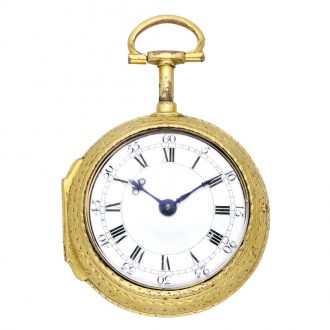
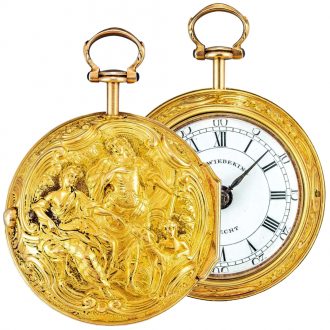
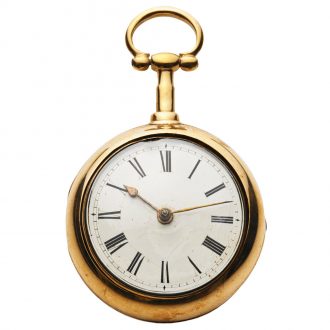
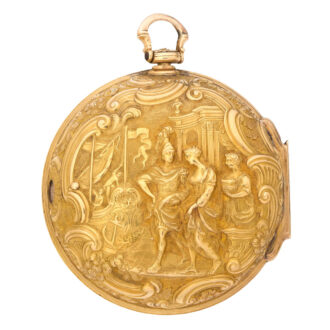
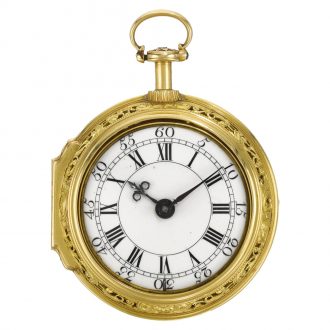
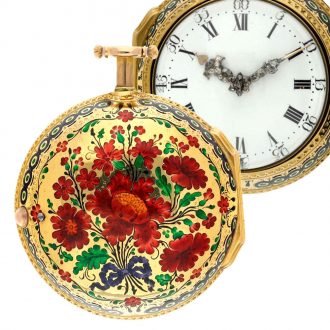
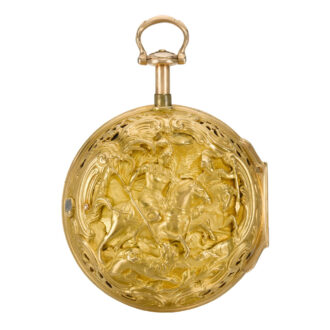
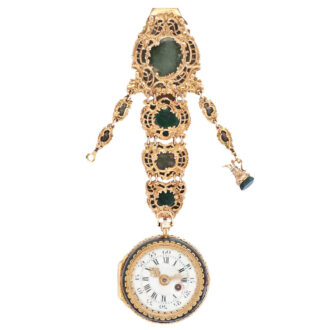
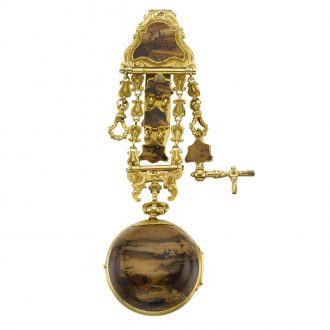
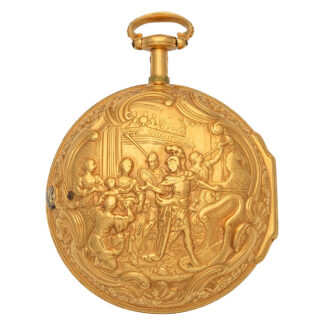
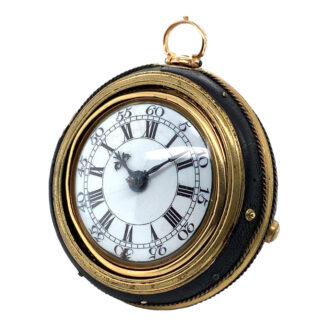
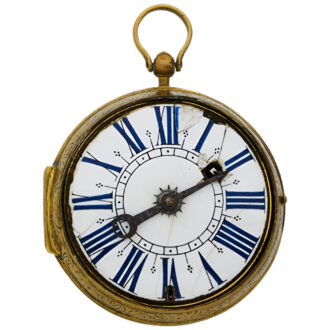
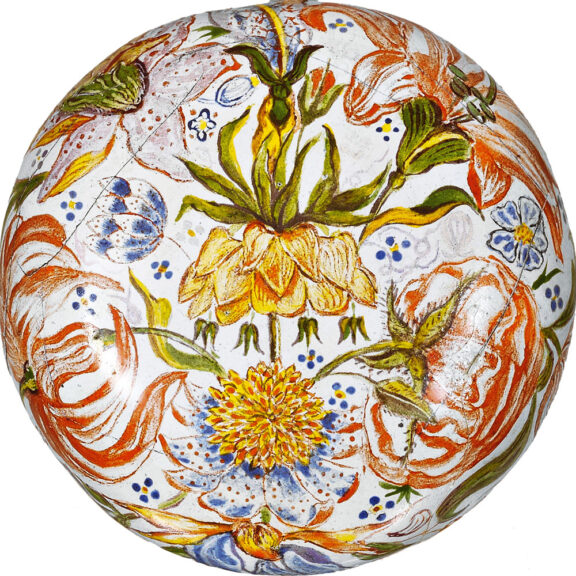
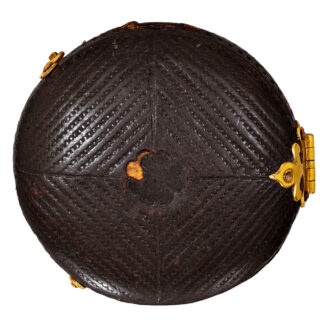
Extremely fine and very rare probably Dutch 20 Carat gold and painted on enamel pendant watch. Accompanied by a leather covered fitted box., circa 1670. The movement by Richard Webster, London, circa 1760.
Gilt full plate movement with cylindrical pillars, fusée and chain, cylinder escapement, plain steel balance with flat balance spring, single footed cock.
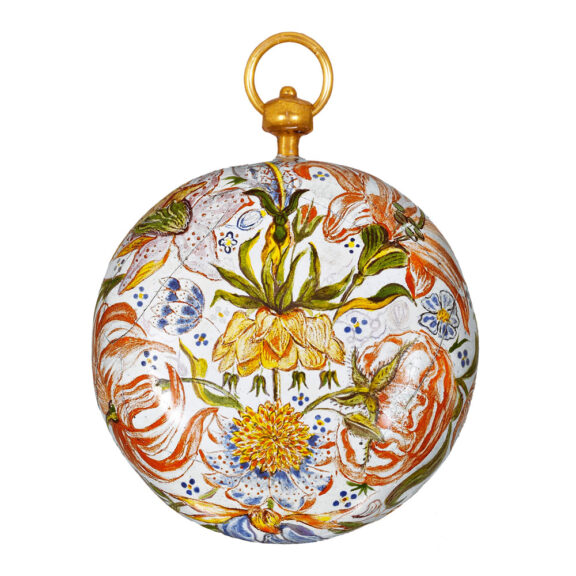
Case with curved in edge, very finely painted with flowers on white background, azure counter enamel, gold engraved split bezel.
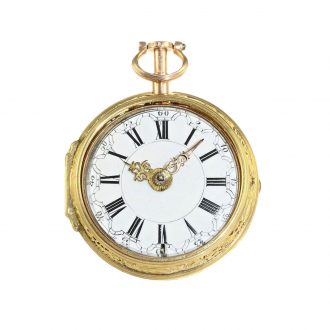
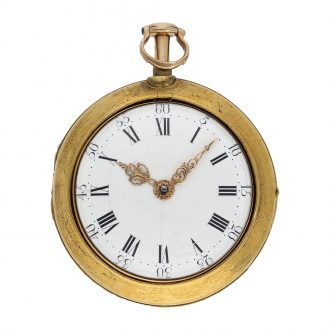
White enamel dial with radial Arabic numerals, outer minute ring. Gold “beetle and poker” hands.
–
Diameter watch: 38 mm
–
Signed: Movement Richard Webster, London
–
Later movement with Lacking elements
–
Very few watches with this type of enamel have survived. The most important examples are in the Louvre, the Walters Museum in Baltimore, formerly in the Demidoff Collection), and the Patek Philippe Museum. Around the beginning of the 17th Century, the flower was elevated to a status of beauty worthy of being painted. This period also witnessed the growth of florilegium, a collection of flower plants, usually printed by copperplate, as opposed to earlier woodcut prints. More than anything they were intended as design sources. In 1611, J.T. de Bry began his work Icones Plantarum, which focused on garden plants. “Still life” paintings of flowers were soon quite common. It appears that the artist who painted the present watch drew inspiration from Florilegium by Emanuel Sweerts, which was first printed in 1612.
The level of mastery that painting on enamel had reached in 17th century France had declined by the turn of the century. Yet owners treasured old cases whose movements had become obsolete after the introduction of the balance spring in 1675. As a result, many Blois watch cases were fitted with “modern” movements or converted into snuff boxes. Many backs and covers were preserved for their beauty alone. There is a record in Ferdinand Berthoud’s registers of a client who requested that an old enamel watch be fitted with a newer movement. The fact that Berthoud obliged the man demonstrates to what extent people treasured their fathers’ enamelled cases. Some watchmakers, like Johanes van Ceulen Le Jeune of Hague, often replaced movements in older painted enamel cases.
Signed: Movement Richard Webster, London
Share this page: