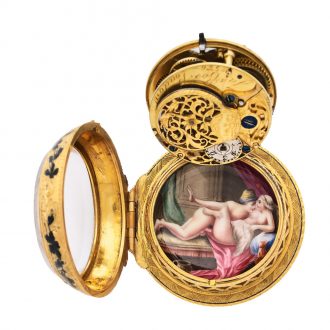
English 18 carat gold and enamel erotic pocket watch Circa 1750
- Kenmerk
- FF0031
- Diameter
- 40 mm
- Estimate
- € 20.000 - 40.000
- Price sold
- -
Gold watch with erotic scene
–
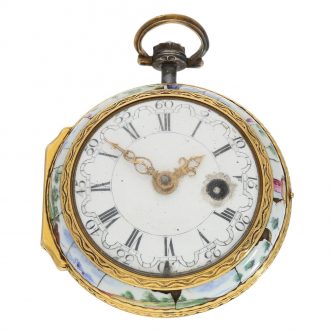
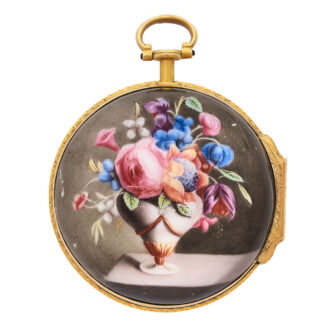
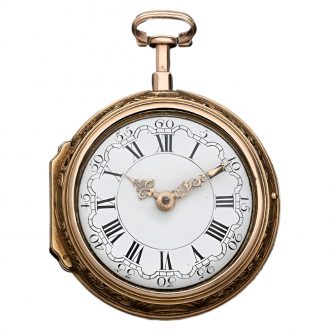
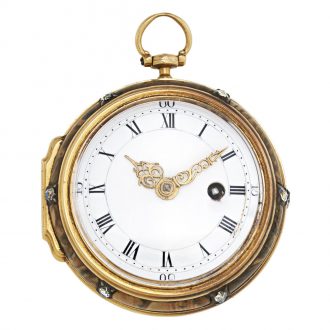
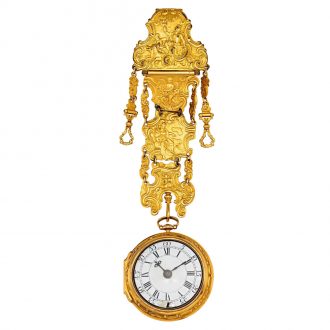
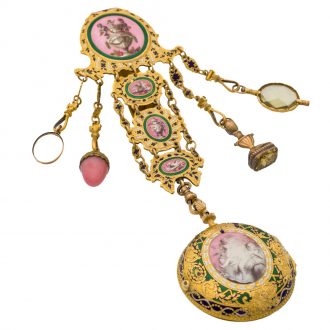
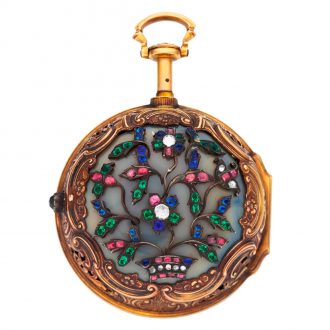
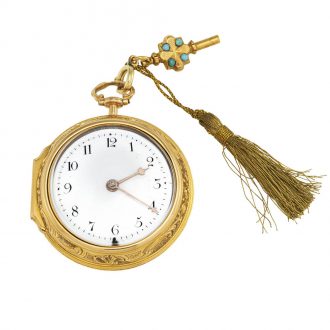
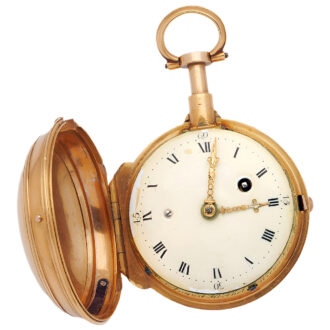
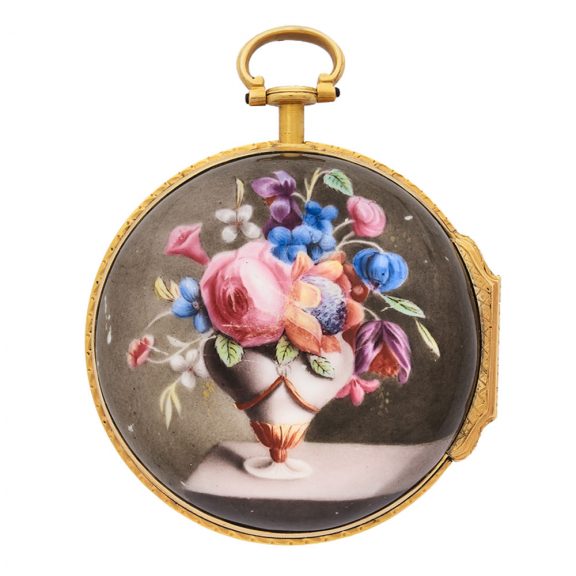
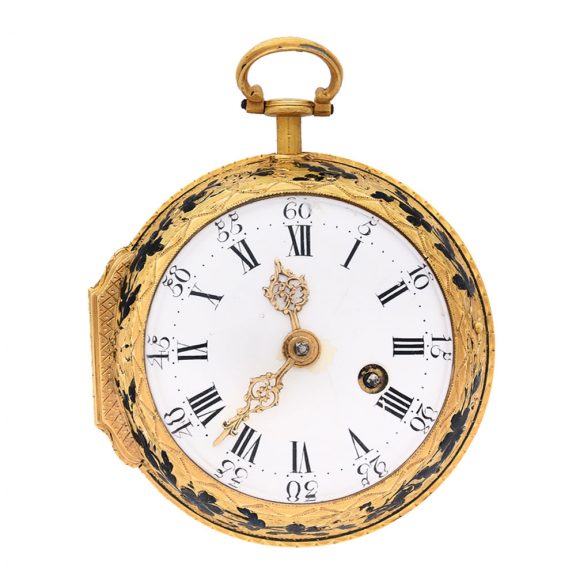
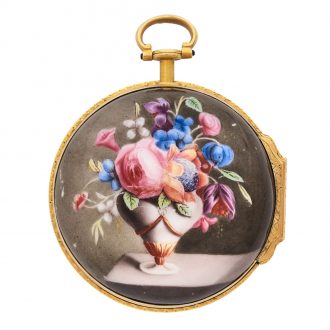
An English naughty gold watch with painted enamel The Vase of Flowers, with three concealed erotic scene made for the Chinese market, circa 1750. Full plate gilt movement with key winding, English cock chased and pierced with a single foot, verge escapement, blued balance spring, fusee and chain mechanism, advance and delay adjustment disc, signature on the plate James Cox, London.
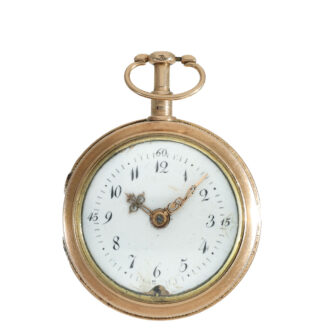
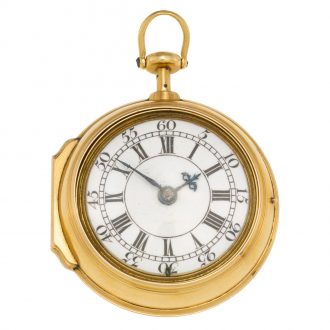
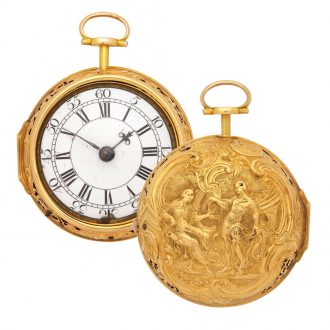
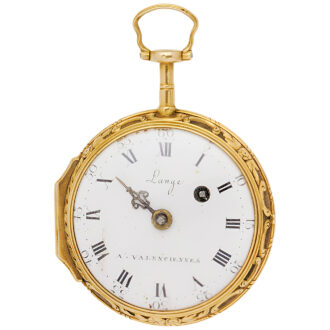
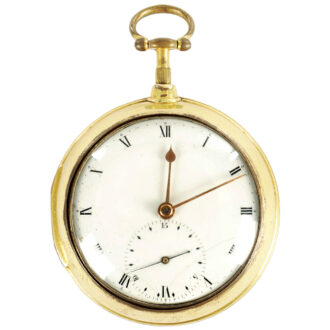
White enamel dial with Roman numerals for the hours and Arabic numerals for the minutes, decorative gold hands and railway minute track, opening for the winding square.
–
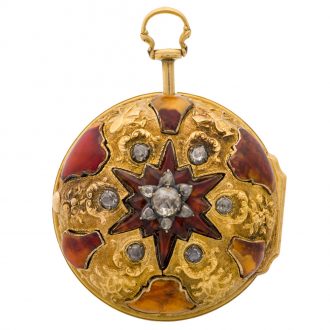
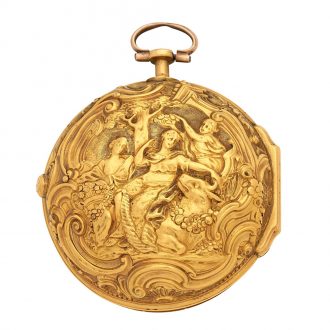
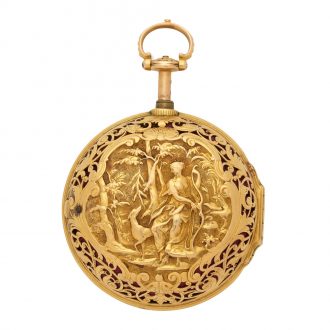
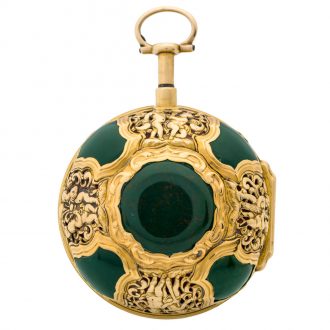
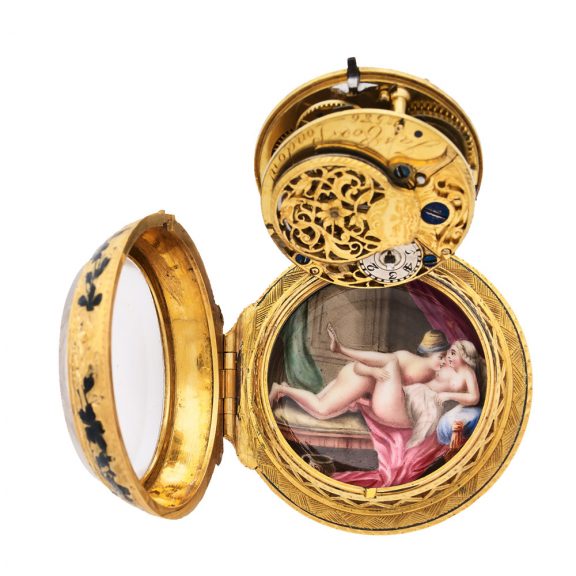
18 Carat round case, the bezel decorated with blue champlevé enamel leaves and engraving, the back decorated with painted enamel depicting a vase of flowers on a light dark grey green background, the entire case conceals on the back of the movement an erotic scene painted on polychrome enamel.
Case with a secret opening on the back onto two erotic scenes in painted enamel, the first depicting a naked woman holding in one hand a goblet given to her by the mythological figure of Pan, the personification of Lust, in the other the main attribute of the Satyr, the second in the interior depicts two lovers on a sofa engaged in an erotic scene.
–
Diameter: 40 mm
–
Weight. 68 gr.
–
Signed: James Cox, London
–
James Cox (1723-1800), a renowned 18th-century British watchmaker, is known for his erotic secret watches, watches with high-quality enamels that were highly prized in both Europe and Asia.
These watches, often made for elites, combined mechanical art and eroticism, hiding naughty scenes behind ingenious mechanisms.
The Context of Erotic Watches in Europe
Fashion of Secret Objects: From the 18th century onwards, the European aristocracy developed a taste for objects that concealed surprises or hidden functions.
Erotic watches are part of this tradition, becoming symbols of refinement, luxury and libertine humour.
Libertine Culture in the 18th Century: The 18th century, marked by libertinism, saw erotic works as a mixture of provocation, intellectual play and aesthetics.
Watches with erotic scenes were particularly appreciated in libertine aristocratic circles, who valued their dual symbolism: the mastery of time and desire.
James Cox’s Erotic Secret Watches
James Cox was a master in the art of designing complex timepieces, often intended to amaze with their aesthetics and ingenuity.
Hidden mechanism: These watches concealed erotic scenes under a cover or dial, often accessible by a secret button like our example.
Erotic scenes: The watches included painted enamel scenes depicting couples or figures in intimate poses, at the request of the patrons.
Precious materials: Cox used gold, silver, enamel, precious stones, and painted miniatures to decorate these watches.
–
Distribution and clientele:
Cox watches were prized by the European aristocracy and lovers of libertine objects, and they circulated in private circles.
–
Symbolism and reception
Symbol of power and luxury: Owning an erotic watch was a sign of sophistication and access to a libertine culture reserved for an elite.
Aesthetic and functional duality: The watches combined the craftsmanship of advanced watchmaking with a touch of lightness or subversion.
Transgressive Object: These watches reflected a fascination with carnal pleasures, but their hidden nature allowed them to be discreetly exhibited, among initiates.
James Cox’s erotic secret watches illustrate the unique blend of mechanical ingenuity, artistic refinement and cultural provocation specific to the European 18th century. These creations, beyond their function, embody an era where time, desire and sophistication intersected in exceptional objects.
It was during the 1760s and early 1770s that Cox became famous for a very specific genre: elaborate and luxurious musical and automaton clocks and watches, intended for the Far Eastern market, and especially for the court of the Chinese emperor himself.
Very few James Cox naughty watches of this quality are known to this day, and well beyond the subversive character specific to libertinage, it is worth noting the quality of the enamel and the jewelry work to conceal the secret which is quite remarkable in its execution.
These watches, intended for a European elite and the Chinese market, are the result of a collaboration between specialized watchmakers and enamelers, who played a crucial role in the decoration of these unique pieces.
Signed: James Cox, London
Share this page: