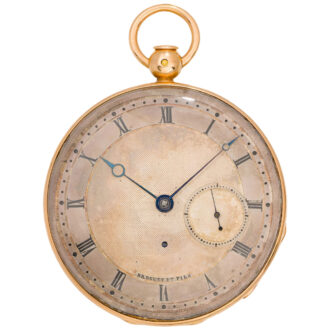
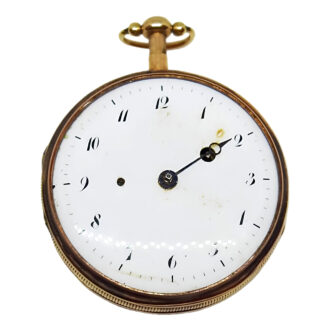
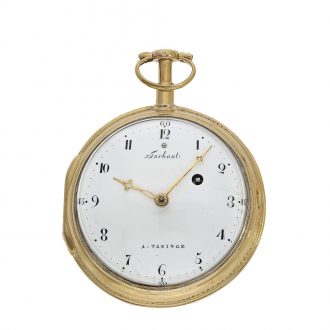
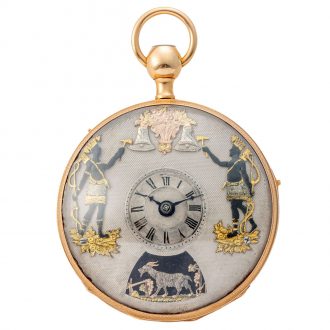
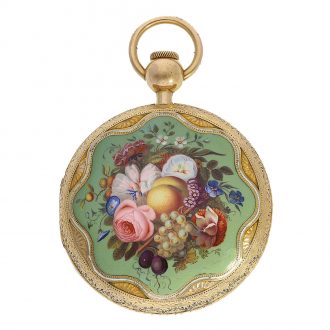
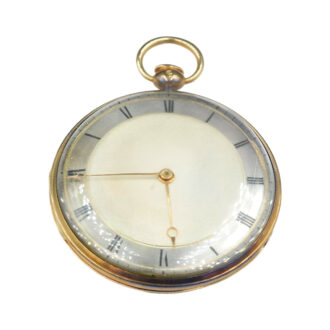
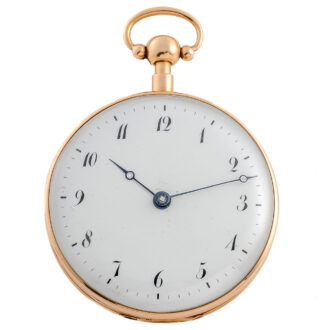
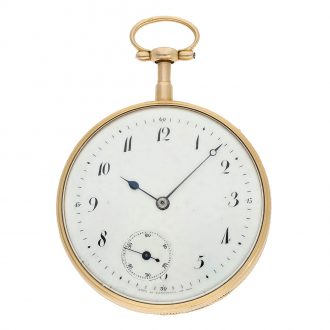
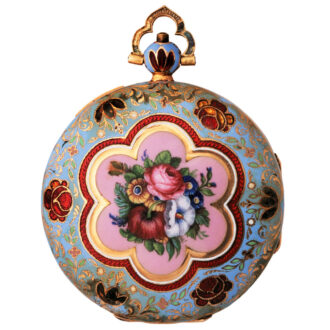
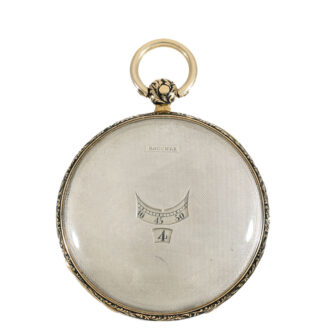
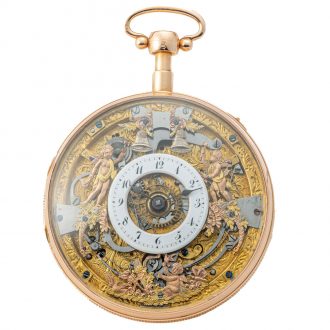
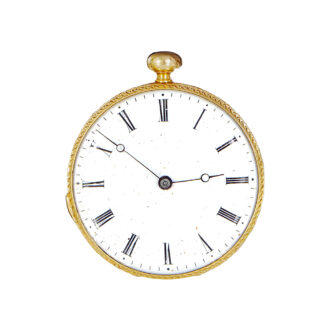
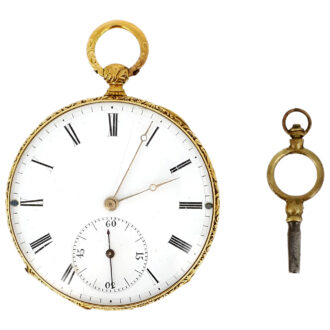
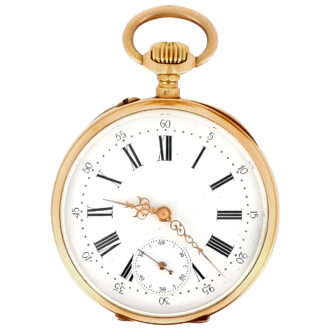
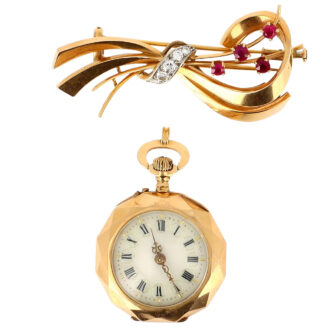
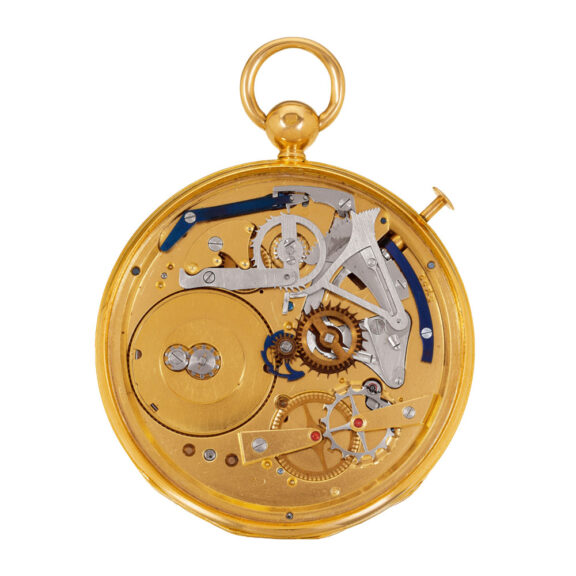
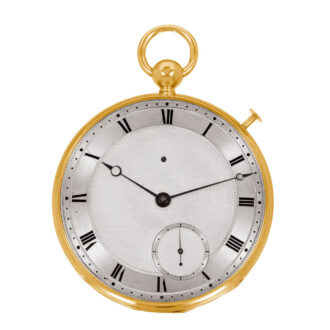
French gold half quarter repeater with jumping hour Circa 1820
- Kenmerk
- TA1142
- Diameter
- 56 mm
- Estimate
- € 50.000 - 100.000
- Price sold
- € 117.800
Gold cylinder watch with essentric seconds
–
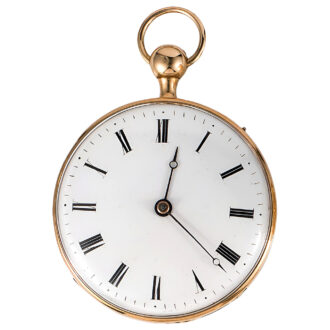
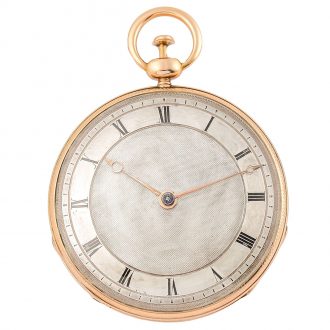
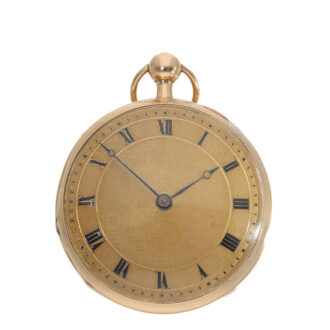
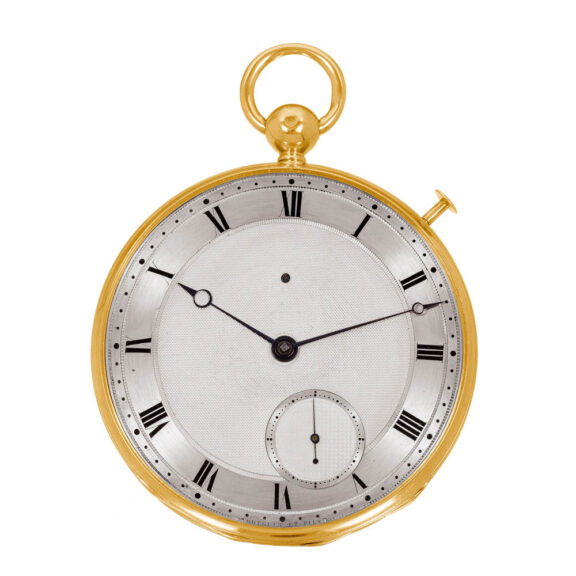
A very fine and very rare French 18K gold jump hour and half-quarter repeating pocket watch, circa 1820. With ruby cylinder escapement and eccentric seconds. Breguet Paris, Marine Royale, sold to the Comte d’Otrante on July 1, 1820, for 2110 Francs. Hinged gold cuvette. Silver engine turned dial, brushed chapter ring with radial Roman numerals, outer minute track with dot markers, eccentric subsidiary seconds between 5 and 6. Blued steel Breguet hands.
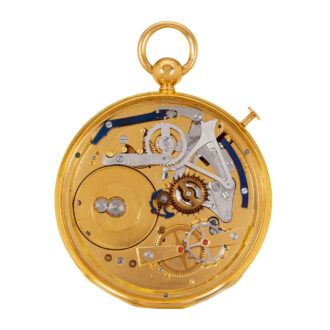
Frosted gilt movement, souscription caliber, standing barrel, jeweled train, overhanging ruby cylinder escapement with polished steel escape wheel, three-arm brass balance, the top pivot with pare-chute, flat blued steel balance spring, bimetallic temperature compensation curb fitted to the index regulator, repeating with a single hammer on a gong activated by a pull and twist piston in the band between 1 and 2. Dial and cuvette signed. Case with Joly’s mark, case and reverse of dial punch numbered.
–
Diameter: 56 mm
–
Signed: Breguet Paris
–
Joseph Fouché (1763-1820) French statesman and head of internal security under Napoleon Bonaparte, Joseph Fouché had been a Jacobin member of the Convention, Fouche voted for the death of Louis XVI and later became politically more conservative when he sensed it was opportune. In 1799, Fouche became Minister of Police. He supported Napoleon’s coming to power in the coup of Brumaire. Nevertheless, Bonaparte mistrusted Fouché and removed him from office for two years, before re-employing him as security chief. In 1810, the Emperor learned Fouché had been having secret talks with foreign powers and eventually sacked him. Fouché, however, won his way back into semi-favor and was given the governorship of Illyria. After the Bourbon return to power Fouché kept links with Bonaparte, as he did with the royals during the 100 Days’ Campaign. After the Emperor’s final defeat he was president of the commission ruling France and even had a place in government. However, pro-royalists objected to a regicide being in power and Fouché quit his post after only a few months. Fouché was made a Count of the Empire in 1808 and Duke d’Otranto in 1809.
Signed: Breguet Paris
Share this page: