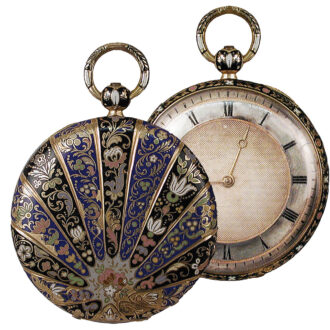
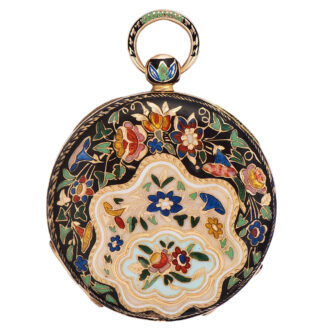
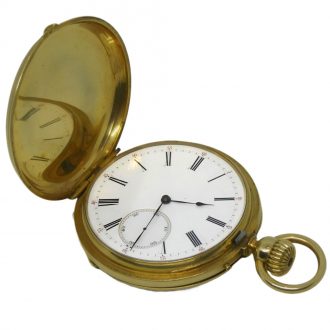
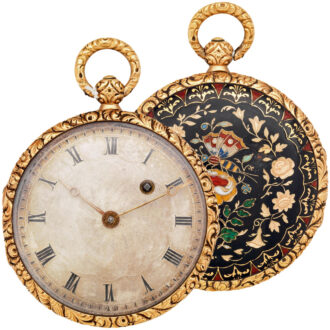
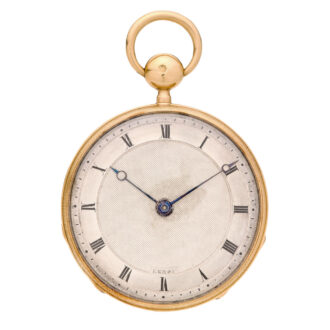
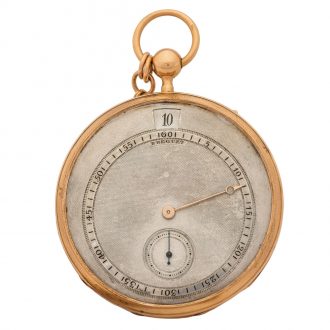
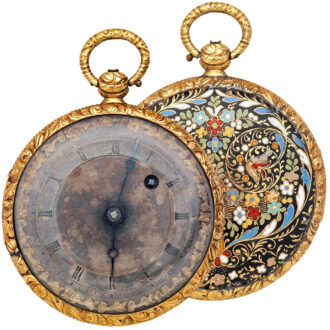
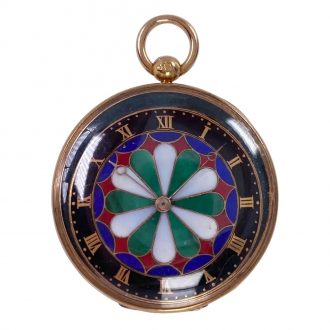
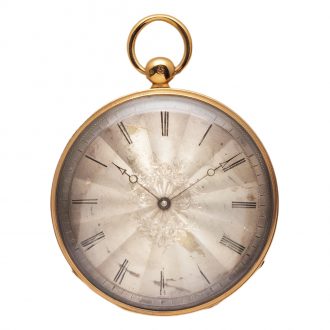
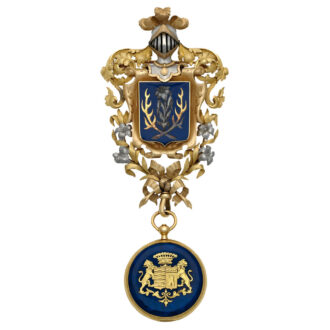
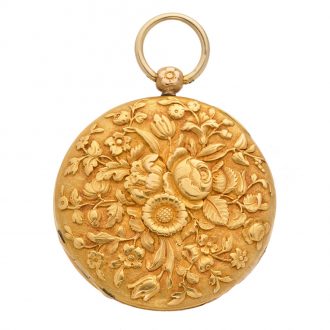
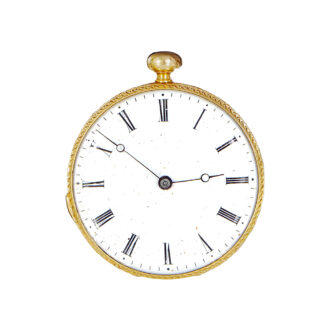
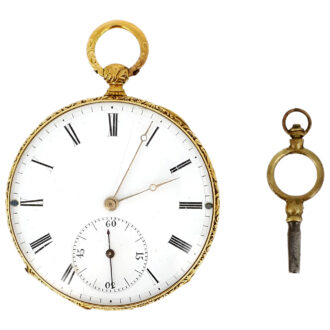
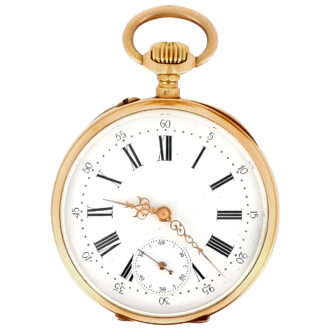
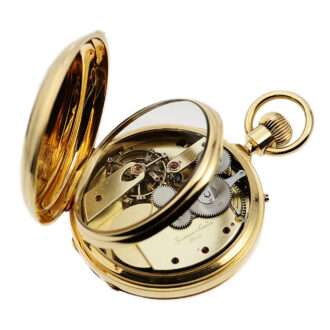
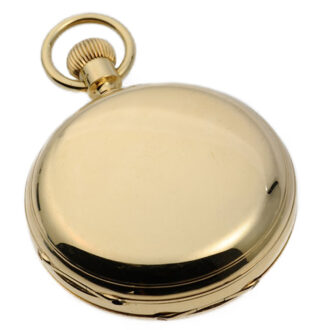
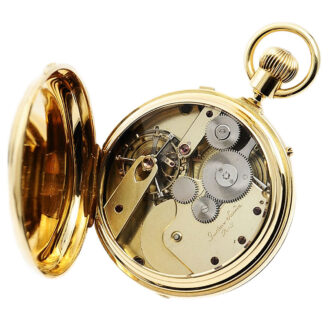
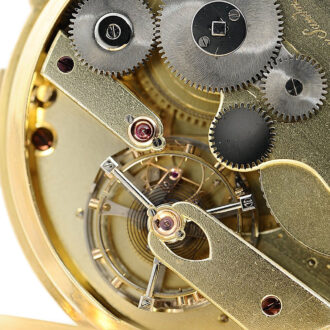
French gold pocket watch with one minute tourbillon Circa 1835
- Kenmerk
- AD9320
- Diameter
- 55 mm
- Estimate
- € 27.500 - 45.000
- Price sold
- € 28.400
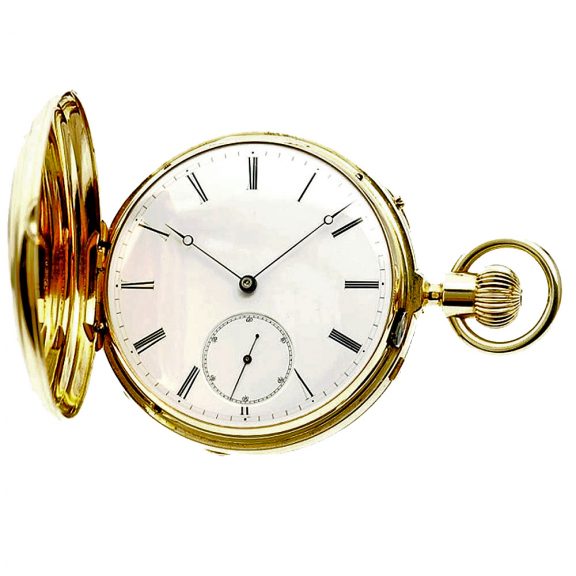
Rare hunting cased gold pocket watch by Gustave Sandoz
–
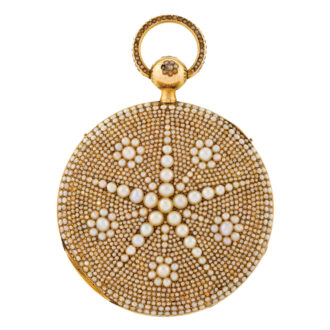
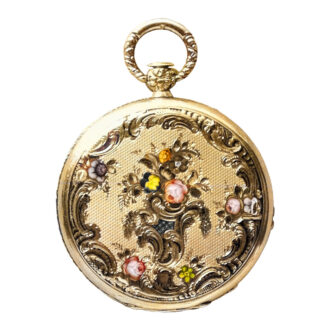
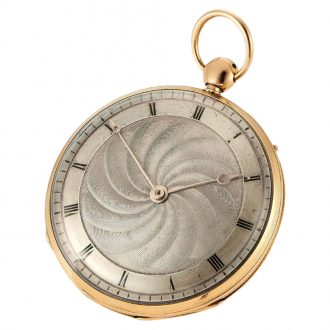
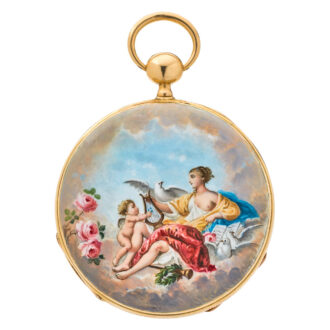
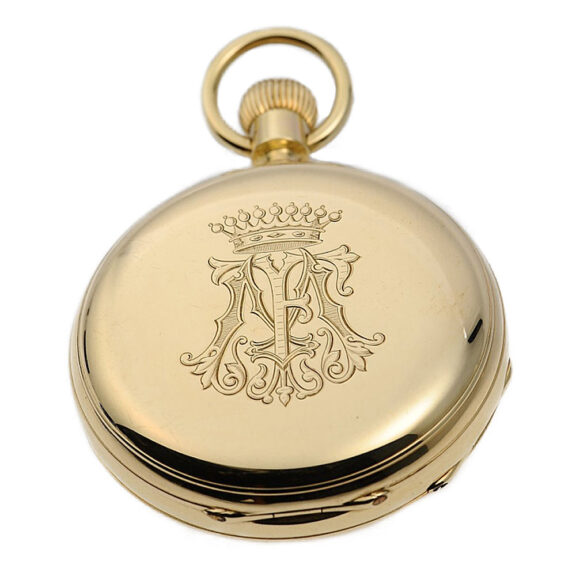
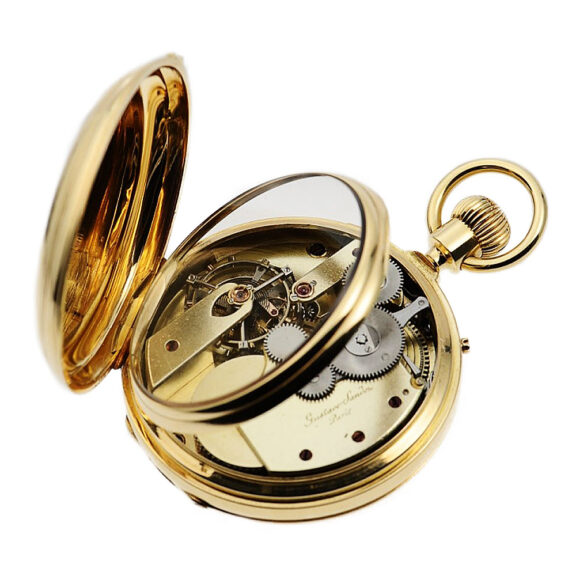
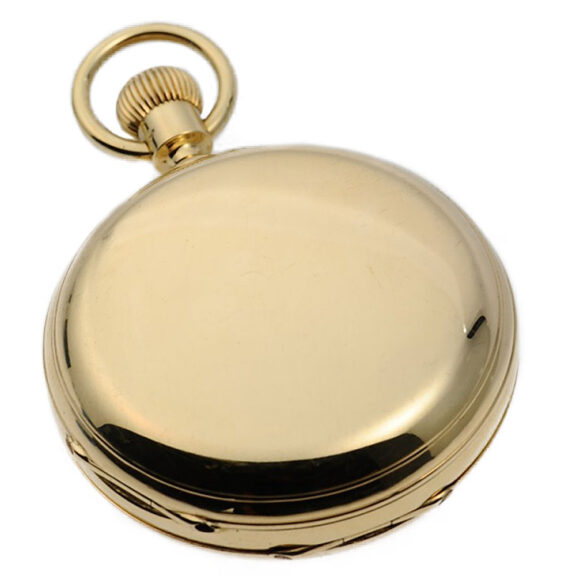
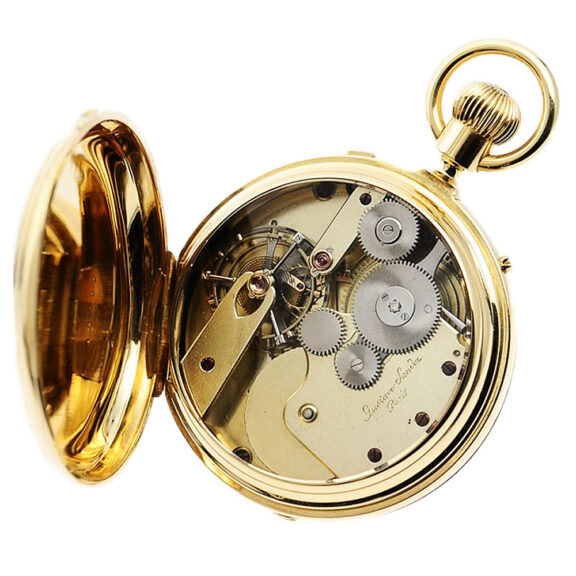
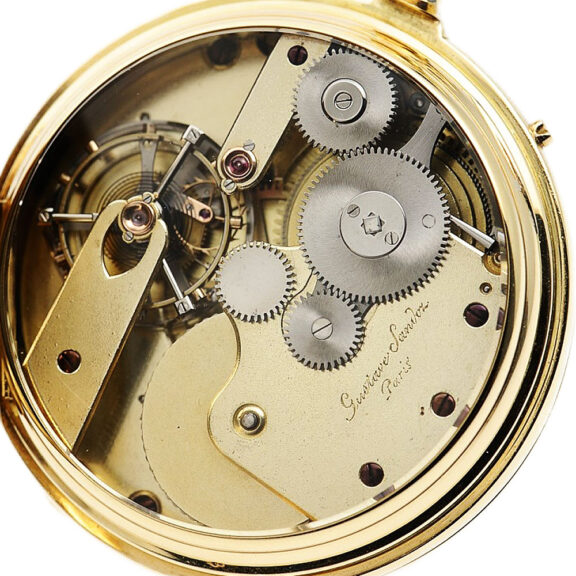
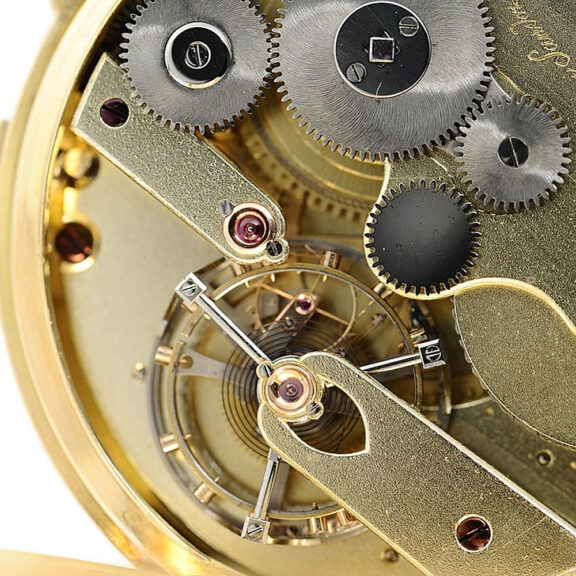
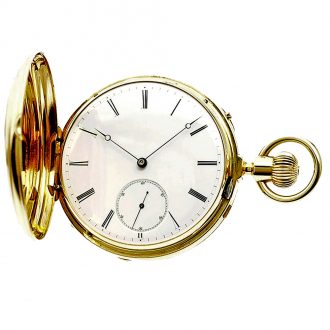
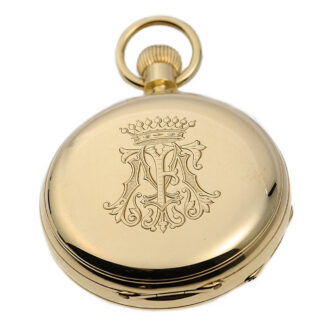
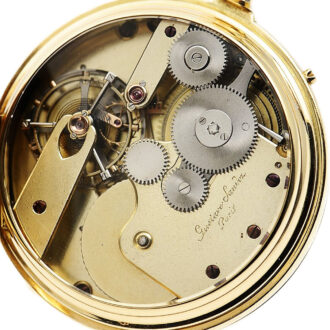
A very fine, rare French hunting cased gold pocket watch with one minute tourbillon and spring detent escapement, circa 1835. Bridge movement, frosted, gilt, chain/fusee, applied to the plate crown winding and hand setting device, finely polished steel tourbillon cage with ornamented platinum counterpoise, screwed gold chatons, gold screw compensation balance, free sprung blued balance spring with a terminal curve, balance cock with aperture. 18 Carat gold, polished, à goutte case, monogrammed FM with earl’s crest and glazed movement. Enamel dial with radial Roman hours, auxiliary seconds, and blued Breguet hands.
–
Diameter: 55 mm
–
Weight: 168 g
–
Signed: Gustave Sandoz, Paris
–
Gustave Sandoz
Gustave Sandoz, or Jacques-Gustave Sandoz, as is his full name, was born in Paris on September 11, 1836; his father was a watchmaker from the Neuchâtel area.
At the age of 13, Gustave began his apprenticeship with the watchmaker Pérusset in the Rue de la Monnaie in Paris; in 1855, aged 19, he was awarded the “Grand prix d’honneur de l’ Association polytechnique” established by Napoleon III. Sandoz later worked in the Lepine workshops which had by then been taken over by Boulay, with the famous Paul Garnier and for the Breguet company; he eventually set up his own workshop in the Rue de la Monnaie. In 1861, he moved to the Passage Sainte Anne; this was at the time when the Conservatoire des Arts et Métiers commissioned him with the maintenance of their timekeepers and instruments – this added considerably to his reputation. In 1865, he moved for the last time and established himself at the famous Palais Royal no. 147-148, where he was quite close to the illustrious companies Boucheron and (later) Lalique.
One of his chronometers won a second prize in 1882 at the Geneva Observatory test, and Sandoz won a gold medal a year later in Amsterdam. Sandoz represented the renowned Swiss company Vacheron & Constantin and presented a lady’s exclusive gold wristwatch (that was wound by turning the bezel) at the World Exhibition in Paris in 1889 – the watch had been made specially for this occasion. In the same year, he became a founding member of the Société d’ Encouragement aux Arts et à l’Industrie. He was made an Officier of the French Legion of Honour and appointed Horloger de la Marine; Gustave Sandoz died in 1891.
A street near the former Renault manufacturing plants was named in honour of Sandoz. His son Gustave Roger, born on May 28, 1867, took over the business in the Palais Royal; four years later he moved to Rue Royale 10.
–
Tourbillon
A system devised and patented by Abraham-Louis Breguet in 1801 to compensate for errors of rate caused by the Earth’s gravitational force in upright positions. The escapement is mounted in a revolving cage with the regulating organ (balance) at the centre.
The escape wheel pinion turns about the fixed fourth wheel. The cage generally revolves once a minute and, in doing so, compensates for errors of rate caused by the vertical position in which pocket watches spend most of their time.
This delicate and complex structure is one of watchmaking’s most ingenious mechanisms. A simplified and more robust alternative is the carousel, where the cage is driven not by the fourth wheel but by the third wheel. A Tourbillon can contain a lever or a detent escapement.
Signed: Gustave Sandoz, Paris
Share this page: