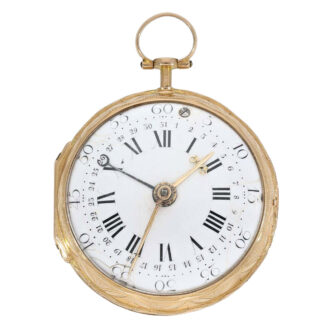
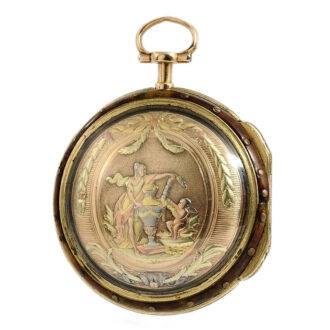
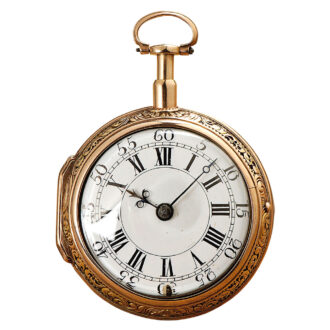
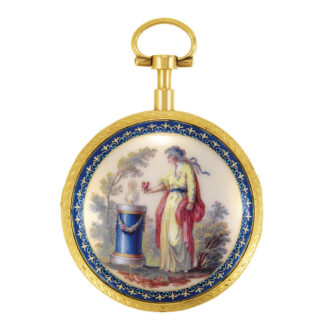
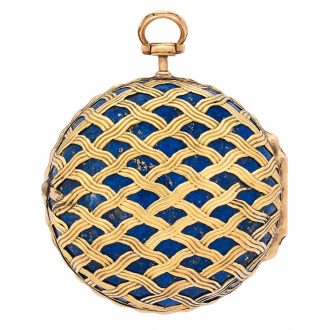
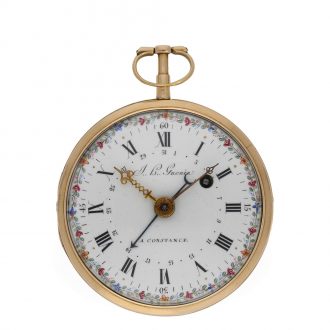
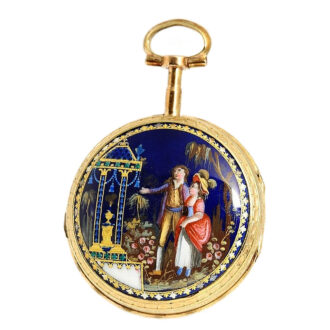
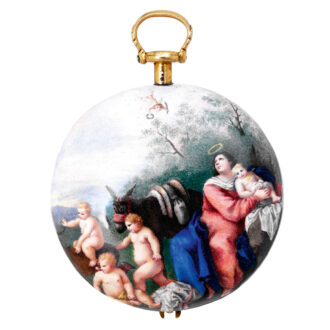
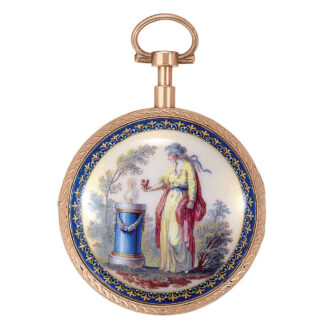
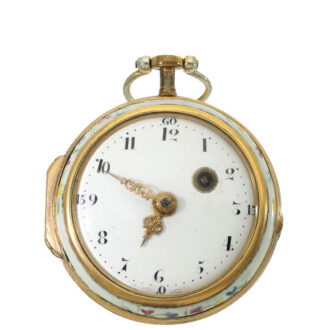
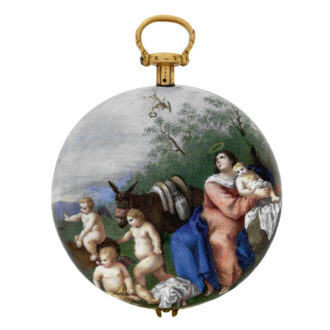
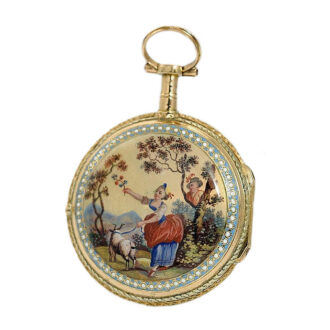
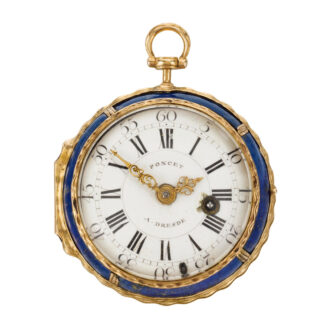
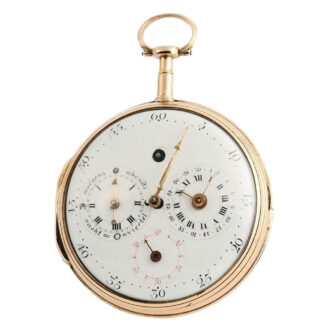
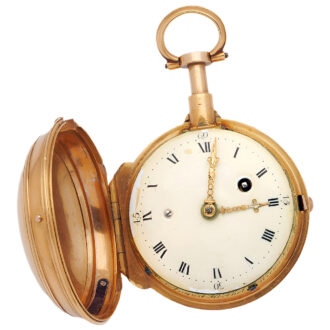
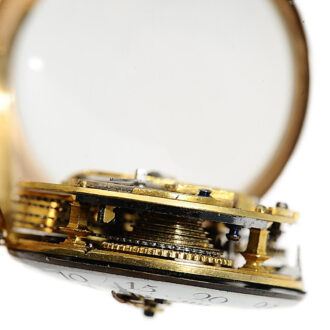
German 18K gold open faced verge pocket watch Circa 1780
- Kenmerk
- AD9487
- Diameter
- 41 mm
- Estimate
- € 2.000 - 3.500
- Price sold
- € 3.000
Gold Augsburg verge pocket watch by Leopold Rotty
–
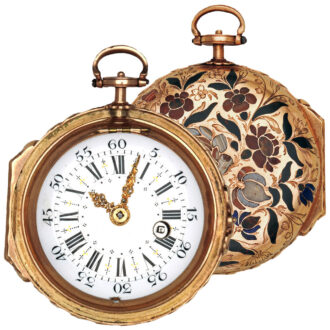
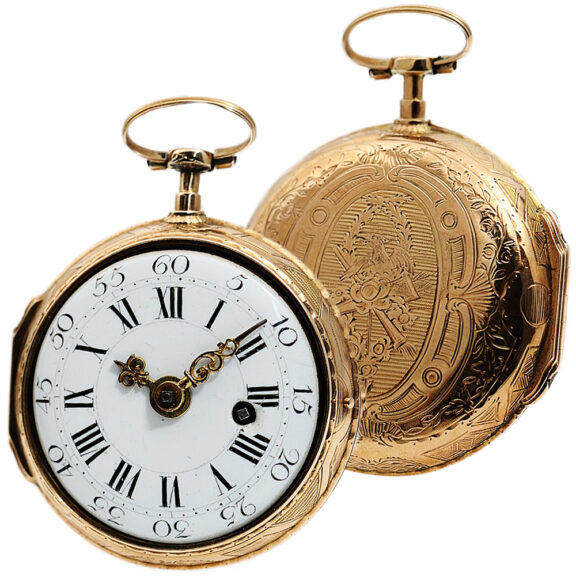
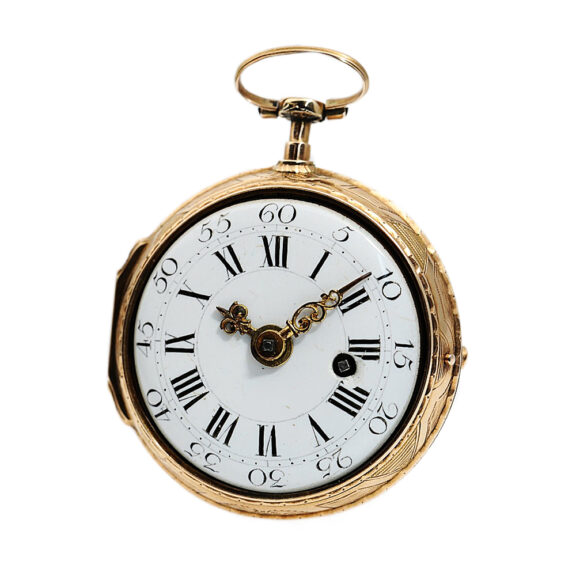
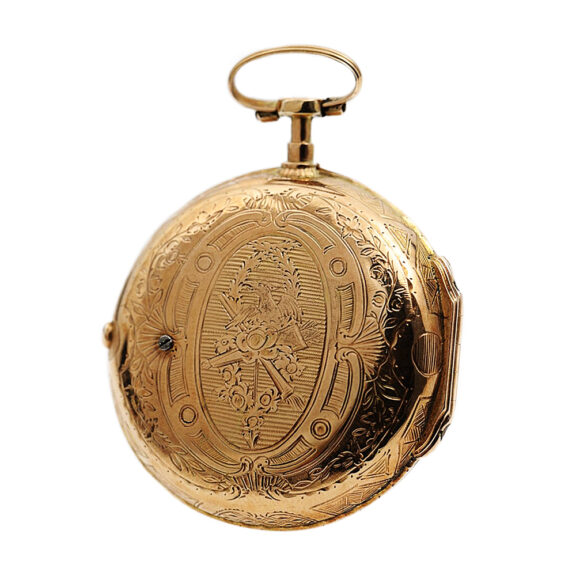
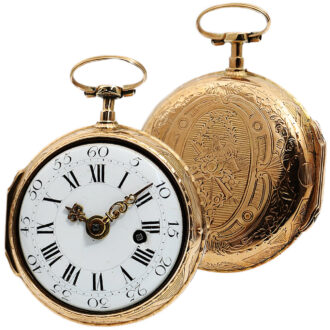
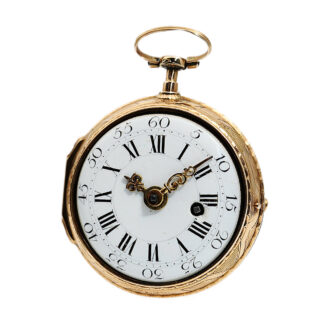
A German rose gold and florally engraved, Augsburg verge pocket watch, circa 1780.
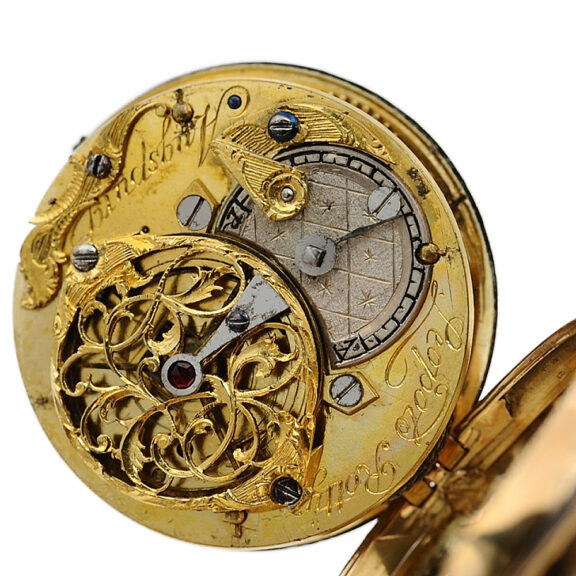
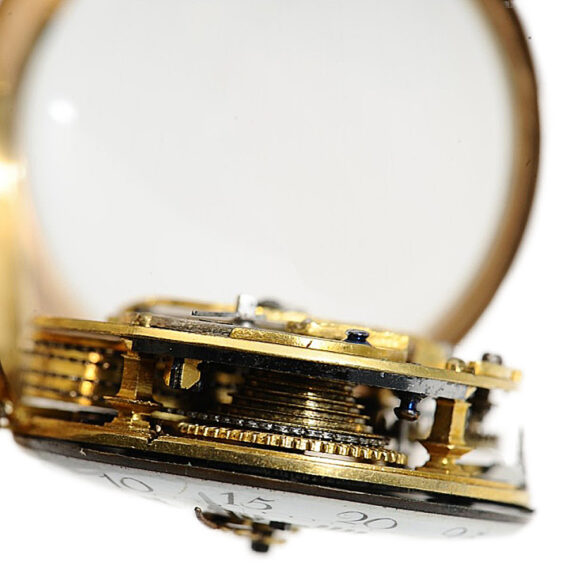
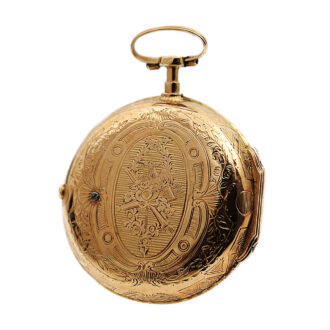
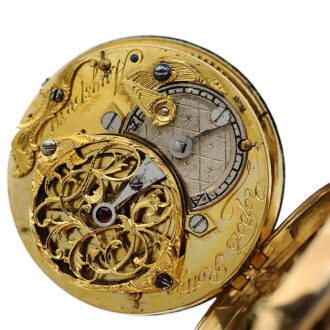
18-Carat rose gold case, the backside with engraved decor: flower garlands and a central oval medallion depicting an eagle and military equipment; and with a large lateral hinge. Enamel dial with radial Roman hours and Louis XVI hands. Full plate movement, keywind, fire gilt, richly engraved, chain/fusee, square baluster pillars, three-arm brass balance, fine florally engraved and pierced balance bridge.
–
Diameter: 41 mm
–
Weight: 48 g
–
Signed: Leopold Rotty, Augspurg
–
Leopold Rotty, German watchmaker
Leopold Rotty was resident in Augsburg, according to the intelligence newspaper and weekly gazette of the royal Bavarian city of Augsburg from 1827, watchmaker Leopold Rotty currently has his lodgings in the middle grave in the house of Lit. G. No. 325 at ground level. A silver box with a clock in the lid is known, signed Georg-Leopold Rotty from the early 19th century. Perhaps Georg-Leopold was identical with Leopold Rotty or was it, family. By 1780, the heyday of clockmaking in Augsburg was long over, and clocks from this period with an Augsburg signature are very rare.
–
Leopold Rotty also knows a watch from the Moritz Holzer collection.
Moritz Holzer (born 1871) lived with his wife Hermine (born 1880) at Güterstrasse 15 in Pforzheim until 1940. Moritz Holzer owned a chain and ring factory in the jewellery city. Before the family was deported to Gurs on October 22, 1940, the property was “sold”. The collection of 124 pocket watches from various international manufacturers was transferred on March 21, 1941, by the “Administration and Exploitation of Jewish Assets in Baden” to the Badisches Landesmuseum for appraisal. There the clocks were assessed by an external appraiser and 37 examples were purchased by the Badisches Landesmuseum. After deportation and imprisonment in the camp, Moritz and Hermine Holzer managed to emigrate to Birmingham in 1945. Moritz Holzer submitted an application for reimbursement, which was resolved in 1955 with a settlement in favour of the applicant in the form of a compensation payment for the confiscated household items, including the clock collection.
Signed: Leopold Rotty, Augspurg
Share this page: