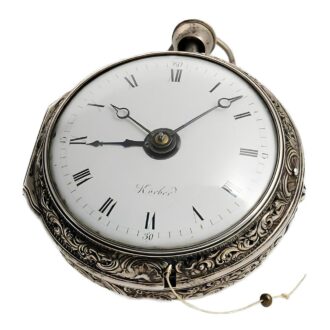
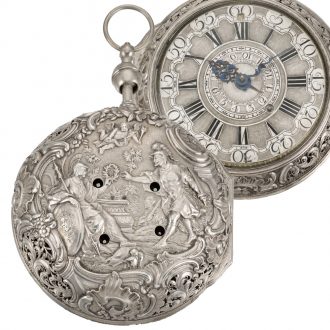
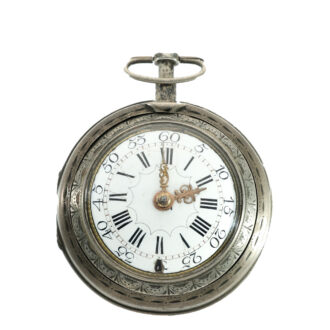
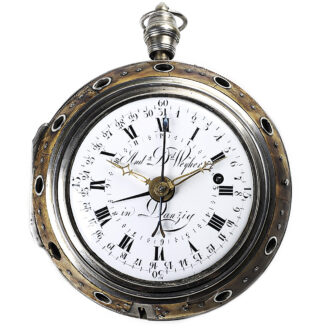
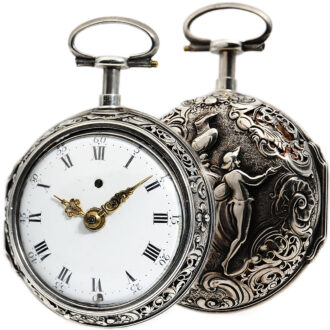
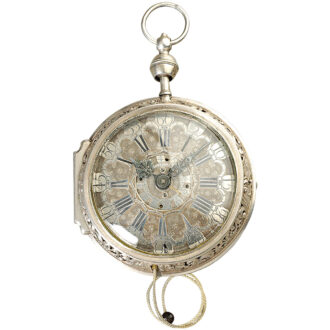
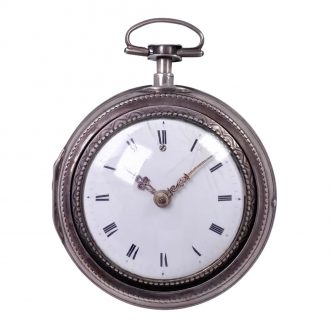
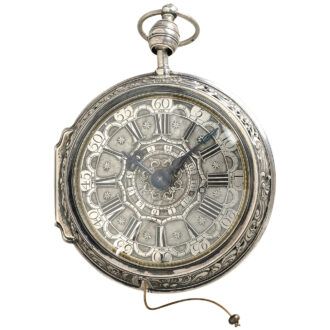
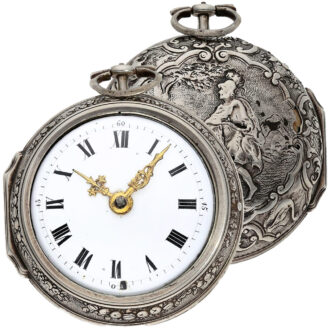
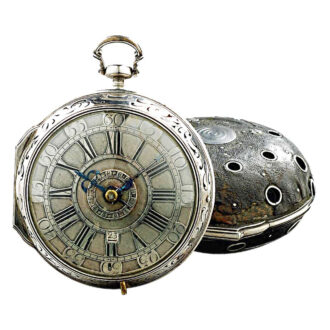
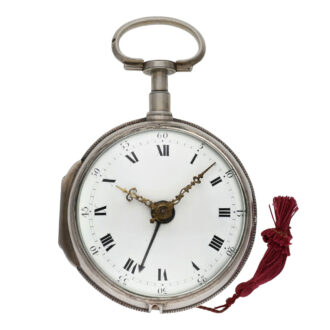
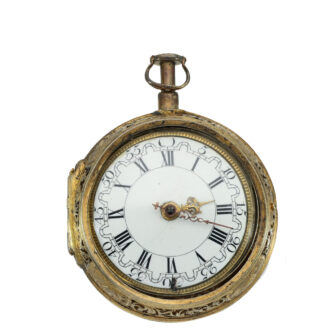
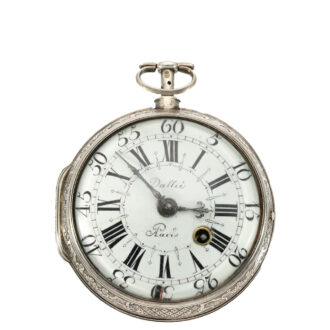
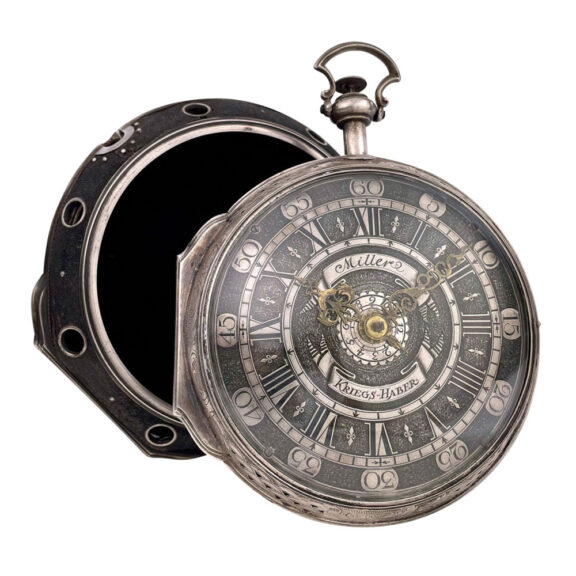
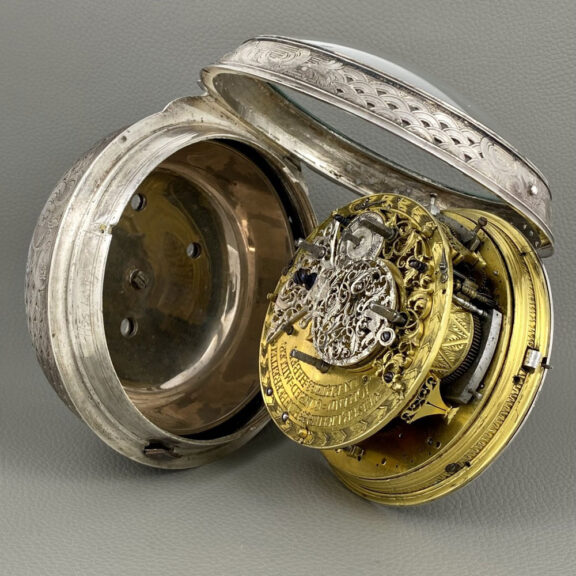
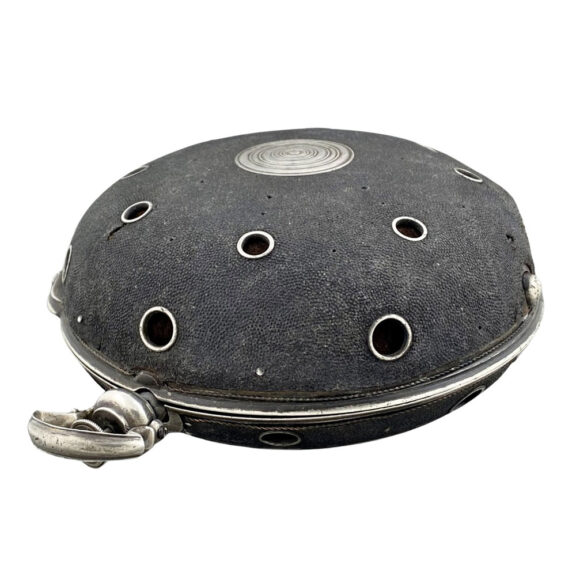
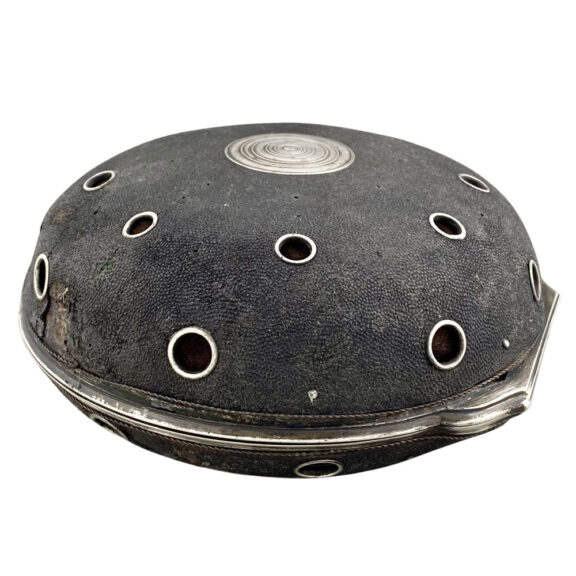
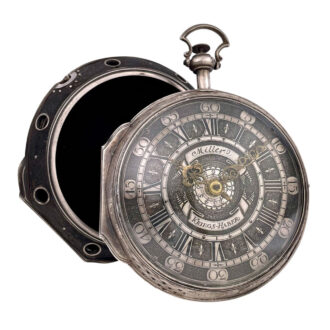
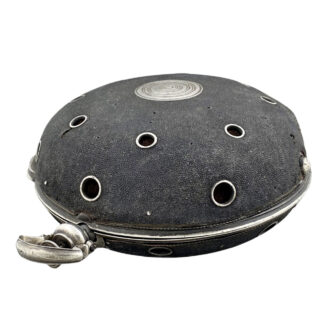
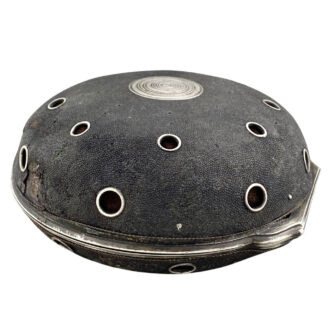
German museum quality pair cased coach watch Circa 1750
- Kenmerk
- DB1073
- Diameter
- 122 mm
- Estimate
- € 25.000 - 45.000
- Price sold
- € 28.750
Silver coach watch with shagreen transport case
–
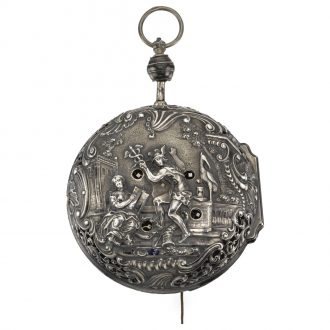
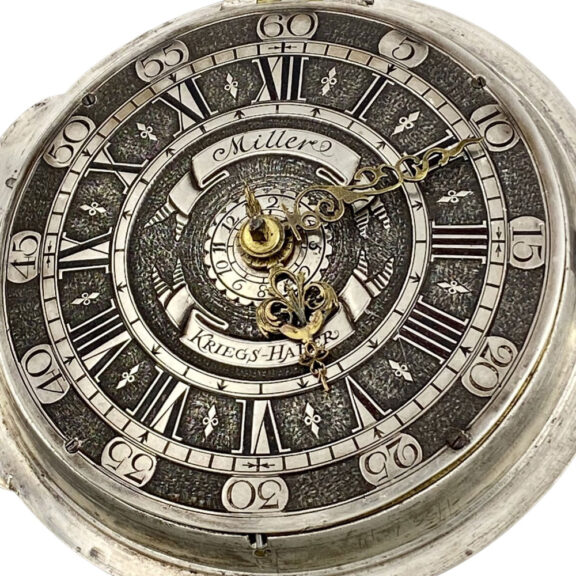
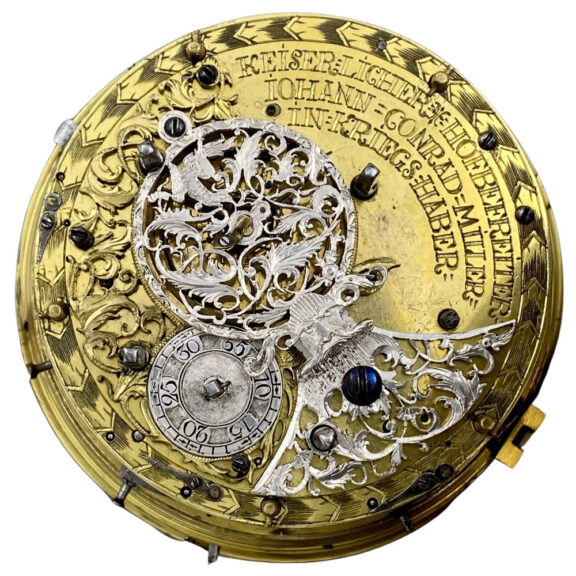
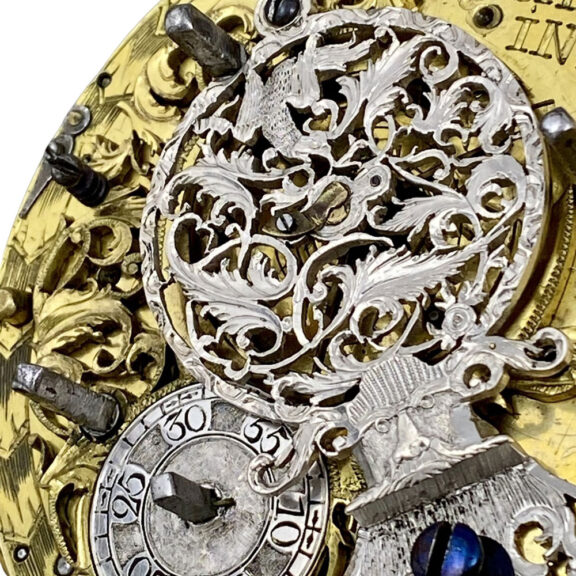
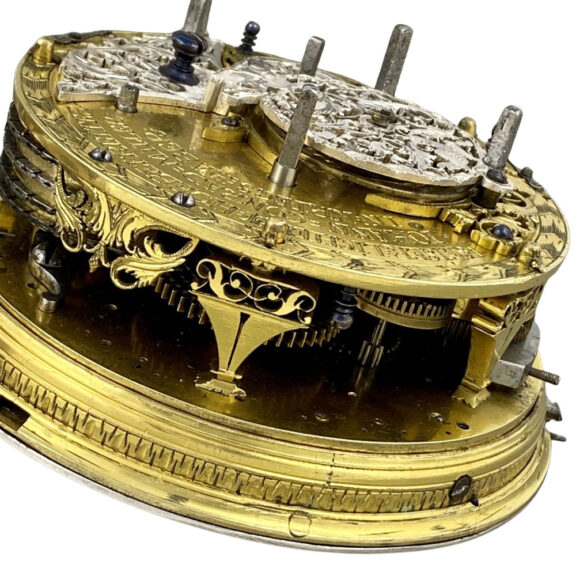
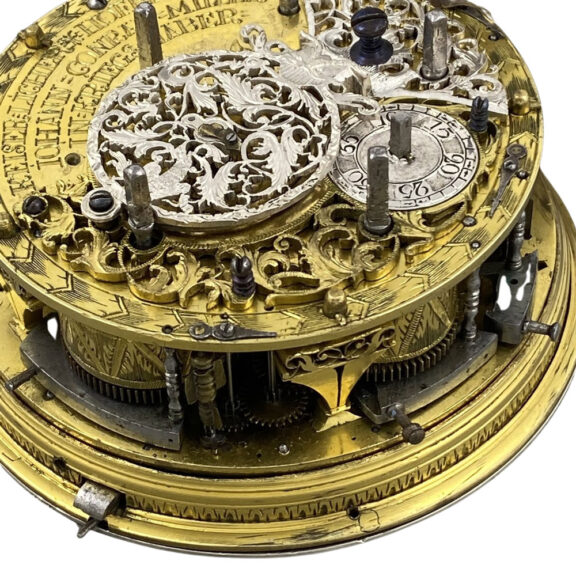
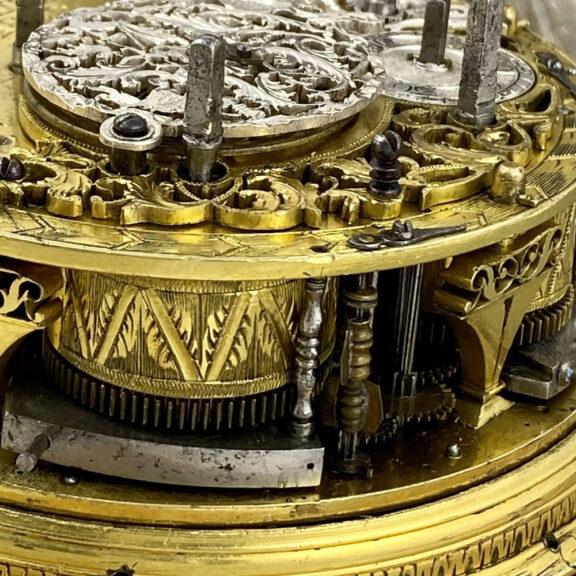
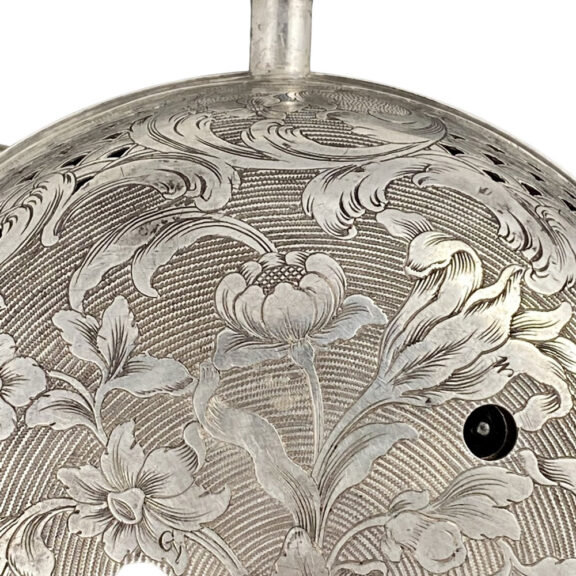
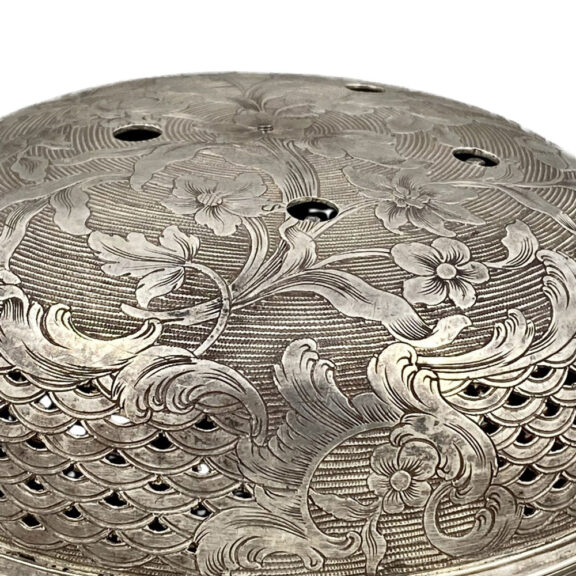
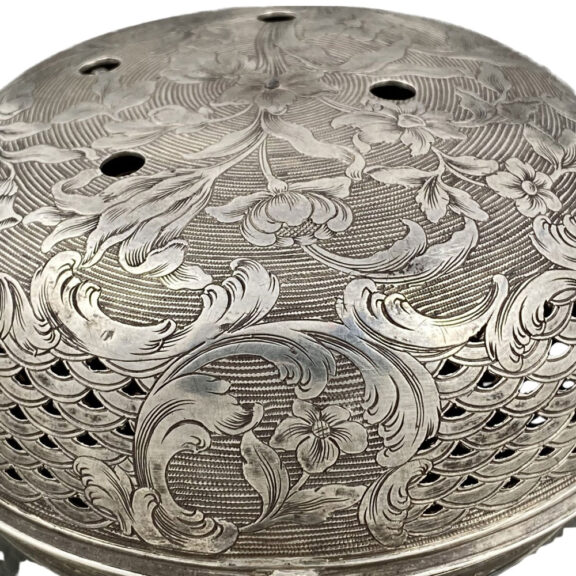
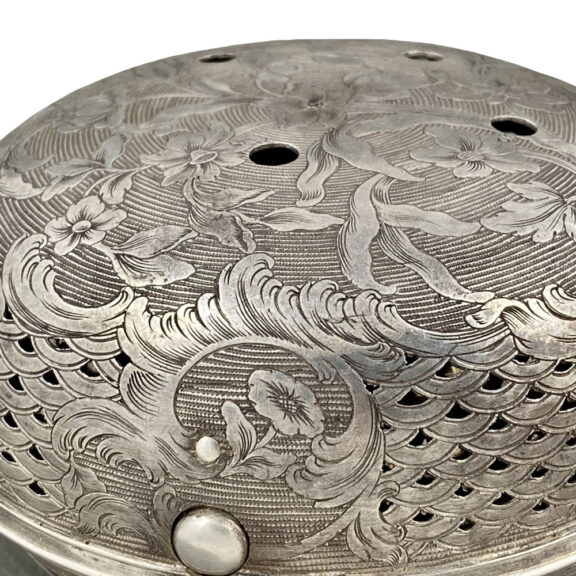
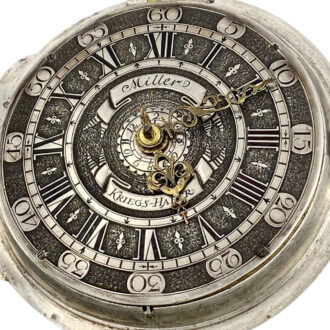
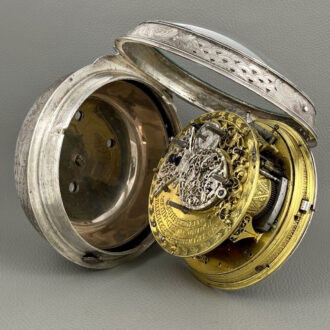
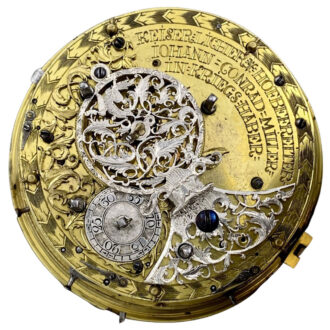
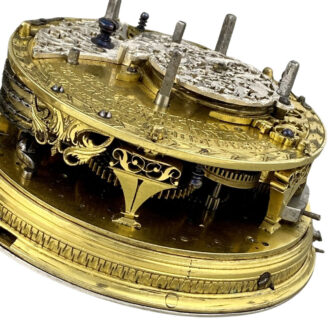
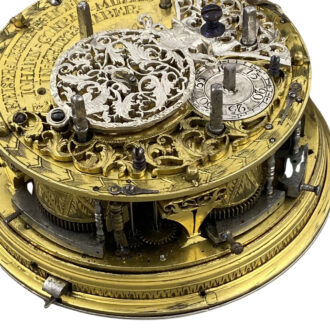
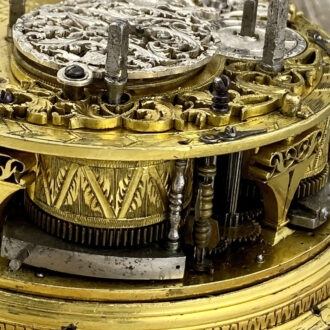
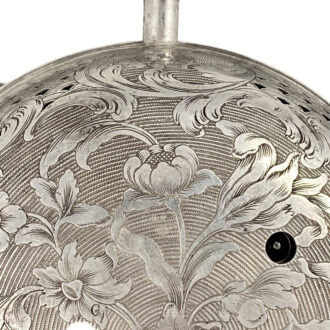
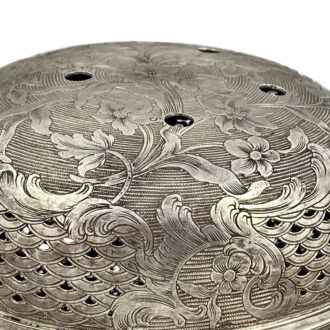
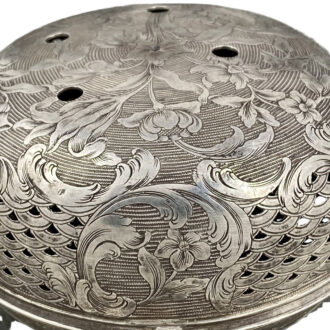
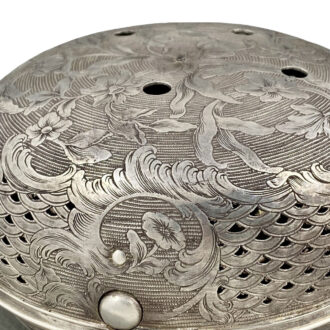
A museum quality German silver and shagreen pair cased hour and quarter repeating coach watch with hour and quarter hour self strike, and alarm made by Johann Conrad Miller in Kriegshaber, Augsburg, circa 1750. The full plate movement with applied pierced decoration in brass and silver, a chain and fusee for the going train, three geometrically engraved barrels for the striking and alarm mechanism, four hammers,
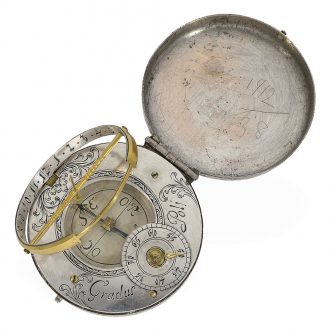
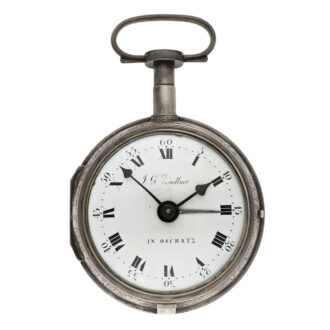
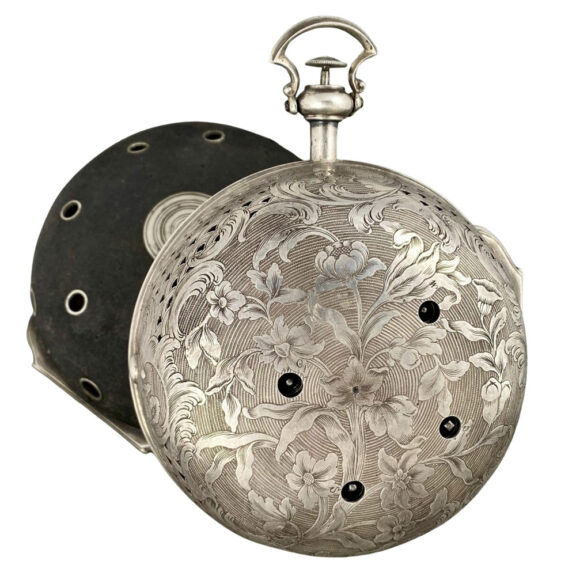
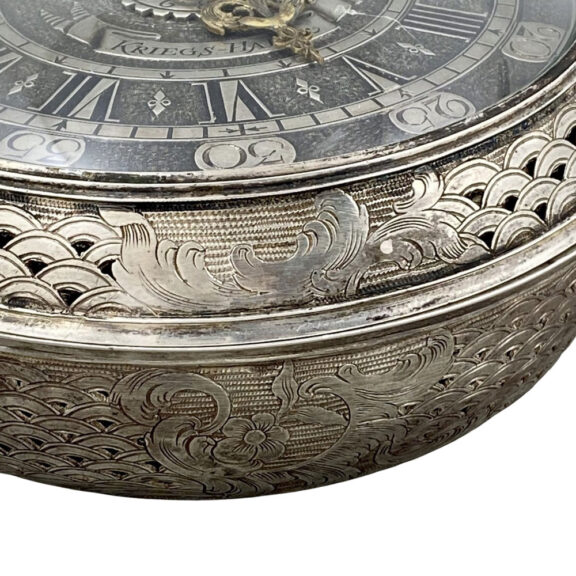
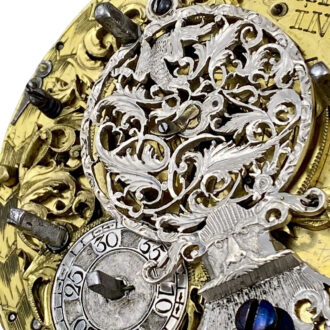
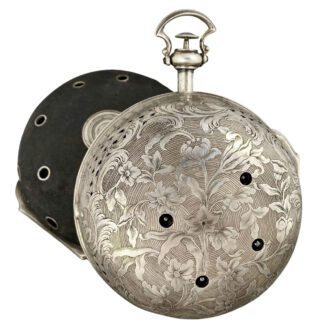
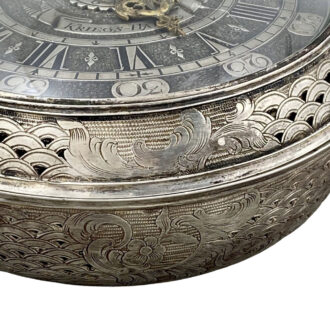
a verge escapement, three arm brass balance, and hand engraved pierced silver balance bridge with a mascaron. Silver champlevé dial with inlaid Roman hours, an outer minute track, outermost Arabic five minute numerals, a central alarm disc and fine gilt hands. The transport case covered with shagreen, silver sound openings and a large seven-part outer hinge, the silver inner case openworked on the edge, its back concentrically chased and decorated with volutes and finely crafted engravings of daffodils, tulips, lilies and other spring flowers, a bottom bell and large outer hinge. Movement signed.
–
Diameter inner case: 122 mm
–
Diameter transport case: 137 mm
–
Weight: 1700 g
–
Signed: Imperial Court Liberator Johann Conrad Miller in Kriegshaber
–
In 1761, Johann Conrad Miller is recorded as a small watchmaker in Kriegshaber, Augsburg. A mantel clock of his with silver fittings is in the Stolberg Collection in Graz, France.
–
The first traces of settlement in the area of today’s Kriegshaber cemetery date to the Middle Bronze Age, approximately 1500-1300 BC.
–
The settlement by Celts has been documented by finds from the Hallstatt period since 500 BC at the latest. Among other things, 16 barrows from that period were found.
–
Coins have been found from the time of the Roman Emperor Augustus to that of the Eastern Roman Emperor Arcadius. The Roman road from Günzburg to Augusta Vindelicorum ran approximately where the Kobelweg is in today’s Kriegshaber. There are Roman settlement finds and cremated graves from the second century. The founding of the village, probably in the context of the Alemannic conquest of land, can be dated with some certainty to the 6th or 7th century, as a proven early medieval Alemannic burial ground suggests.
–
In the Middle Ages, the Imperial Road from Augsburg via Günzburg to Ulm ran through this village. It is today’s Ulmer Straße.
–
Around the year 1000, Kriegshaber was first mentioned under the name Chrechesavar, followed by several variations such as Kriechshabern, around 1428. Since 1550, the community was known as Kriegshaber. After the Jews were expelled from Augsburg in the 15th century, many of them found a new home in this place. They mainly worked as traders. Through several listed former Jewish houses on Giesecke Strasse and Ulmer Straße, through the profaned and renovated Kriegshaber synagogue on Ulmer Strasse and the Jewish cemetery, first mentioned in 1627, the local Jewish history is still clearly visible today.
–
Until 1805, the place was part of the Habsburg Margraviate of Burgau and was therefore in Upper Austria, as the Custom House reminds us of. The town’s first school was opened there in 1807. The Holy Trinity Catholic Church was consecrated in 1868. A separate school building was built in 1872. The Kriegshaber volunteer fire department was founded in 1874. A hospital opened in 1885 and the tram connection to Augsburg went into operation on June 1st, 1910.
Signed: Imperial Court Liberator Johann Conrad Miller in Kriegshaber
Share this page: