Rare, massive French revolutionary era watch Circa 1790
- Kenmerk
- SB0400
- Diameter
- 60 mm
- Estimate
- € 40.000 - 80.000
- Price sold
- € 89.100
Early self-winding center seconds repeater with calendar by Bazile Le Roy
–
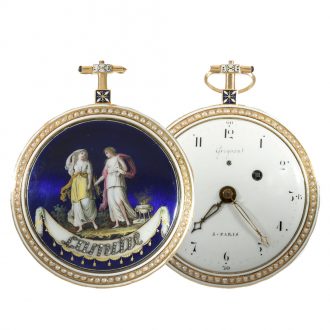
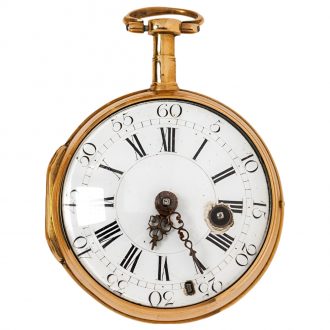
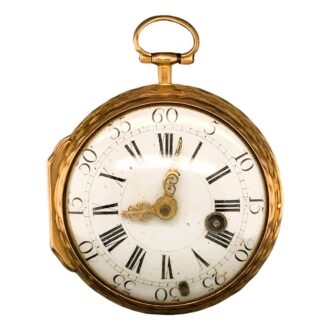
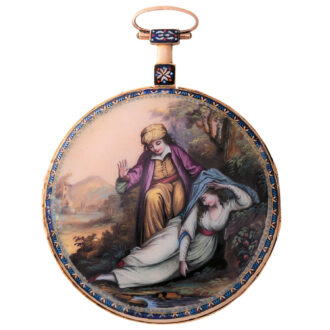
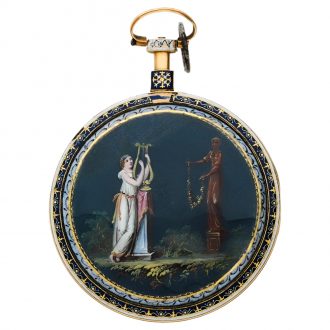
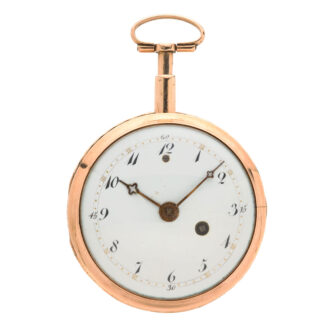
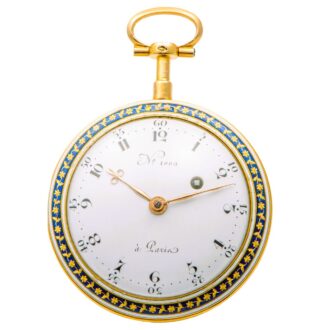
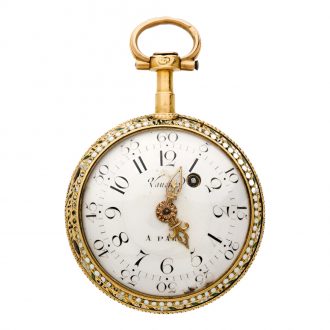
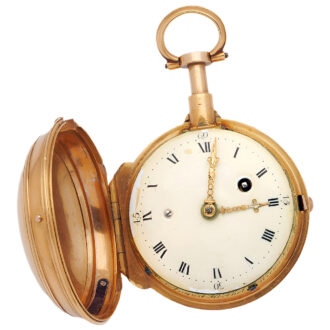
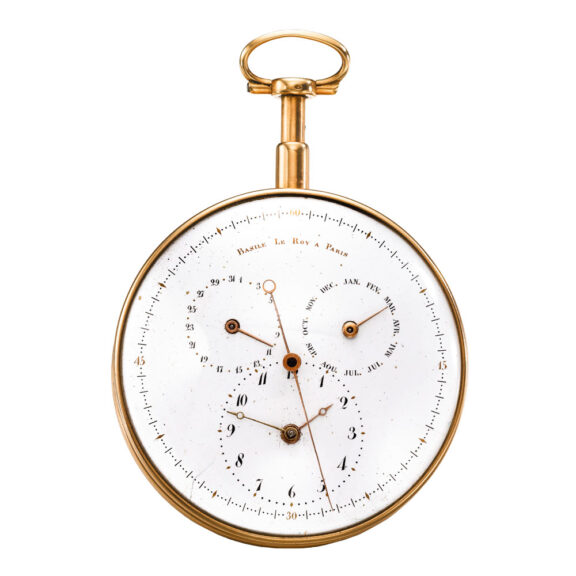
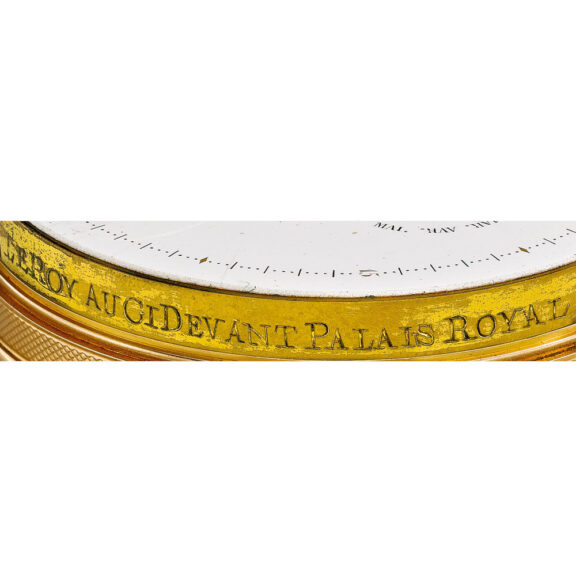
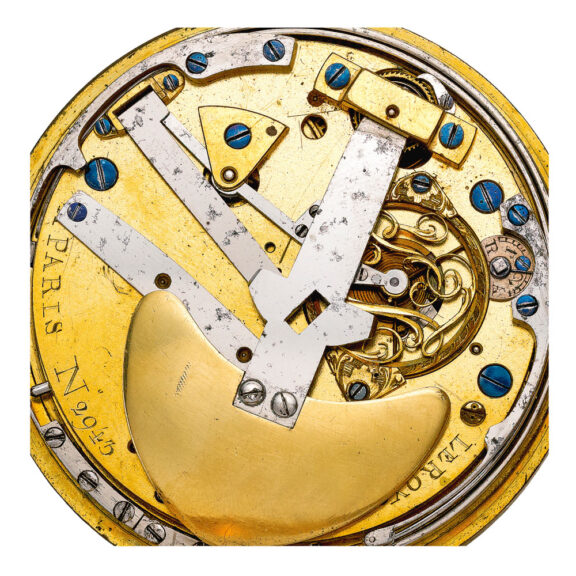
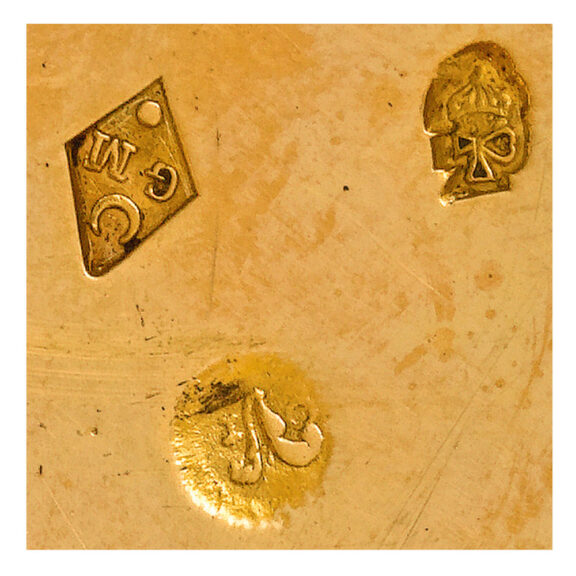
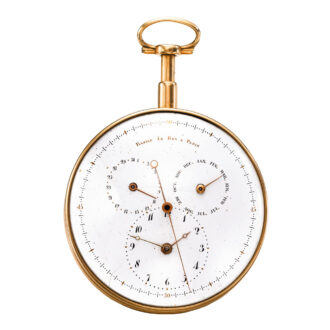
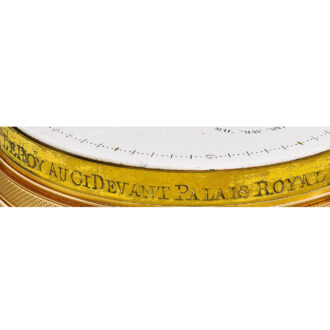
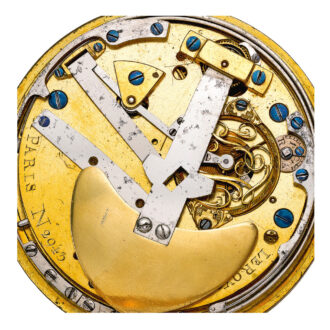
A fine and rare massive and early self-winding center seconds quarter repeating French revolutionary era watch with calendar, circa 1790. Gilt brass full plate cylinder movement, pierced and engraved balance bridge sunken into the plate, barrel wound by a crescent shaped gold winding weight on a steel arm, repeating on two large gongs. White enamel eccentric dial, Arabic numerals, subsidiary dials for date and month in French, gold hands and outer ring calibrated for minutes. Engine turned case back and band. Dial and movement signed, dial band signed ‘Le Roy Au Cid Evant Palais Royal’, case stamped ‘GM’ (Guillaume Mermilliod) surmounted by a crescent.
–
–
Diameter: 60 mm
–
Signed: Basile Le Roy A Paris – Le Roy Au Cid Evant Palais Royal
–
Bazile-Charles Le Roy was a second generation watchmaker of great repute. He received his formal training at the firm founded by his father, Bazile Le Roy, in 1764, which remained intact until its closing in the 1960’s. However, in the latter part of the 20th century, the firm was revived and currently produces renowned complicated watches under the name of L. Leroy & Cie. Bazile-Charles Le Roy began making watches in 1788 at his workshops in Paris. He sold approximately 300 watches per year, some using imported Swiss ebauches that were then finished in his workshop. Le Roy personally crafted approximately 50 watches which were made entirely in his workshop. These watches were the most expensive and of the highest quality. As a result, only the most prestigious collectors were able to purchase these pieces.
–
Le Roy was one of the few French makers that supplied to Louis XVI and Marie Antoinette. Le Roy was forced to change his name during the French Revolution due to his professional ties to the French Royal family and the insinuated meaning of his name, ‘le Roy’, or ‘le Roi’, meaning ‘The King’, and adopted the anagram ‘Eylor’ in order to preserve his reputation. Following ‘the Reign of Terror’ he was able to change his name back to Le Roy or Charles Le Roy.
–
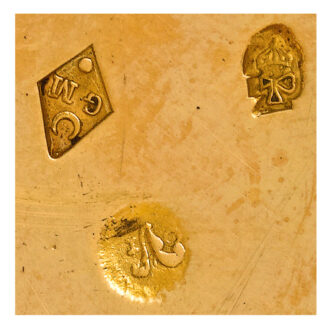
The marks on this watch scan almost a decade. The case has the pre Revolutionary charge and discharge marks for Paris, 1789. The phrase ‘ci-devant Palais Royale’ in the engraved signature suggests that it was added after the abolition of noble titles in 1792 and the lozenge shaped maker’s mark of Guillaume Mermilliod is first registered in 1798.
–
Signed: Basile Le Roy A Paris – Le Roy Au Cid Evant Palais Royal
–
Bazile-Charles Le Roy was a second generation watchmaker of great repute. He received his formal training at the firm founded by his father, Bazile Le Roy, in 1764, which remained intact until its closing in the 1960’s. However, in the latter part of the 20th century, the firm was revived and currently produces renowned complicated watches under the name of L. Leroy & Cie. Bazile-Charles Le Roy began making watches in 1788 at his workshops in Paris. He sold approximately 300 watches per year, some using imported Swiss ebauches that were then finished in his workshop. Le Roy personally crafted approximately 50 watches which were made entirely in his workshop. These watches were the most expensive and of the highest quality. As a result, only the most prestigious collectors were able to purchase these pieces.
–
Le Roy was one of the few French makers that supplied to Louis XVI and Marie Antoinette. Le Roy was forced to change his name during the French Revolution due to his professional ties to the French Royal family and the insinuated meaning of his name, ‘le Roy’, or ‘le Roi’, meaning ‘The King’, and adopted the anagram ‘Eylor’ in order to preserve his reputation. Following ‘the Reign of Terror’ he was able to change his name back to Le Roy or Charles Le Roy.
–
The marks on this watch scan almost a decade. The case has the pre Revolutionary charge and discharge marks for Paris, 1789. The phrase ‘ci-devant Palais Royale’ in the engraved signature suggests that it was added after the abolition of noble titles in 1792 and the lozenge shaped maker’s mark of Guillaume Mermilliod is first registered in 1798.
Signed: Basile Le Roy A Paris – Le Roy Au Cid Evant Palais Royal
Share this page: