Swiss center seconds duplex for Chinese market Circa 1840
- Kenmerk
- SA2823
- Diameter
- 64 mm
- Estimate
- € 12.500 - 25.000
- Price sold
- € 18.200
Gold enamel and pearl set watch made for the Chinese market
–
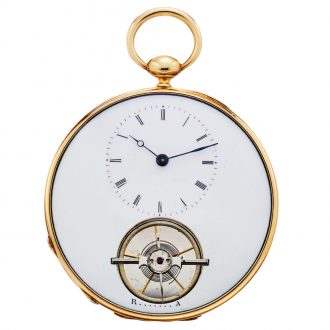
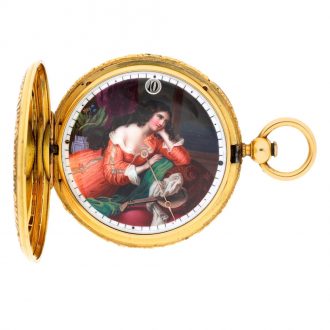
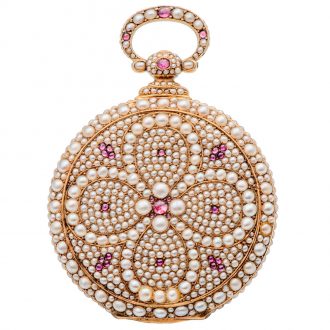
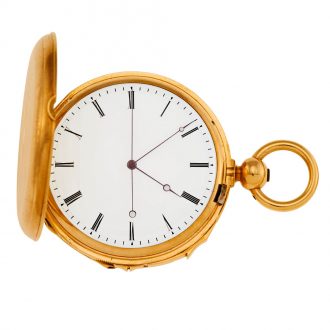
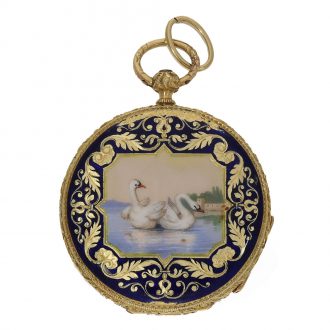
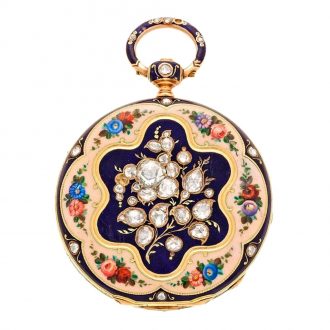
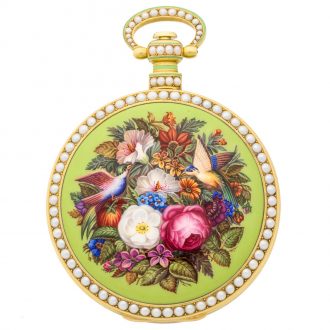
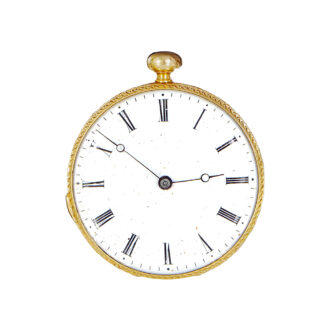
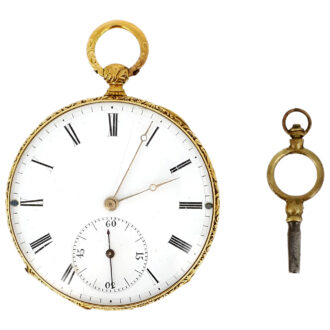
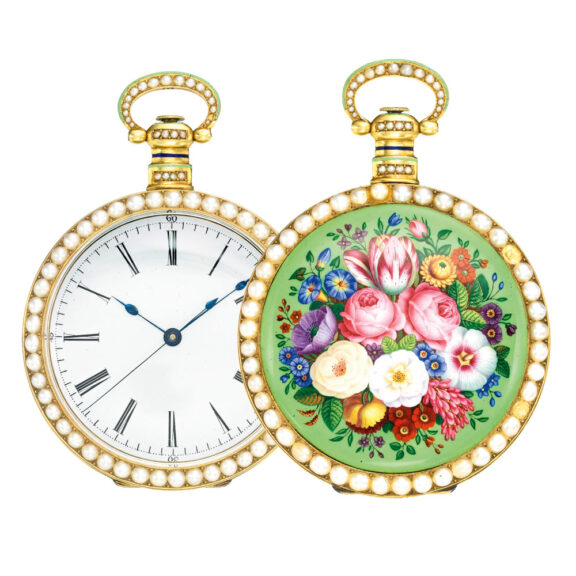
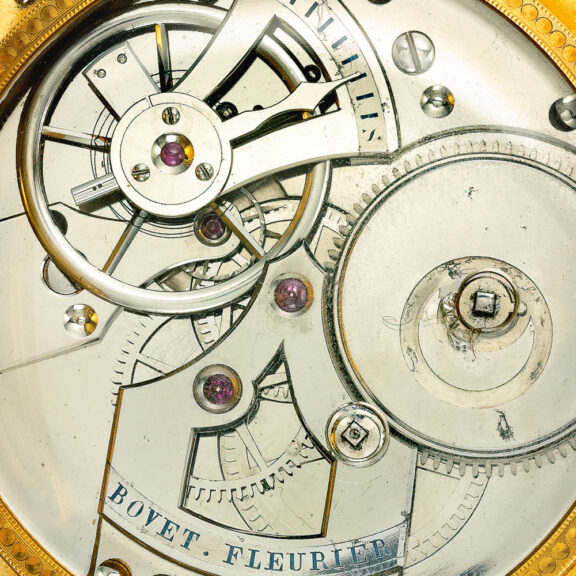
A Swiss gold, enamel and pearl center seconds watch made for the Chinese market, circa 1840, polished steel Chinese caliber jeweled movement with duplex escapement.
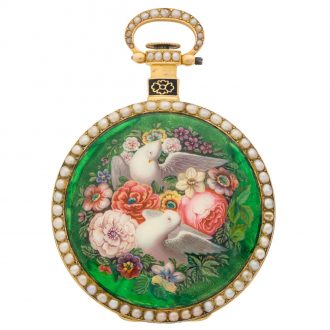
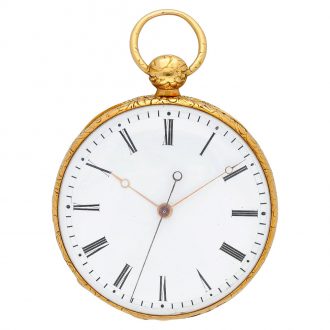
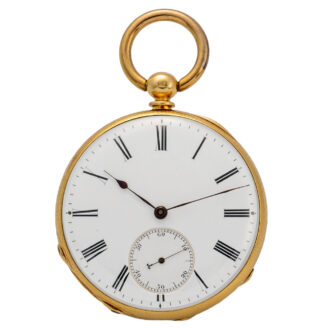
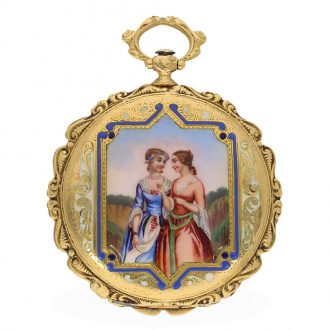
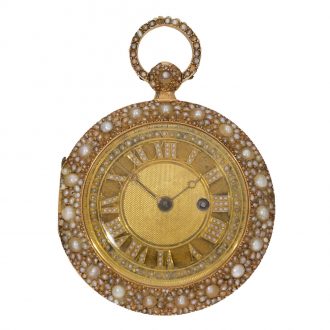
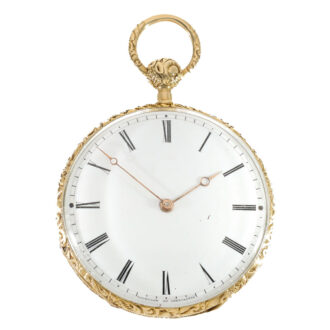
White dial, painted radial Roman numerals, outer minute track, center seconds, yellow gold case, pearl-set bezel, floral enamel scene on the case back, enamel to the band, enamel and pearl-set bow, glazed cuvette, movement signed.
–
Diameter: 64 mm
–
A Swiss gold, enamel and pearl center seconds watch made for the Chinese market, circa 1840, polished steel Chinese caliber jeweled movement with duplex escapement.
White dial, painted radial Roman numerals, outer minute track, center seconds, yellow gold case, pearl-set bezel, floral enamel scene on the case back, enamel to the band, enamel and pearl-set bow, glazed cuvette, movement signed.
–
Diameter: 64 mm
–
Signed: Bovet Fleurier
–
Bovet was established in 1822 by the four Bovet brothers, including Edouard who had settled in Canton, China. The company rose to prominence for its “Chinese watches” that were made in Fleurier, Switzerland. Whilst Edouard Bovet settled in Canton, brothers Alphonse and Frédéric, who had stayed behind in London, and a third brother, Gustave, a watchmaker living in Fleurier, set up a partnership to sell watches to China. The first bill of sale for the Bovet company was drafted in London, on May 1st. Business thrived, and the company transferred its manufacturing activity to Fleurier.
In 1824, Bovet began production of watches in matching pairs. These were highly-prized gifts for the Chinese, who considered twins to be a sign of good fortune.
In 1830, Maison Bovet, better known as the “Chinese Palace,” was built in Fleurier. In 1905 it became the Town Hall and the seat of the Qualité Fleurier Foundation, of which Bovet is a founder-member.
In 1835, the fourteenth-century Château de Môtiers, which stands above Val-de-Travers and Fleurier, was sold to Henri-Francois Dubois-Bovet which illustrates the fortune and the influence of the Bovet family in the Neuchâtel region. His great-grandchildren gifted the Château to the State of Neuchâtel in 1957.
In 1857, at the first Exposition Universelle in Paris, Bovet was awarded a gold medal in the Luxury category for a pair of enamelled watches, a commission from the Emperor of China. Bovet continued to sell to China until 1900, when the company began to lose ground to rival production from Besançon in France and from the United States, as well as countless imitations.
–
Chinese caliber watches are normally seen with gilt metal engraved movements. This watch contains a more rare, and more exclusive, polished steel movement, made in this manner to withstand oxidation.
Signed: Bovet Fleurier
–
Bovet was established in 1822 by the four Bovet brothers, including Edouard who had settled in Canton, China. The company rose to prominence for its “Chinese watches” that were made in Fleurier, Switzerland. Whilst Edouard Bovet settled in Canton, brothers Alphonse and Frédéric, who had stayed behind in London, and a third brother, Gustave, a watchmaker living in Fleurier, set up a partnership to sell watches to China. The first bill of sale for the Bovet company was drafted in London, on May 1st. Business thrived, and the company transferred its manufacturing activity to Fleurier.
In 1824, Bovet began production of watches in matching pairs. These were highly-prized gifts for the Chinese, who considered twins to be a sign of good fortune.
In 1830, Maison Bovet, better known as the “Chinese Palace,” was built in Fleurier. In 1905 it became the Town Hall and the seat of the Qualité Fleurier Foundation, of which Bovet is a founder-member.
In 1835, the fourteenth-century Château de Môtiers, which stands above Val-de-Travers and Fleurier, was sold to Henri-Francois Dubois-Bovet which illustrates the fortune and the influence of the Bovet family in the Neuchâtel region. His great-grandchildren gifted the Château to the State of Neuchâtel in 1957.
In 1857, at the first Exposition Universelle in Paris, Bovet was awarded a gold medal in the Luxury category for a pair of enamelled watches, a commission from the Emperor of China. Bovet continued to sell to China until 1900, when the company began to lose ground to rival production from Besançon in France and from the United States, as well as countless imitations.
–
Chinese caliber watches are normally seen with gilt metal engraved movements. This watch contains a more rare, and more exclusive, polished steel movement, made in this manner to withstand oxidation.
Signed: Bovet Fleurier
Share this page: