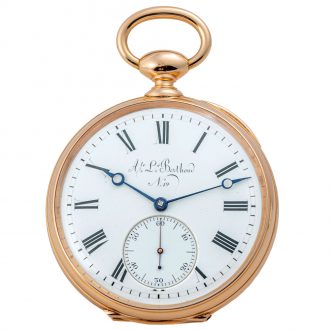
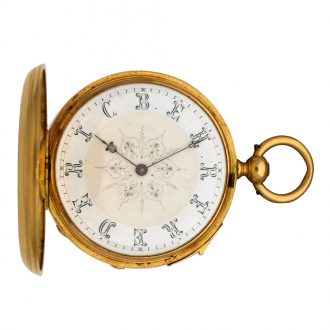
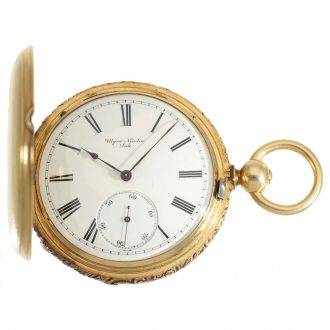
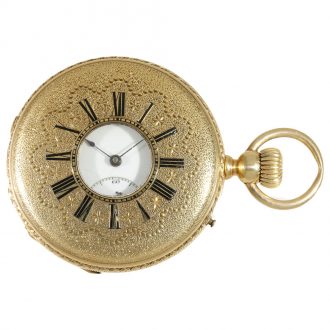
Swiss center seconds pocket watch with duplex escapement Circa 1860
- Kenmerk
- HA0110
- Diameter
- 53 mm
- Estimate
- € 22.500 - 40.000
- Price sold
- € 43.600
Pearl set center seconds pocket watch
–
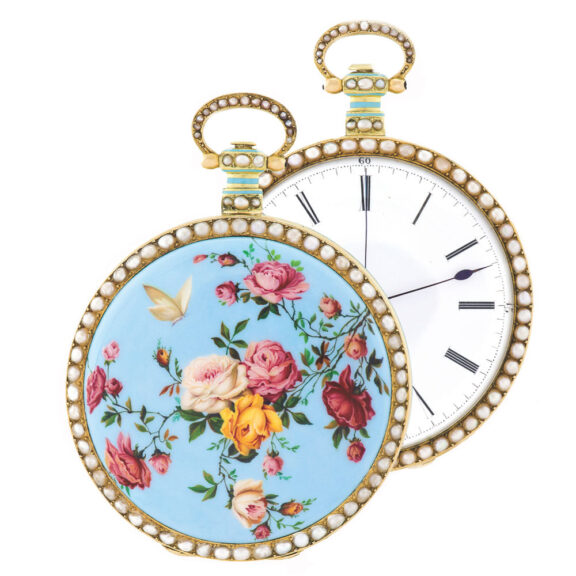
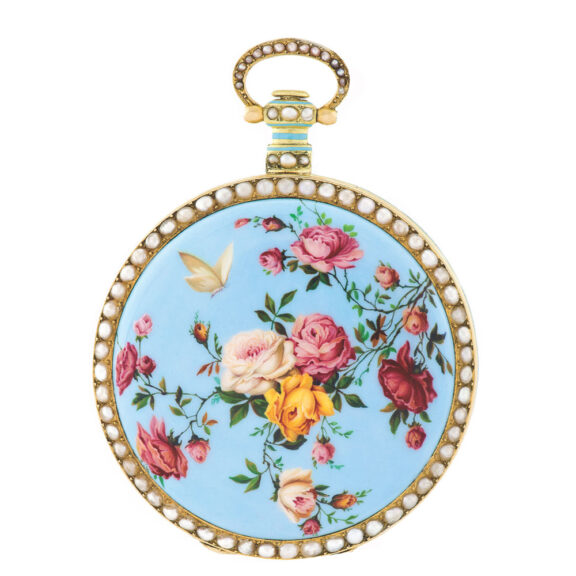
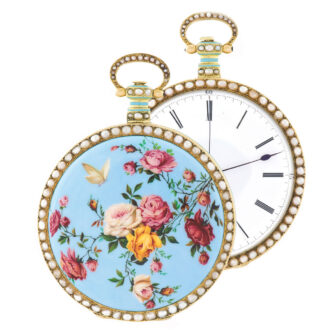
A very fine 18 Carat gold, painted on enamel and pearl set center seconds pocket watch with duplex escapement. Made for the Chinese market by Vaucher, Fleurier Switzerland Circa 1860.
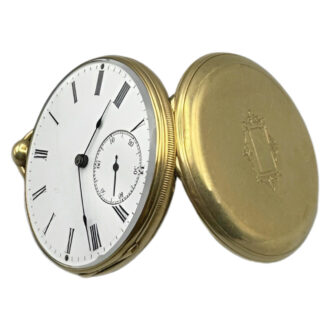
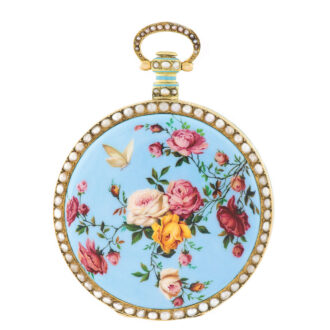
Three body case with the back very finely painted on enamel, a branch of pink, red, white and yellow roses and a white butterfly against a light blue enamel ground, the bezels, pendant, and bow set with split pearls, the band and pendant decorated with light blue champlevé enamel to match the back. The gilt rimmed glazed cuvette is hinged to the movement ring.
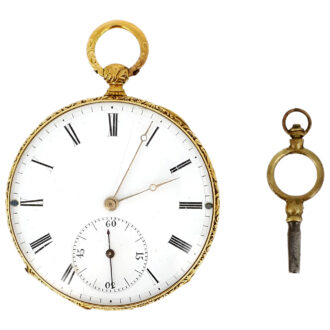
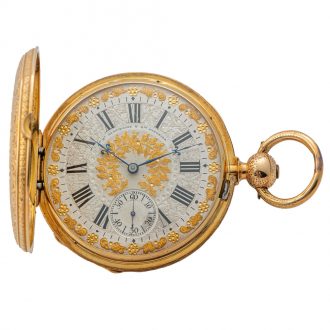
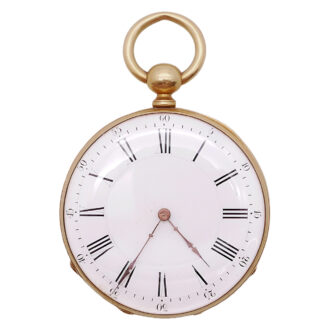
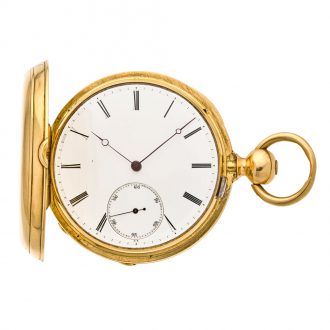
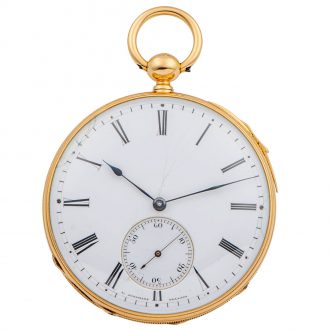
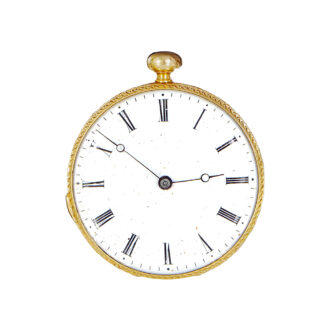
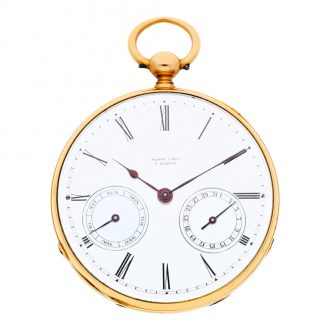
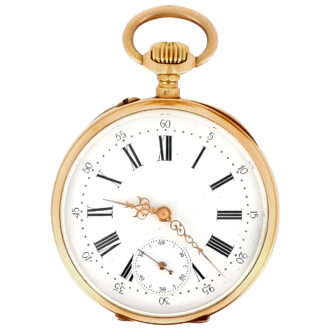
White enamel dial with radial narrow Roman numerals, outer minute and seconds divisions with fifteen minute and seconds Arabic numerals and gold blued steel ovoid hands. Gilt ‘Chinese’ caliber fully engraved movement jewelled to the third wheel with standing barrel, duplex escapement, bi metallic compensation balance with screws, blued steel flat balance spring and an index regulator.
Dial and movement signed.
–
Diameter: 53 mm
–
Signed: Vaucher
–
CHARLES-HENRI VAUCHER, FLEURIER. Not to be confused with Vaucher frères. The firm was established by Charles-Henri Vaucher in Fleurier, in what later became the ‘Hotel de Ville’. In 1838 Vaucher sent a number of watches, some enamelled, to Canton, attracting the attention of Louis Bovet, who mentioned them to his uncle Edouard. The company had a branch in London. Later it moved to Trévise.
This extremely beautiful watch is in very good condition. The scene is very unusual for a Chinese market watch by the inclusion of a butterfly into the enamel flower panel which is usually restricted to flowers only. The branch of roses cascades horizontally across the panel resulting in an elegant and delicate enamel. This more ‘free’ style of painting is very uncommon amongst Chinese export watches which makes the effect all the more pleasing when compared to the highly stylized flower enamels normally encountered. It is possible that the artist took inspiration from ancient Chinese botanical watercolours which often include a butterfly alongside the flower specimen.
Signed: Vaucher
Share this page: