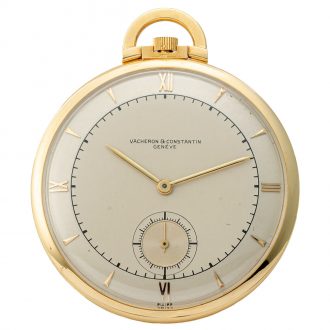
Swiss 18K gold contest chronometer tourbillon Circa 1940
- Kenmerk
- HC0981
- Diameter
- 48 mm
- Estimate
- € 35.000 - 100.000
- Price sold
- € 39.700
Historically important timing contest chronometer
–
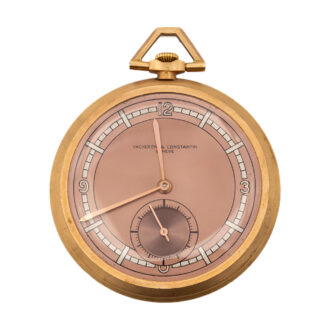
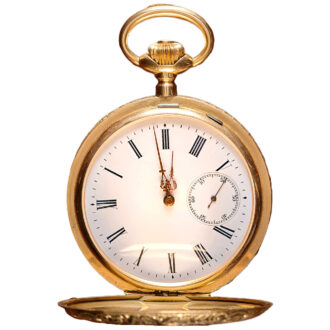
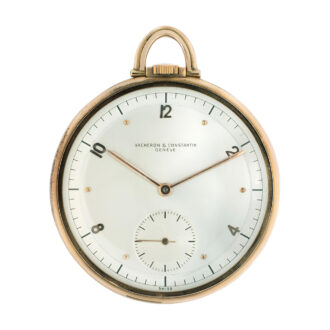
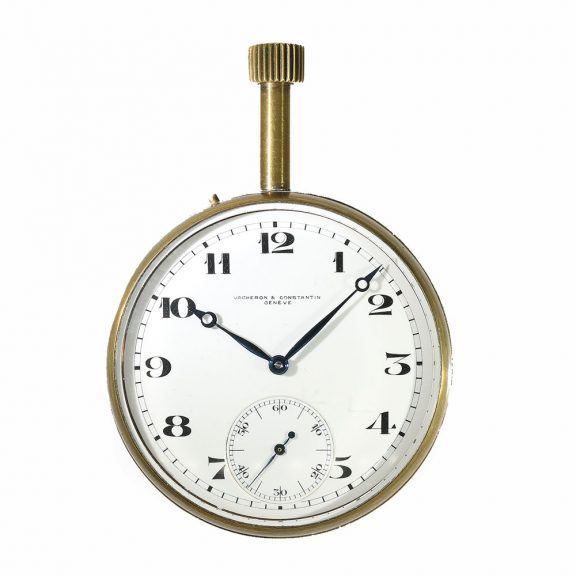
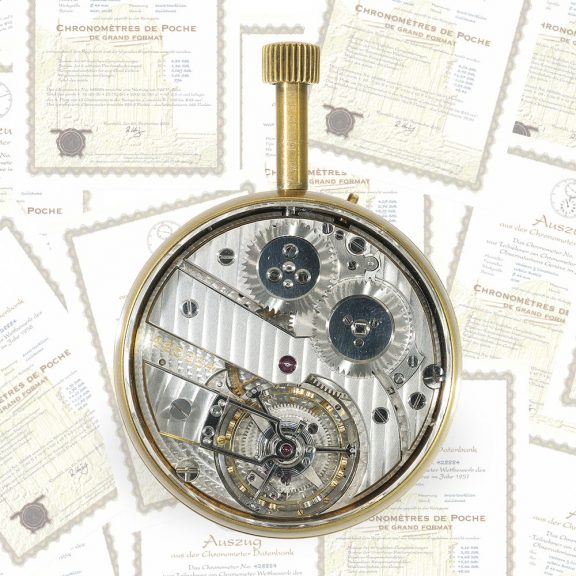
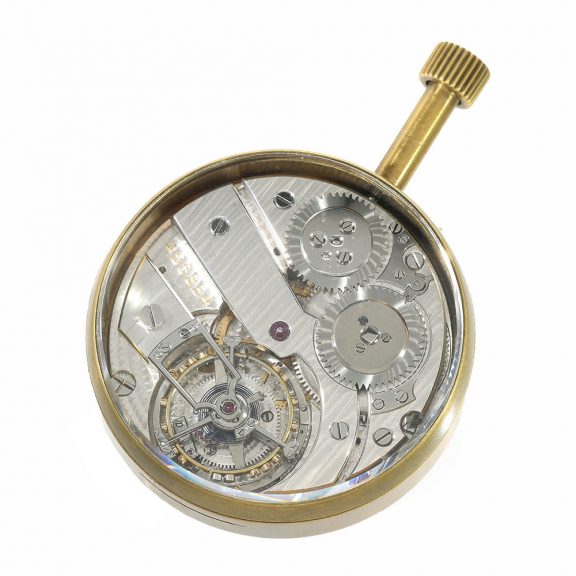
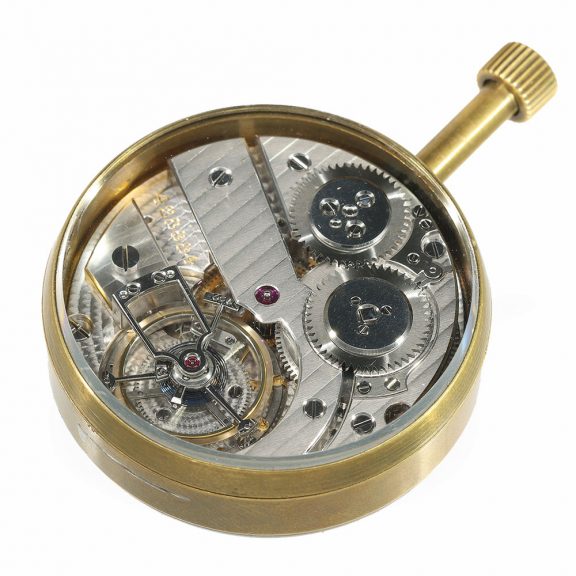
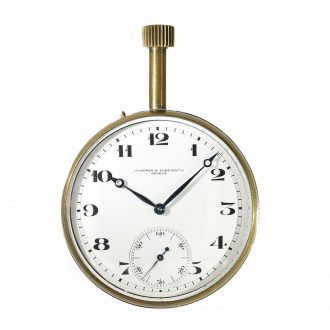
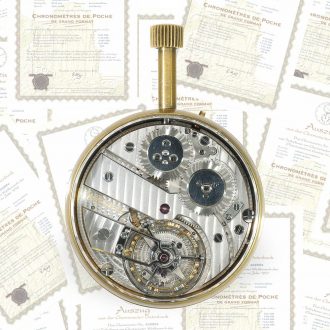
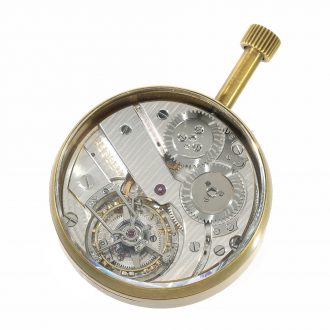
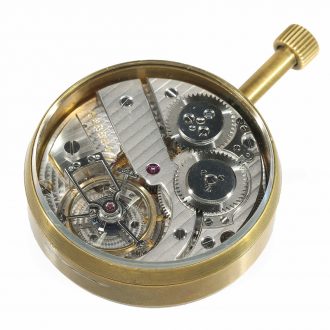
A historically important chronometer with tourbillon made for contest purposes at the Geneva Observatory by Vacheron & Constantin S. in Geneva, Switzerland, circa 1940. The original case is glazed on both sides. The white enamel dial has Arabic hour numerals, an outer minute track, subsidiary seconds at 6 o’clock and blued steel moon hands. The numbered movement has an Observatory chronometer escapement with a tourbillon, wolf’s toothing and Geneva striping decoration.
The dial is signed.
–
Diameter: 48 mm
–
Signed: Vacheron & Constantin Genève
–
The present watch is an absolute rarity and, in its original condition, one of the few surviving examples of a Vacheron & Constantin Observatory chronometer with tourbillon.
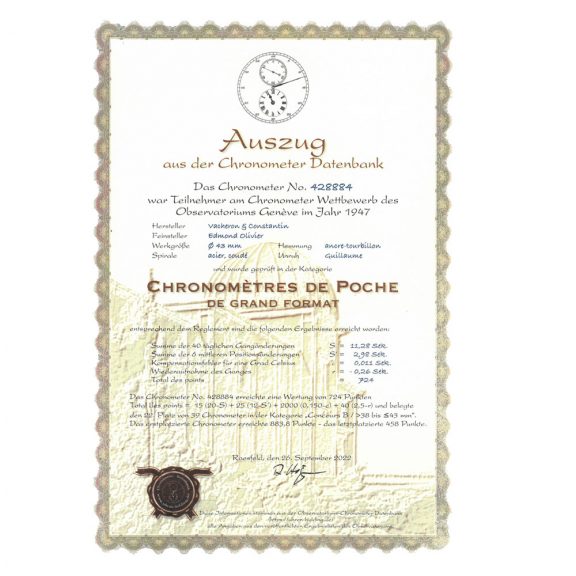
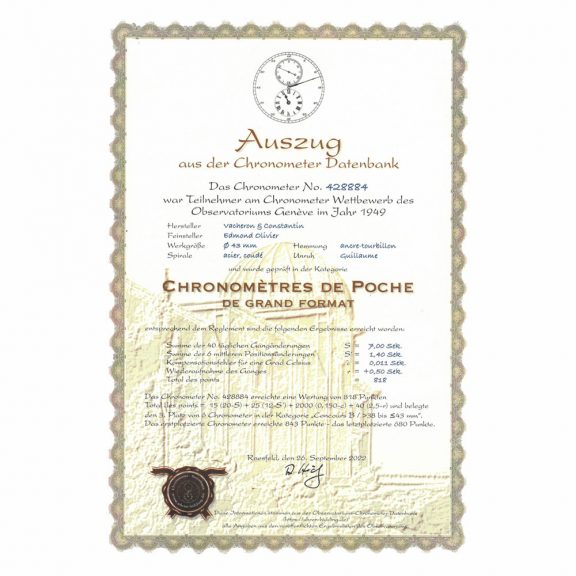
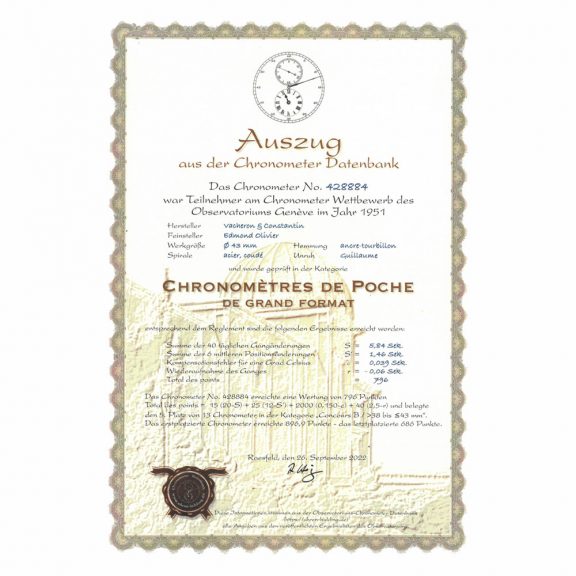
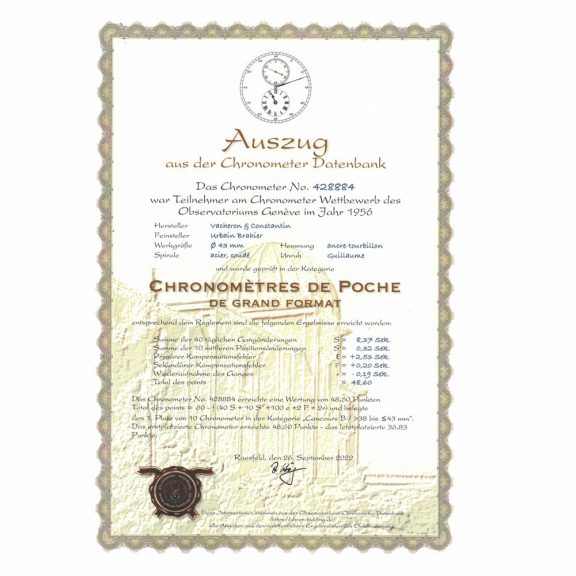
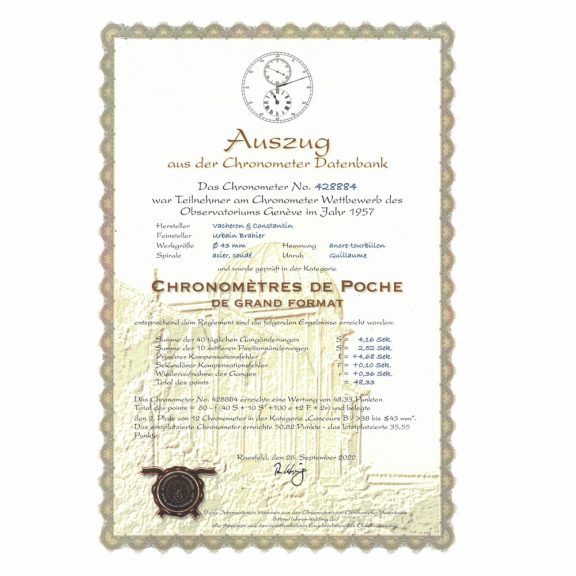
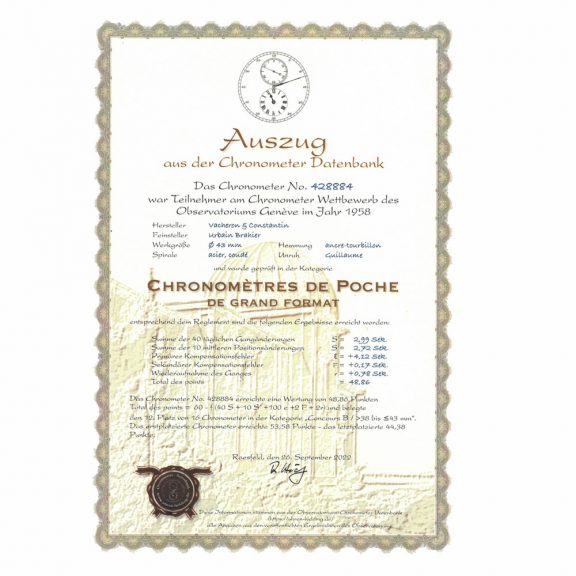
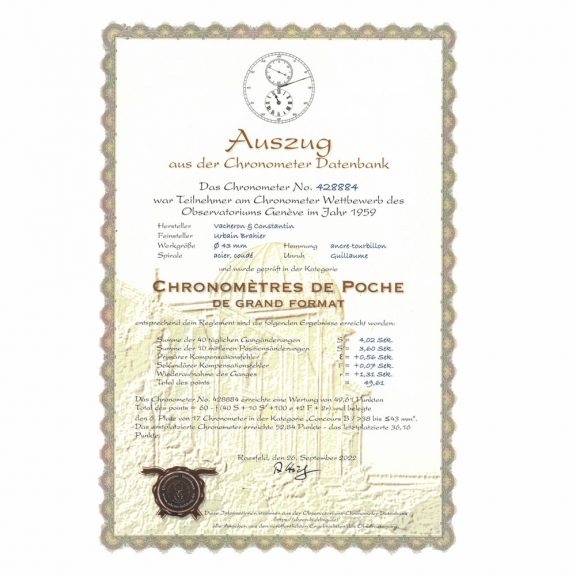
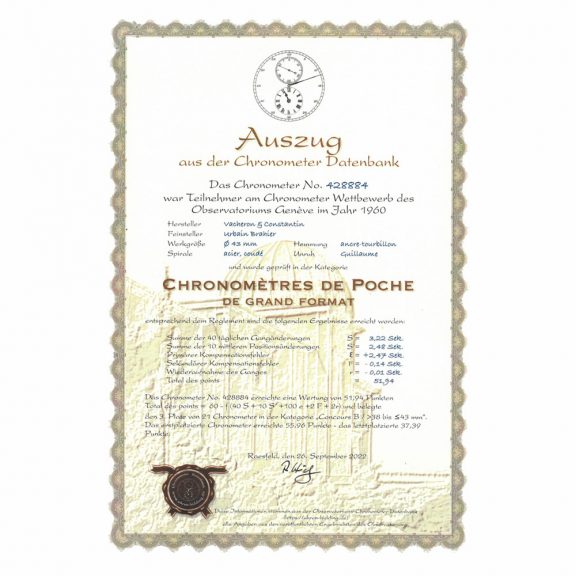
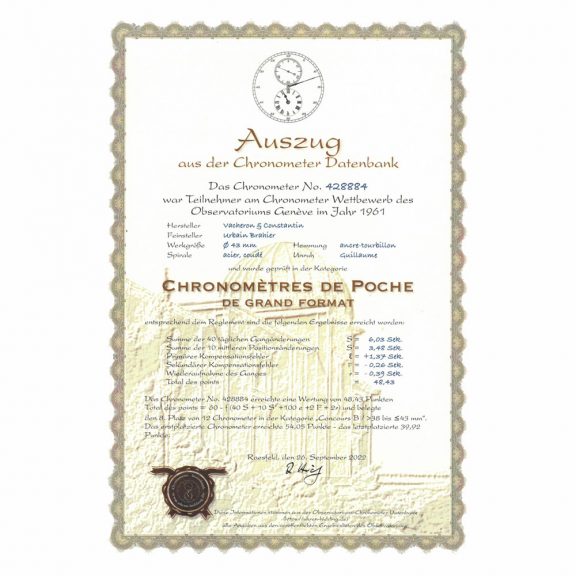
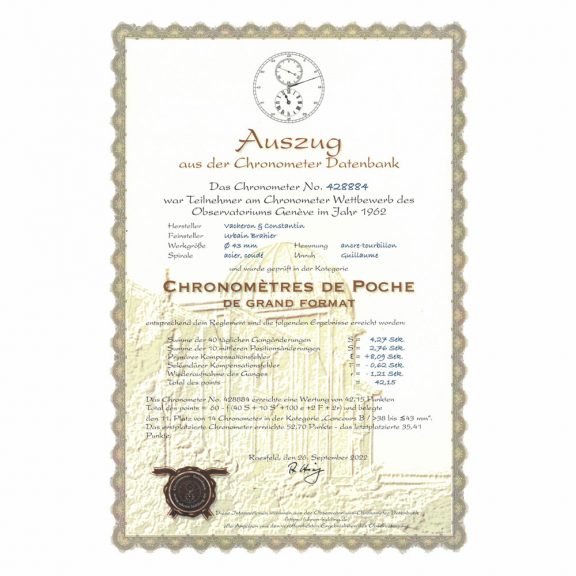
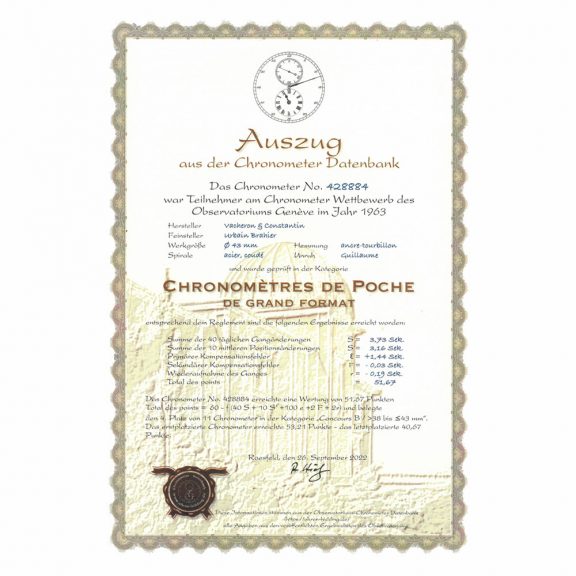
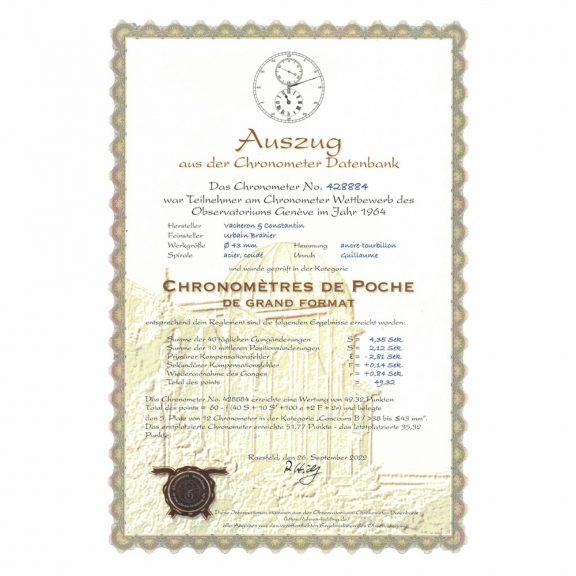
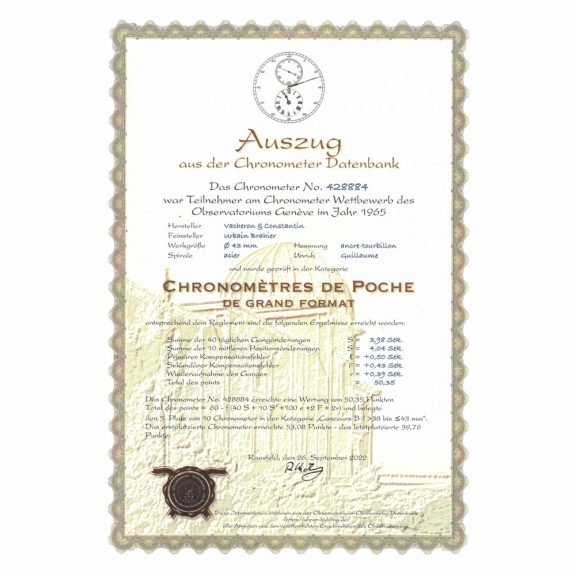
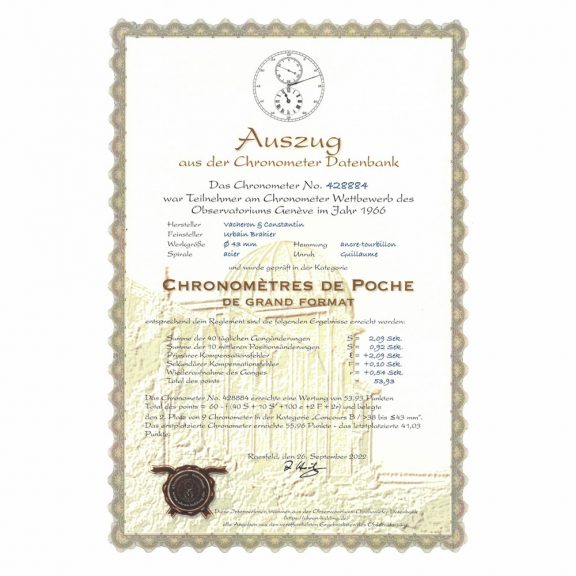
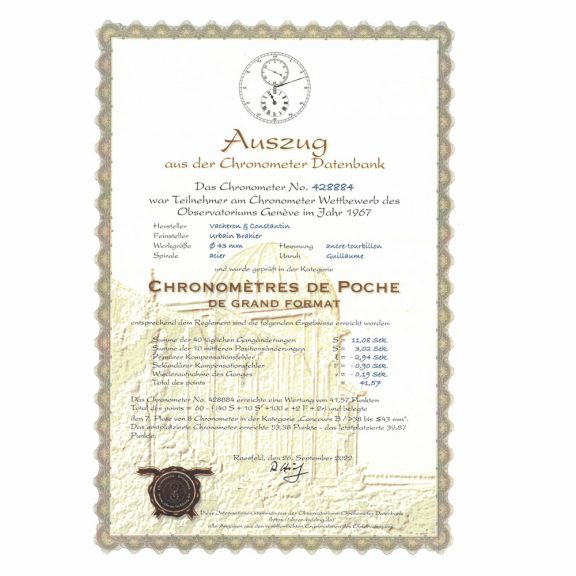
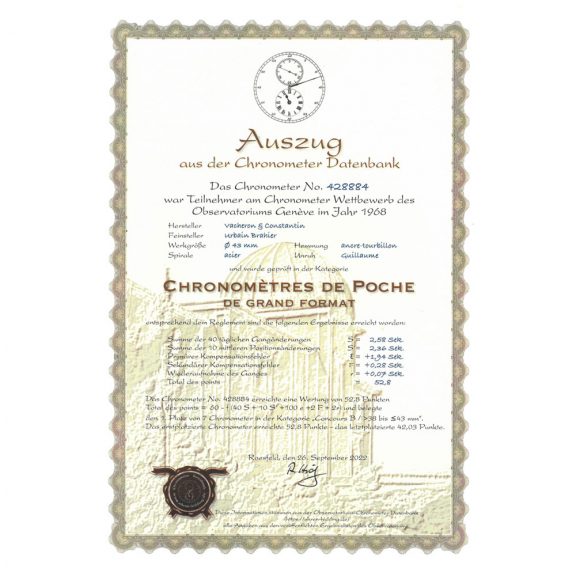
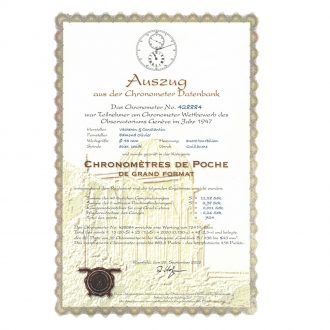
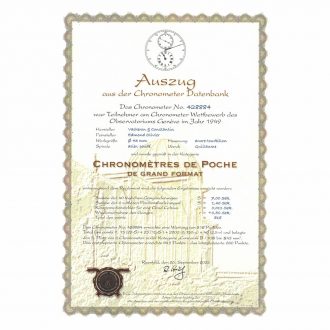
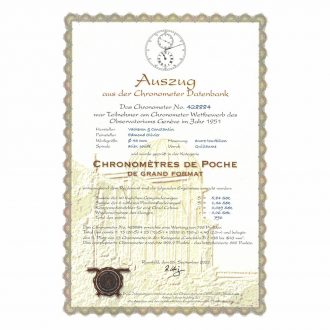
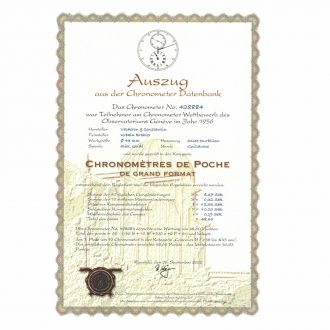
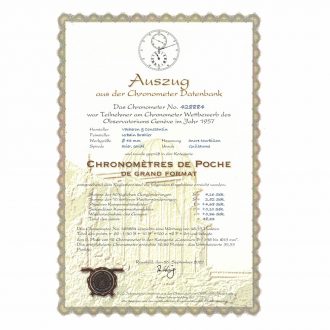
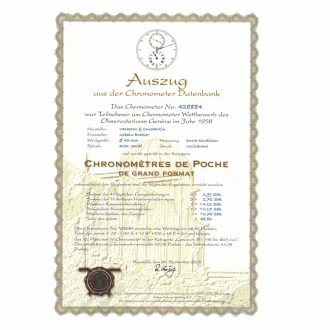
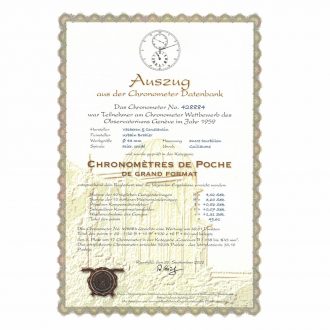
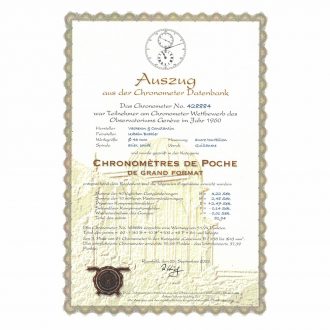
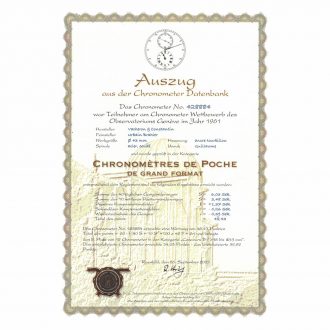
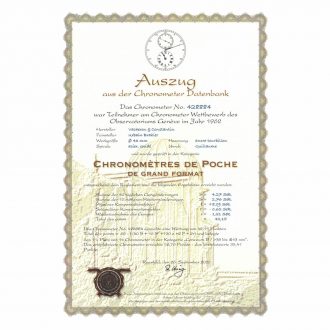
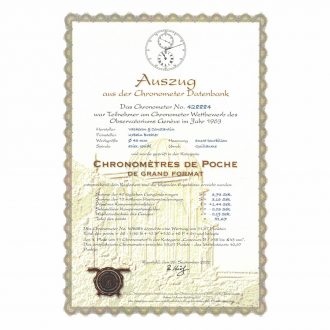
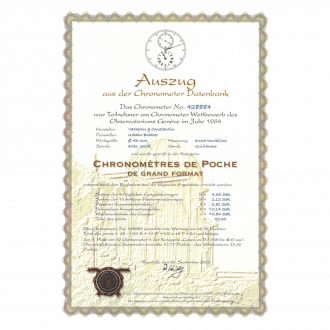
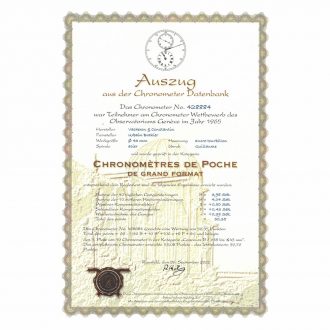
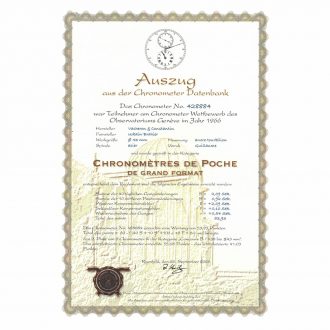
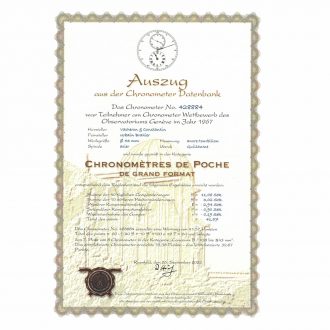
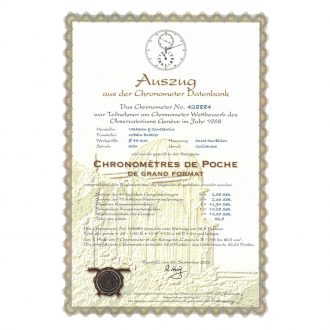
From the 1930s to the 1940s, a few of these chronometers were made for competition purposes at the Observatory in Geneva, of course, in the very best quality and with the greatest sophistication. The results were sensational. This tourbillon took part in competition 16 times, between 1947 and 1968, almost every year and was probably the most successful watch that Vacheron & Constantin sent in over more than 20 years! It even won 1st place twice! All contest results for this watch are available.
These watches were never intended for sale and therefore never entered circulation. Nevertheless, Vacheron & Constantin encased a few examples from their stock in gold pocket watch cases in the 1980s and 1990s. This example, on the other hand, is still in its original case made for the contests and is therefore a museum rarity, a highlight for every chronometer collector. Confirmation of authenticity from Vacheron & Constantin and that the 428884 tourbillon was never encased in a pocket watch case is available, the Extract from the Archives as well! According to the archives, the tourbillon was made in 1940. It is an observatory caliber with the designation “RA 19 Tourbillon, Chronomètres de Poche Grand Format Vacheron Constantin”.
A few years ago, Vacheron & Constantin produced the so called “Coffret Observatoire Set Of Five Traditional Chronometer Tourbillons” for a special customer. A set of five different Observatory tourbillons, all with Observatorium test movements from the 1930s, including the “sister movement” No. 428882. The movements received new dials, high quality gold cases and were technically revised. The Coffret Observatoire (Observatory case) is the most important project of Vacheron Constantin’s Atelier Cabinotiers, which is dedicated to the production of special and custom made watches. According to a post on “The Hour Lounge”, the official forum of Vacheron Constantin, the Coffret Observatoire set price is TW$ 135.950.000, which is equivalent to about US$ 4,34 million.
–
Tourbillon
It was 1795 when Abraham-Louis Breguet developed the mechanical mechanism (AKA complication) that we call the tourbillon. It’s no surprise that many Breguet watches often have tourbillons. The word “tourbillon” is a French term that means “whirlwind”. If you take one close look at a tourbillon watch in action, then the name makes perfect sense. It has a mesmerizing spiral motion that can be quite hypnotic.
One of the most challenging things watchmakers faced when regulating a pocket watch, is the effects that gravity has on the caliber or movement. A tourbillon acts as a way to counter the drag effect that it has on some of the smaller components in a timepiece’s escapement when held in certain positions. A tourbillon places certain parts of the watch’s internal mechanics (the balance wheel and escapement ) into a rotating cage. The escapement is a component of the movement which is comprised of the hairspring, balance wheel and pallet fork. The tourbillon watch will then slowly rotate this cage holding the aforementioned components, usually at a rate of one RPM and this counteracts the adverse effects that gravity creates when the watch is in certain positions and helps to iron out positional errors of accuracy.
Tourbillons have evolved quite a bit since they were first invented. In fact, there are quite a few new types of tourbillons. Some examples are double and triple axis tourbillons, double and quadruple tourbillons, flying tourbillons and gyro tourbillons.
Signed: Vacheron & Constantin Genève
Share this page: