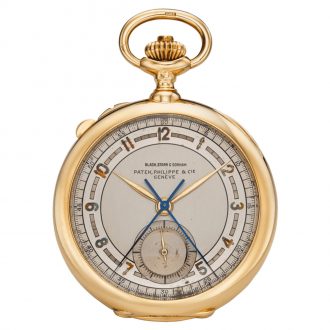
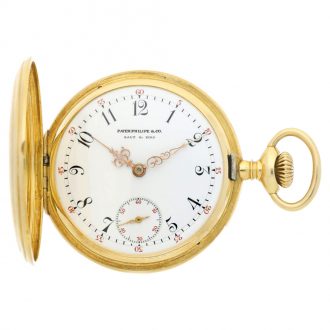
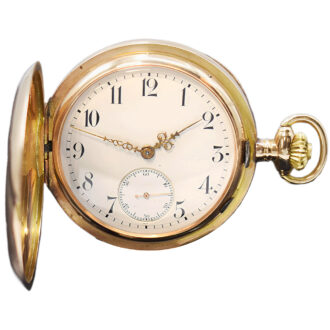
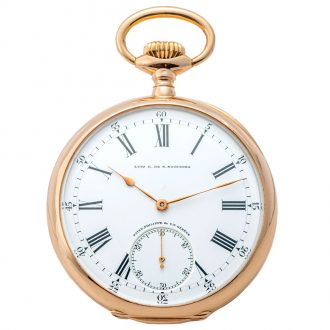
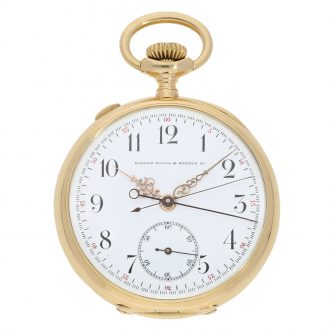
Swiss gold and enamel split second chronograph Circa 1904
- Kenmerk
- HC0764
- Diameter
- 47 mm
- Estimate
- € 4.000 - 8.000
- Price sold
- € 5.070
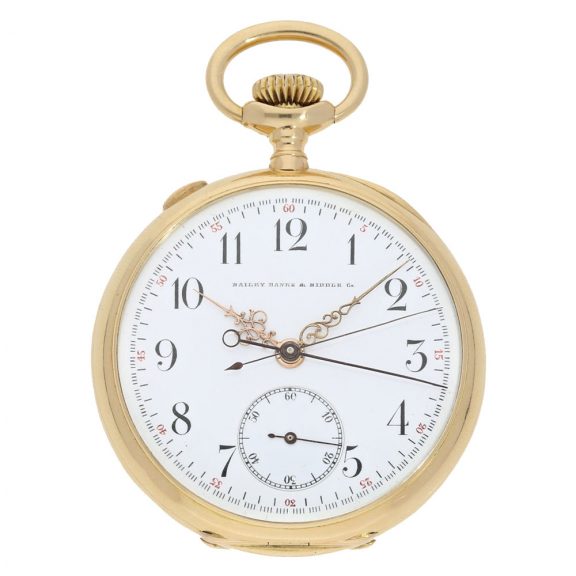
Very fine chronograph in gold and enamel case
–
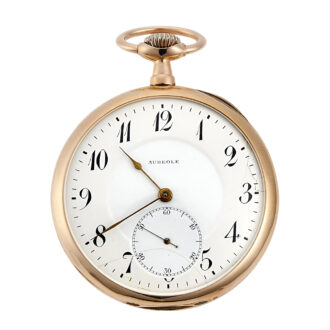
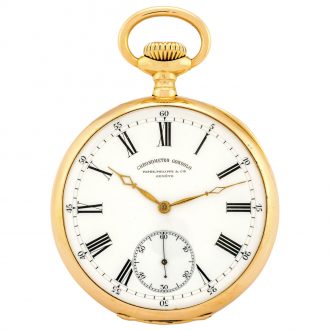
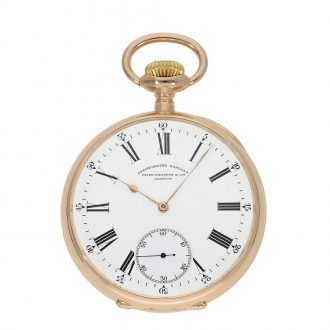
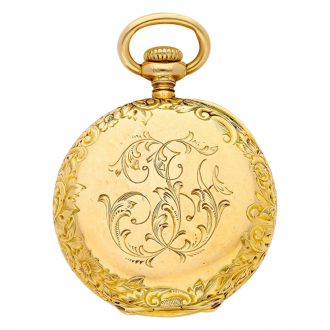
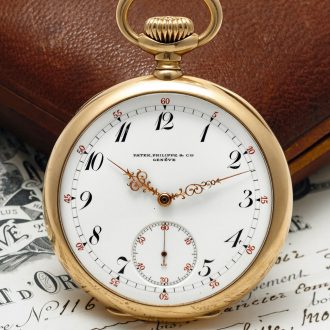
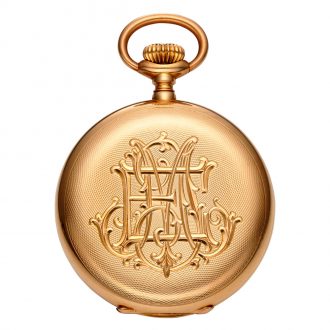
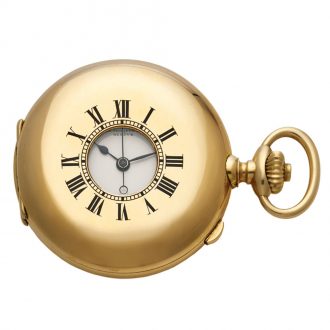
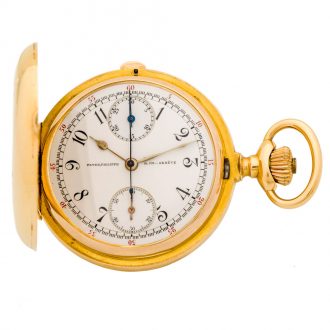
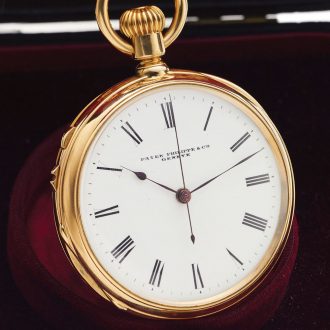
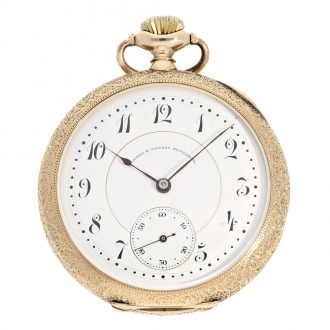
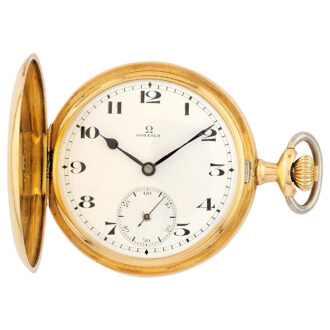
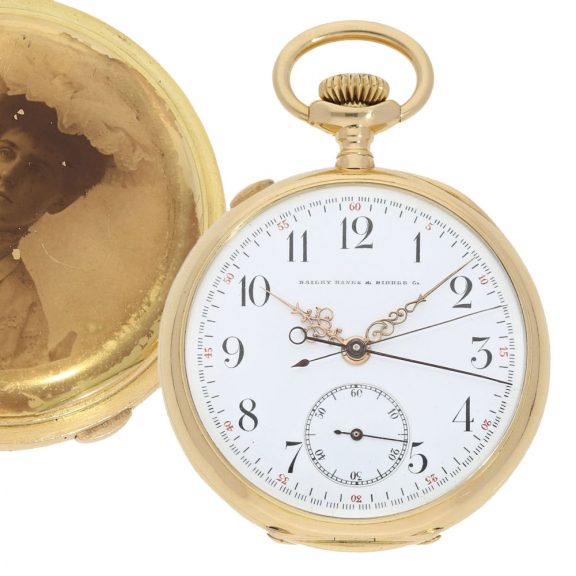
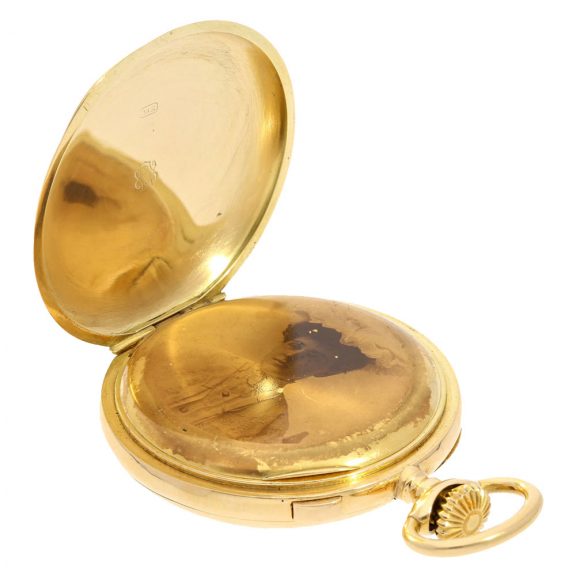
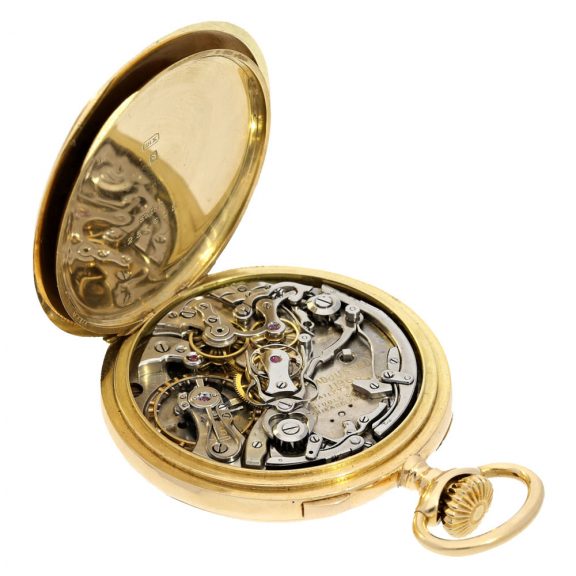
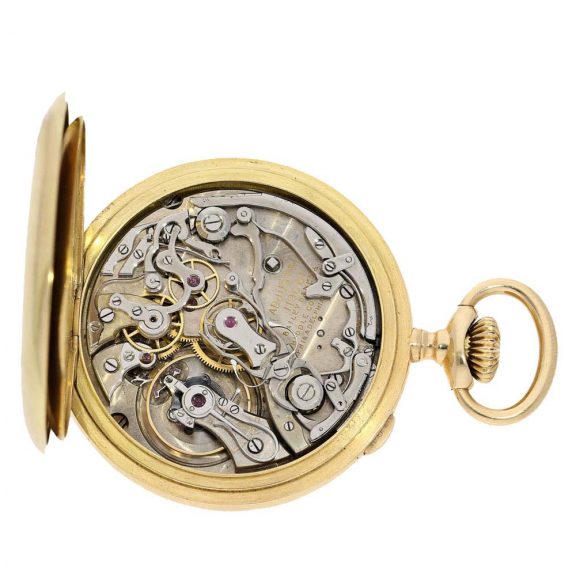
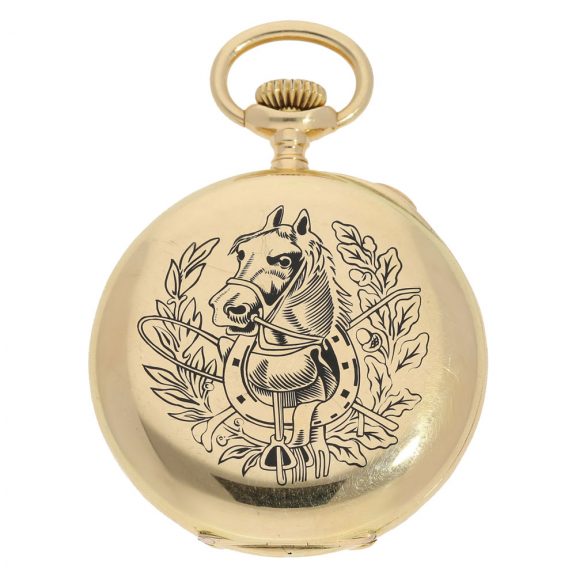
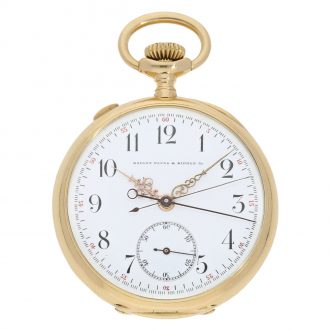
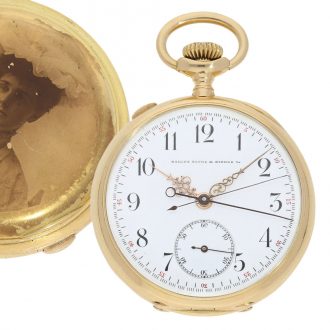
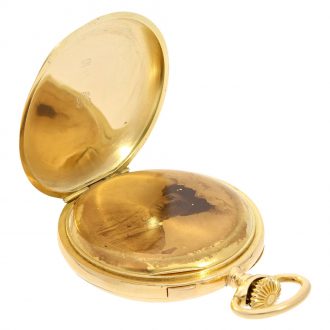
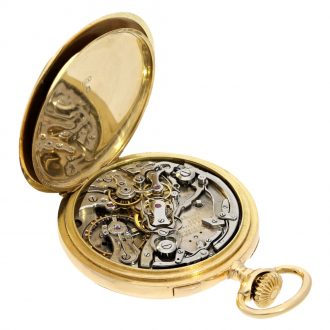
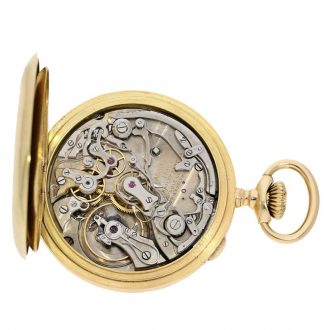
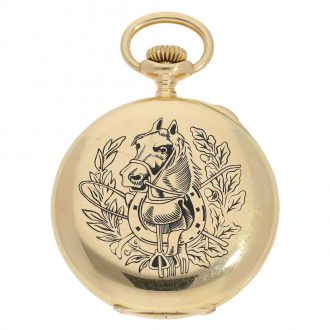
A very fine and small split seconds chronograph, probably made by Patek Philippe in Geneva, Switzerland, for Bailey, Banks & Biddle in Pennsylvania, Philadelphia, U.S.A. circa 1904. The numbered open faced case of this watch was crafted from 18 carat gold and has a fine black enamelled hore scene on the back lid and a cuvette with the portrait of a lady. The original white enamel dial has black Arabic hour numerals, red Arabic minutes, a subsidiary seconds dial at 6 o’clock, pink gold hands and a blued steel chronograph hand. The numbered movement has a very fine caliber with lever escapement, fine adjusting device, chronograph and a main plate inscribed Swiss.
Dial and movement are signed.
–
Diameter: 47 mm
–
Weight: 80 g
–
Signed: Bailey, Banks & Biddle Co.
–
Bailey, Banks & Biddle Co
Bailey, Banks & Biddle Co in Pennsylvania, Philadelphia, U.S.A., was one of the most important clients of Patek Philippe. Bailey & Kitchen, as it was originally known, was founded at 136 Chestnut Street, Philadelphia, on September 20th, 1832, by Joseph Trowbridge Bailey (1806–1854) and Andrew B. Kitchen (died 1850). The partnership was dissolved in November 1846. It was reformed with new partners as Bailey & Co in 1841, and on March 1st, 1878, again re-established as Bailey Banks & Biddle. From about 1852-1862, the company made its own silver. They were principally supplied by Taylor & Lawrie before 1852, and from about 1862-1870, by George B. Sharp. After 1870, they resold silver from a variety of manufacturers.
–
Split seconds chronograph
A split seconds chronograph, or ‘rattrapante’, is a type of chronograph watch with two coaxial superimposed center seconds hands that are controlled by two push buttons. One push button controls the split seconds hand to stop or join the chronograph hand. The other push buttons control both hands and all the chronograph functions. The chronograph and split seconds hands are used for timing several events that start simultaneously but are of different durations. To operate the split seconds chronograph, both hands are started and remain superimposed. Then at the end of the first duration, the split seconds hand can be stopped while the chronograph hand continues to move. The duration of the first event can be read. After recording, the split seconds hand can be released to instantly move and join the chronograph hand, synchronizing with it and thus being ready for another recording. At the end of each event, the hands then can be stopped and returned to zero. The split seconds chronograph, in its present form, was first introduced in 1880. Split seconds chronograph wristwatches came on the market circa 1922 by Patek Philippe (the first known wristwatch of this kind was Patek Philippe No. 124824, case No. 235326. This timepiece appeared five years prior to the official release of the split seconds chronograph, making Patek Philippe the first manufacturer to create this complication in a wristwatch. As they require a highly complicated and technical mechanism, these watches are desirable, very collectable and extremely difficult to produce accounting for their rarity.
Signed: Bailey, Banks & Biddle Co.
Share this page: