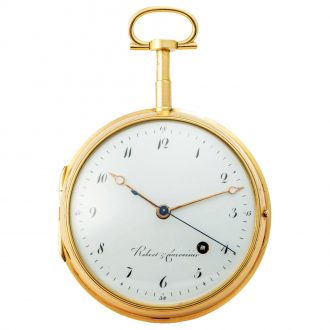
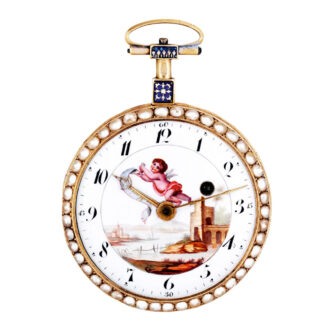
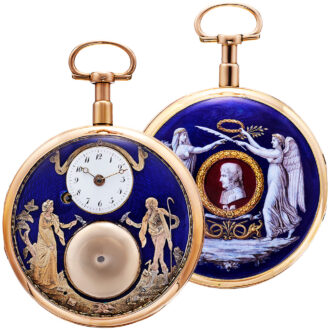
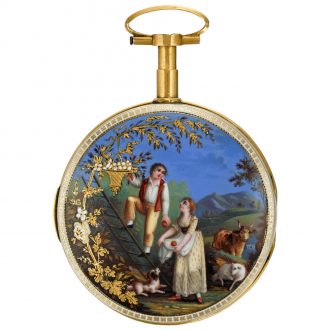
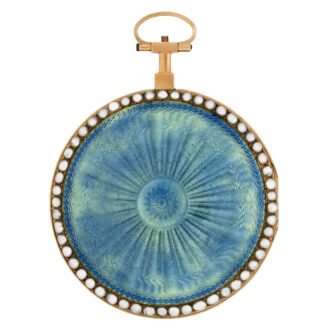
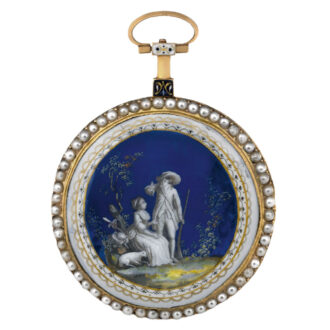
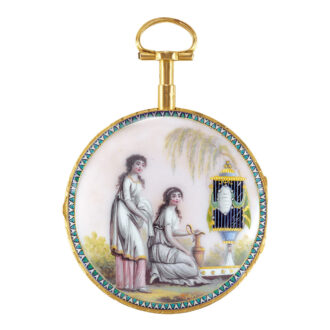
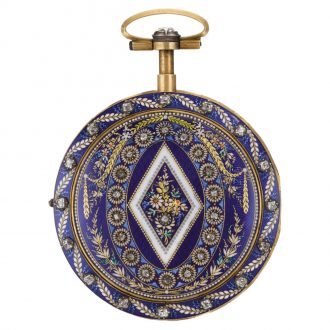
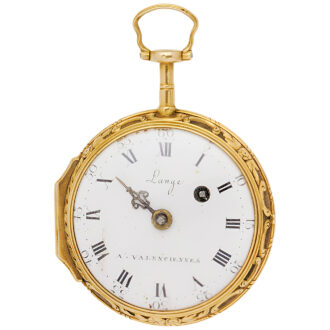
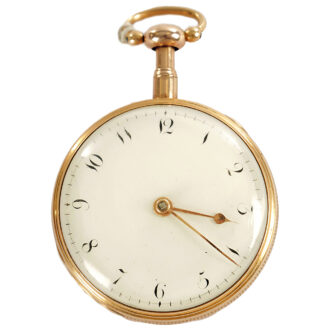
Swiss 18K gold enamel Varnish Martin automaton Circa 1795
- Kenmerk
- AA0213
- Diameter
- 56 mm
- Estimate
- € 17.500 - 35.000
- Price sold
- -
Gold, enamel and pearl-set open faced verge automaton
–
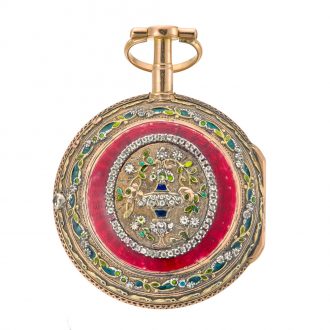
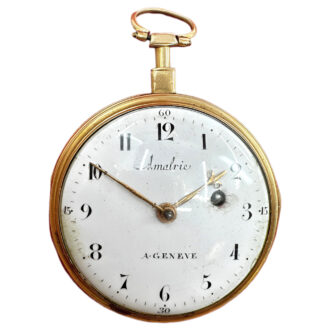
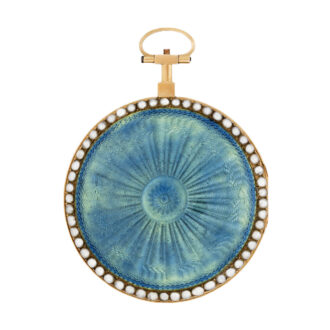
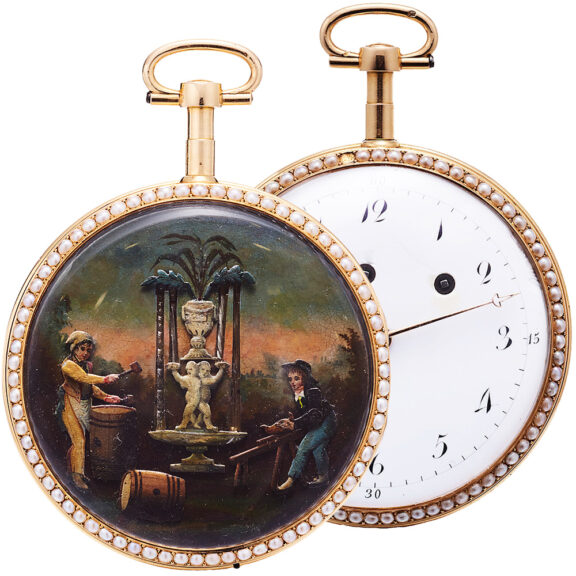
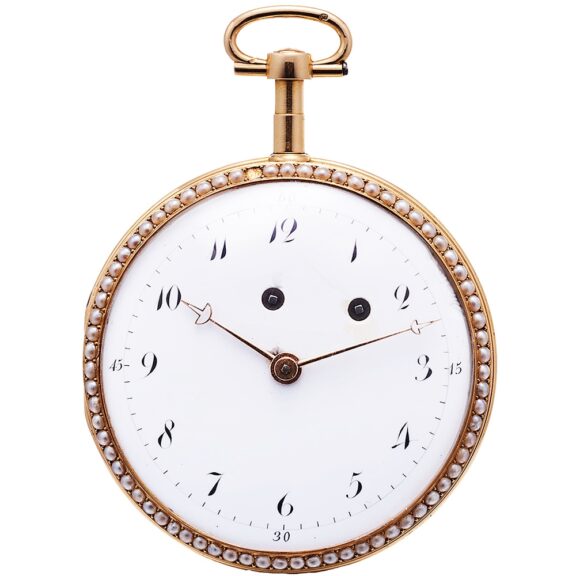
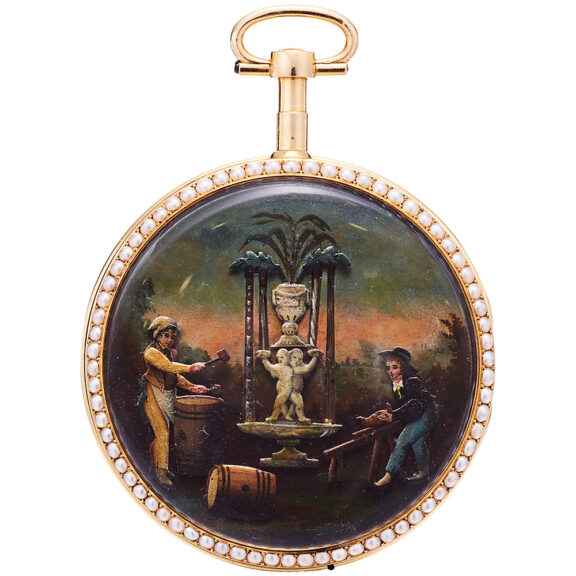
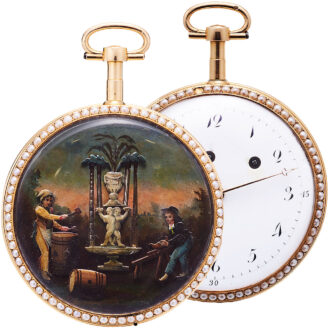
A Swiss 18K gold, enamel, pearl-set key-wound pocket watch with an automated scene and animated fountains, circa 1795.
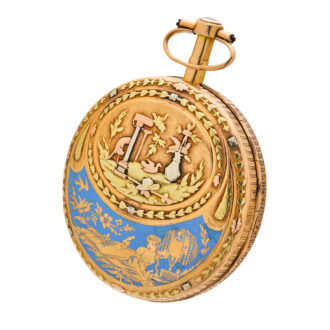
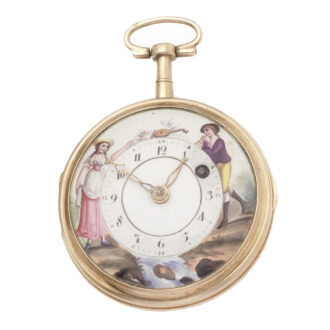
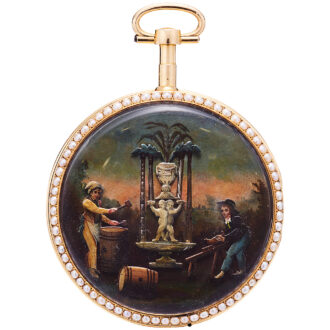
Round-shaped case with varnish Martin, the case back with an animated scene triggered upon request, activated by a button at 6 o’clock, with two functions and a set of four animated fountains, the polychrome enamel scene shows a cooper preparing a piece of wood for the construction of barrels on the left, on the right, another cooper knocks a rimmed barrel to finish the manufacture, between them, a set of four animated fountains and in the front a small barrel of wine.
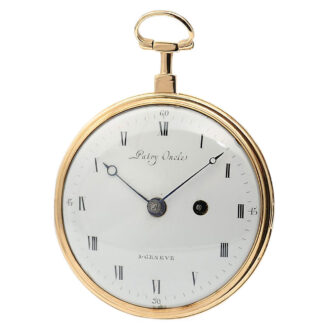
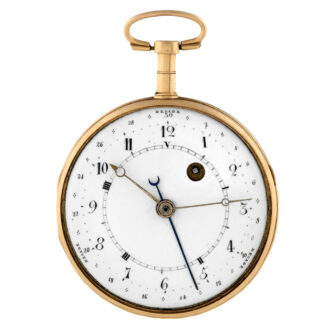
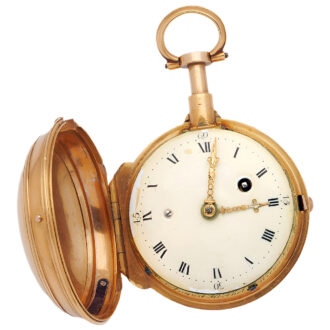
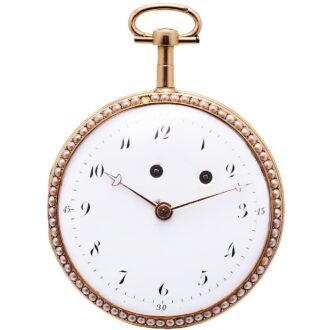
White enamel dial with radial Breguet hours, an outer minutes track with Arabic fifteen-minute numerals and gold skeletonized hands. Gilded brass full plate movement with going barrel, verge escapement, gilded brass monometallic balance, blued steel flat hairspring, and an independent gear train for the automaton mechanism.
–
Diameter: 56 mm
–
Signed: No name
–
In French interior design, Vernis Martin is a type (or several types) of japanning or imitation lacquer named after the 18th century French Martin brothers: Guillaume (died 1749), Etienne-Simon, Robert and Julien. They ran a leading factory between 1730 and 1770 and were vernisseurs du Roi (varnishers to the king). The Martin family perfected adding bronze or gold powder to green varnish in Paris, hence its name Vernis Martin (Martin varnish). But they did not invent the process, nor were they the only producers, nor does the term cover a single formula or technique. It imitated Chinese lacquer on European subjects and was used to decorate furniture and such personal articles as brisé fans and snuff boxes. It is said to have been made by heating oil and copal and then adding Venetian turpentine. Vernis Martin was made in several colours, green and golden red being the most characteristic.
–
The Martin family were French lacquerware artists during the period of Louis XV. The four brothers Guillaume († 1749), Julien († 1752), Robert (1706-1765) and Etienne-Simon († 1770) are remembered for perfecting the composition and application of vernis Martin, a lacquer substitute named after them, patented by Guillaume and Robert in 1730. In 1748, their factory became part of the Royal Factory of Furnishings to the Crown. Among their commissions were coaches and rooms at Versailles. Their name is also associated with vernis Martin fans, although it is unknown if they made these fans. It is extremely rare to find watches using this technique, especially since it remains fragile. Few objects of the 18th century have survived in good condition, often deteriorated, while the decor of our watch is barely cracked.
Share this page: