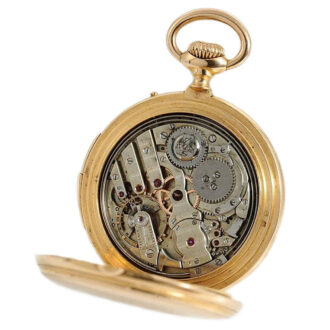
Swiss gold astronomical repeating calendar watch Circa 1877


- Kenmerk
- AD7499
- Diameter
- 58 mm
- Estimate
- € 15.000 - 30.000
- Price sold
- €
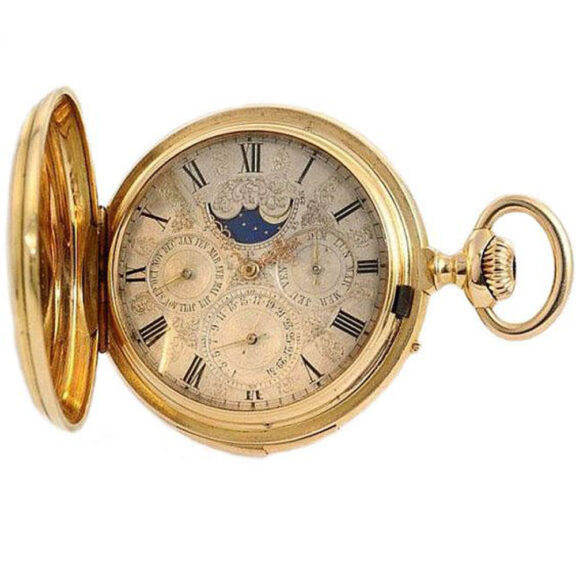
Rose gold full hunter with retrograde date indication
–
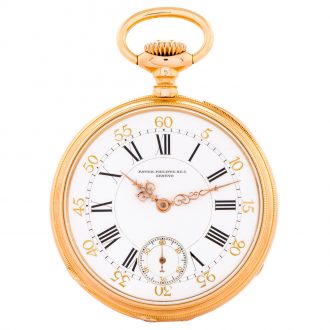
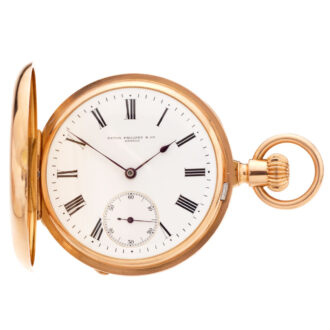
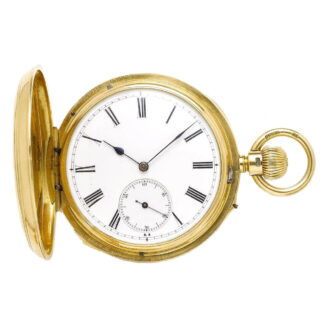
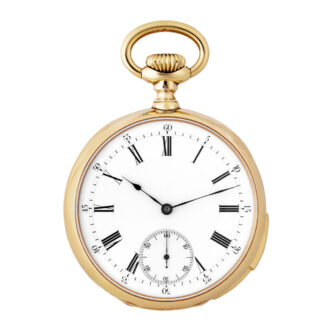
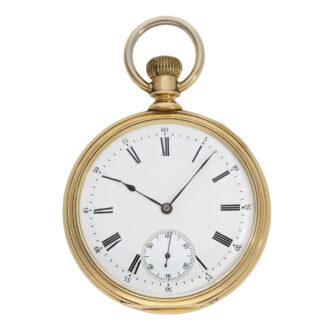
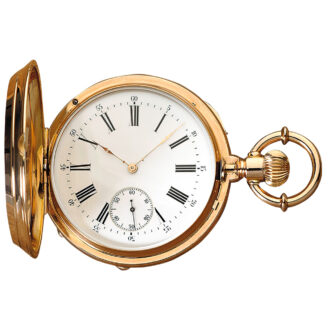
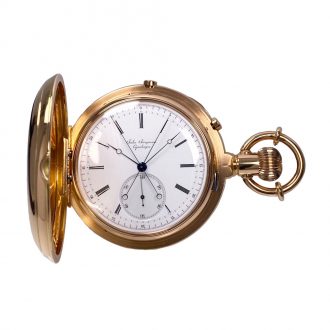
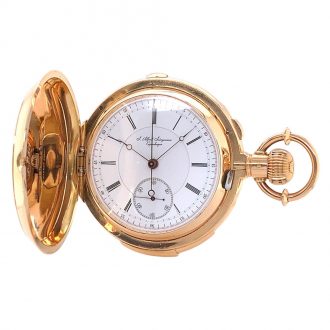
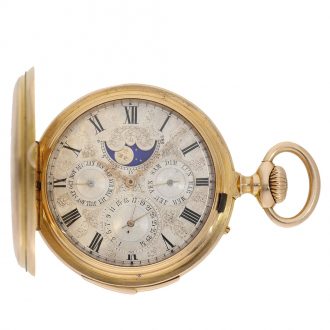
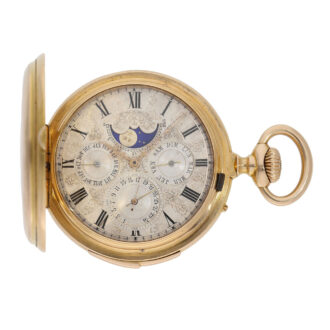
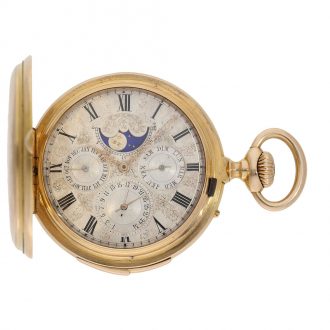
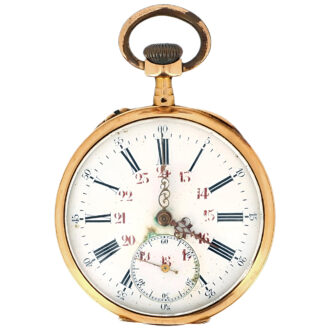
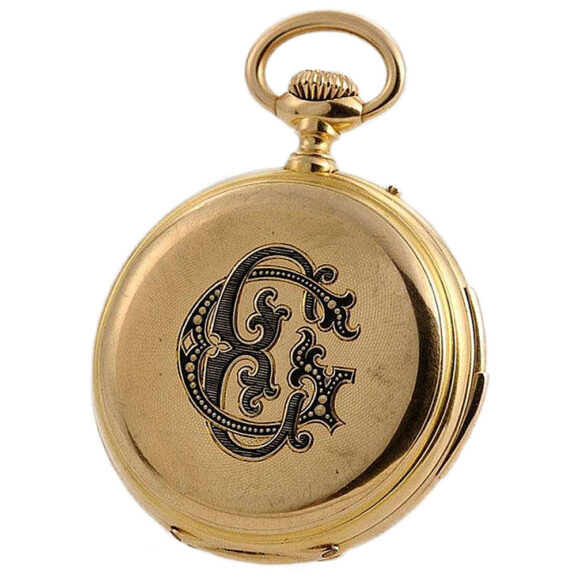
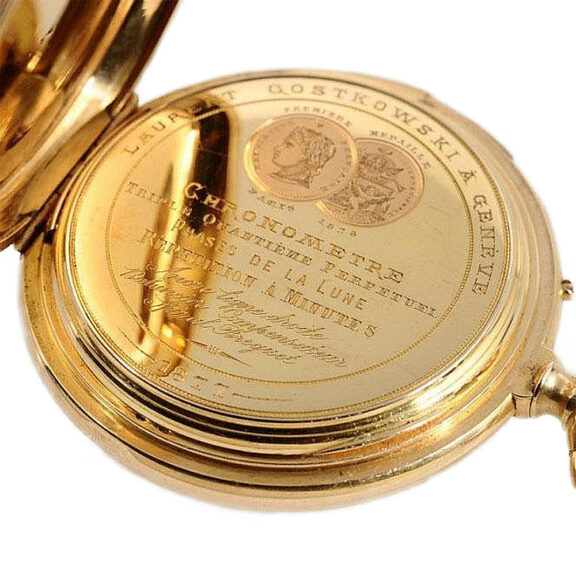
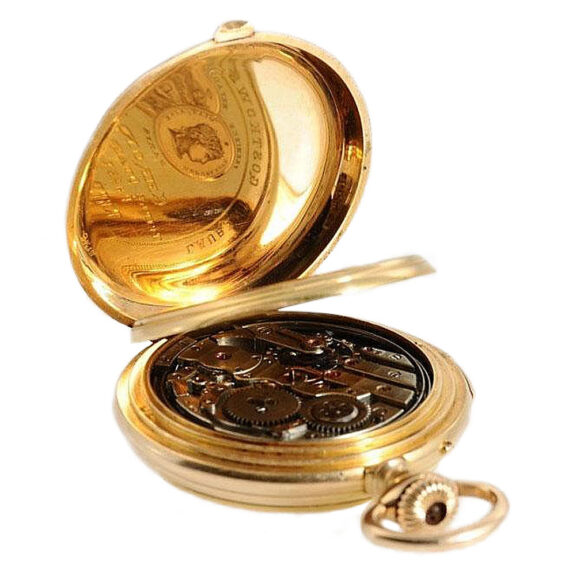
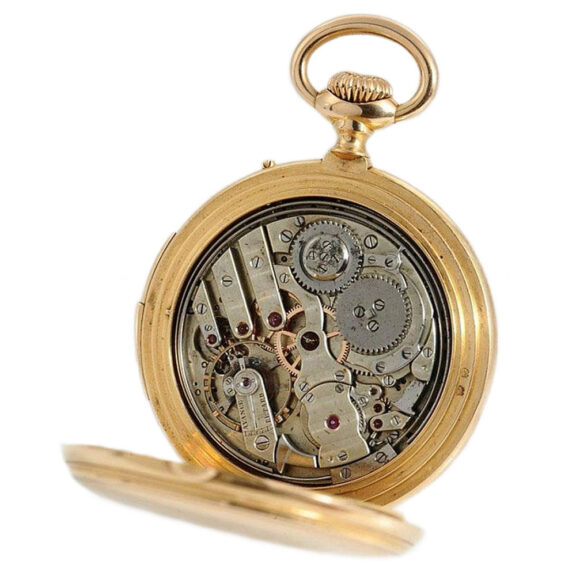
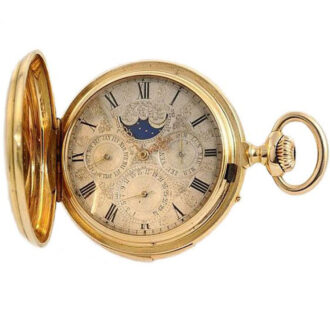
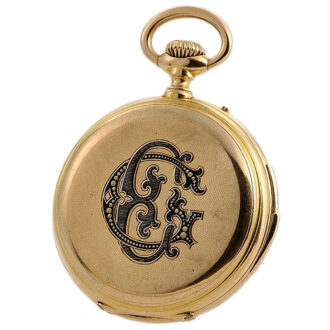
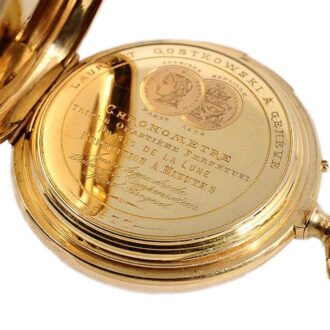
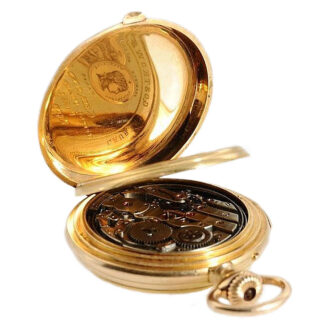
A very fine and heavy Swiss 18 carat rose gold hunting cased minute repeating astronomical pocket watch with perpetual calendar, phases of the moon and moon age made by Laurent Gostkowski in Geneva, Switzerland, circa 1877. The engine turned case with a black enamelled monogram on the front and a slide for the repeating mechanism in the band. A cuvette engraved with the prize medals from Paris 1878 and technical details. Silvered, lavishly foliate and florally engraved, dial with inlaid radial Roman hours, an outer minute track, auxiliary seconds with concentric retrograde date at 6 o’clock, segment shaped aperture with a cobalt blue enamelled golden moon phase disc and applied gold moon and stars at 12, ages of the moon, two further subsidiary dials for indication of the weekdays at 3, the months at 9 and rose gold Louis XVI hands. The nickel plated movement with Geneva striping decoration, two hammers, two gongs, a rose gold train, wolf teeth winding wheels, a large screw compensation balance and counterpoised lever.
–
Diameter: 58 mm
–
Weight: 174 g
–
Signed: Laurent Gostkowski à Genève
–
Laurent Gostkowski was born around 1850 in Nice, France. He was the son of Wincenty (Vincent) Gostkowski and Marie-Antoinette de Rabaudy. Father Vincent Gostkowski (March 29, 1807-August 29, 1884) was born in Grzymski, Poland and emigrated to Geneva in the 1830s.
He was a lawyer, and an early financier and co-owner of Patek & Cie, previously known as Patek, Czapek & Cie, founded by the Polish businessman and aristocrat Antoine Norbert Count de Patek and the Polish watchmaker Franciszek Czapek. On May 15, 1845, the company was renamed Patek & Cie after Jean-Adrien Philippe and Vincent Gostkowski joined the company. On June 30, 1847, at the age of 40, Vincent married the French Marie-Antoinette de Rabaudy. For this marriage Antoine Norbert Count de Patek and Jean Adrien Philippe were two of the three witnesses.
On January 1, 1851 the name was changed from Patek & Cie to Patek, Philippe & Cie. On January 21, 1876, Vincent Gostkowski retired from the Patek Philippe company and founded the Gostkowski family business with his son Laurent in Geneva and later in Paris. Among their suppliers was another former employee of Patek, Czapek & Cie, Henri Majewski, from Lwów in Poland.
The company won a silver medal for watchmaking at the 1878 World Exhibition in Paris and shortly afterwards, Gostkowski opened a new workshop near the Quai des Bergues in Geneva. One of their employees was Emmanuel Cottier (1858-1930), father of Louis Cottier (1894-1966), a genius who, among other technical innovations, invented the Patek Philippe World Time mechanism in 1931.
Laurent Gostkowski died on March 29, 1915.
Only a few watches by Gostkowski and Majewski, are known so far. All of them, however, stand for the very highest Geneva quality and with unmistakable similarity to the early, highly complicated Patek Philippe watches of the 1870s/1880s. Interesting details of the connections between Patek Philippe and the role of the Gostkowski’s at Patek were published by Patek Philippe expert Philip Poniz in his article: Patek Philippe: The Forgotten Beginnings.
Signed: Laurent Gostkowski à Genève
Share this page: