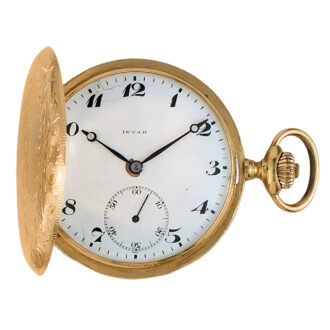
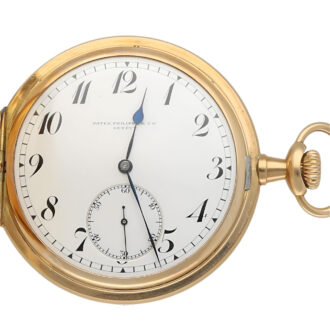
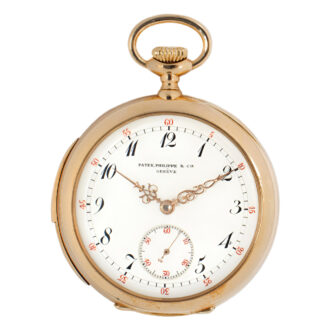
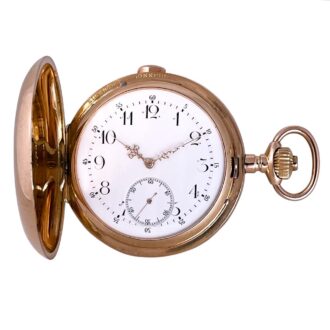
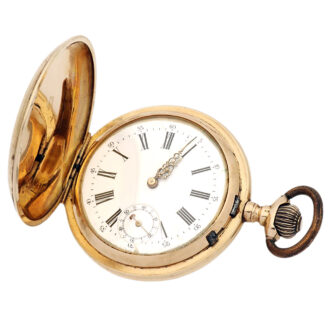
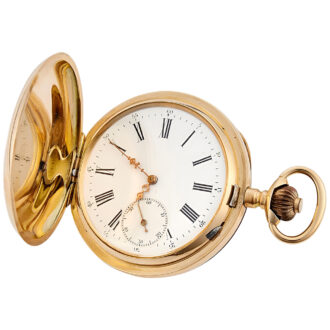
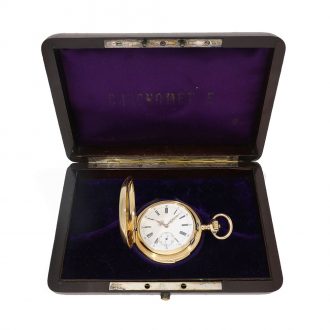
Swiss refined pocket chronometer with minute repeater Circa 1905
- Kenmerk
- HC0778
- Diameter
- 54 mm
- Estimate
- € 17.500 - 35.000
- Price sold
- € 25.400
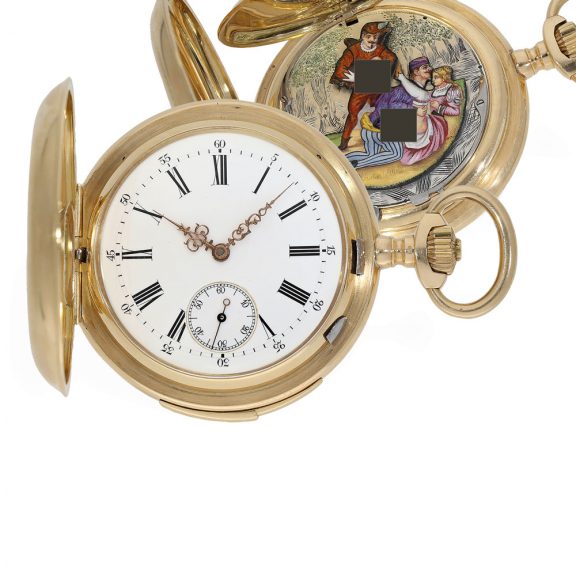
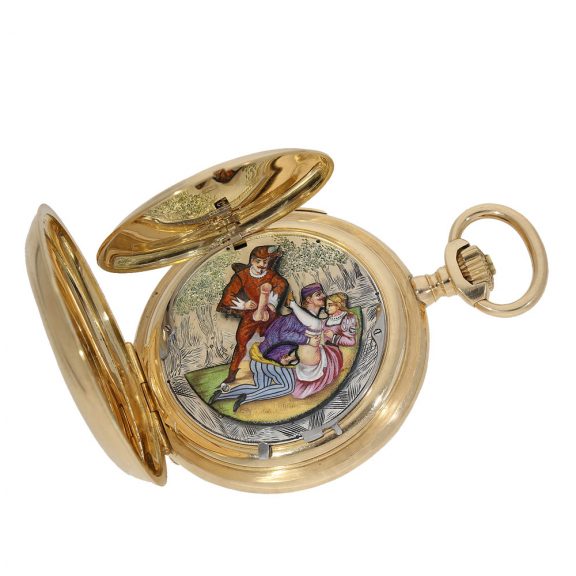
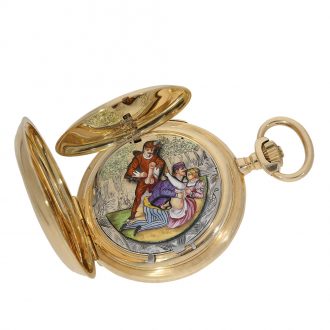
Pocket watch with concealed erotic automaton ‘Mephisto’
–
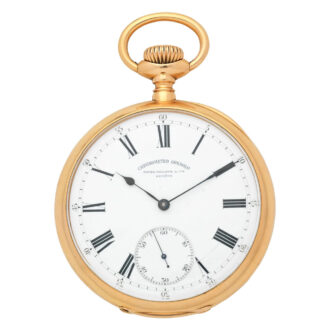
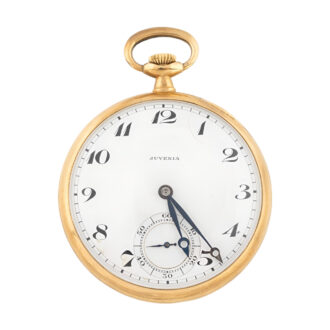
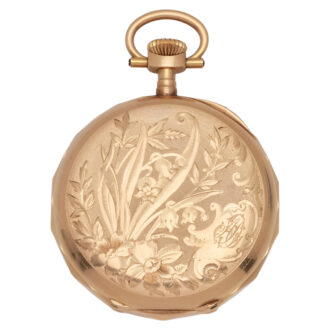
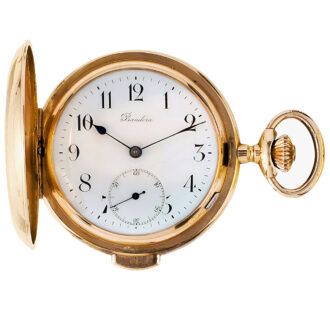
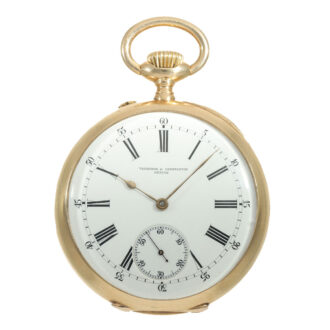
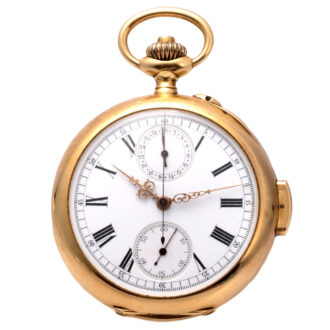
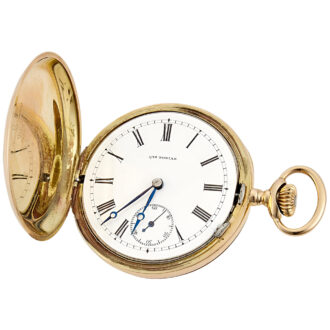
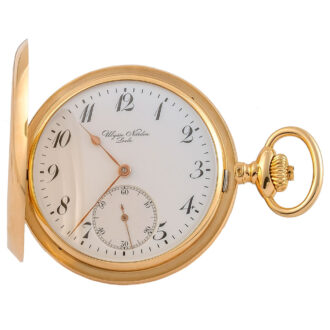
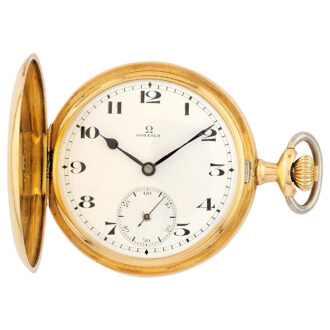
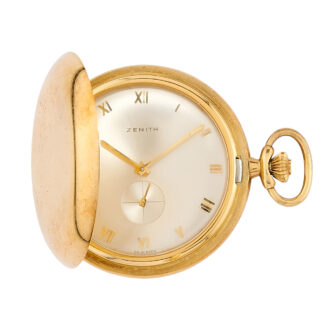
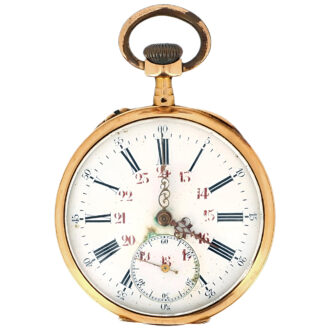
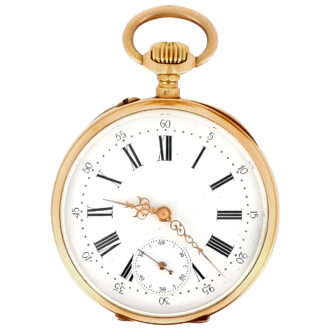
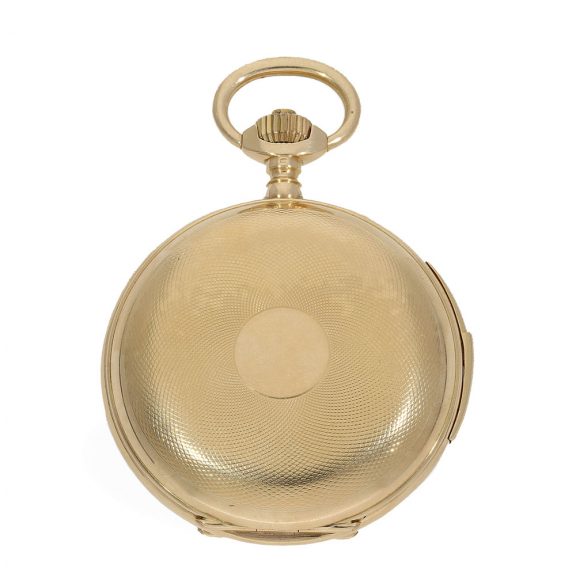
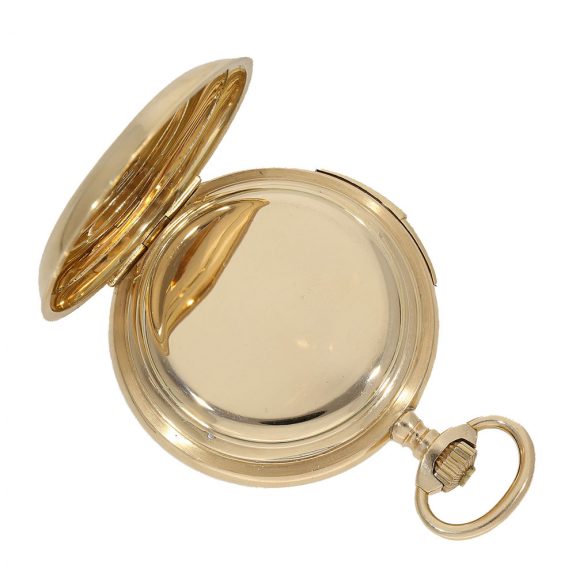
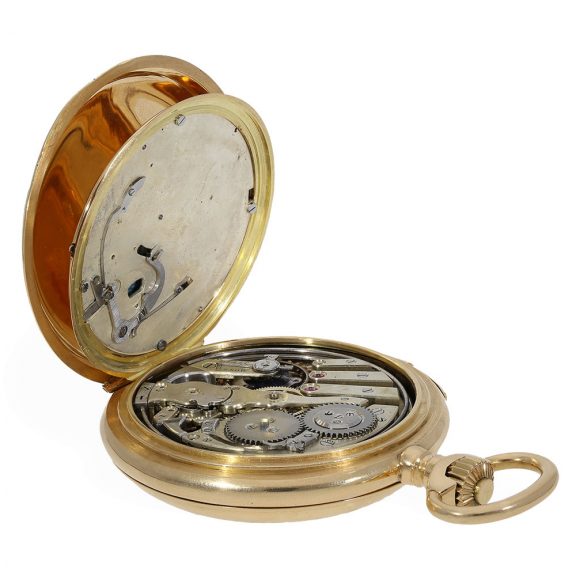
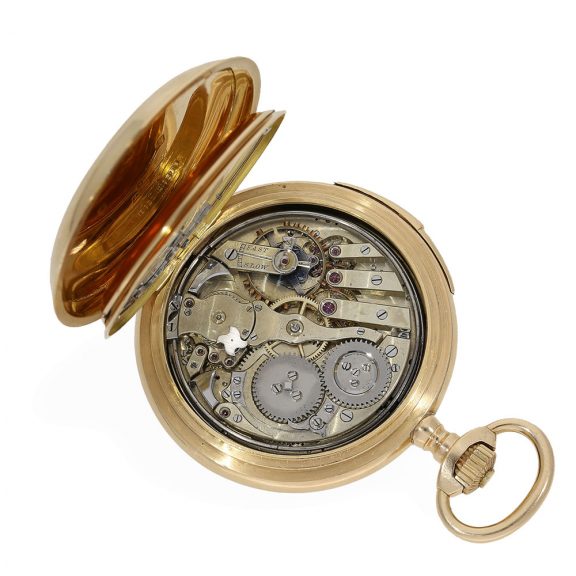
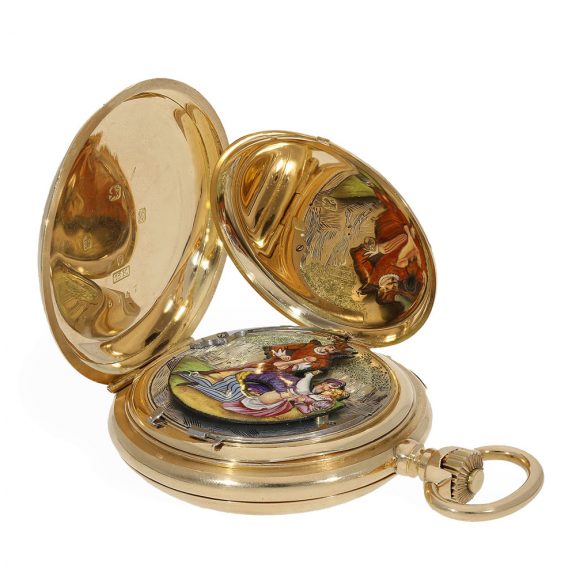
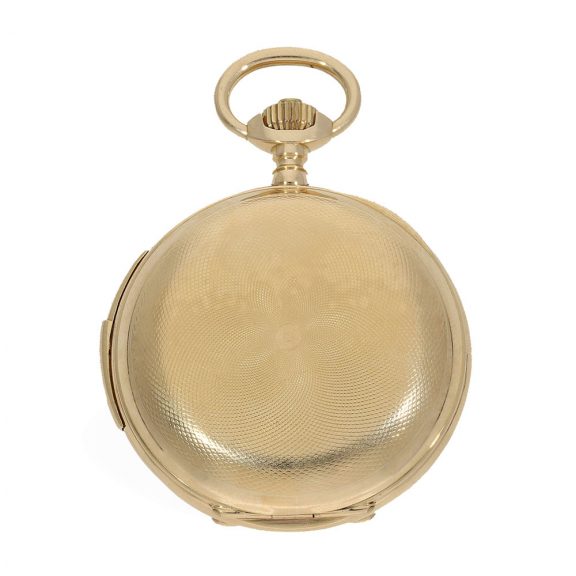
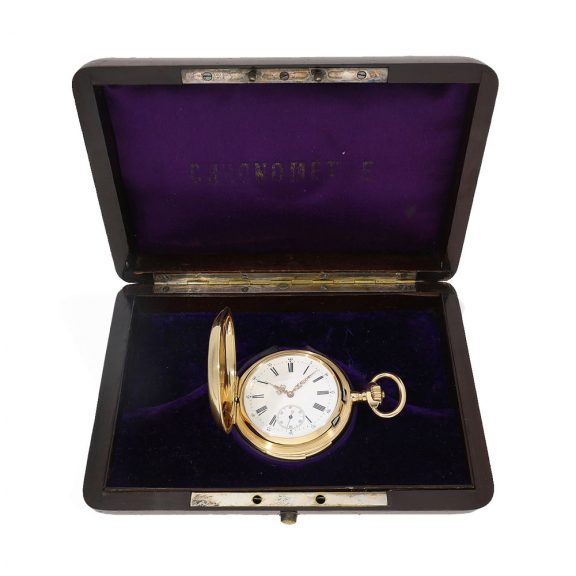
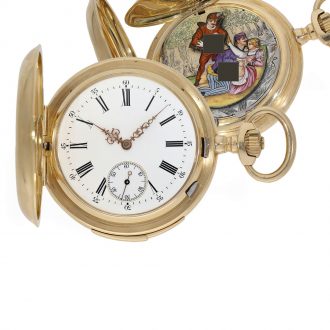
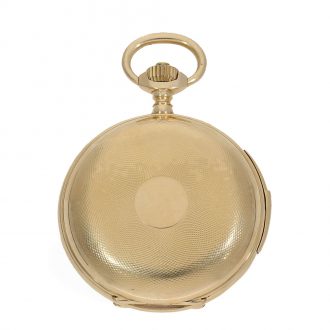
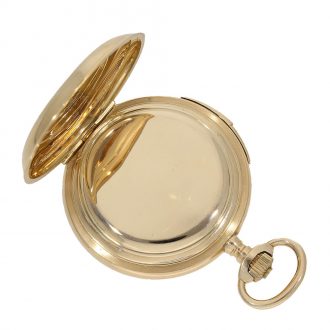
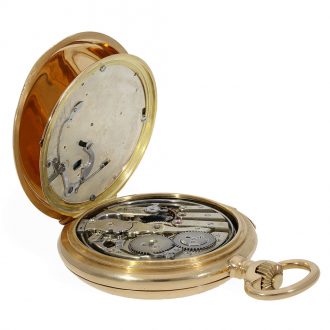
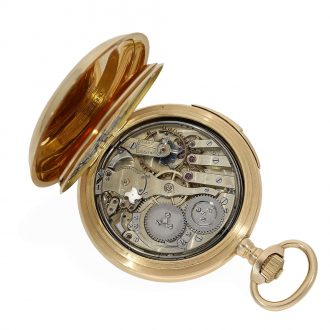
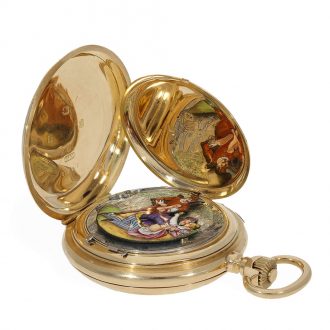
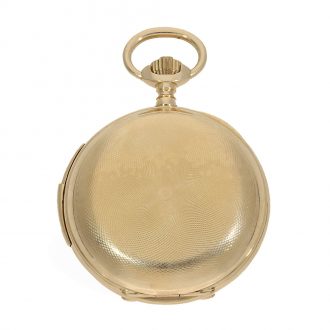
An especially heavy highly refined pocket chronometer with minute repeater and concealed erotic automaton ‘Mephisto’, probably made by le Coultre in Genève, Switzerland, circa 1905. This full hunter cased and numbered pocket watch was crafted from 18 Carat gold and has engine turned decoration on both lids, a Swiss gold punch as well as English Hallmarks from 1905. Under the cuvette there is an extremely fine quality enamelled erotic figure automaton with a rare scene of three persons, including ‘Mephisto’. The excellently preserved white enamel dial has black Arabic minute numerals, black Roman hour numerals, a subsidiary seconds dial with black Arabic numerals at six o’clock and gold hands. The very fine Swiss probably Le Coultre movement has a lever escapement in chronometer quality, repeating the hours, quarters and minutes as well as driving the figure automaton during repeating.
–
Diameter: 54 mm
–
Weight: 133 g
–
Signed:No name
–
Most of the automatons as used in the time in which this watch was produced are of average, sometimes primitive quality. However, this watch is of fantastic quality, top quality in terms of both the movement and the automaton. Both the serial number and the caliber indicate Le Coultre. The watch was made for the English market. The special feature, apart from the quality, is that it is an automaton with minute repeater, which is extremely rare. A comparable erotic automaton in chronometer quality was sold for circa € 43.000 at an auction in 2021.
–
LeCoultre & Cie
LeCoultre & Cie. The earliest records of the LeCoultre family in Switzerland date from the 16th century, when Pierre LeCoultre (circa 1530 – 1600), a French Huguenot, fled to Geneva from Lisy-sur-Ourcq, France to escape religious persecution. In 1558, he obtained the status of inhabitant but left the following year to acquire a plot of land in the Vallée de Joux. Over time, a small community formed and in 1612, Pierre LeCoultre’s son built a church there, marking the founding of the village of Le Sentier where the company’s manufacturing is still based today. In 1833, following his invention of the machine to cut watch pinions from steel, Antoine LeCoultre (1803-1881) founded a small watchmaking workshop in Le Sentier where he honed his horological skills to create high quality timepieces. In 1844, he invented the world’s most precise measuring instrument at the time, the millionomètre and in 1847 he created a keyless system to rewind and set watches. Four years later, he was awarded a gold medal for his work on timepiece precision and mechanization at the first Universal Exhibition in London. In 1866, at a time when watchmaking skills were divided up among hundreds of small workshops, Antoine and his son, Elie LeCoultre (1842-1917), established the Vallée de Joux’s first fully fledged manufacture, LeCoultre & Cie, bundling their employees’ expertise under one roof. Under this setup, they developed the first partially mechanized production processes for complicated movements in 1870. By the same year, the manufacturer employed 500 people and was known as the Grande Maison of the Vallée de Joux. By 1900, it had created over 350 different calibers of which 128 were equipped with chronograph functions and 99 with repeater mechanisms. From 1902 and for the next 30 years, LeCoultre & Cie produced most of the movement blanks for Patek Philippe of Geneva.
Share this page: