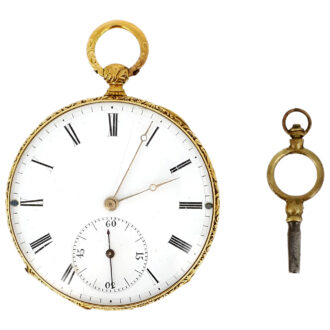
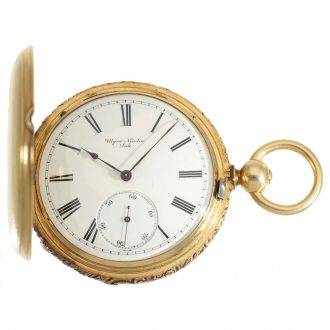
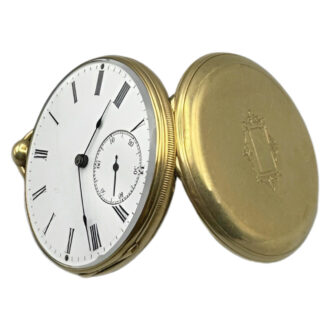
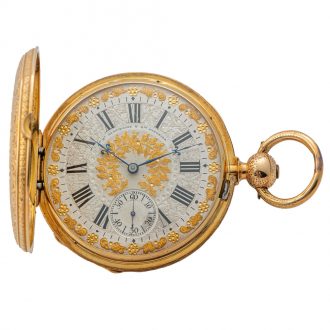
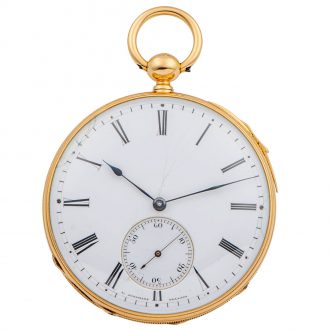
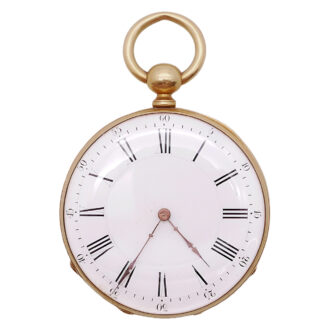
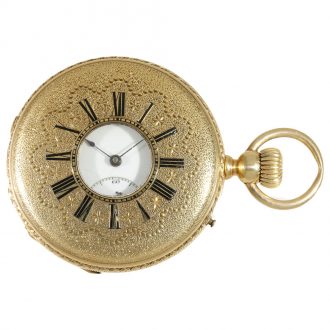
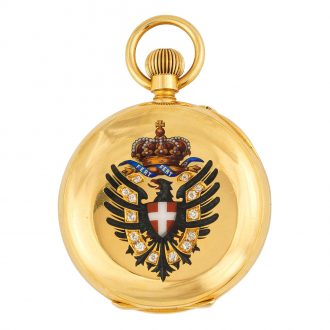
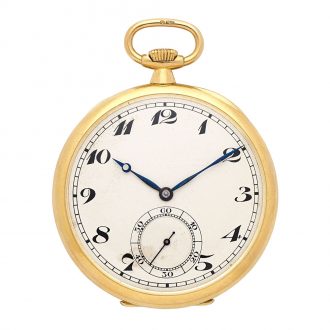
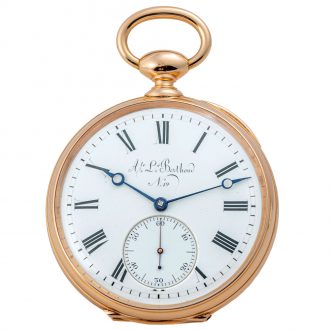
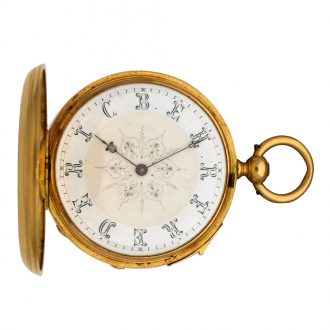
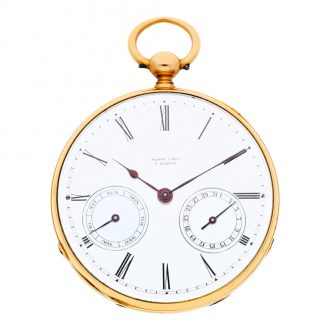
Swiss precision watch with Seconde Morte & diablotine Circa 1860
- Kenmerk
- AC1105
- Diameter
- 52 mm
- Estimate
- € 3.500 - 6.000
- Price sold
- € 3.850
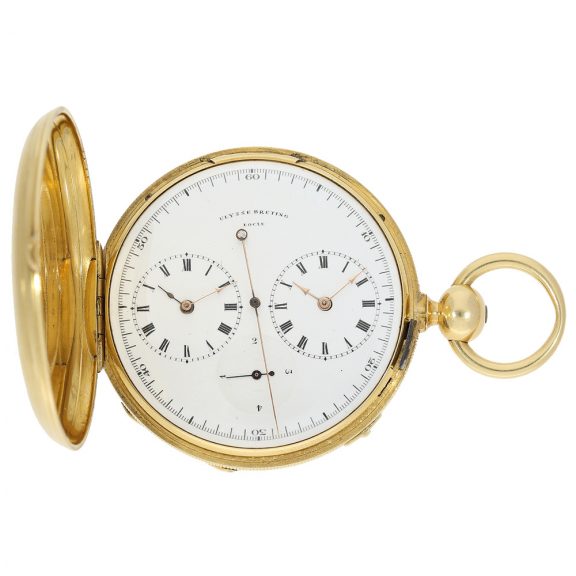
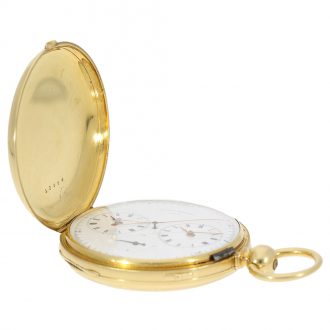
Gold Full Hunter with two-time zones by Ulysse Breting
–
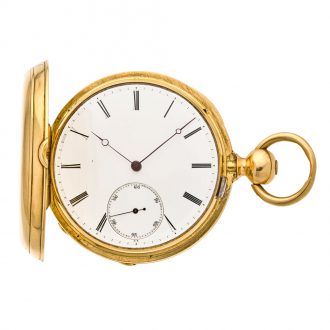
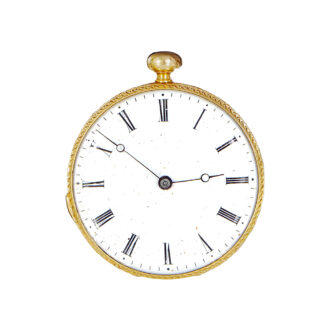
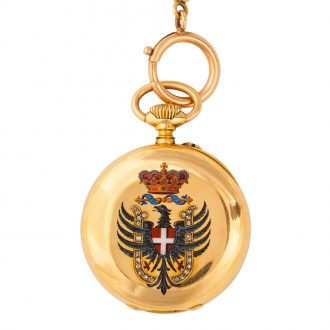
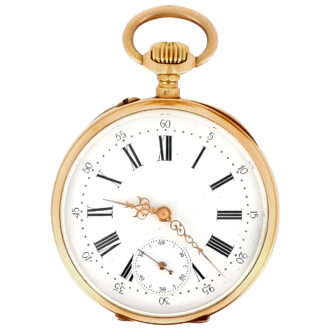
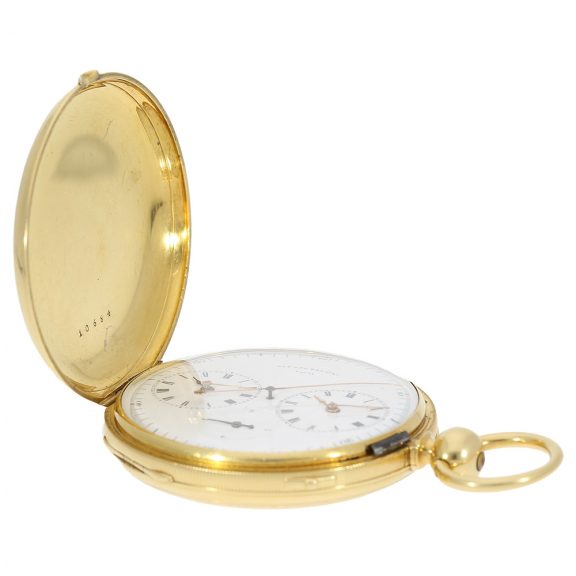
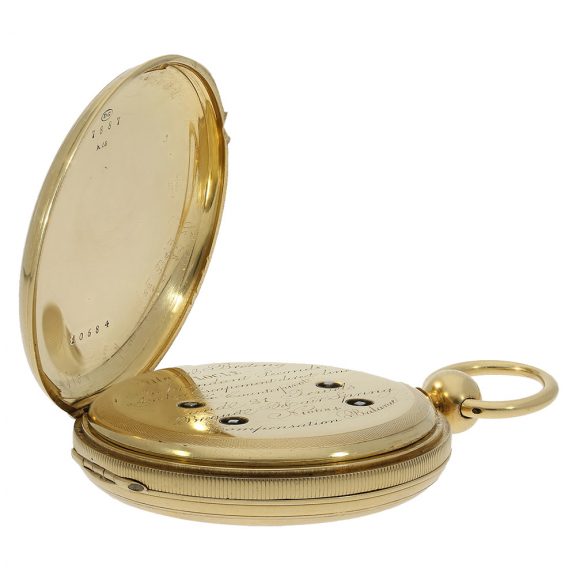
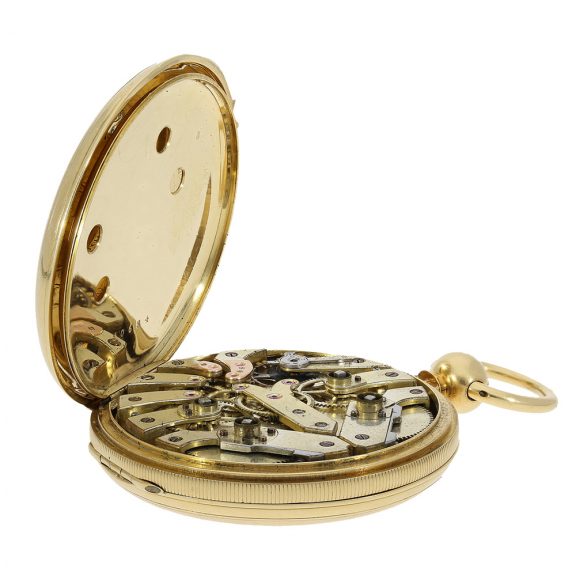
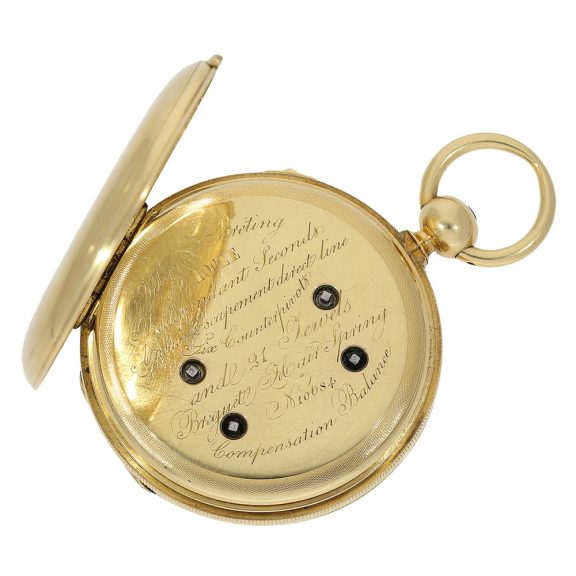
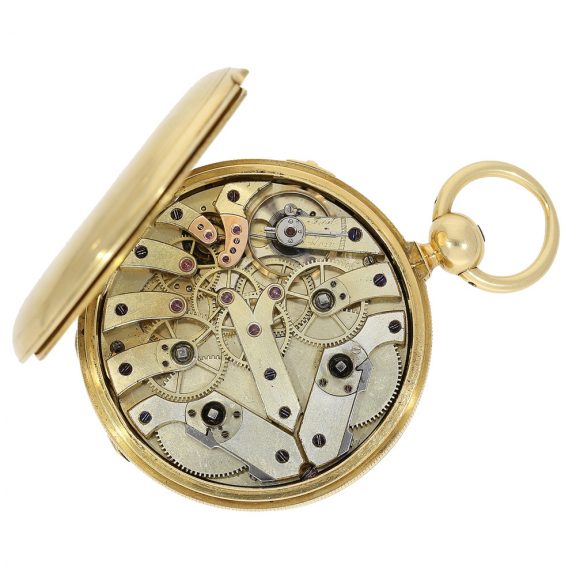
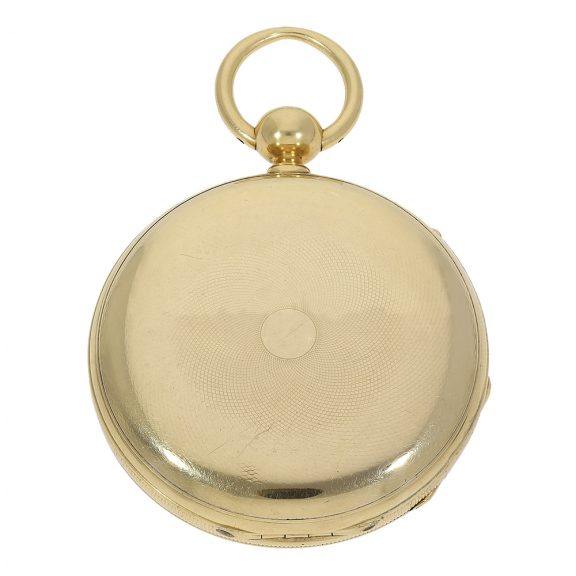
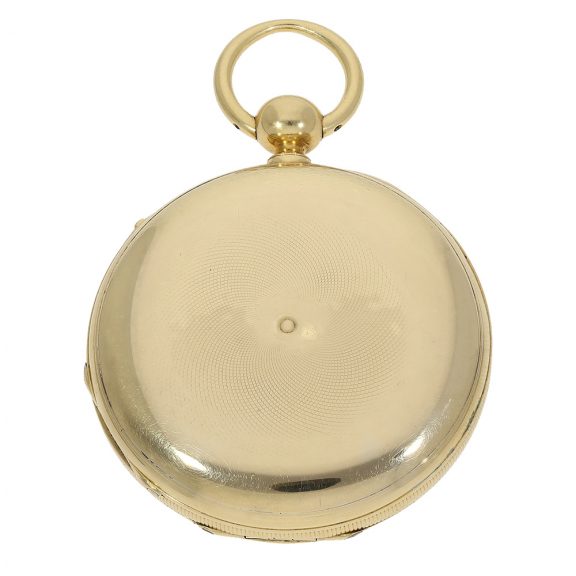
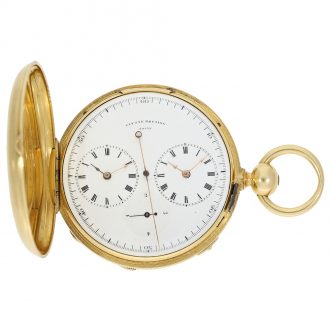
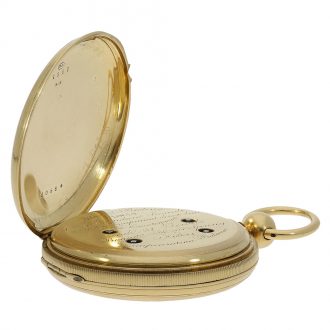
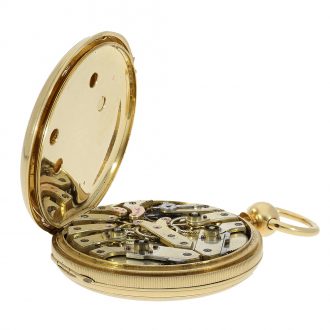
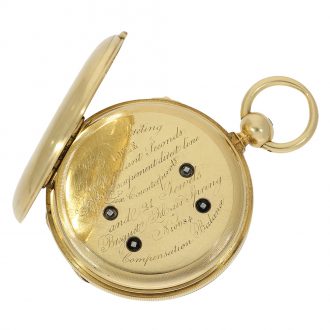
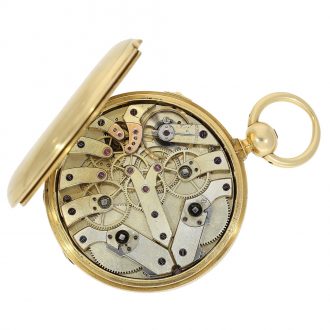
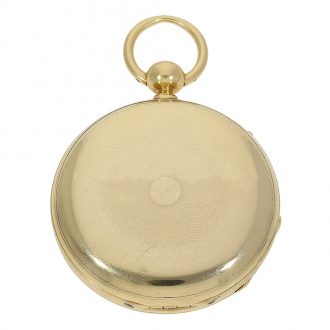
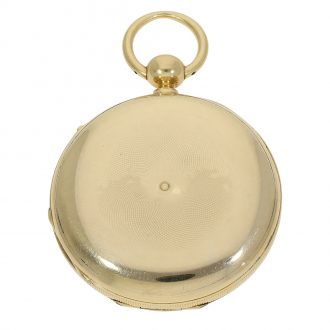
A heavy Swiss gold hunting cased pocket watch with seconde morte & diablotine, circa 1860. This vintage pocket watch has an 18K gold engine turned à goutte hunting case with a coined band. The band has a slide for the independent stoppable seconds. The case and the movement have matching numbers. The watch has a highly complicated bar movement with special lever escapement and three complications: seconde morte, flashing quarter seconds, and 2nd-time zone. The enamel dial is original, perfectly preserved and signed. It features two meantime dials with Roman numerals, an outer minute track, a subsidiary quarter-second jumping diablotine and gold hands.
–
Diameter: 52 mm
–
Weight: 115 g
–
Signed: Ulysse Breting Locle
–
The spring in the fly spring watch needs to be replaced. However, the movement is working properly. It is recommended to clean the watch. This collector’s watch is technically advanced and interesting.
–
Diablotine is a small subsidiary dial on a chronograph or independent centre seconds pocket watch, the hand of which moves in a jumping manner at intervals of 1/4 or 1/5th of a second. The term means little devil. The diablotine is halted when the chronograph or centre seconds is stopped, and the fractions of a second can be read.
–
Ulysse-Adrien Breting was a Swiss precision watchmaker born in Le Locle on December 1, 1812 (Neuchâtel). He founded Breting Frères with his older brother, Jules Breting, in the 1840s. Their company manufactured a range of timepieces from simple bridge movements to chronometers, jumping seconds with quarter repetition in the Piguet design style and tourbillons. The watches were often characterized by red gold gears and chronometer escapements and were signed only on the dial side with ‘Breting Frères au Locle’.
From 1853, Antoine LeCoultre supplied the company with ebauches. Between 1874 and 1875, four clocks with Philippe’s end curves were submitted to the Neuchâtel Observatory, with the highest placing being 8th. In 1876, the company was bought and renamed Ginnel & Ottone Frères.
Ulysse-Adrien Breting was married to Cècile Sandoz and died on January 19, 1891 in Le Locle (Neuchâtel). Both brothers had sons named Ulysse Breting (1835-?) and Jules Breting (1833-circa 1892). Ulysse Breting benefited greatly from the knowledge of his father, Ulysse-Adrien, and achieved fourth prize at the Neuchâtel Observatory in 1875 for a chronometer (bascule escapement). 1876, he won first prize at the Technicum in Le Locle with another chronometer. Until 1887, numerous watches from Ulysse Breting achieved very good placements in the Neuchâtel Observatory.
Share this page: