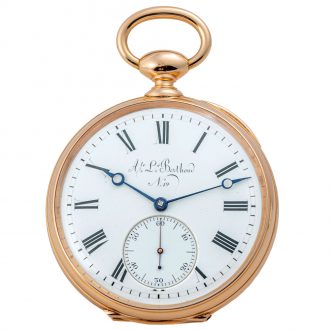
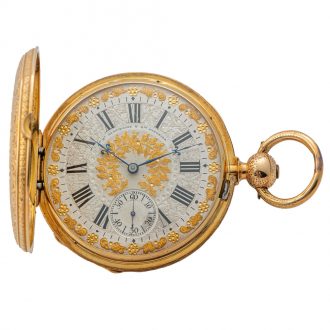
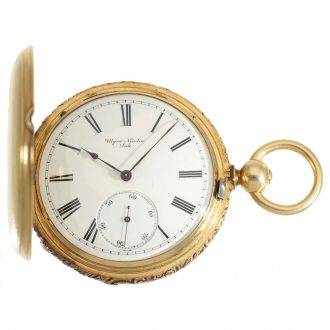
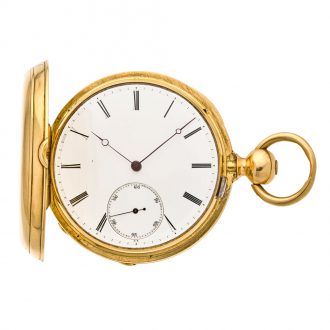
Swiss split-seconds chronograph with diablotine Circa 1860
- Kenmerk
- AD1230
- Diameter
- 56 mm
- Estimate
- € 5.000 - 9.000
- Price sold
- € 4.200
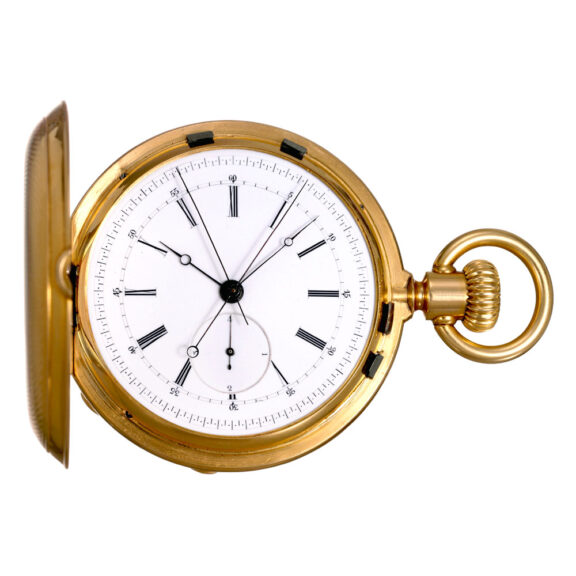
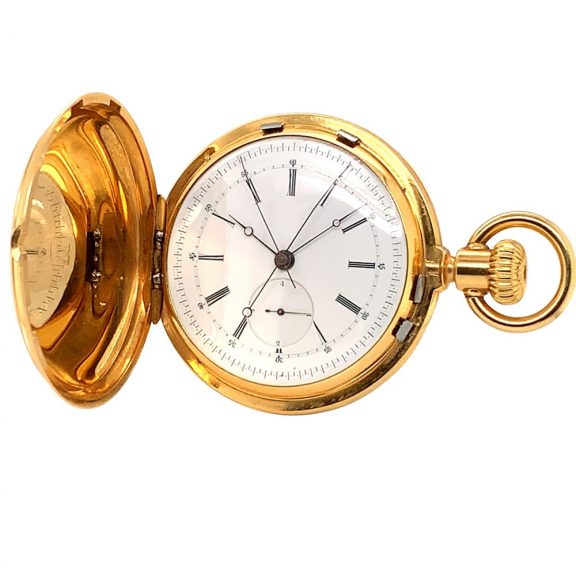
Gold split-seconds lever chronograph with 1/4th second diablotine by P.H. Doret
–
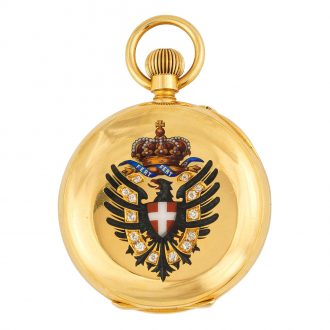
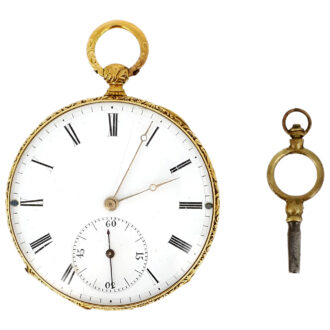
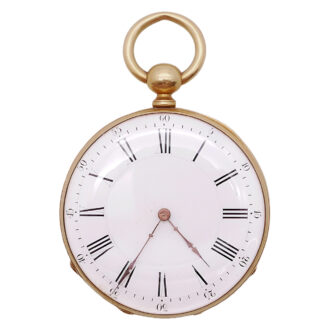
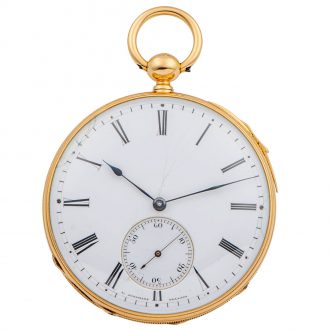
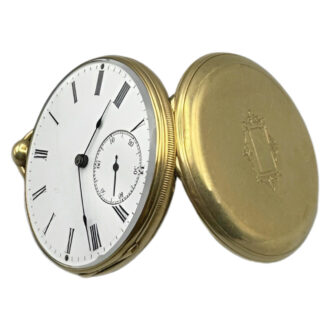
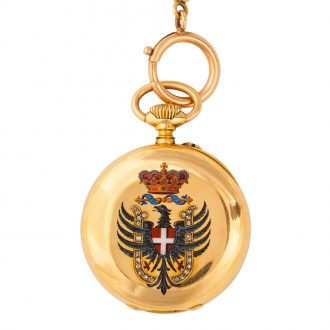
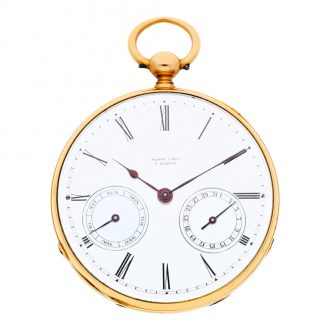
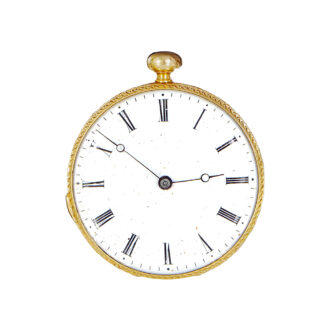
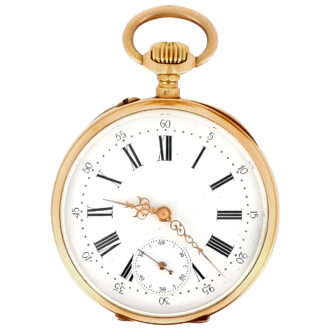
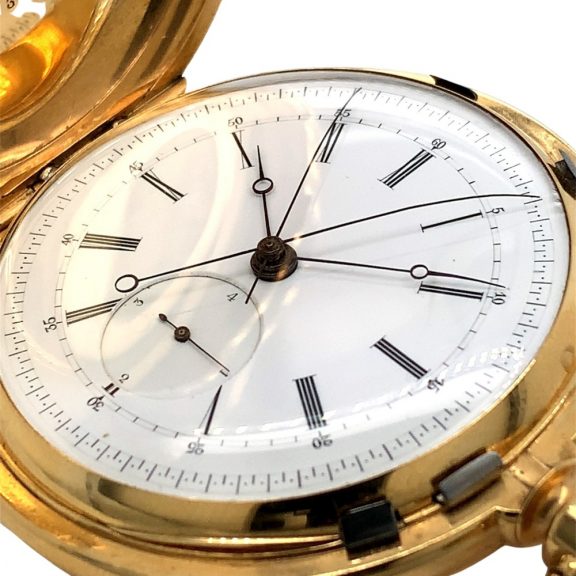
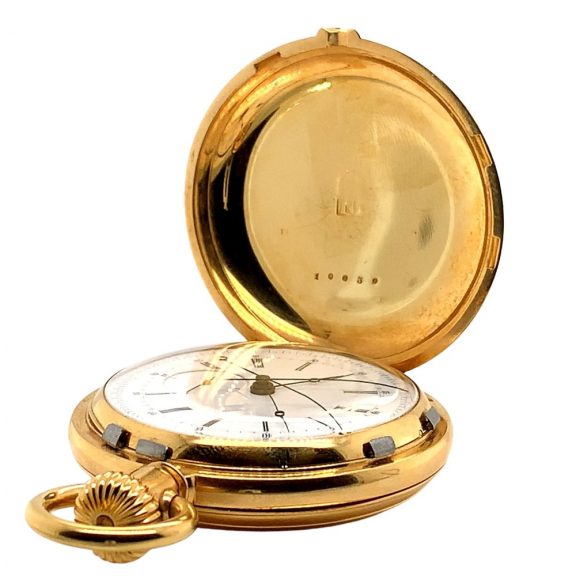
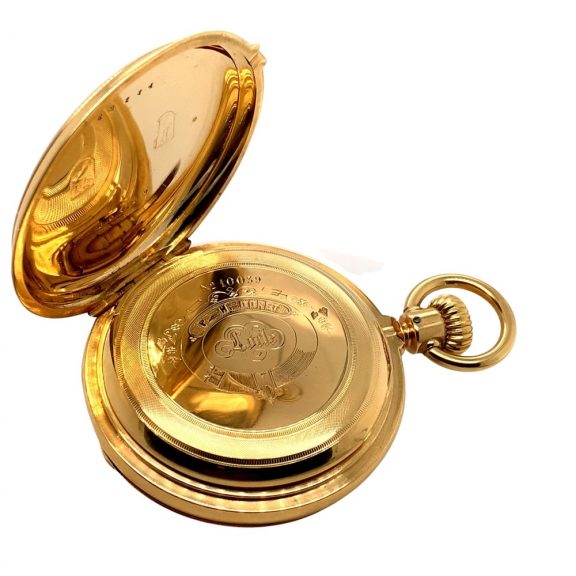
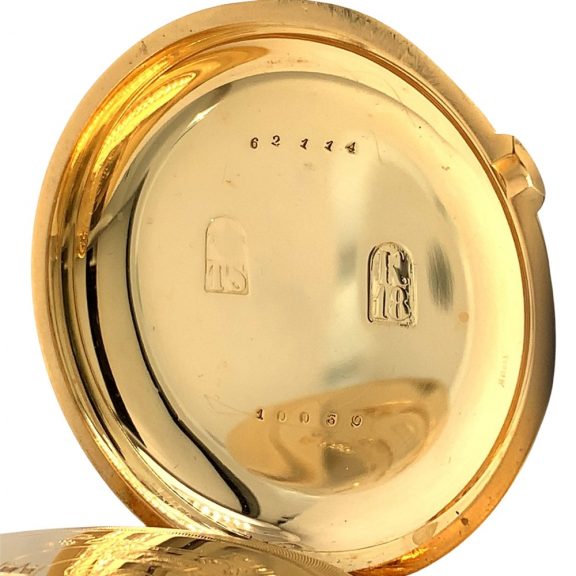
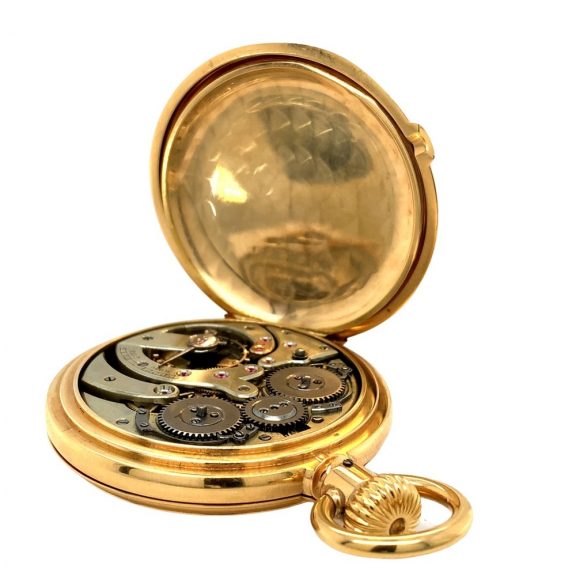
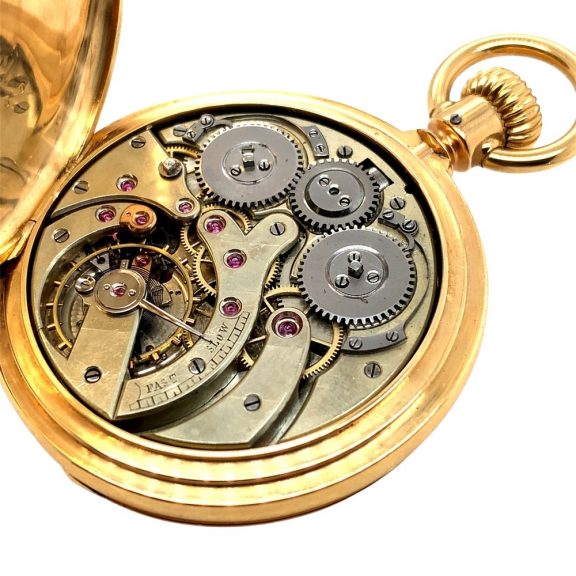
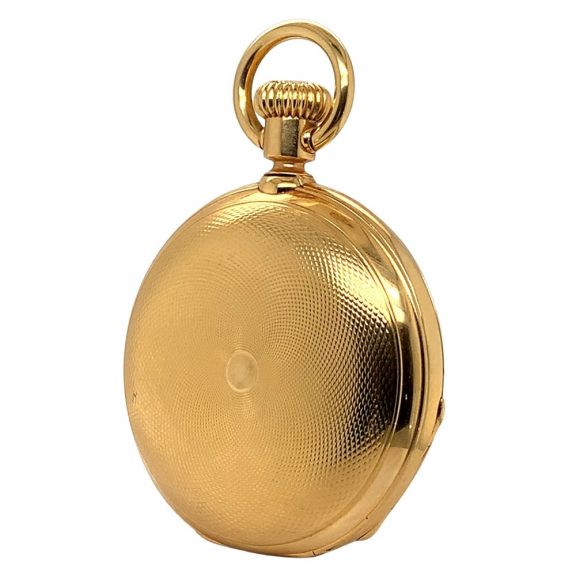
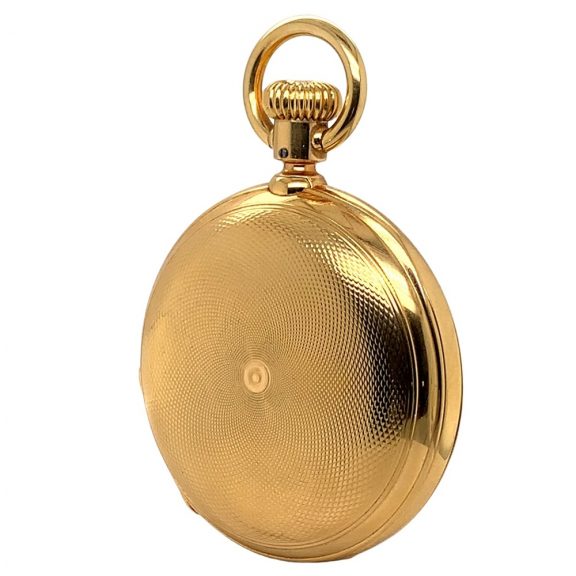
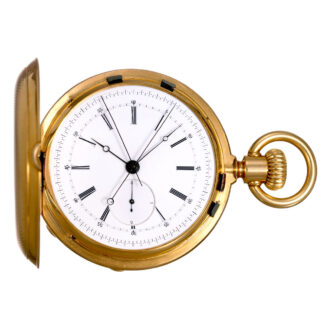
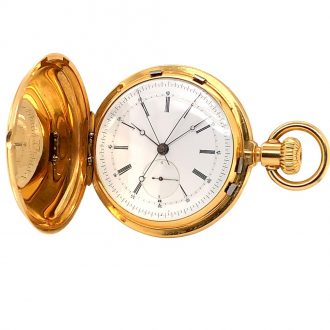
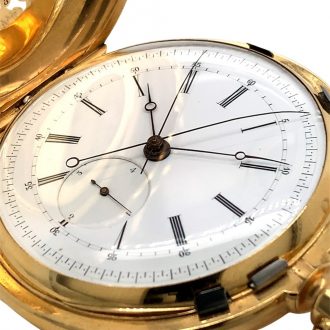
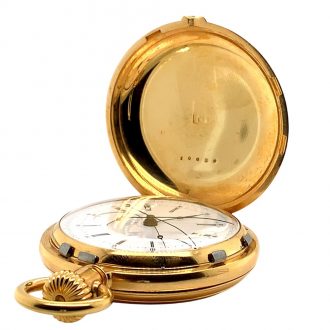
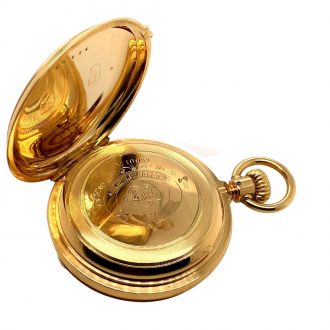
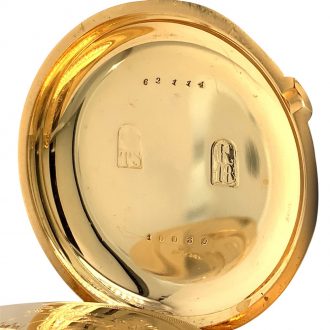
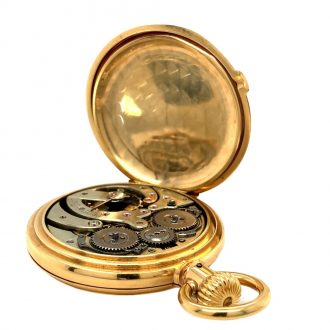
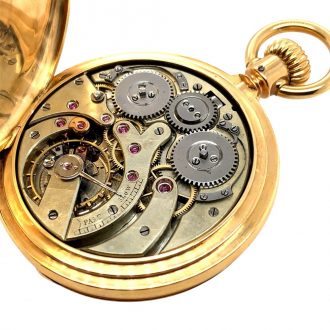
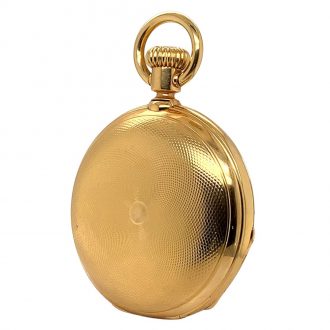
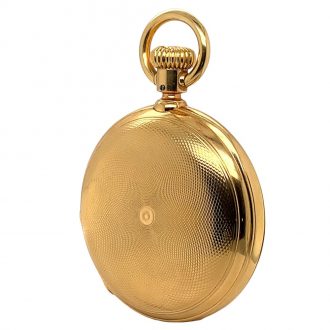
A very fine, rare, early and unusual Swiss 18 carat gold hunting-cased keyless winding pocket watch with two train independent split-seconds chronograph without return to zero function and 1/4th second diablotine, circa 1860. Nickel-silver movement, a two-train special calibre with tandem winding, 30 jewels, Geneva striping decoration, counterpoised straight-line lever escapement, cut bimetallic compensation balance, blued steel Breguet balance spring, index regulator, independent split-seconds chronograph with push-pieces in the bezel for stop/start and stop/rejoin. Hinged gold cuvette with engine-turned border. White enamel dial with Roman numerals, outer minute track and outermost fourths of a second ring, subsidiary quarter-second foudroyante and blued steel Breguet hands. The case engine turned to both sides with polished borders and bands. Cuvette signed.
–
Diameter: 56 mm
–
Signed: P.H. Doret Locle
–
This watch can be considered a true chronograph with an independent train. It is interesting because it probably dates from just before the Adolphe Nicole patent of 1862 and is, therefore, one of the early developments of the split-seconds mechanism for chronographs. Unlike the Adolphe Nicole patent, the hands of this watch cannot be reset to zero.
–
The feature known as a diablotine is a small subsidiary dial on a chronograph or independent centre seconds pocket watch, the hand of which moves in a jumping manner at intervals of 1/4 or 1/5th of a second. The term literally means ‘little devil’. The diablotine is halted when the chronograph or centre seconds is stopped, and the fractions of a second can be read.
Signed: P.H. Doret Locle
Share this page: