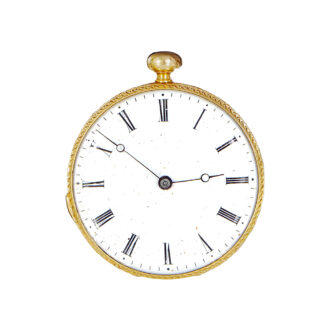
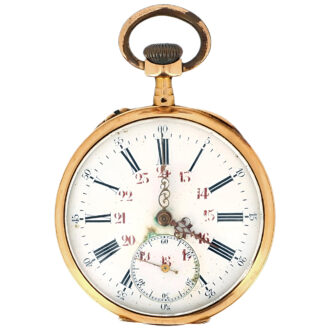
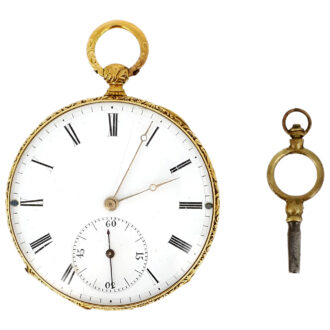
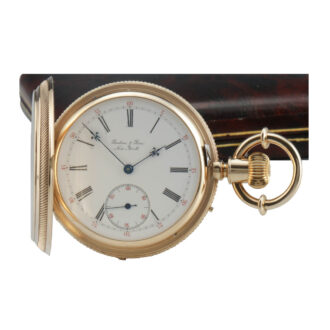
Swiss gold chronometer made for the US market Circa 1882
- Kenmerk
- EB0031
- Diameter
- 52 mm
- Estimate
- € 6.000 - 12.000
- Price sold
- € 12.800
Gold chronometer watch by Henry Louis Matile
–
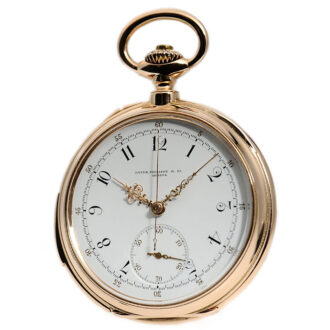
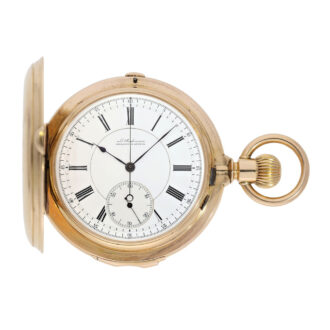
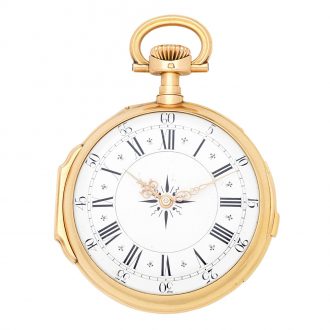
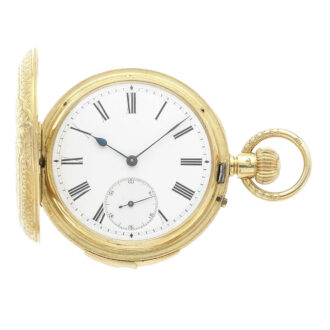
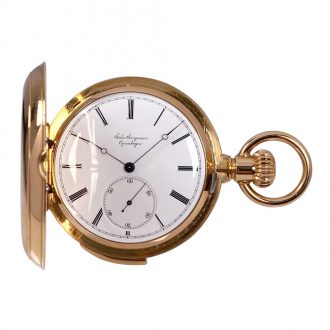
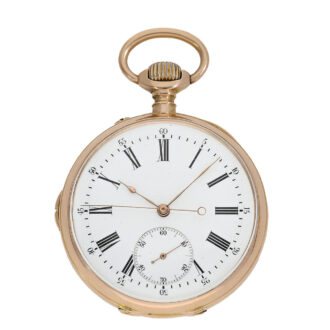
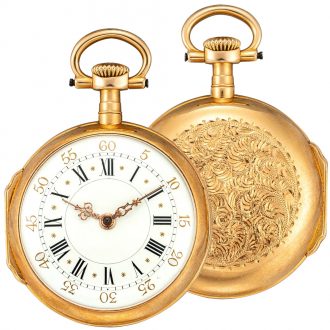
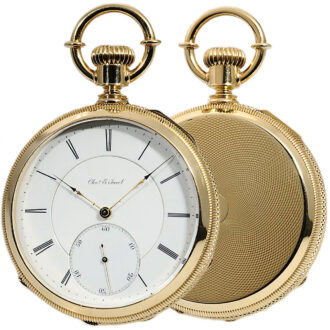
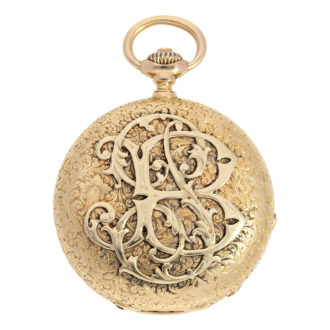
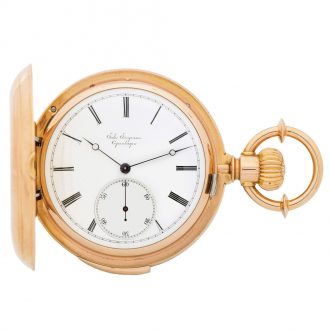
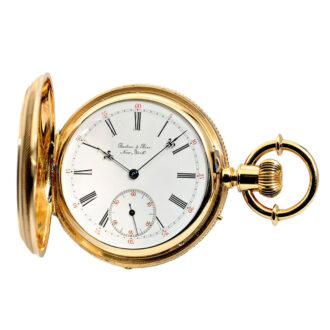
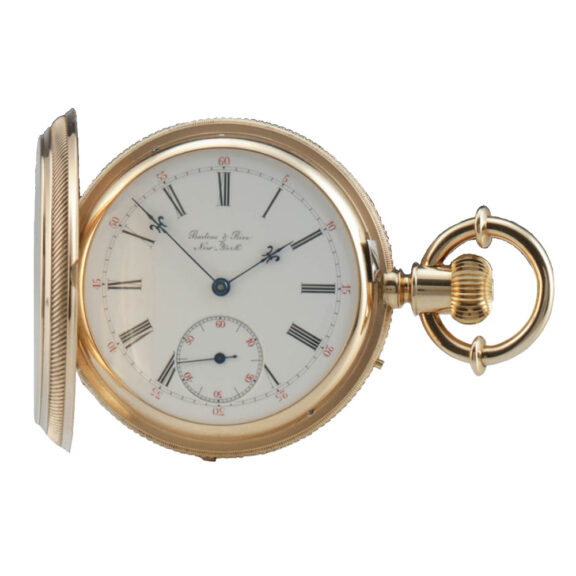
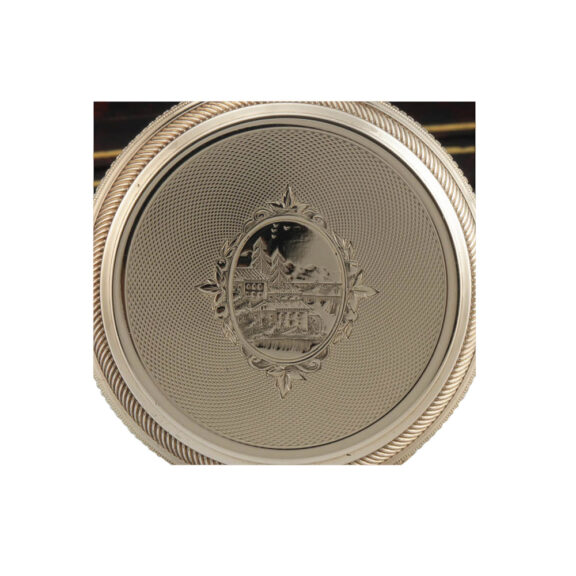
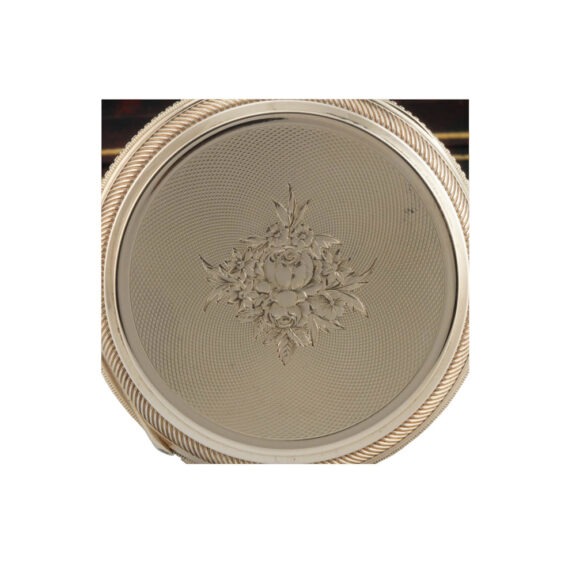
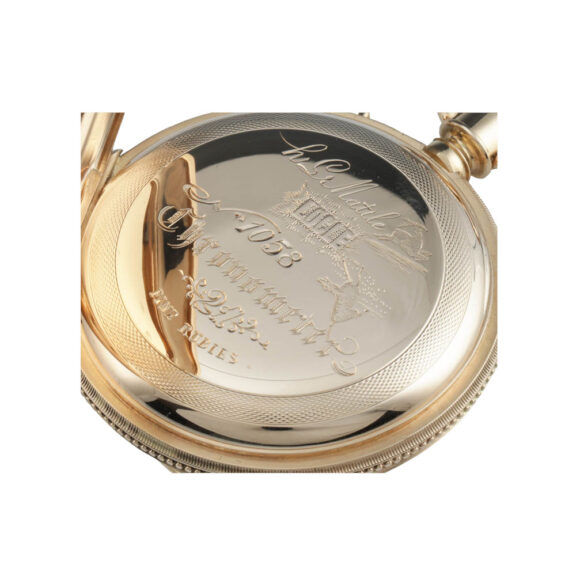
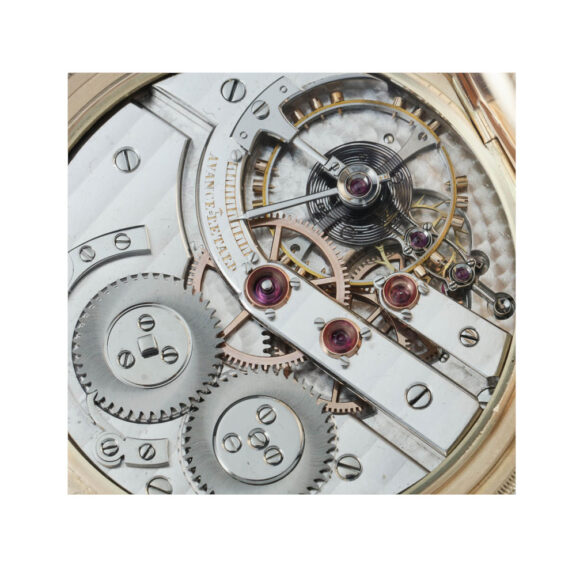
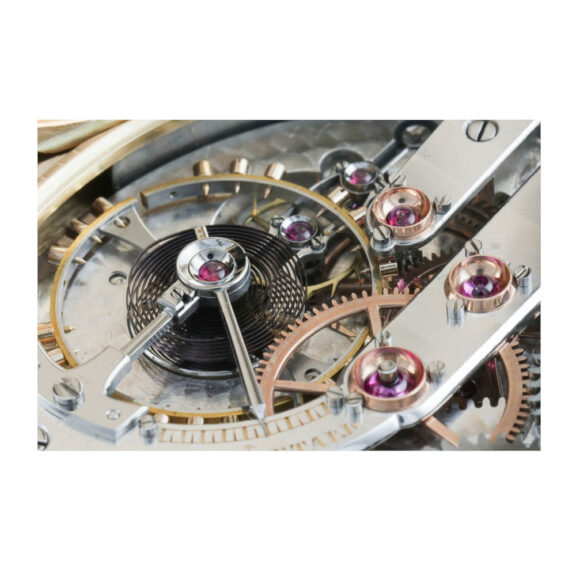
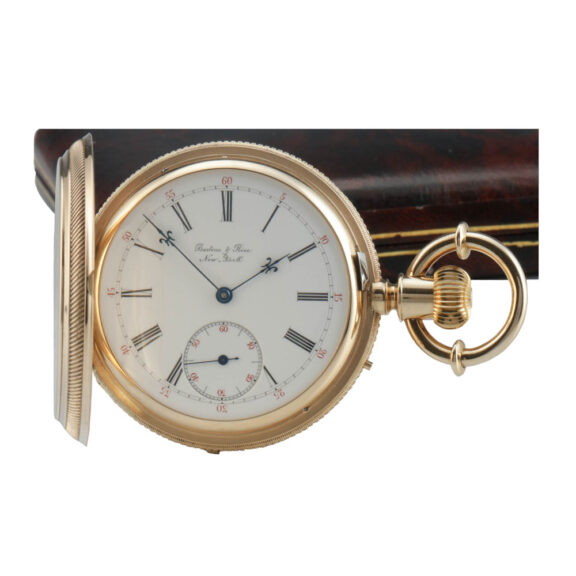
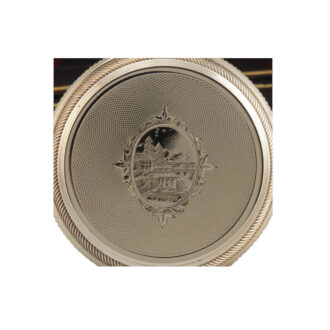
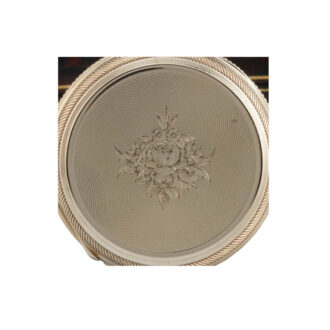
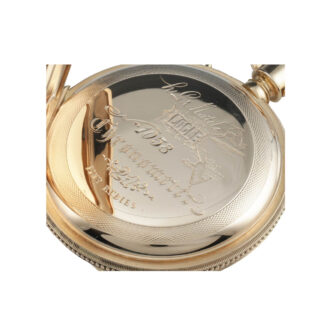
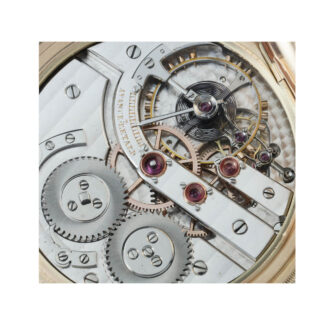
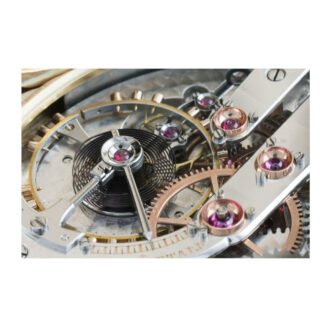
A Swiss 18 carat gold chronometer made for the American market, circa 1882. Anchor escapement, bridge movement, rhodium plated, ‘fausses côtes’ decoration, screwed gold chatons, wolf toothed mechanism, gold screwed compensation balance, blued balance spring with end curve, polished steel filigree balance cock, spring adjustment with engraved scale on the middle bridge, straight-line special form compensating anchor, anchor and escape wheel mounted on a filigree steel bridge.White enamel dial, Roman hours, red Arabic minute ring, small seconds with red Arabic numerals and blued steel filigree Fleur-de-Lys hands. Engine turned case to the back decorated with a floral ornament, to the front a representation of a manor with mill wheel. Guilloché gold cuvette, signed and with engraved animal representations. Cuvette signed by watchmaker, dial signed by retailer. Comes with the original box.
–
Diameter: 52 mm
–
Weight: 130 g
–
Signed: HL Matile Locle No 1058 Chronometer 21 fine rubies – Bartens & Rice, New York
–
The construction of the escape section is similar to a tourbillon cage by Ernst Guinand, who was also founded in Le Locle. All the details of the watch are worked out to the last detail with the utmost precision. A very rare version.
–
Henry Louis Matile is mentioned in the second half of the 19th century. His watches are usually of high quality and he specialized in making watches for export to the United States.
–
Ernest Guinand (1810-1879) was an important master watchmaker from Le Locle, who together with Auguste Grether from Ponts-de-Martel (1817-1879) specialized in manufacturing tourbillon cages. According to the records of the Neuchâtel Observatory, the production of tourbillons by Guinand began between 1865 and 1867. He designed three models of tourbillon frames. He worked for several important manufacturers, including Girard-Perregaux and Montandon. Most Guinand tourbillons were equipped with a chronometer inhibitor, one with spring and some with lever escapement. Most of his tourbillons were unsigned and can only be recognized by their characteristic A shape. In 1864, Patek Philippe decided to build the first tourbillon.
–
Literature: Dictionnaire des horlogers Genevois and Osvaldo Patrizzi, Antiquorum Editions, 1998.
Signed: HL Matile Locle No 1058 Chronometer 21 fine rubies – Bartens & Rice, New York
Share this page: