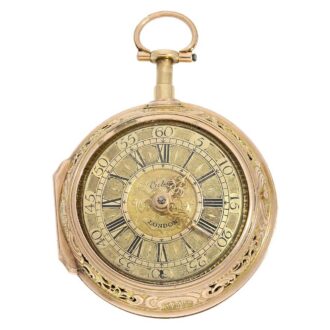
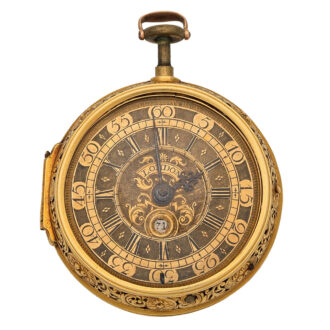
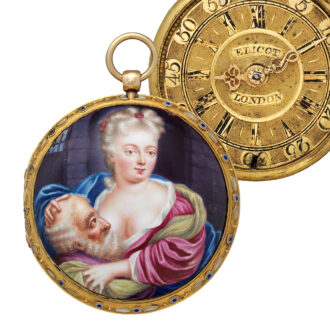
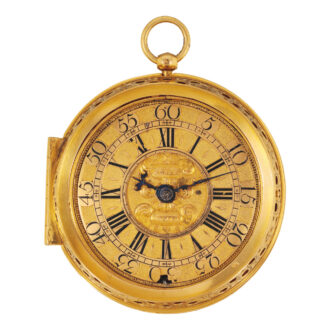
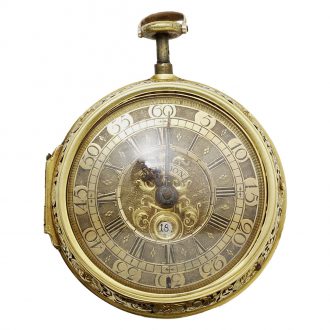
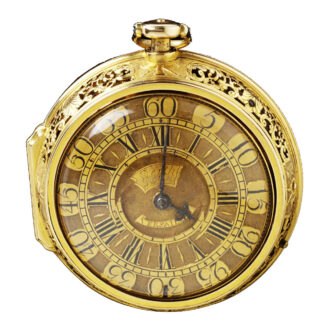
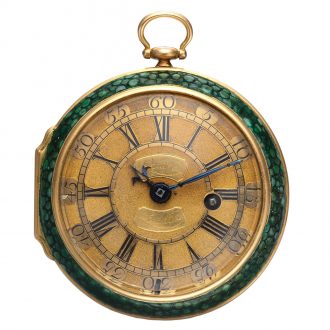
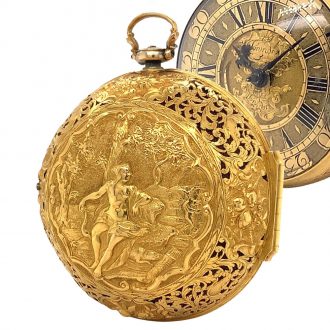
English important gold and enamel verge watch Circa 1710
- Kenmerk
- AD2369
- Diameter
- 48 mm
- Estimate
- € 12.500 - 25.000
- Price sold
- €
Gold and enamel verge watch by Henry Massey
–
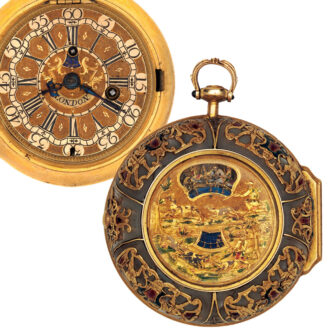
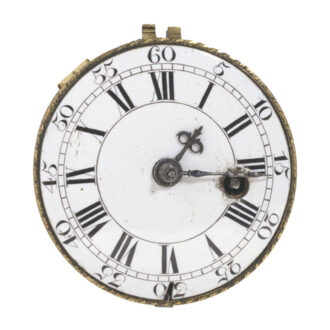
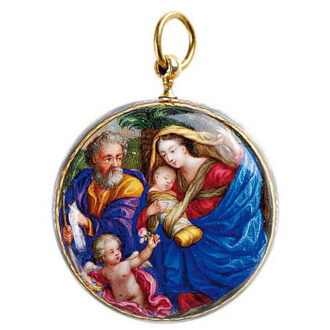
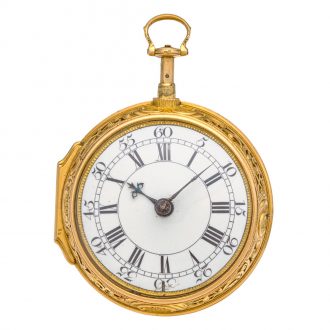
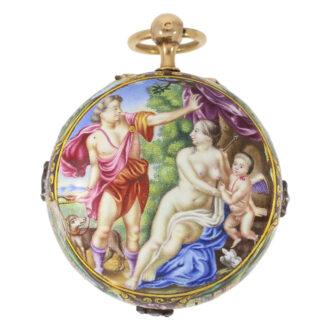
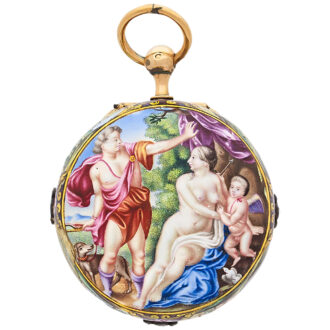
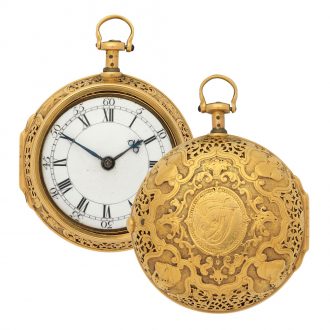
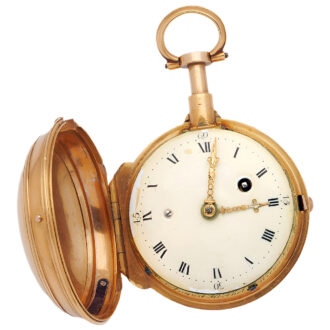
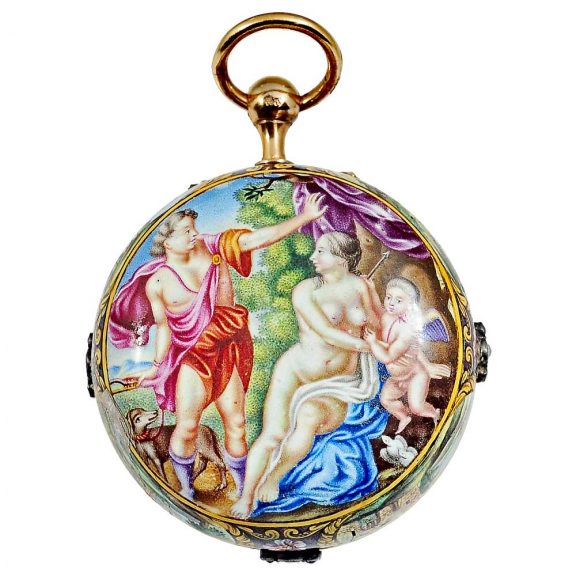
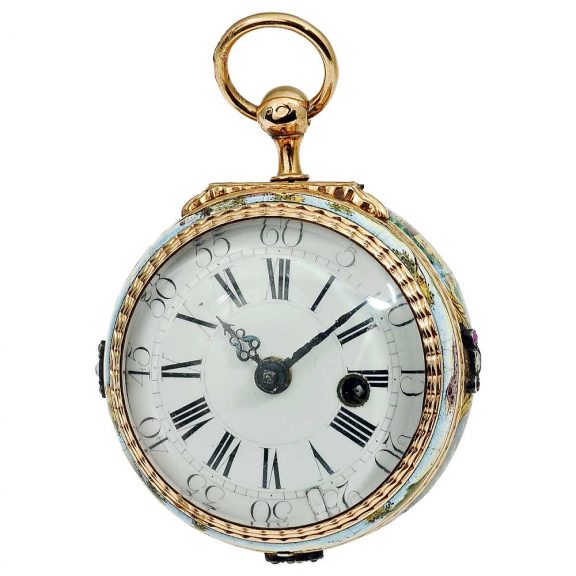
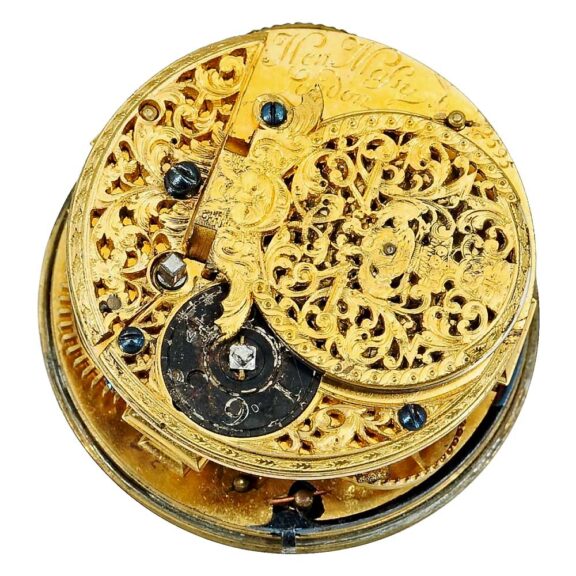
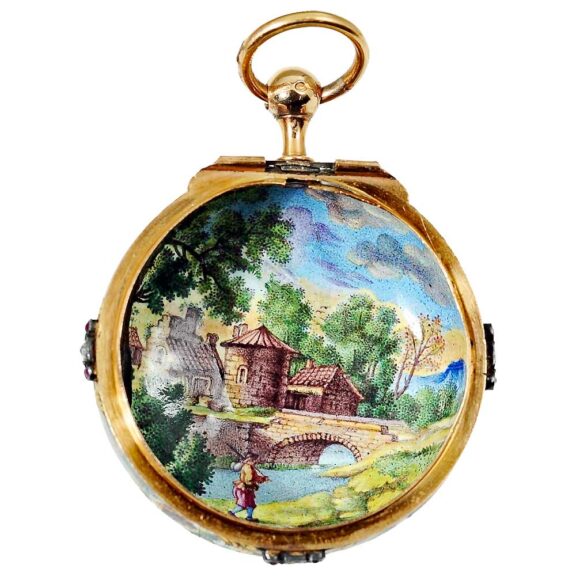
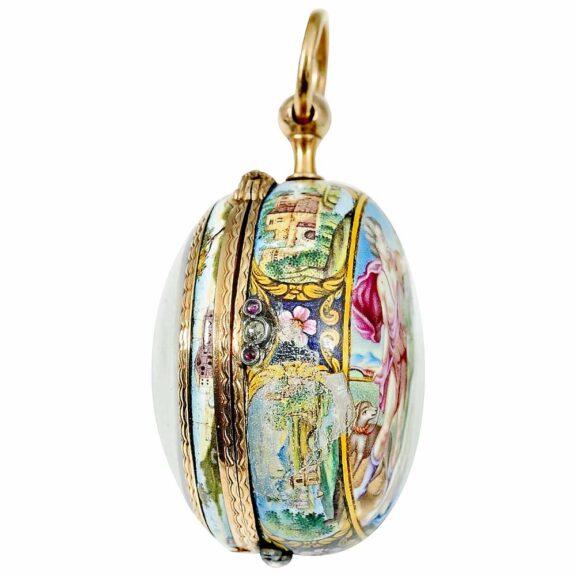
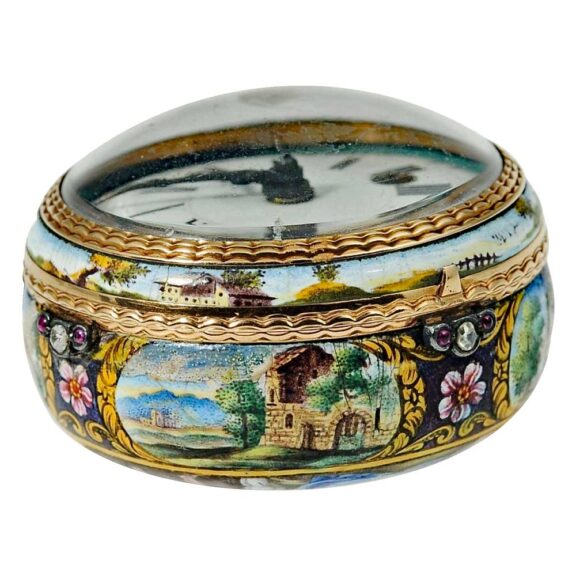
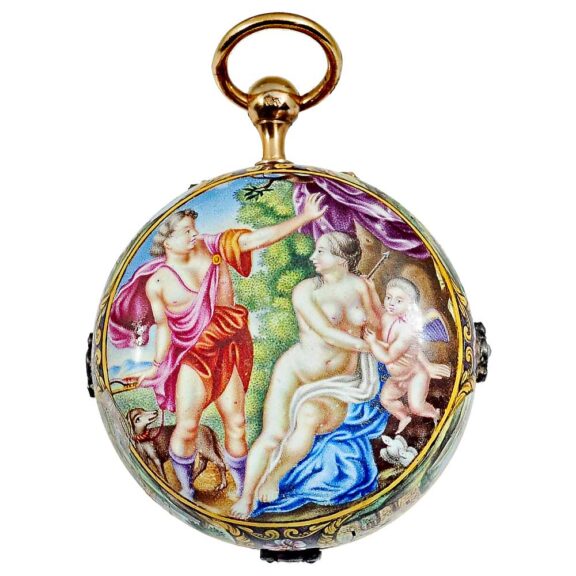
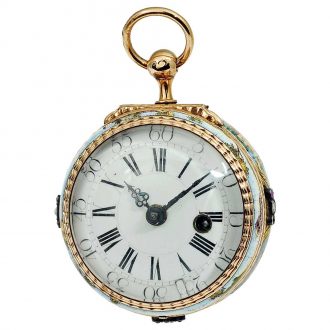
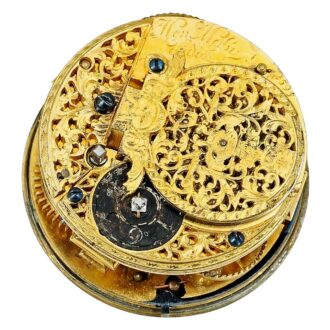
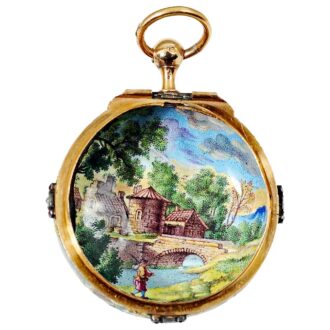
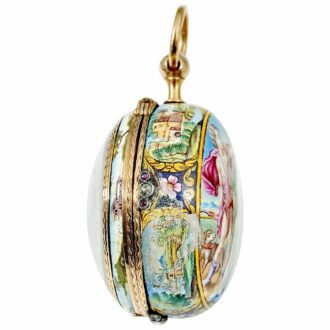
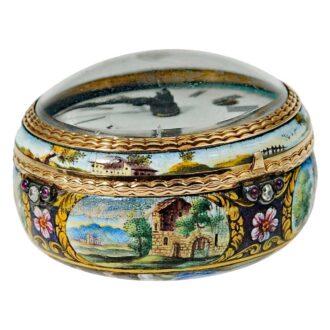
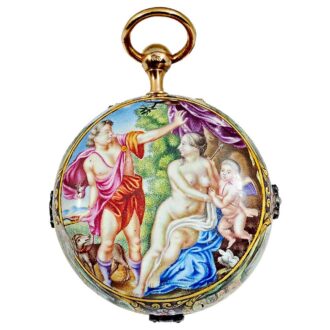
An important English 20 Carat gold and enamel open-faced verge pocket watch, circa 1710. The back is decorated with a polychrome enamel painting of Venus and Adonis with Cupid. Four lateral vignettes with castles and farmsteads in mountain landscapes on the band are separated by yellow flower garlands. Inside, a painting shows a wanderer walking towards a bridge leading to a hamlet on the bank of a river, probably after a painting by the Dutch painter Paul Bril. The enamelling is attributed to Jean Mussard V. Three paste stones open the case. The white enamel dial has Roman numerals for the hours, Arabic numerals for the minutes, and decorative hands. It has a full plate movement, chain and fusee, three-arm steel balance, and is signed.
–
Diameter: 48 mm
–
Weight: 120 g
–
Signed: Hen. Massy London
–
Henry Massy, clock/watchmaker, was active from 1692 to 1745 in Charles Street, St James, London. He was a member of the Clockmakers’ Company during that time. His father, Nicolas Massy II of Blois, France, came to London as a refugee and worked on Cranbourn Street. He had been a member of the Clockmakers Company from 1682 and died in 1698. Nicolas II and Henry descended from Nicolas Massy I, a renowned watchmaker in Blois who became a master and married in 1623. He was elected juré of the guild in 1646 and died in 1658. The Massy family likely never broke their ties to Blois.
–
Jean Mussard V was born and died in Geneva, 1681-1754. He was one of the best enamel painters of the early 18th century, son of Jean IV and cousin of the Huauds. He began as a goldsmith and became a Master on December 7, 1699. He later became a painter in enamel, influenced by the style of Les Frères Huaud. Although inspired by their work, his paintings were more in line with the taste of the time, showing religious and secular designs. He partnered with his son Jean-Antoine and trained several pupils, including Gabriel Fontaine, André Oettner, and in 1712, Germain Colladon. The scene ‘The Death of Cleopatra’ appears on several of his enamel watches, but two of his best-known subjects are ‘Roman Charity’ and ‘Religious Scene’. His signature appears as Mussard, Jean Mussarpinx, and ‘Mussard pinx’.
–
Paul Bril, born in Antwerp in 1554 and died in Rome on October 7, 1626, was a Southern Netherlandish painter of landscapes from the Baroque period.
Signed: Hen. Massy London
Share this page: