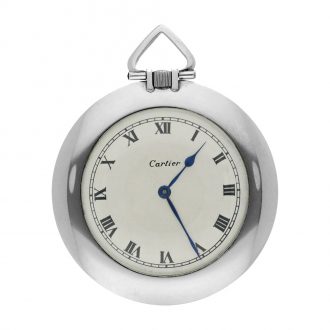
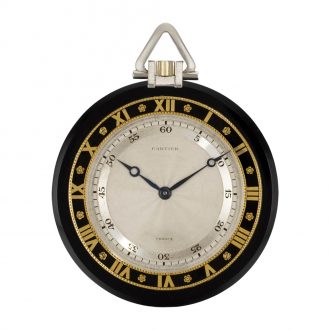
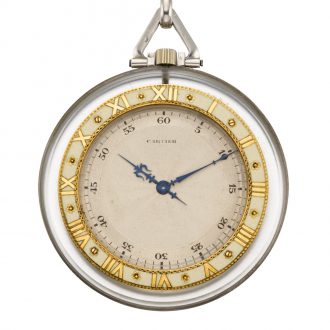
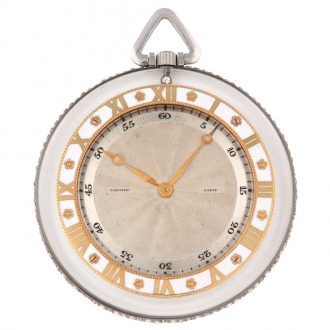
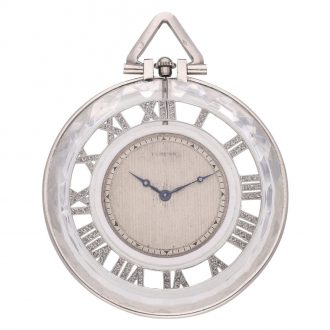
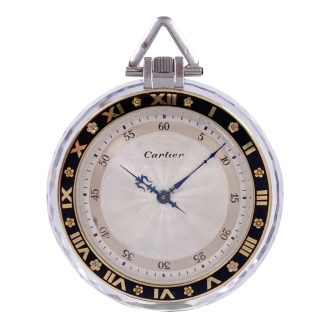
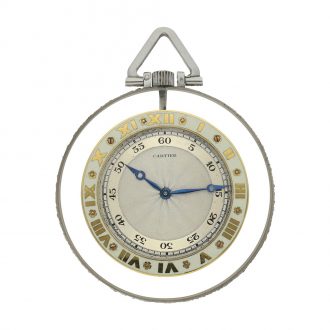
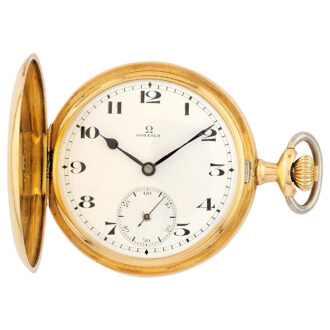
French black & white style Art Deco pendant watch Circa 1925
- Kenmerk
- AD6430
- Diameter
- -
- Estimate
- € 7.500 - 12.500
- Price sold
- € 9.450
Diamond set pendant watch by LaCloche Frères
–
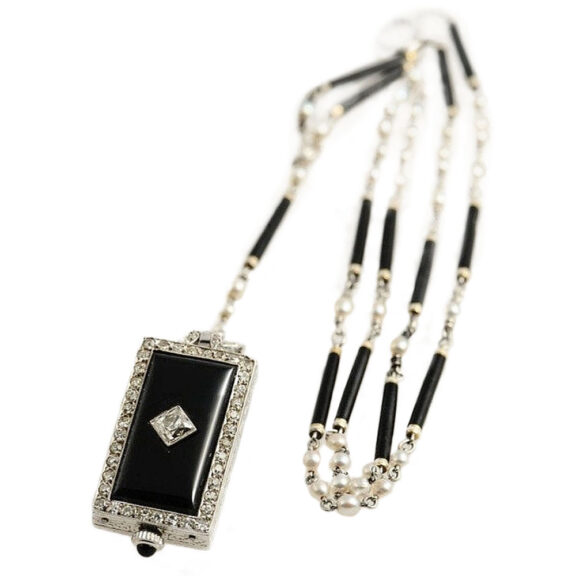
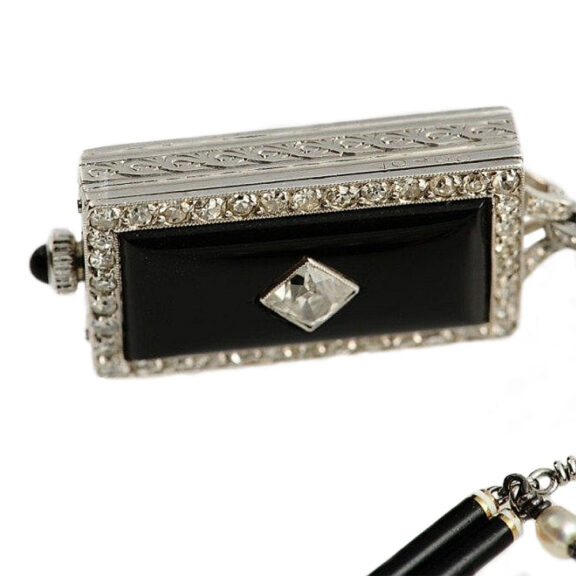
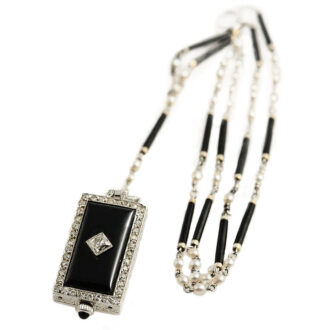
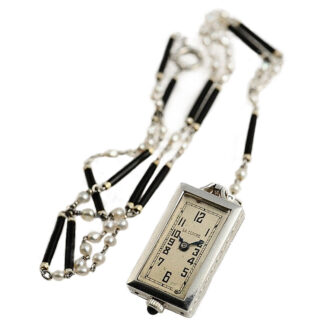
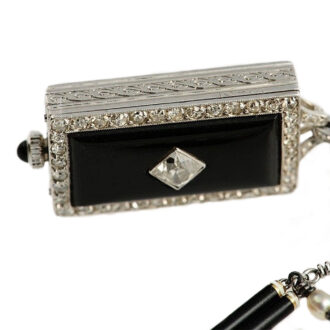
A fine, diamond set black & white style Art Deco French pendant watch with matching necklace, circa 1925.
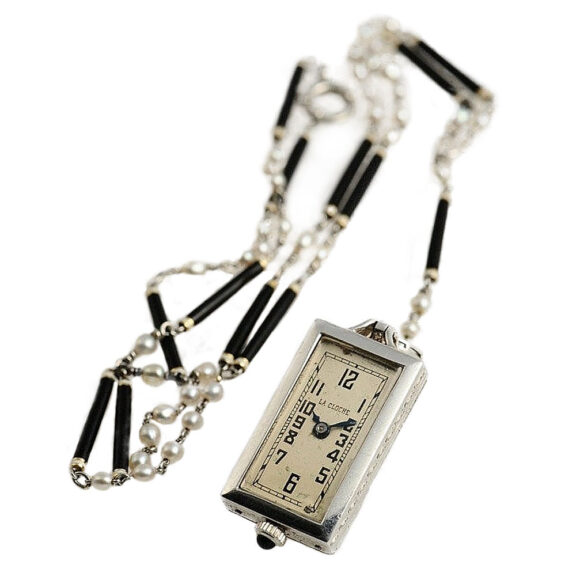
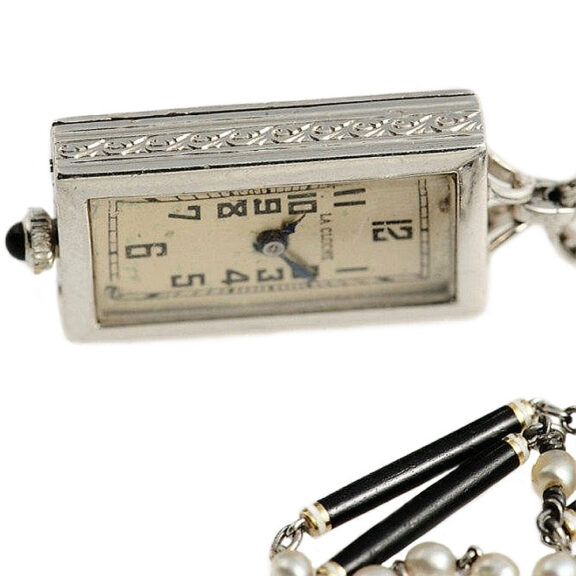
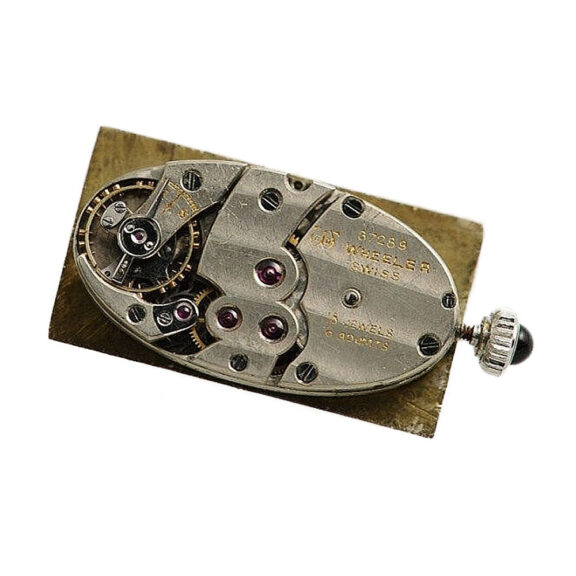
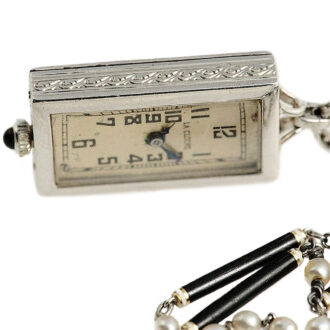
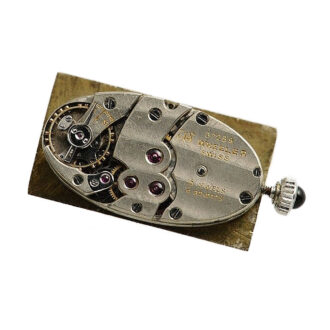
Platinum, onyx decorated, rectangular case with brilliant cut border, the case centring an emerald cut diamond, crown with onyx cabochon, engraved case band and diamond-set pendant. Matching necklace with onyx links, pearls and diamonds. Silvered dial with Arabic Art Deco numerals and blued spade hands. Rhodium-plated, oval movement with Geneva striping decoration, six adj., 18 jewels and gold screw compensation balance. Dial and movement signed.
–
Signed: La Cloche
–
La Cloche Frères Since the 19th Century,
LaCloche Frères and La Cloche have been synonymous with some of the greatest Jewellery and Objet’s d’art ever produced. Visionary and artistic designs have always ensured a special cliental who desired unique pieces. Crowned heads, the titled and the famous have enjoyed LaCloche Frères for personal use and pleasure. The House is, of course, best known for its Art Deco Jewellery and Objet’s d’art; hundreds of classic crafted works of jewelled art reflected the mood and discoveries of the period. La Cloche was the first Jewellery House to produce its perfume label, “Parfum No1”, before its competitors.
–
Maison LaCloche Frères
The Maison LaCloche Frères, a retail company founded in 1901, chose its objets d’art from the best workshops and most talented designers in Paris. Hardly anyone knew that it was the exquisite and fashionable pieces of great makers such as Louis Girard, Georges Verger, Rubel, Georges Lenfant, Strauss-Allard-Meyer and Halluin-Matlinger that helped to cement the firm’s reputation as one of the major jewellery houses of its time. For inspiration, the brothers regularly looked at the fables of La Fontaine and Oriental and Chinese artworks. Léopold, Jules and Fernard Lacloche had originally had a workshop in Madrid and moved to Paris at the turn of the century; they opened several shops and founded in 1901 the famous Maison LaCloche Frères at 15 Rue de la Paix. The success of their company allowed the brothers to expand it rapidly – in 1912, they were able to open a branch in New Bond Street in London. During the First World War, LaCloche Frères bought Fabergé’s London store and the stock that remained after the Russian government brought company staff and assets back to Russia. In the early 1920s, the company was most famous for its intricate and lavishly jewelled vanity and cigarette cases, lipstick holders, powder cases and other “necessities” for fashionable society. LaCloche Frères followed their contemporaries Cartier and Van Cleef & Arpels. Their fame began in earnest after the 1925 Exposition Internationale in Paris, where the company’s jewellery was displayed in a Grand Palais with silver and gold columns; certainly, the Maison LaCloche Frères profited heavily from the excesses of the Roaring Twenties. However, the company was forced to close its doors after the stock market crash of 1929 and could only retain one ground floor showroom in Paris.
Signed: La Cloche
Share this page: