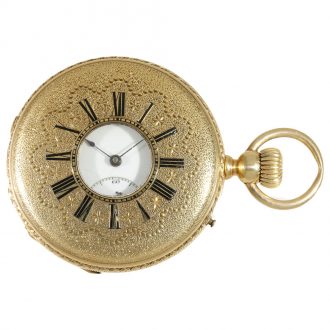
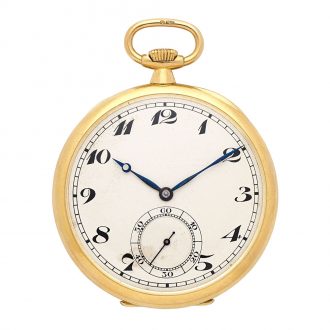
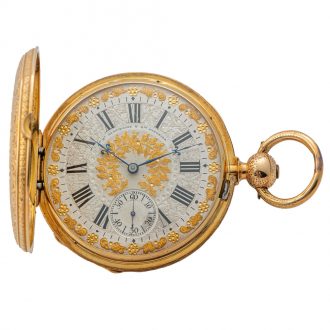
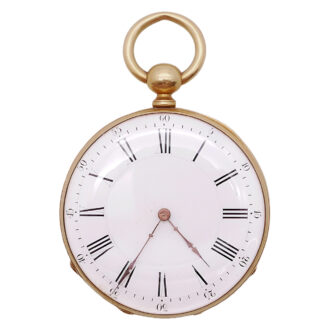
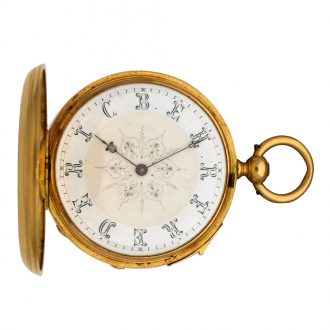
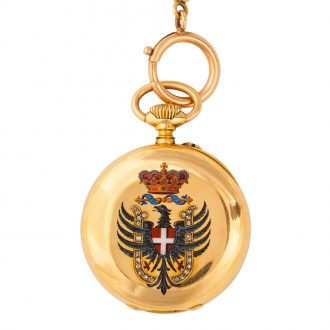
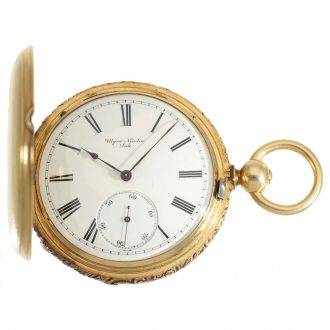
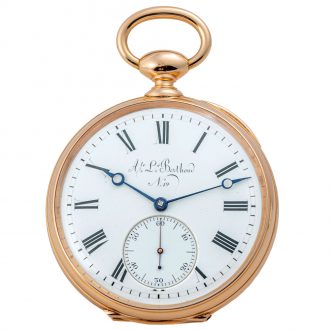
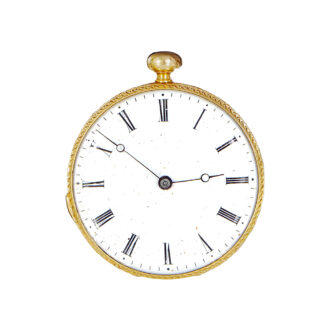
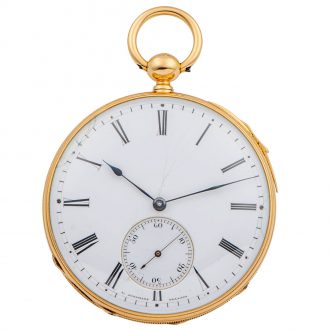
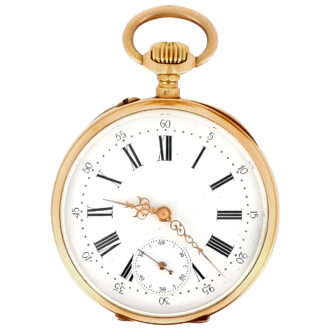
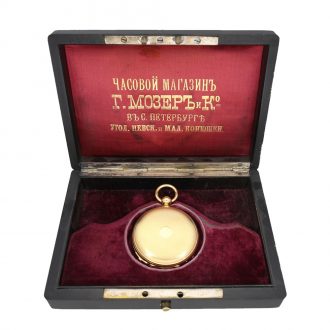
Swiss 18 carat gold anker chronometer in original box Circa 1860
- Kenmerk
- HC1581
- Diameter
- 53 mm
- Estimate
- € 20.000 - 40.000
- Price sold
- € 26.000
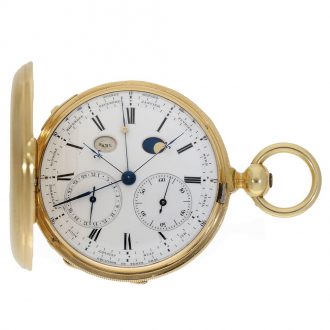
Unusual astronomical watch with equation of time
–
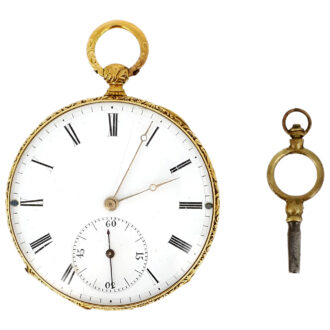
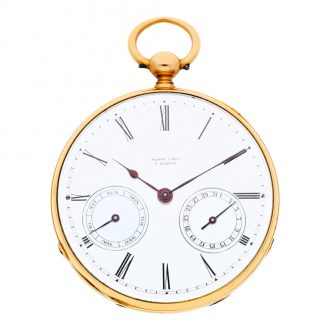
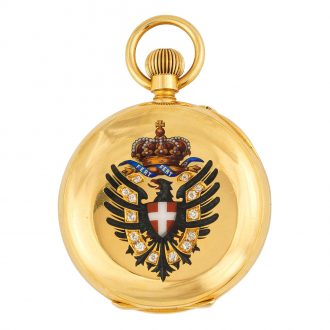
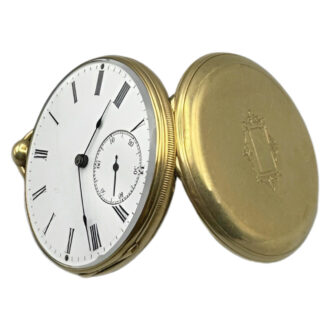
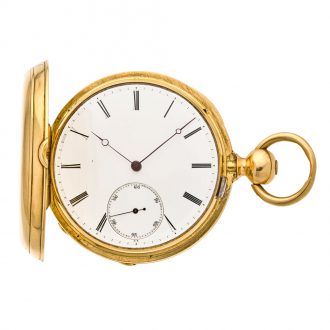
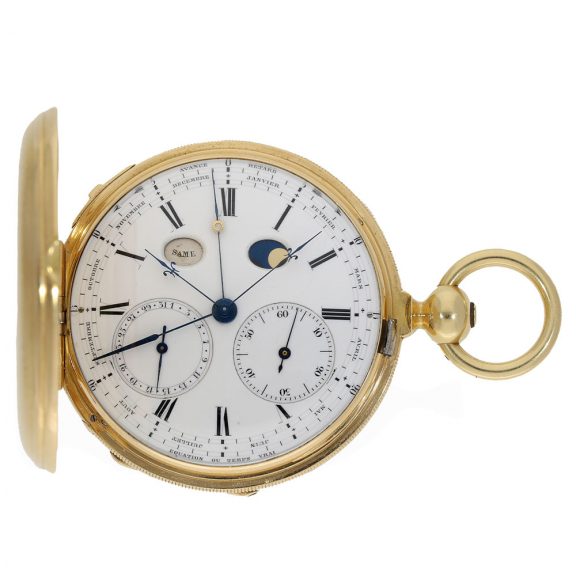
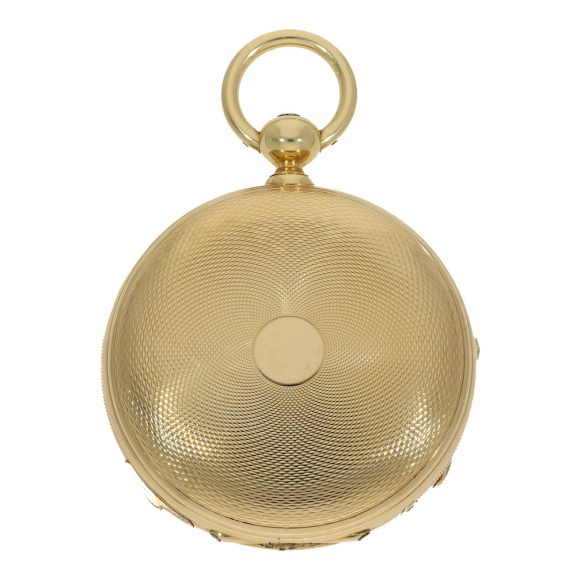
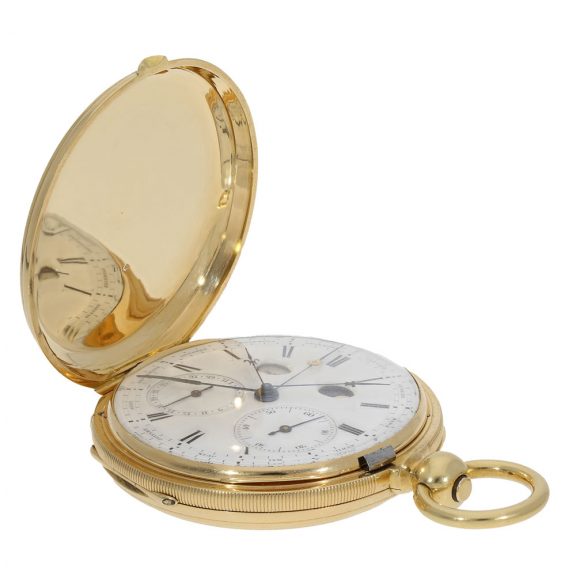
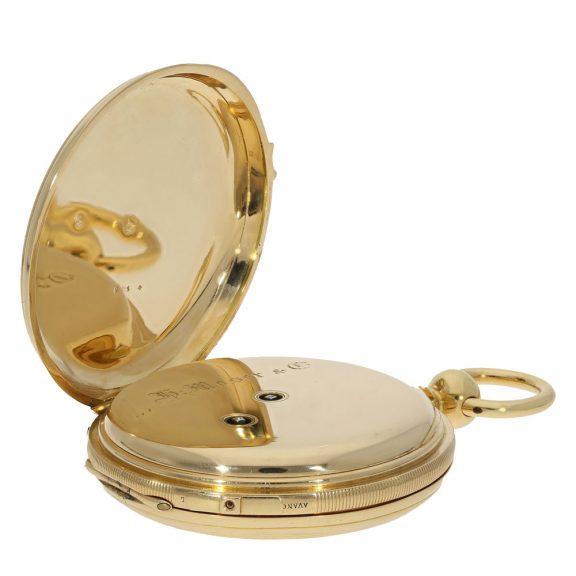
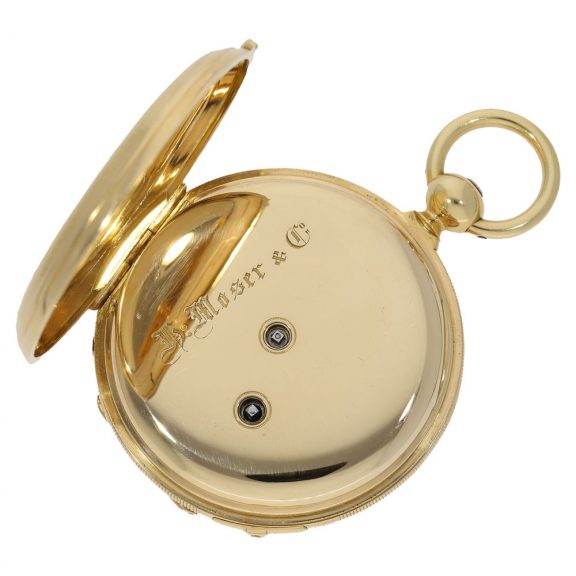
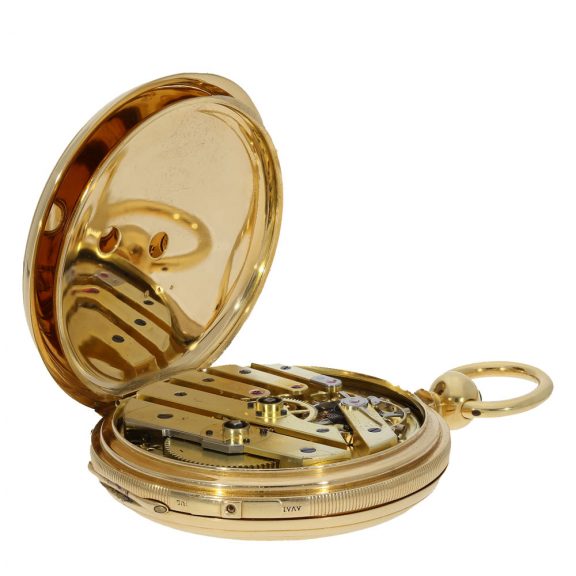
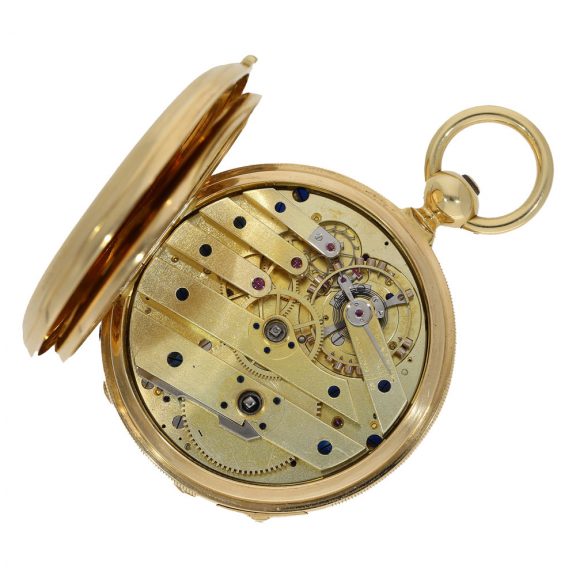
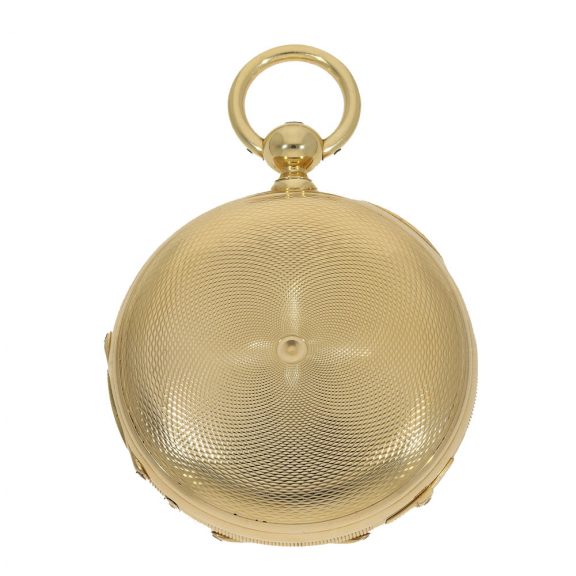
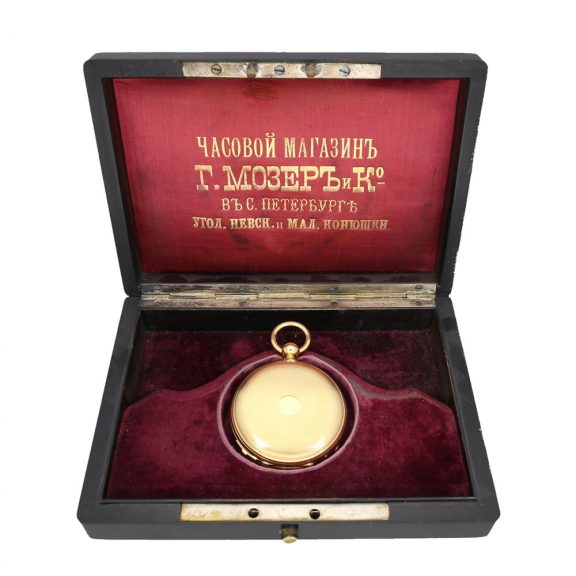
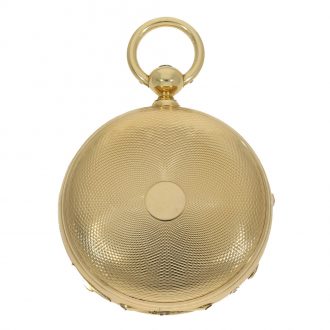
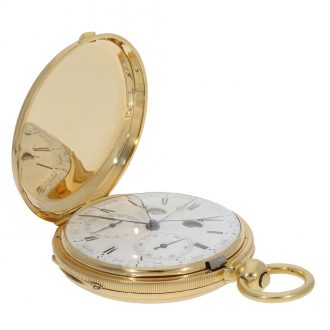
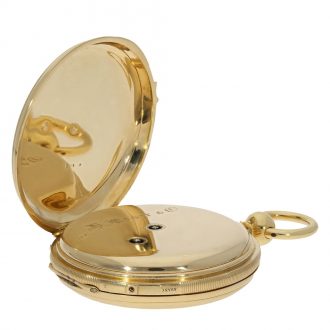
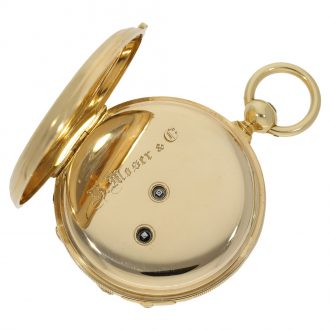
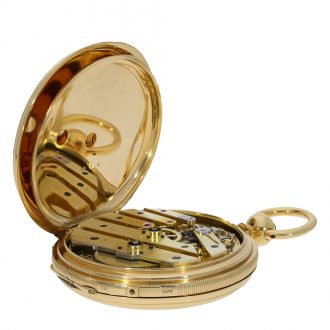
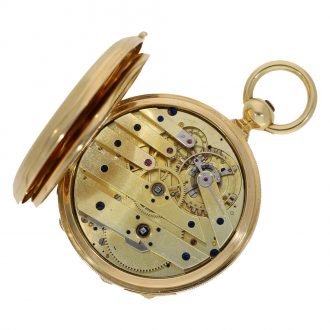
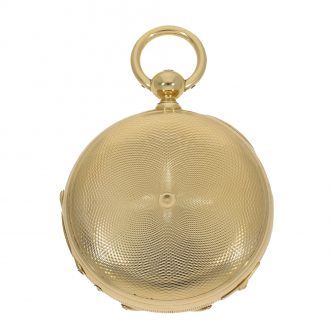
An unusual astronomical anker chronometer with equation of time in original box, made by Heinrich Moser & Cie in St Petersburg, Russia, circa 1860. The full hunter case of this watch was crafted from 18 carat gold and features engine turned decoration on both lids. The white enamel dial features an inscription on the edge ‘Equation du Temps Vrai’, a triple calendar, the moon phase, equation of time display, a subsidiary seconds dial at 4 o’clock and blued steel hands. The exquisite movement features an anker chronometer escapement with special lever, a chronometer balance with gold and platinum screws and key winding.
The cuvette is signed.
–
Diameter: 53 mm
–
Weight: 139 g
–
Signed: H. Moser & CO
–
Moser
Henry Moser was an ingenious watchmaker and was appointed Court Watchmaker to the Russian Tsar. His shop was located in St Petersburg.
–
The pusher for the moon phase and day of the week, which can be adjusted forwards or backwards by means of a slide, is an exceptionally rare invention by Eugene LeCoultre. The equation of time complication is rarely found on pocket watches, for example at Breguet.
–
Eugène Lecoultre (1819-1882) created an ingenious system for setting the date. The watch presented here features a triple date whose duration of each month is 31 days, like all rare watches of the time equipped with this type of horological complication. Eugène Le Coultre’s system allows the date to be quickly corrected manually at the end of each month by running both forwards and backwards. In addition, this correction of the date automatically adjusts the day of the week, but also the phase of the moon. Even more complicated, this correction does not change the equation of time system (whose cams make one revolution per year), but also adjusts it. Everything is achieved by a mechanical device that can be seen on the left side of the movement. For that time, this was one of the most sophisticated calendar watches, independent of some of the earlier achievements of Abraham-Louis Breguet (1747-1823) and the perpetual calendar watches with retrograde dates in which Eugène LeCoultre specialised in Geneva.
–
Equation of time
This complication turns the watch into a sundial. The watch shows noon exactly every 24 hours. The sundial, on the other hand, shows noon when the sun is at its highest point. However, due to the inclination of the Earth’s axis and the eccentricity of the Earth’s orbit, the sun is not always at its highest point at the same time. A watch with equation of time (also called equation) indicates how large the difference is at any given time.
Signed: H. Moser & CO
Share this page: