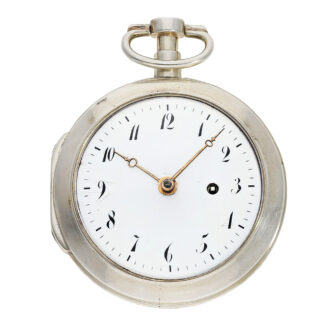
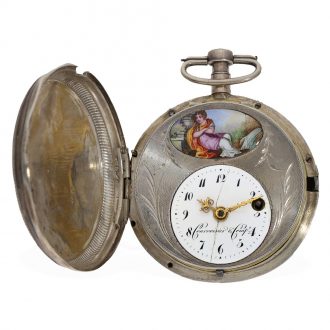
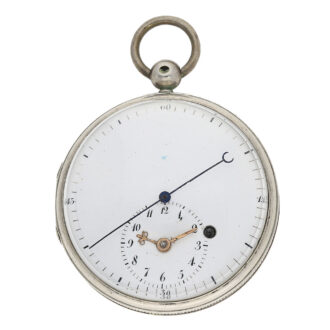
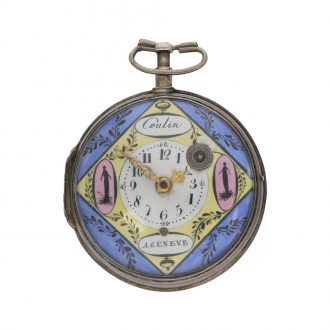
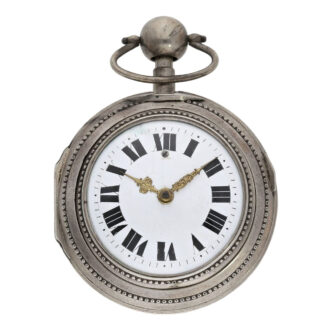
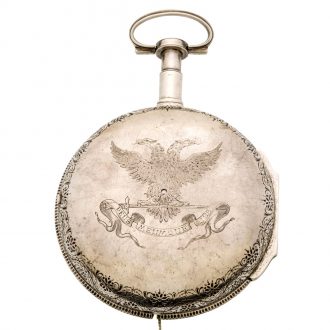
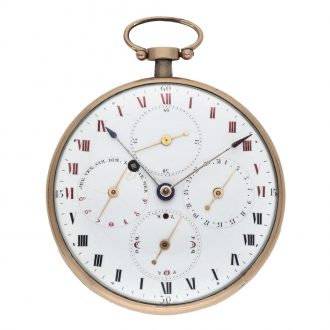
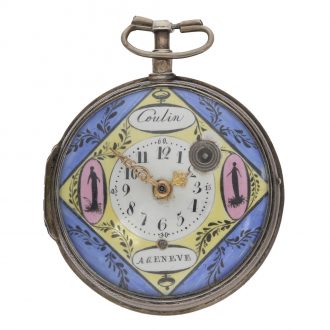
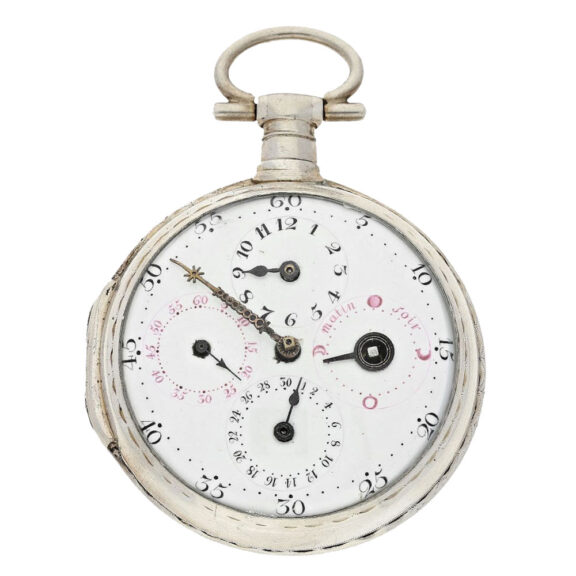
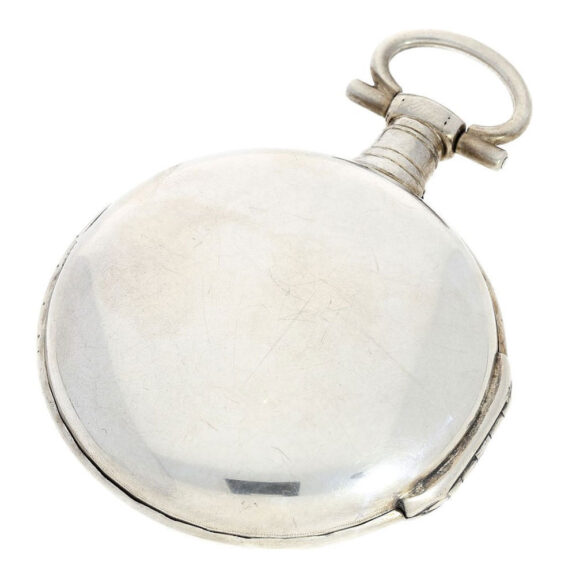
German silver astronomical movement watch Circa 1780
- Kenmerk
- TC1254
- Diameter
- 57 mm
- Estimate
- € 8.000 - 15.000
- Price sold
- € 13.500
Silver watch with Sautrog escapment
–
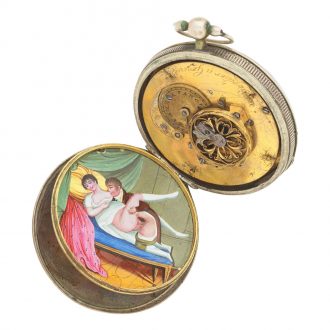
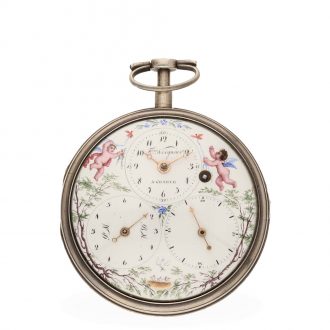
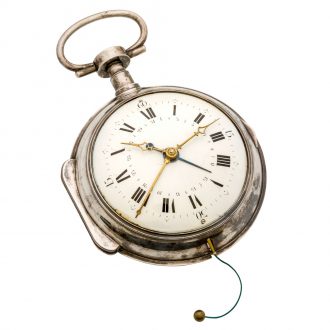
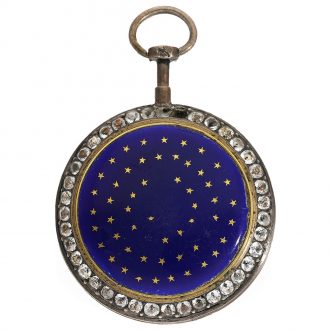
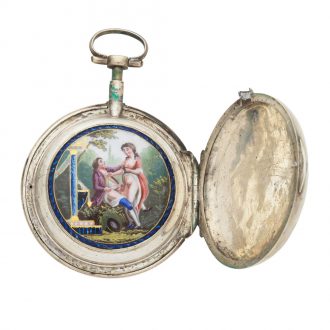
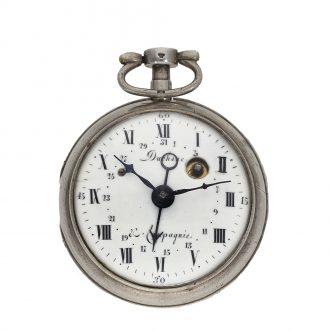
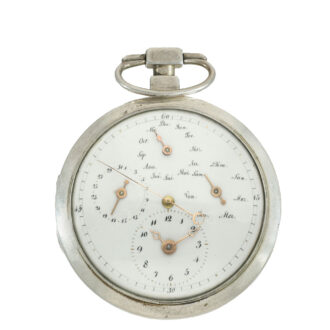
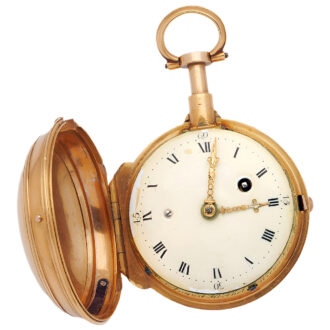
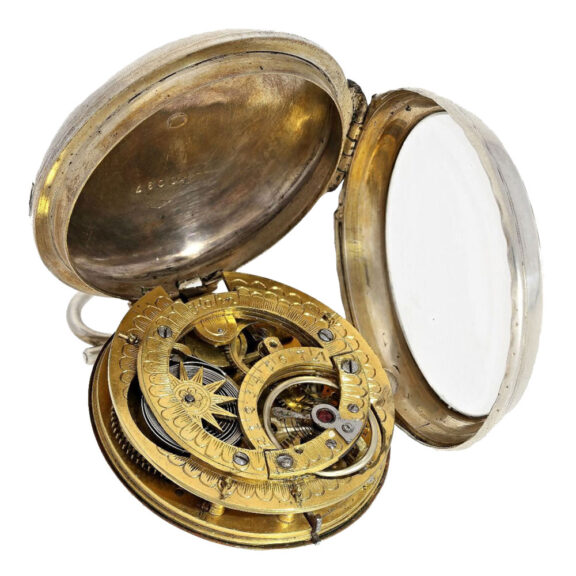
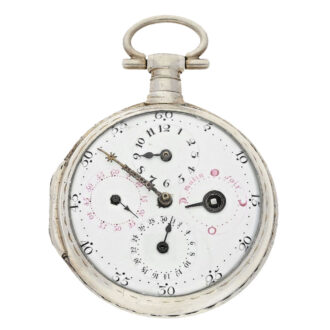
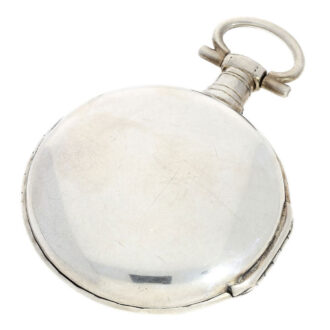
An important astronomical pocket watch by Philipp Matthäus Hahn Echterdingen, circa 1780. A silver case, probably a bit later than the movement, astronomical movement with Sautrog escapement, opened barrel, signed Hahn, original enamel dial, regulator dial with hours, central minutes, seconds, date and moon phase, very nice condition of preservation, in working order.
–
Diameter: 57 mm
–
Weight: 107 g
–
Signed: Philipp Matthäus Hahn Echterdingen
–
This watch was examined by Hahn’s watch specialist Alfred Leiter and evaluated as follows: this watch is so-called test-watch by Philipp Matthäus Hahn, probably from his time in Kornwestheim. The term test-watch was often used by Hahn in his diary and workshop manuals. Hahn normally didn’t produce them in large series. He usually didn’t start the construction before the order was confirmed and the delivery time was also considerable. The working style made Hahn never produced the same product in large series but brought new acknowledge every time. That’s the reason why he had always test-watches in his workshop, when he tested his new ideas. Alfred Leiter has read Hahn’s diary and workshop book, he researched them with different archives and wrote various essays and books on Hahn’s watches. Philipp Matthäus Hahn (November 25, 1739, in Scharnhausen – May 2, 1790, in Echterdingen) was a German pastor and an engineer. He was a pastor in Onstmettinge, which was part of Albstadt, as a follower to his father. Under the influence of Schaud and his first inclination scale, Hahn devised a world machine and the famous precision sundial, which was considered as a live watch. Hahn was the inventor of the inclination scales, which spread rapidly and without weights and the founder of the fine mechanics industry in the Zollernal district, which developed in the 19th century. Philipp Hahn was a skillful mechanician, who was engaged in making clocks and planetariums. He needed a calculating device, in order to calculate parameters of his machines, that’s why sometime in the summer of 1770 he started to design a calculating machine. The first working copy of the device was ready in 1773 but was demonstrated as late as in 1778, because Hahn has difficulties with the reliability of tens carry mechanism. Until 1779 four machines were made, until the end of his life, Hahn manufactured about 5-6 devices, only two of them survived to the present and kept in Landesmuseum Württemberg in Stuttgart and in Technoseum in Mannheim. Reconstructions are found in the Arithmeum in Bonn and in the Philipp-Matthäus-Hahn-Museum in Albstadt-Onstmettingen.
Signed: Philipp Matthäus Hahn Echterdingen
Share this page: