Swiss gold hunting cased keyless pocket watch Circa 1860
- Kenmerk
- AD4500
- Diameter
- 48 mm
- Estimate
- € 4.500 - 8.000
- Price sold
- -
Gold full hunter by Louis Bachelard & Fils
–
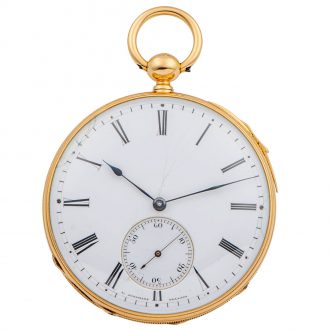
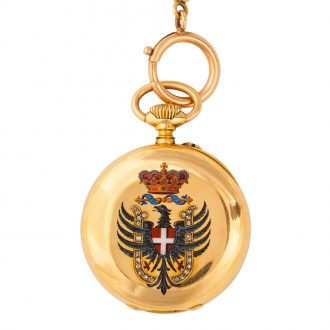
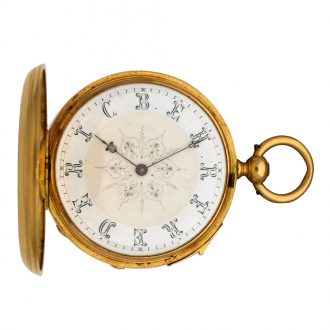
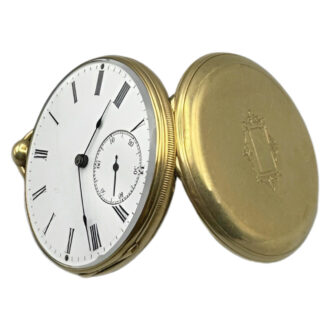
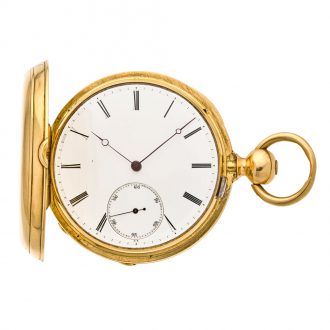
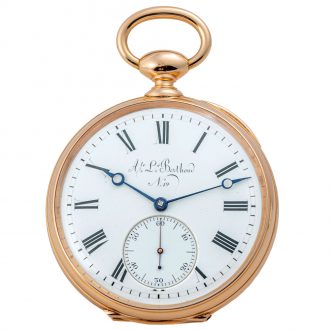
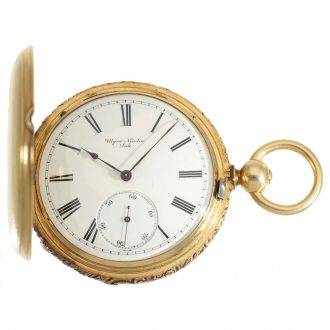
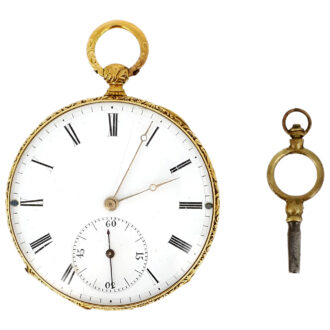
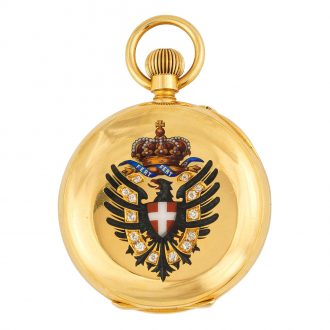
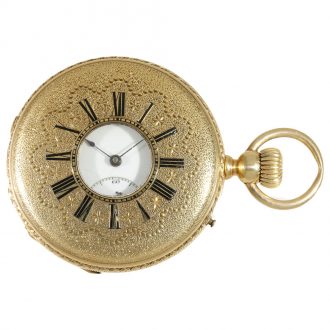
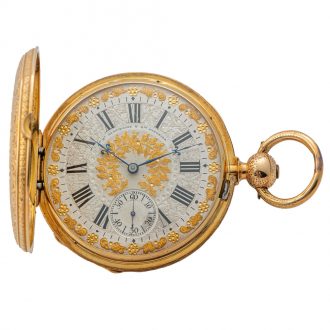
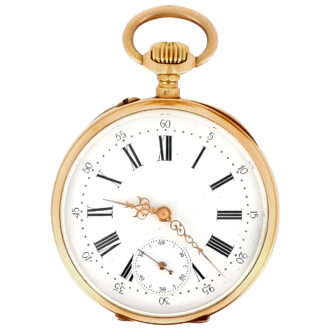
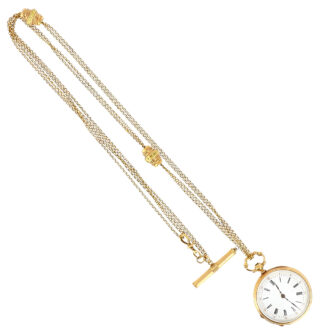
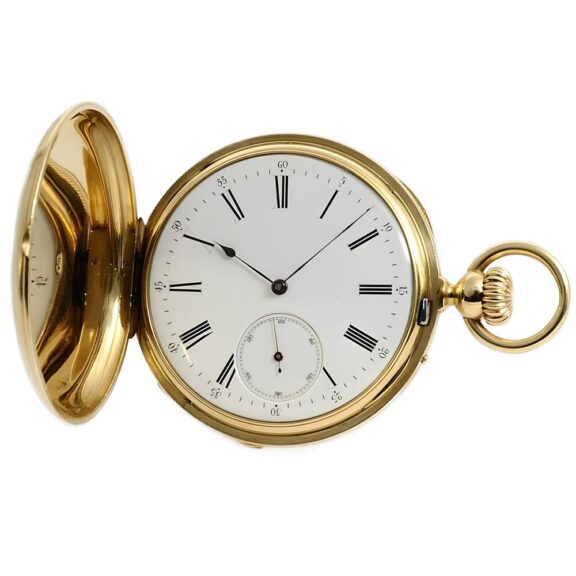
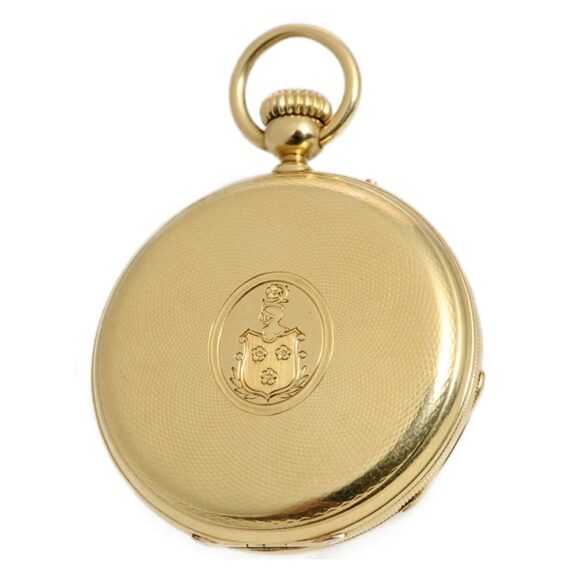
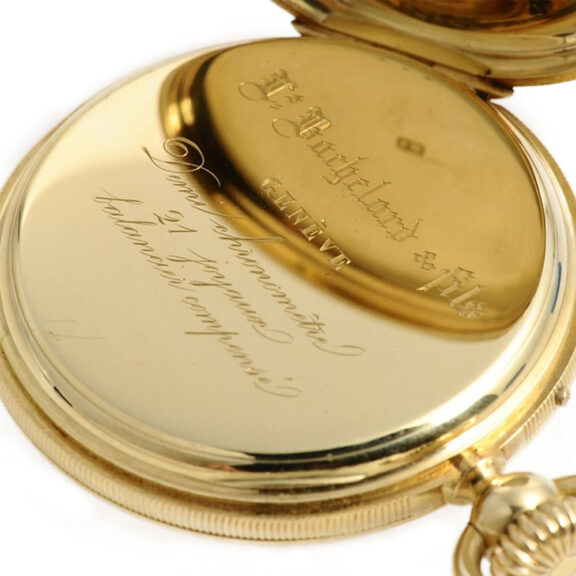
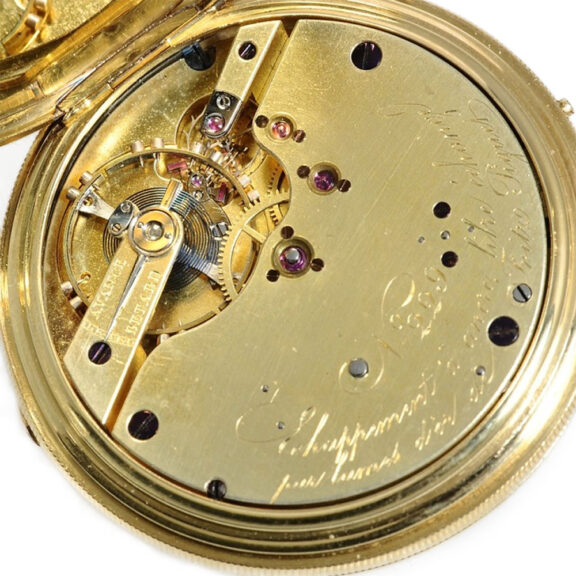
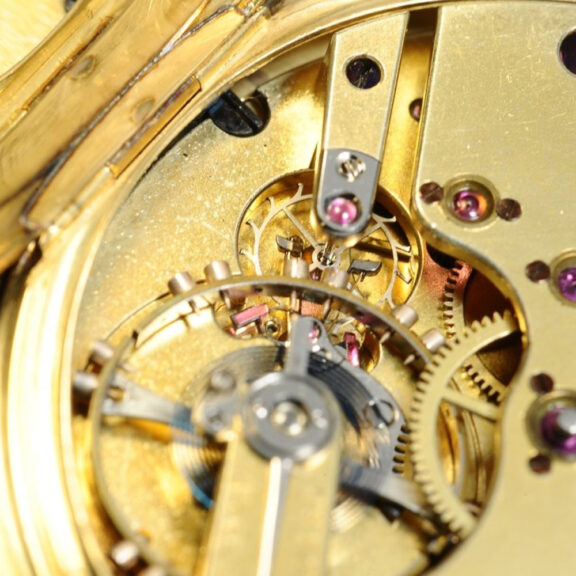
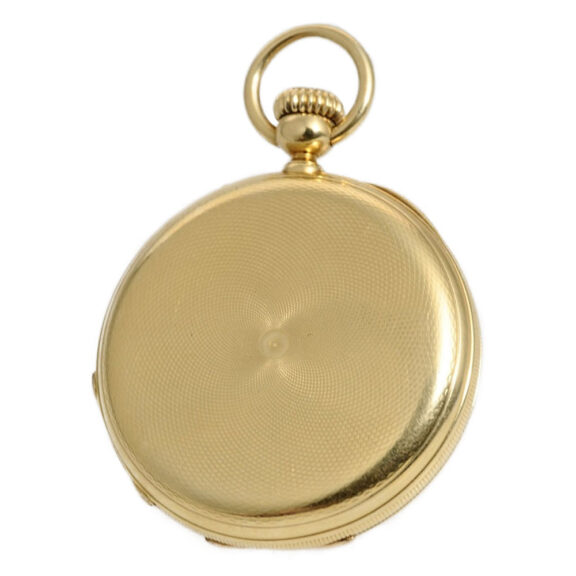
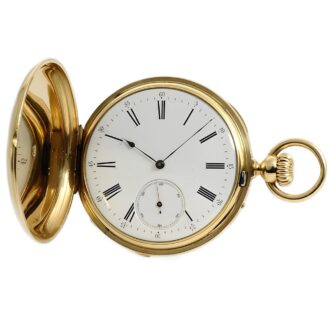
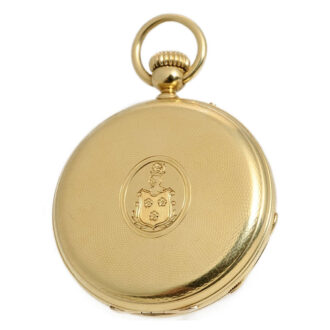
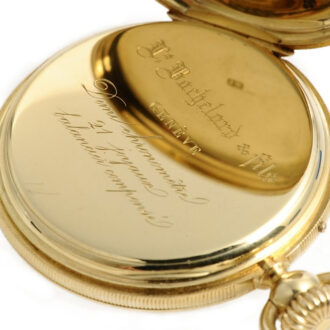
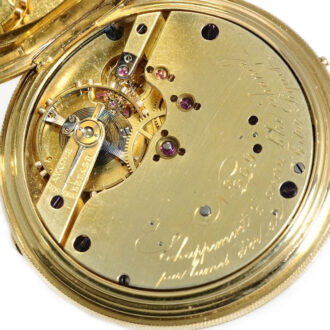
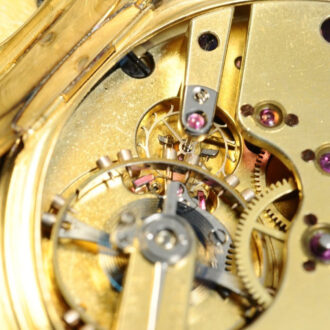
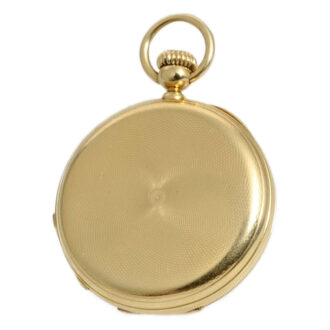
A fine and rare Swiss 18 carat gold hunting cased keyless pocket watch, demi chronomètre, circa 1860. The watch boasts an engine turned case with an engraved family crest on the front cover and a signed gold cuvette. Its white enamel dial features radial Roman hours, an outer minute track with Arabic five minute numerals, subsidiary seconds and blued spade hands. The watch is equipped with a frosted gilt 2/3 plate movement that has screwed chatons, 21 jewels, a lever escapement, screw compensation balance, counterpoised lever and long counterpoise arms made of gold strips continuing to the fork invented by Fritz Piguet
–
Diameter: 48 mm
–
Weight: 101 g
–
Signed: Louis Bachelard & Fils à Genève
–
This timepiece, the so-called demi chronomètre, has an inscription on its movement that reads ‘Echappement à ancre libre échange par lames d’or de Fritz Piguet’. The gold strips on either side of the lever fork extend to the end of the counterpoise arms, providing a sprung backing for the roller. This backing does not limit the balance’s natural arc or affect the watch’s timekeeping or adjustment. The watch is truly remarkable and interesting.
The term demi chronomètre was exclusively used by two other Geneva based companies, Henry Capt and Vacheron Constantin. This rare designation indicates that the movement was sent to the Observatory for chronometer testing but was withdrawn before all the required tests were completed. Usually, commercial reasons were behind this decision.
–
Fritz Piguet was a company located at Rue Bonivard 10 in Geneva, Switzerland and supplied ebauches to the most important watchmakers of the mid 19th century. Trading as Fritz Piguet & Bachmann, the company was renowned for its splendidly adjusted watches, made possible by their incomparable adjuster, the acclaimed Favre-Rochat, a rival to the equally famous Batifoulier. Both Favre-Rochat and Batifoulier were expert adjusters who specialized in highly complicated watches.
Piguet & Bachmann competed with Haas Neveux for first place on complicated watches and won first prize in the 1888 Geneva Observatory Timing Contest with 228.8 points. The company further won a silver medal in the 1878 Paris Universal Exhibition and a gold medal in Melbourne in 1881. Piguet & Bachmann were always amongst the top contestants in competitions for complicated watches and were favoured to win.
Signed: Louis Bachelard & Fils à Genève
Share this page: