Swiss gold complicated keyless lever pocket watch Circa 1904
- Kenmerk
- SA0595
- Diameter
- 55 mm
- Estimate
- € 150.000 - 250.000
- Price sold
- € 223.600
Gold gentlemen’s pocket watch
–
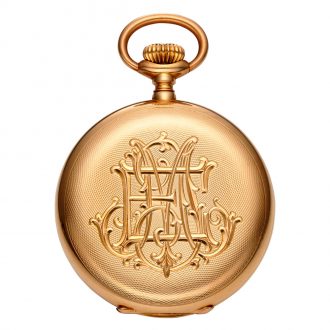
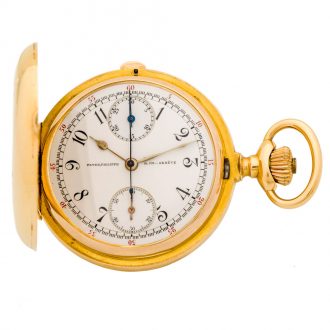
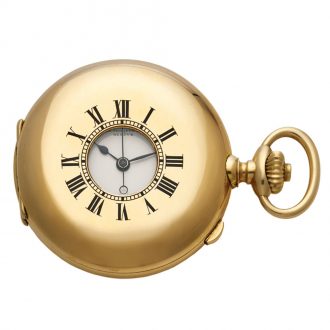
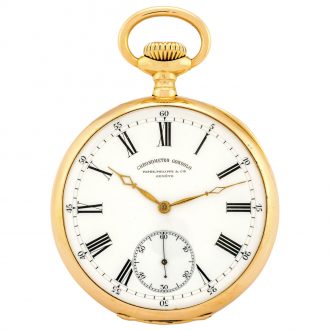
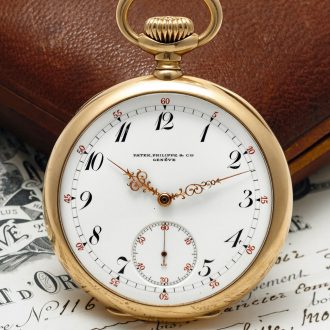
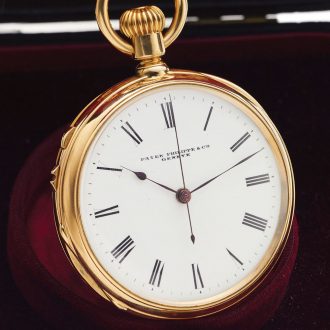
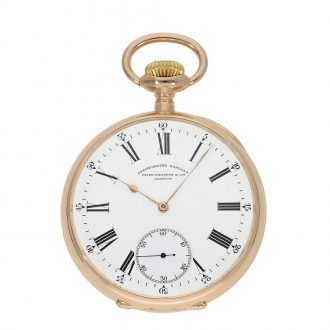
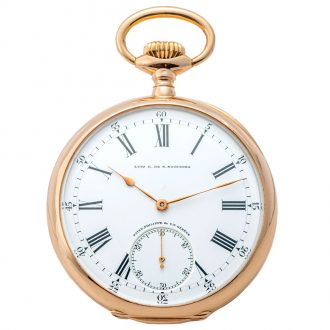
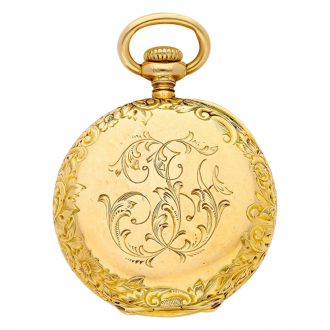
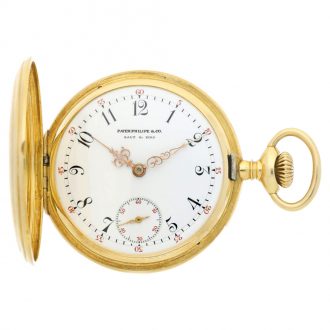
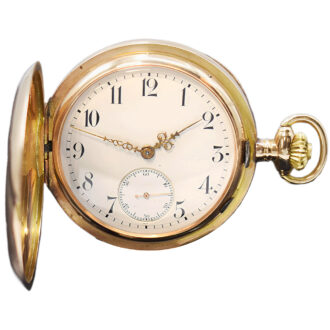
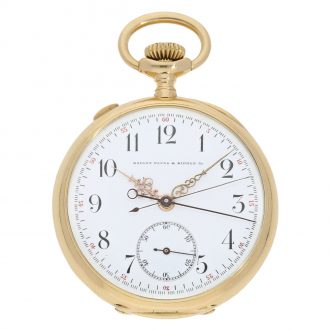
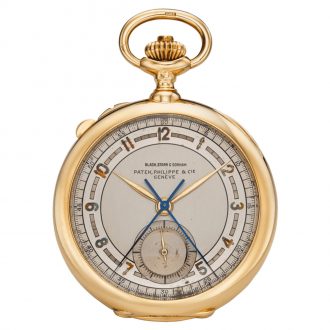
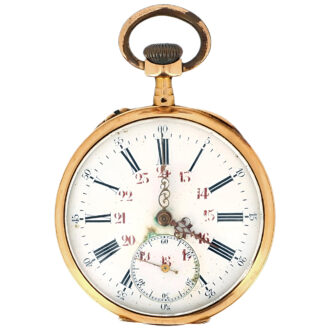
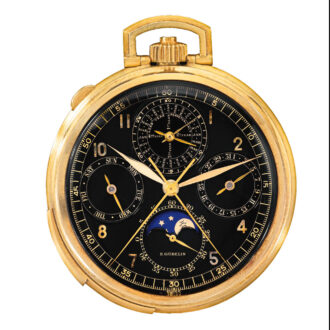
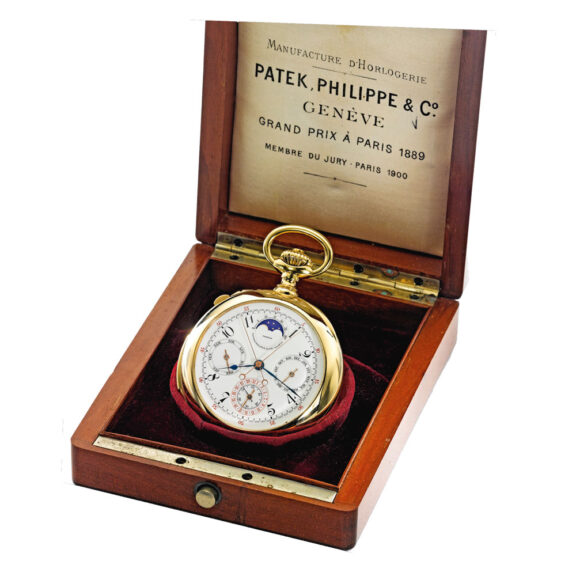
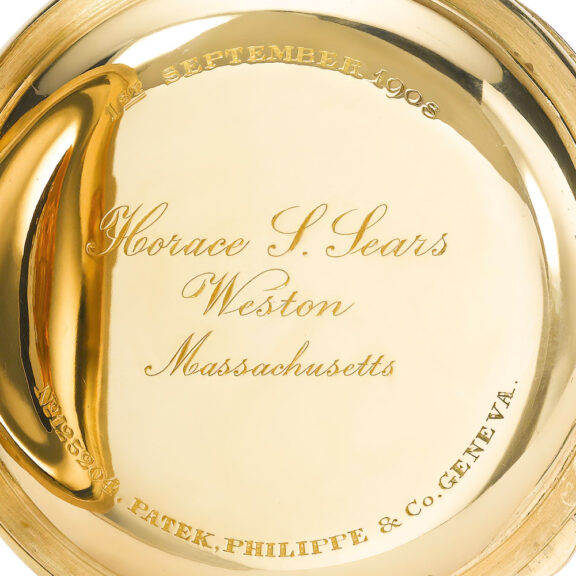
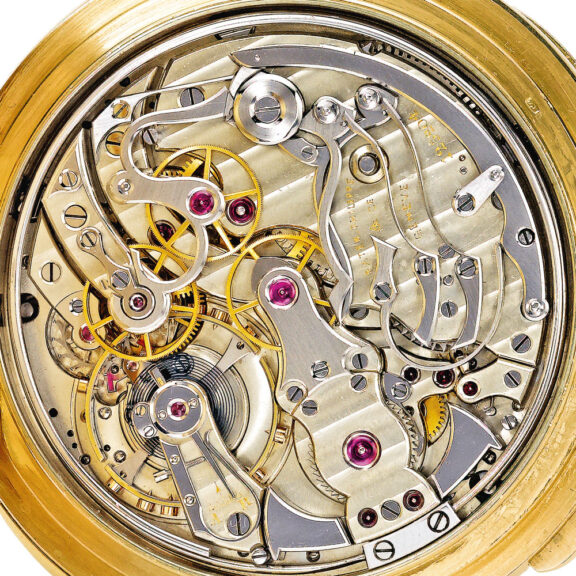
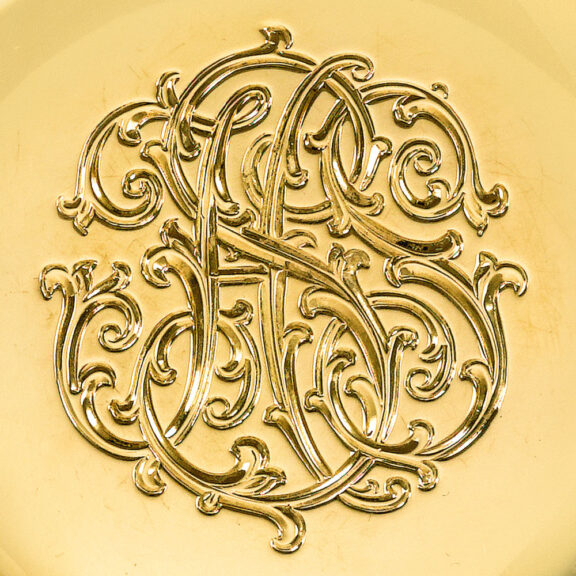
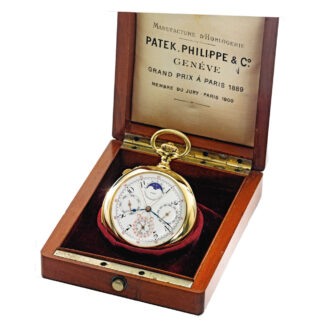
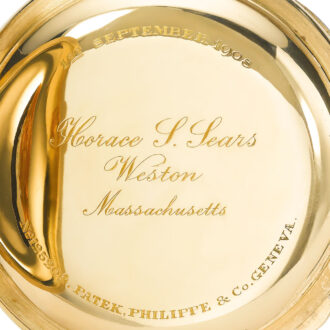
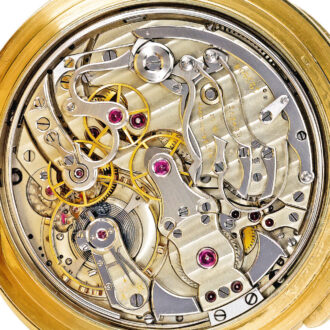
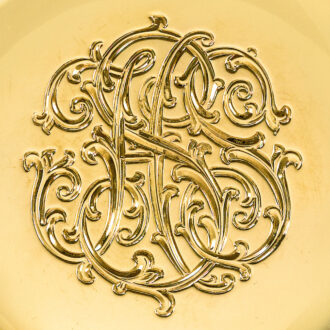
An important Swiss 18 carat yellow gold open faced minute repeating split seconds chronograph pocket watch with perpetual calendar and moon phases made by Patek Philippe in Geneva, circa 1904. The nickel lever movement with 40 jewels and a bimetallic balance, repeating on two gongs. A hinged cuvette engraved 1st September 1908 Horace S. Sears Weston Massachusetts. White enamel dial with black Arabic hours, an outer minute track with fifth of a second divisions and red Arabic five minute numerals, subsidiary seconds with concentric date at 6 o’clock, days of the week at 9, phases of the moon at 12 and the months at 3, blued spade hands and gold chronograph hands. A plain case with the monogram HSS on the back, a minute repeating slide to the band, a slide to lock the crown, a split second button at 10 o’clock and coaxial chronograph button on the crown. Dial, case, cuvette and movement signed, cuvette and movement numbered.
–
An important Swiss 18 carat yellow gold open faced minute repeating split seconds chronograph pocket watch with perpetual calendar and moon phases made by Patek Philippe in Geneva, circa 1904. The nickel lever movement with 40 jewels and a bimetallic balance, repeating on two gongs. A hinged cuvette engraved 1st September 1908 Horace S. Sears Weston Massachusetts. White enamel dial with black Arabic hours, an outer minute track with fifth of a second divisions and red Arabic five minute numerals, subsidiary seconds with concentric date at 6 o’clock, days of the week at 9, phases of the moon at 12 and the months at 3, blued spade hands and gold chronograph hands. A plain case with the monogram HSS on the back, a minute repeating slide to the band, a slide to lock the crown, a split second button at 10 o’clock and coaxial chronograph button on the crown. Dial, case, cuvette and movement signed, cuvette and movement numbered.
–
Diameter: 55 mm
–
Signed: Patek, Philippe & Co Geneva
–
Comes with an Extract from the Archives confirming its sale on September 24th, 1908 and engraved monogram H.S.S. on the back cover.
–
Diameter: 55 mm
–
Signed: Patek, Philippe & Co Geneva
–
Comes with an Extract from the Archives confirming its sale on September 24th, 1908 and engraved monogram H.S.S. on the back cover.
–
Horace Scudder Sears (1855-1923) was the son of the Reverend Dr Edmund Hamilton Sears and grew up in the idyllic town of Weston, Massachusetts, a small town outside Boston.
Sears began his career as a clerk for a Boston ship chandler selling canvas for sails and grew rapidly in his role. Before long, he co founded the textile firm Wellington, Sears & Co, where he amassed his fortune. In addition to Sears’ business accomplishments, he was also a great philanthropist.
In 1898, Sears started the development of his grand estate, Haleiwa, in his childhood home of Weston. Like many Gilded Age magnates, Sears hired only the best to help design and build his magnificent home in the style of the Renaissance Revival. The legendary Olmsted Brothers were commissioned to design the landscaping, and Arthur Shurcliff later added Italianate decorative elements to the landscape, such as fountains, terraces and balustrades. The estate was completed in 1901 and it is relevant to note that the mansion housed a 200 seat theatre used to hold performances by the Friendly Society, a theatrical group that raised funds to benefit the First Parish Church. This was particularly special to Sears, as he was the President of the First Parish Friendly Society.
Sears was a prominent figure in Weston and dedicated much of his wealth to the betterment of the town. He was the driving force behind the Village Improvement Plan that created the Town Green. Additionally, the Sears Hall was named after Sears after his generous donation to the town hall in 1917.
It would only befit a gentleman of Mr Sears’ standing to own a watch such as the present piece. Highly complicated, featuring a perpetual calendar, split second chronograph and minute repeating, it embodies the apex of watchmaking. The first such known piece is recorded from 1887 and scholars estimate that no more than two such pieces might have been made annually.
Within a few years of this watch’s sale in 1908, Patek Philippe would begin to receive commissions from now celebrated horological patrons James Ward Packard and Henry Graves Jr With this investment in a timekeeping masterpiece, Sears was a pioneer of American turn-of-the-century magnates whose fortunes and curatorial eyes brought them to Patek Philippe.
Signed: Patek Philippe and Cie Geneve
Share this page: