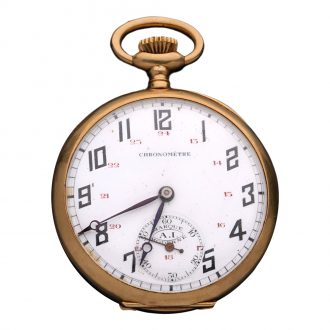
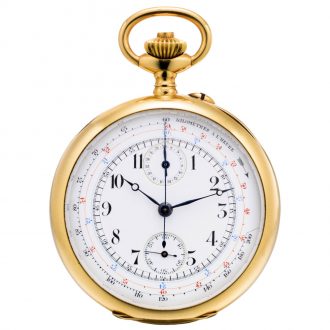
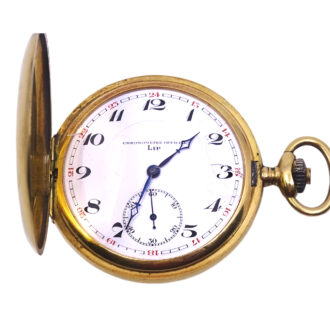
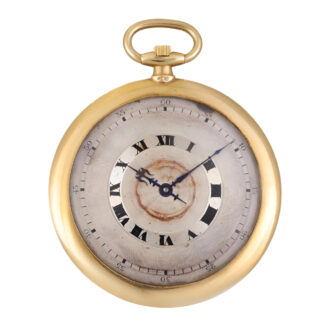
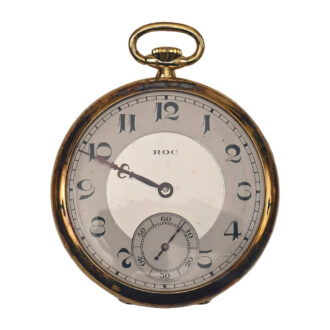
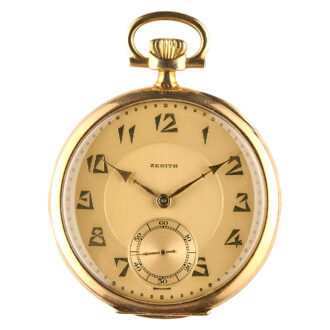
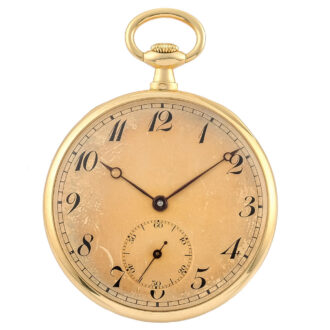
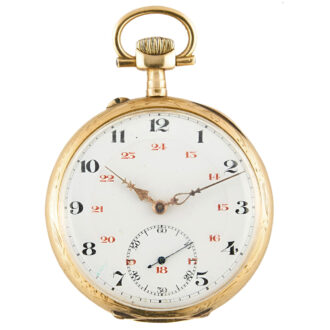
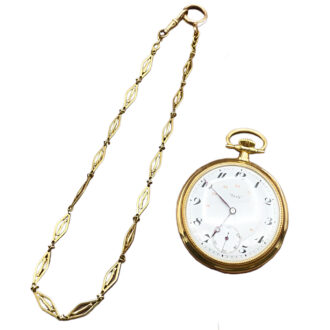
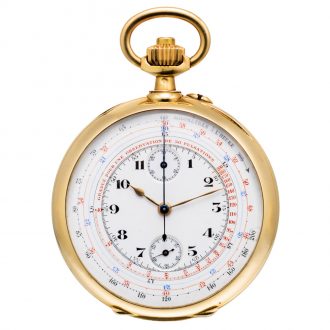
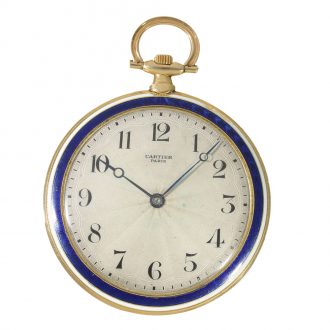
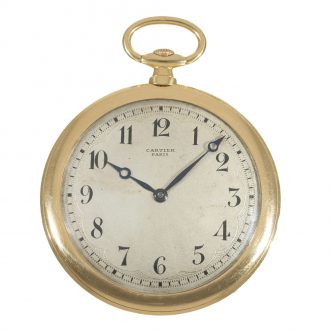
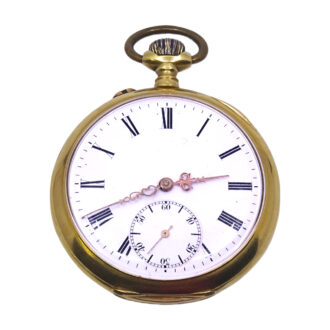
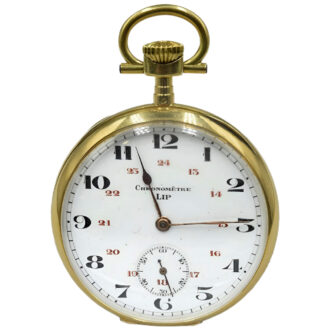
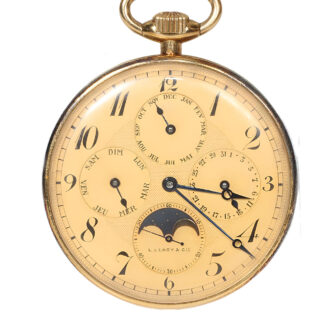
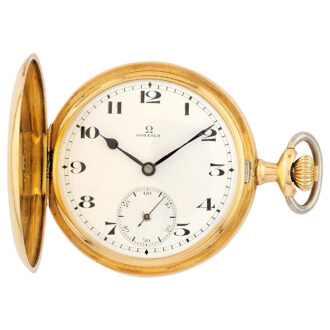
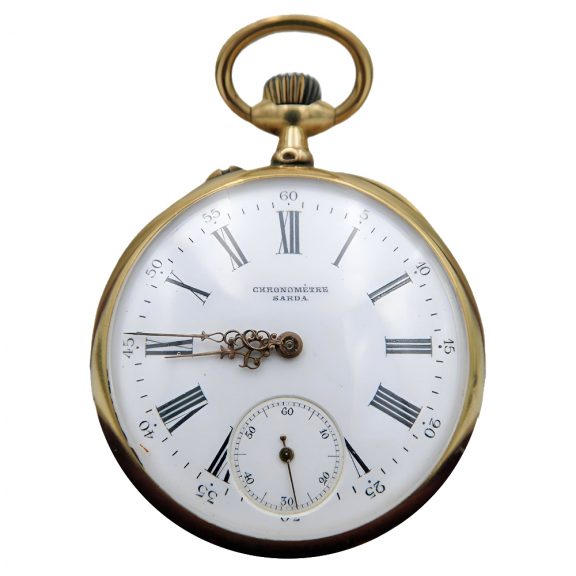
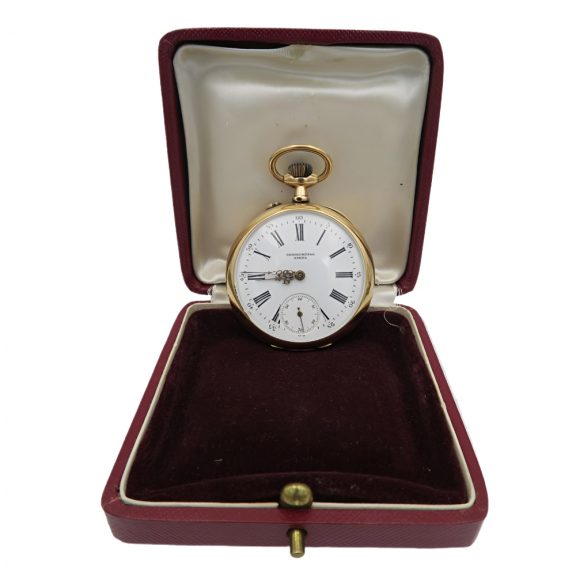
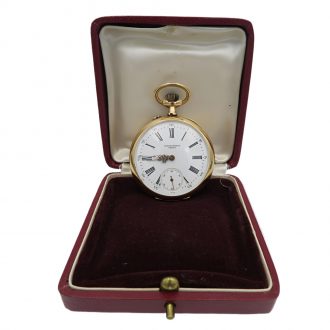
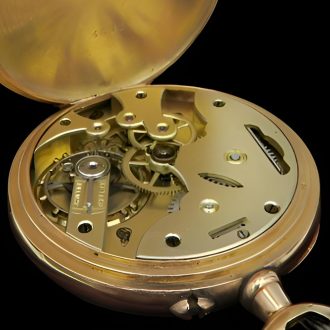
French 18K yellow gold pocket chronometer watch Circa 1920
- Kenmerk
- AL2755
- Diameter
- 47 mm
- Estimate
- € 1.250 - 2.000
- Price sold
- € 1.050
Gold open faced keyless pocket watch
–
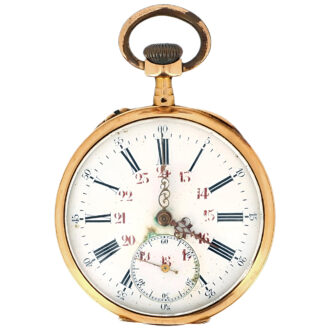
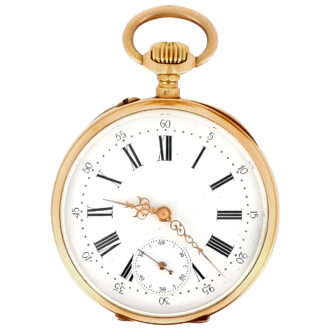
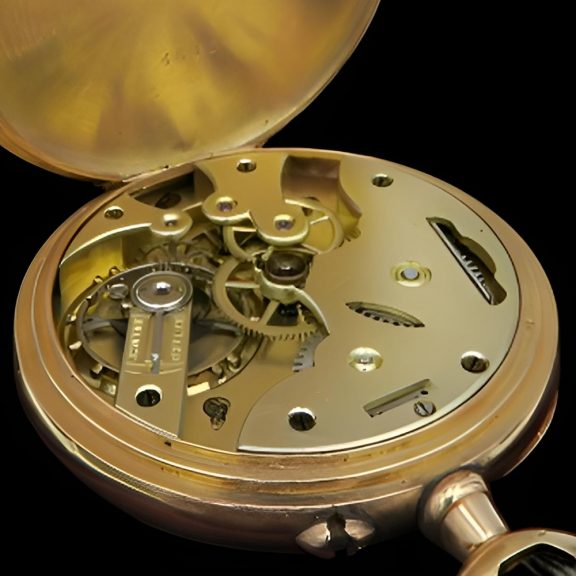
A French 18 carat yellow gold keyless pocket watch, made by Sarda, circa 1920. The watch features a mechanical lever movement. The signed white enamel dial displays black Roman numerals, an outer minutes track with Arabic five minute numerals, a sunk subsidiary seconds dial at 6 o’clock, and openworked hands. Gold polished Bordeaux case and double back.
–
Diameter: 47 mm
–
Weight: 76.8 g
–
Signed: Sarda Chronomètre
–
Sarda Besançon was founded in 1893 by Hyacinthe Sarda (1869-1941 ). He was born in Prades, Pyrénées-Orientales, France. In 1890, he volunteered for the 10th Infantry Battalion in Besançon, which was the centre of French watch and clock making. He soon made a name for himself, repairing the pocket watches of his fellow soldiers.
–
Having left the army in 1893, he moved into a shop premises in Besançon, where he started by repairing watches before embarking on a watchmaking career, calling the company Sarda Besançon. He had cleverly noted all his army contacts, and his business grew rapidly by advertising them. He advertised his services and watches, offering an early form of mail order hire purchase, and eventually became one of France’s largest mail order companies.
–
When his two sons, Robert and Roger, were old enough, he enrolled them in the company. Eventually, he employed more than 50 staff to make a wide range of watches and clocks in-house, including everything from basic pocket watches to chronometers, bracket and coach watches, and wall clocks and long case clocks. In addition, he imported ébauche movements from Switzerland, which he cased and dialled.
–
He also carried a wide range of jewellery to suit all pockets. Despite the economic troubles of the 1920s, the business survived mainly because it offered payment on credit terms on over 250 clocks and watches by mail order. By this time, he had also branched out into producing a wide range of wristwatch designs. He had a goldsmith’s department on his premises, making rings, bracelets, necklaces, and medals, which he sold in his shop and through his catalogues, along with fountain pens, binoculars, phonographs, and cameras. The business prospered.
–
After Hyacinthe died in 1941, the two brothers continued to run the business successfully until they sold out to Difor in 1961.
Signed: Sarda Chronomètre
Share this page: