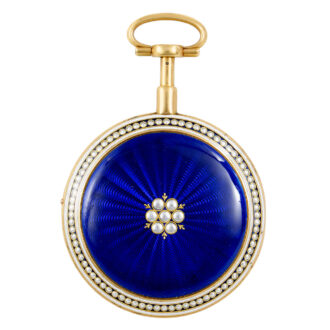
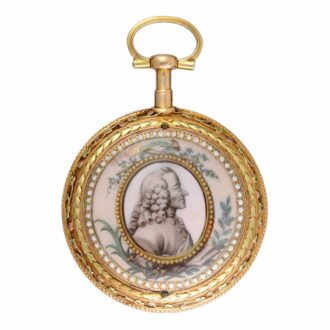
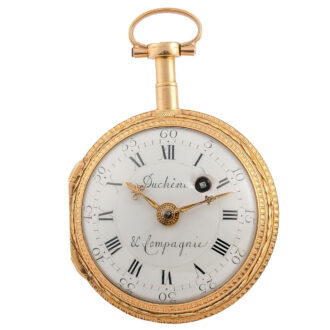
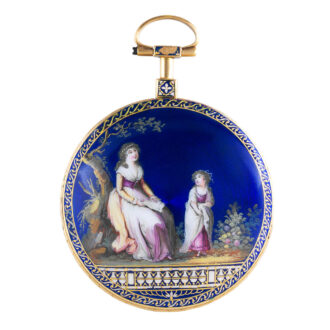
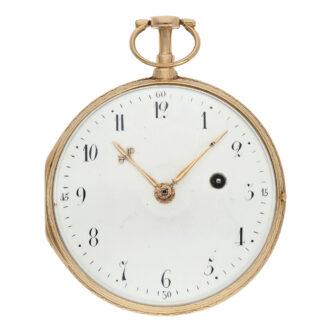
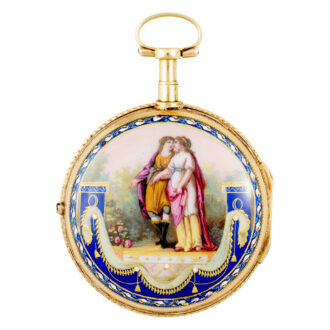
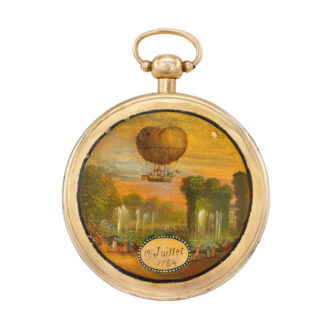
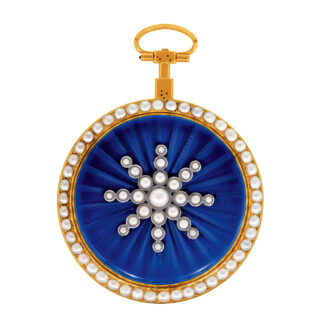
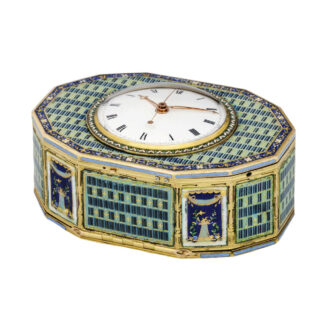
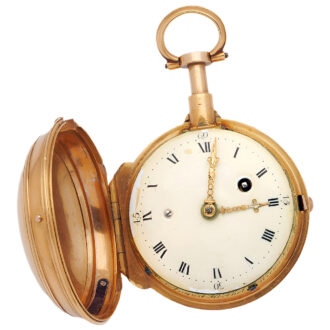
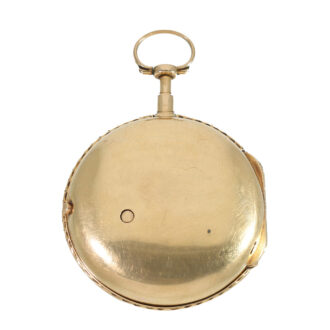
Swiss 18 carat gold automatic cylinder watch Circa 1785
- Kenmerk
- HC2192
- Diameter
- 54 mm
- Estimate
- € 7.500 - 20.000
- Price sold
- € 9.900
Important museum quality watch with center seconds
–
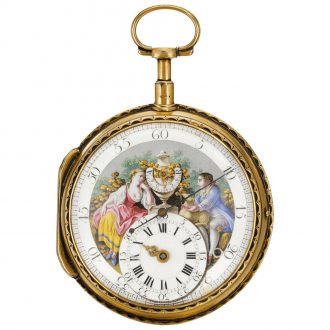
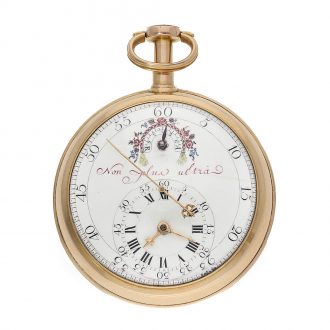
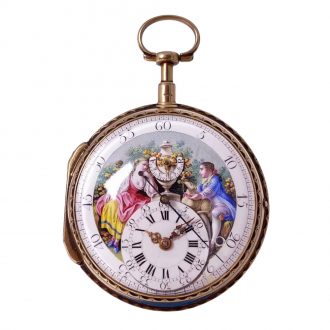
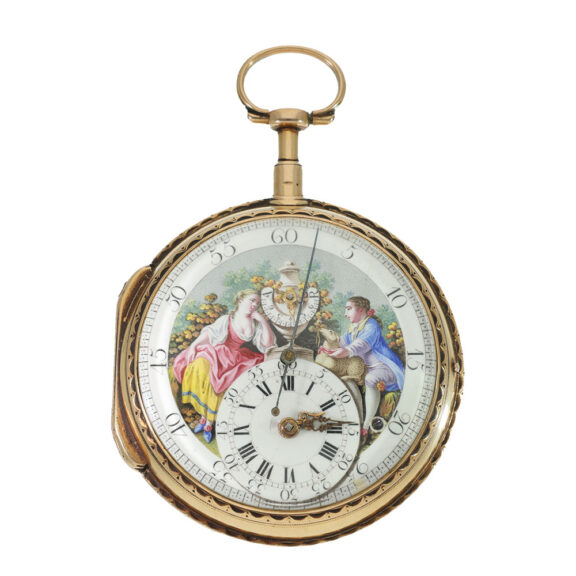
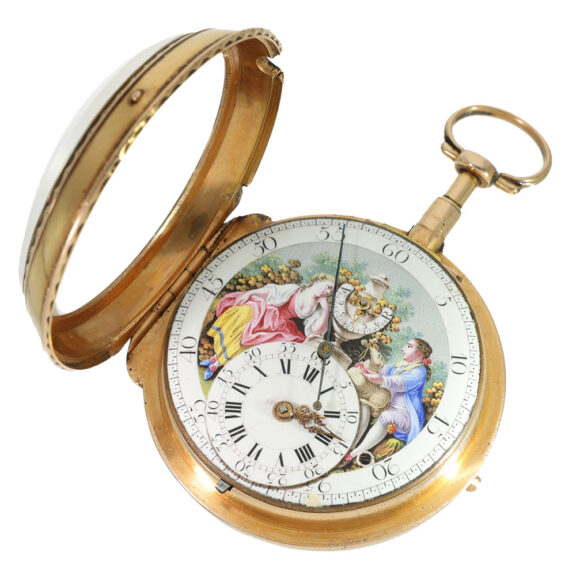
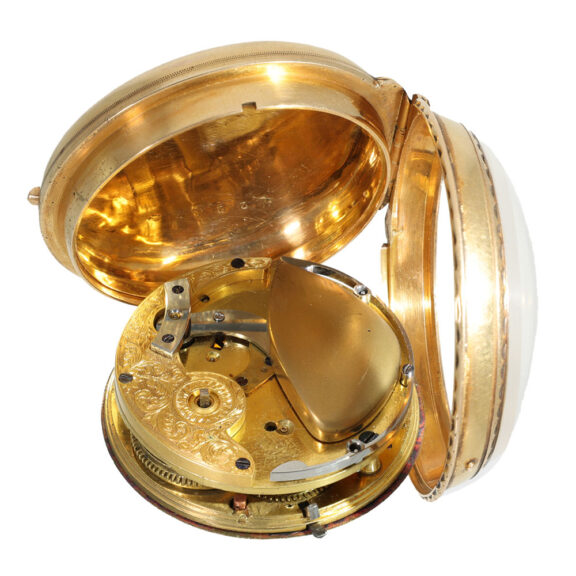
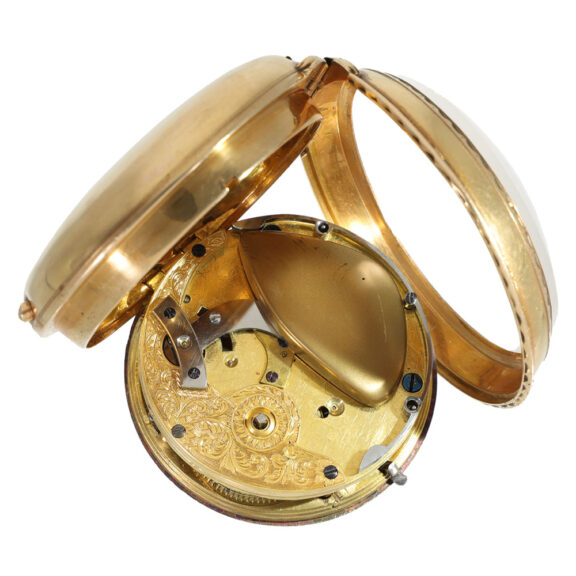
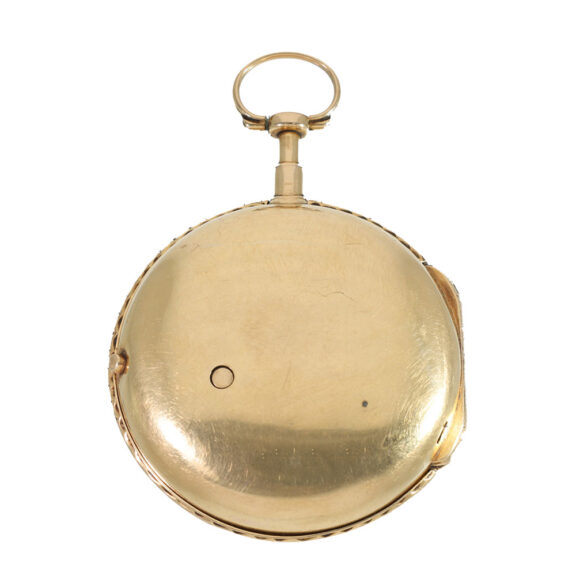
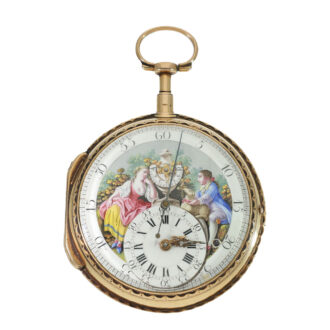
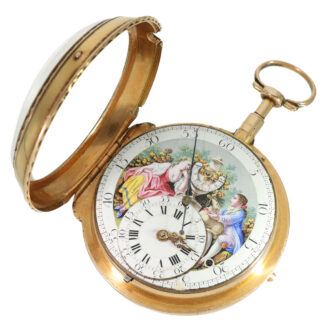
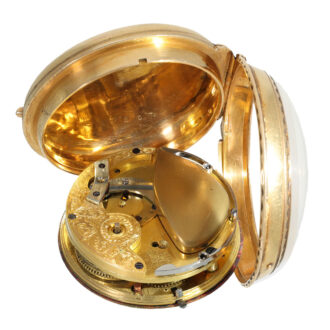
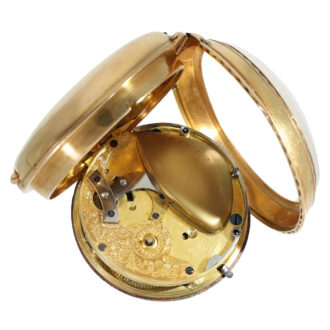
An important museum quality automatic (self winding) cylinder escapement watch with center seconds, made by Moÿse Gevril & Fils in Crêt-Vaillant, Le Locle, Switzerland, circa 1785. The watch is housed in a plain 18 carat gold case, while the dial features an ornate polychrome miniature enamel painting set against a scenic landscape backdrop. Surrounding the central scene is a white outer chapter ring marked with large Arabic numerals in five second increments from 5 to 60, allowing the continuous sweep of the central seconds hand to be read. An off center hours- and minutes sub dial is positioned in the lower left quadrant, with black Roman numerals for the hours and Arabic numerals for the minutes. Near the 12 o’clock position is a small semicircular fast/slow (advance/retard) regulator scale for fine tuning the escapement rate. The exceptionally rare movement is fitted with an early oscillating weight self winding mechanism and a cylinder escapement.
–
Diameter: 53,5 mm
–
Weight: 109 g
–
Signed: No name
–
Gevril
The history of the Gevril family in the pocket watchmaking business is rooted in the mid 18th century, defined by royal appointments, master craftsmanship and early mechanical innovations that helped shape Swiss horological history. The family lineage can be traced back to the 1500’s, but their watchmaking legacy peaked between the 1740’s and the 19th century.
The family’s watchmaking prominence began with Jacques Gevril (1721–c. 1790s , who was born in La Chaux-de-Fonds, Switzerland.
His son Moÿse Gevril, born in 1749 in Le Locle, lived in Crêt Vaillant near Le Locle. He became a master watchmaker in 1784 and made pocket watches with automatic windings using an oscillating weight winding. Moÿse founded the company Moÿse Gevril & Fils and died around 1791. The magnificent automatic watches from this manufacturer all have a similar design and only very rarely appear at auctions. They are the most beautiful and valuable early pocket watches with automatic winding.
As the business moved into the 1800’s, watchmakers like Daniel Gevril took over the family tradition. During this era, the family diversified their mastery. While continuing to manufacture highly precise pocket watch movements, they became exceptionally renowned for miniature enamel artistry and creating incredibly ornate, custom painted dials for European aristocrats.
Signed: No name
Share this page: