Swiss gold minute repeating chronograph watch Circa 1885
- Kenmerk
- AD0670
- Diameter
- 57 mm
- Estimate
- € 12.000 - 20.000
- Price sold
- -
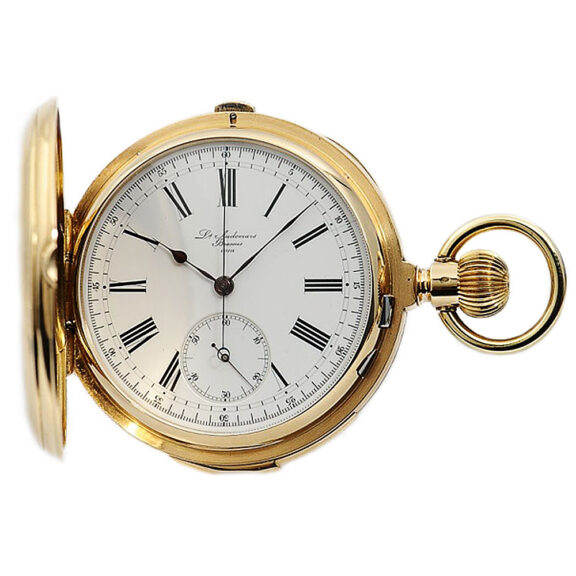
Gold hunting cased pocket watch by Louis Audemars
–
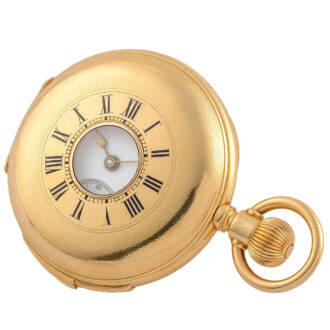
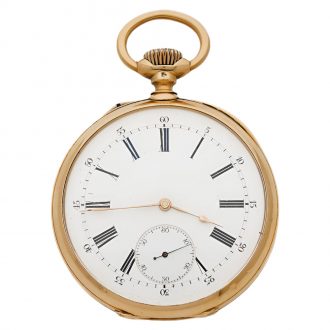
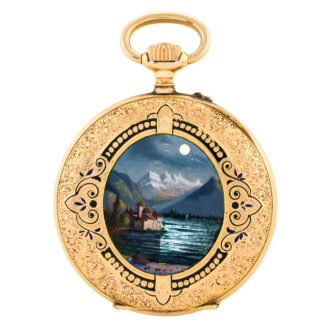
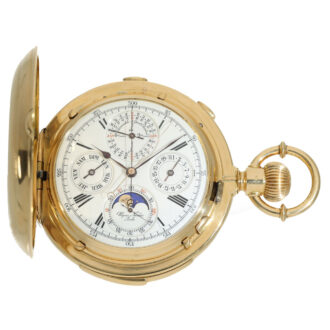
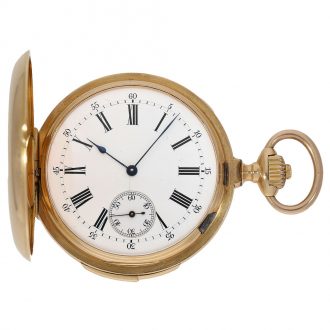
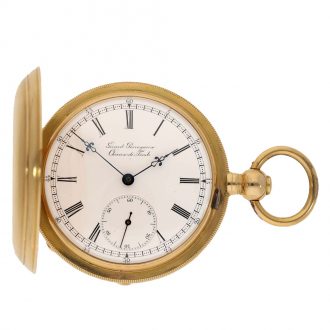
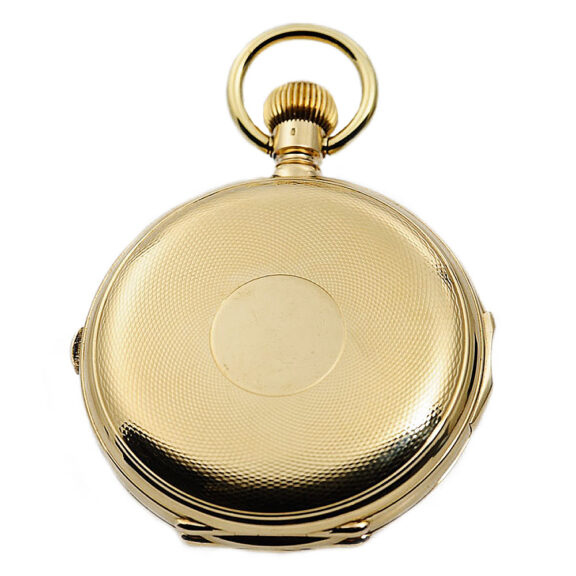
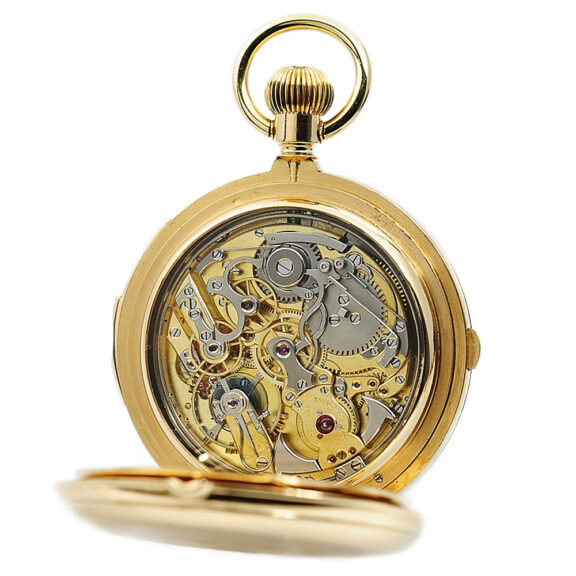
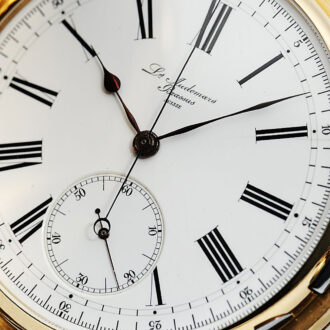
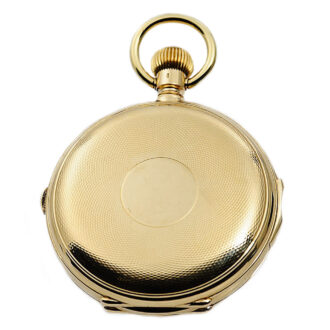
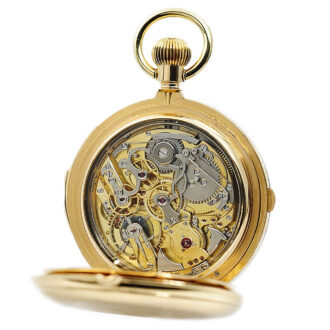
An impressively heavy and large minute repeating hunting cased Swiss pocket watch with chronograph, circa 1885.
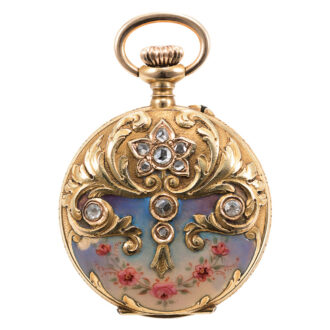
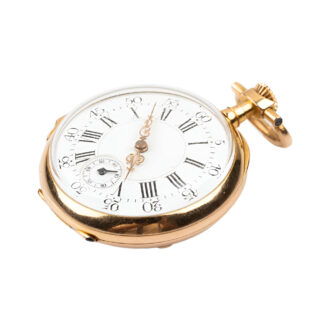
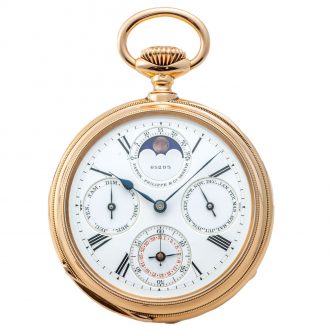
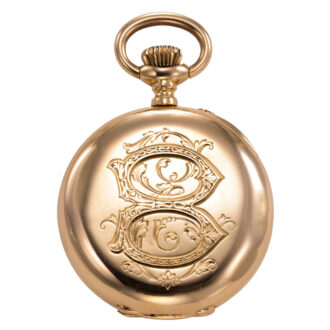
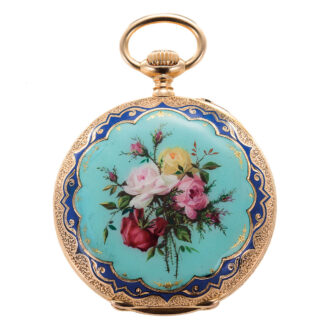
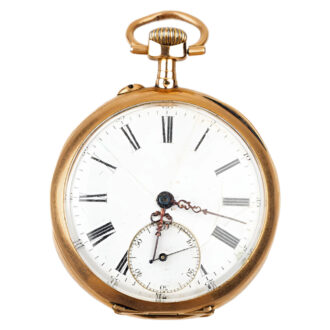
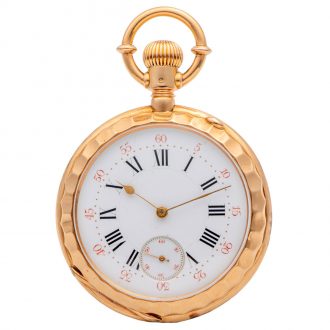
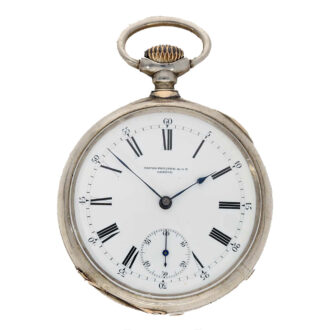
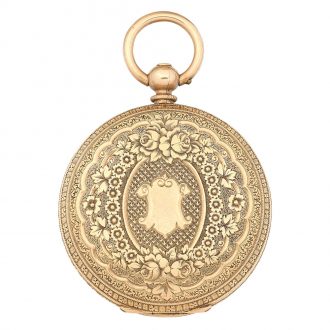
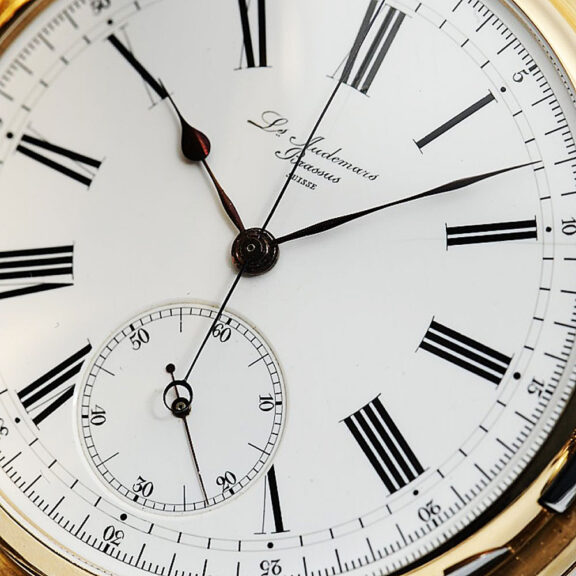
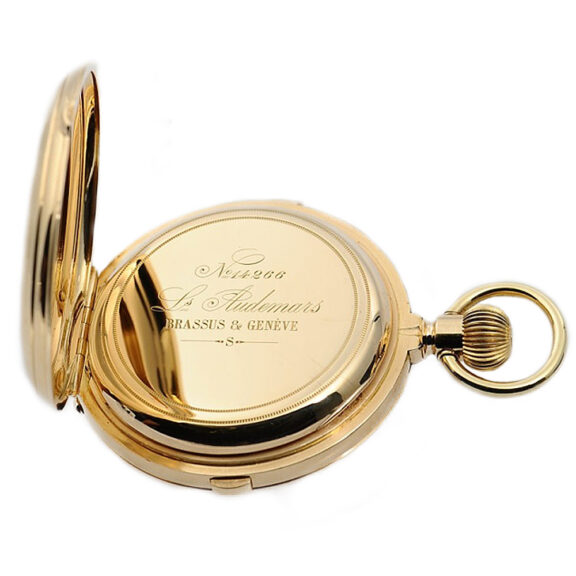
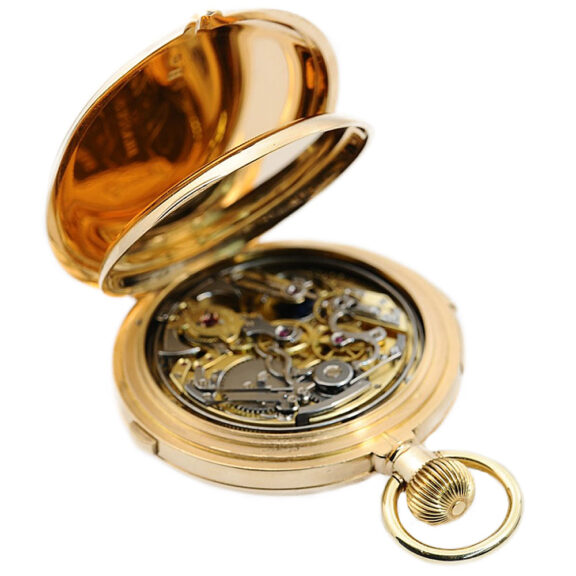
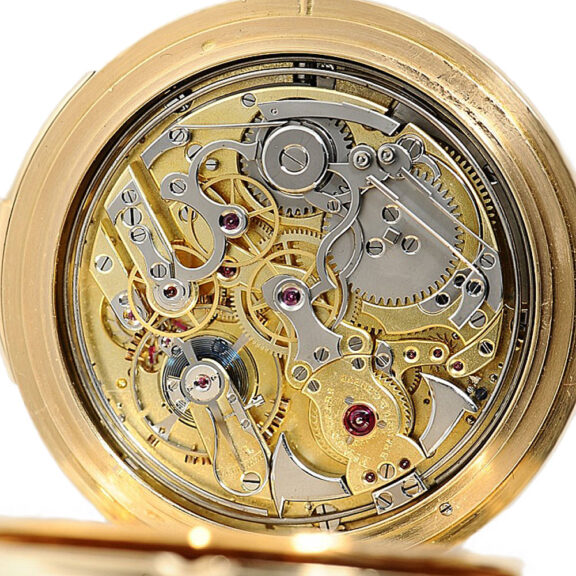
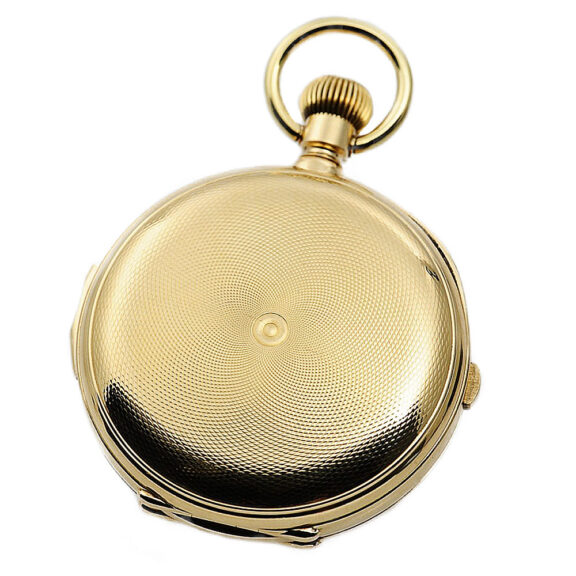
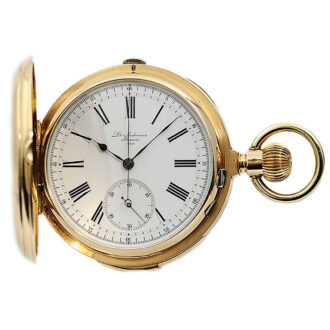
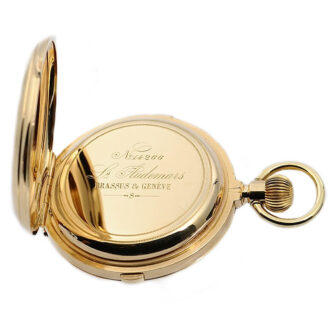
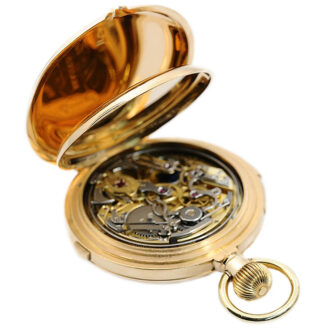
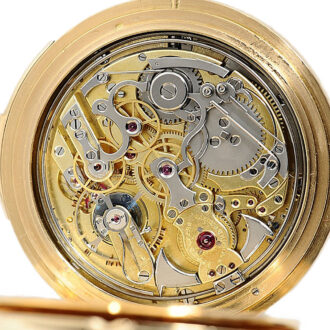
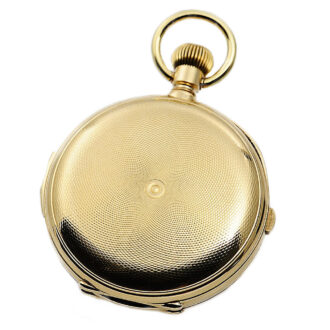
Engine-turned 18-carat gold case with glazed movement. Engraved signed gold dome. Signed white enamel dial with radial Roman numerals, outer minutes/seconds track with Arabic five minutes/seconds numerals, subsidiary dial for the seconds, centre chronograph hand, and spade hands. Bridge movement, two hammers / two gongs, lever escapement, gold screw compensation balance.
–
Diameter: 57 mm
–
Weight: 205 g
–
Signed: Louis Audemars, Brassus & Genève
–
The polished steel parts in different shades of grey, the outstanding condition of the engine-turning, the smooth operation of the single pusher chronograph, the exquisite dial and the deep sound of the gongs the combination of all these characteristics attest to the outstanding quality of this watch and the appreciation which it was shown by its previous owners.
–
Louis-Benjamin Audemars
Born in 1782 in the Vallée de Joux, he was apprenticed at the age of 16 to the already famous Philippe Meylan, who had specialized in making watch movements. Audemars’ manual skills, keen perception and intelligence impressed Meylan so much, that a partnership was offered to him.
–
In 1811 Meylan went to Geneva and made Audemars his successor. He left Audemars the workshop which produced movements for other companies. The new company Meylan formed with Piguet became Le Roy, Breguet, Jürgensen, Charles Oudin, LeCoultre, Piguet Frères, Bautte, Piguet & Meylan, Patek, Frodsham, Dent, and Benson important customers for Audemars.
–
In 1832 Audemars decided to produce complete watches to sell under his own name. Louis died a year later leaving this challenge to his eight sons, who continued running and developing the Audemars company.
–
Between 1832 and 1837 the company invented the keyless winding/setting system, which is known today as the Audemars system. Audemars catalogues list “Breguet” calibre watches, “Breguet style” repeaters with independent centre seconds, “demiBreguet” calibres and Breguet anti-shock devices (pare-chutes). The Audemars company was soon recognized as one of the best.
–
At the London Exhibition of 1851, it showed 10 watches with different escapements and complications. The company became famous for its ultra-complicated watches. Among the honours Audemars received were: London 1851 First Class Medal, New York 1853 Bronze Medal, Paris 1855 First Class Medal, London 1862 First Class Medal, Académie Nationale de France 1856-1863 First Class Honour Medal, Vienna 1873 Medal of Progress, Philadelphia 1876, Paris 1878 1ère Medaille d’Or, Croix de la Légion d’Honneur, Diplôme d’Honneur, Sidney 1879 First Class Medal, London 1880. Audemars was named Watchmaker to the Queen of England, which was a very rare honour to be bestowed upon a foreigner.
Signed: Louis Audemars, Brassus & Geneva
Share this page: