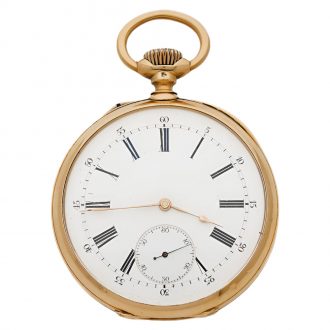
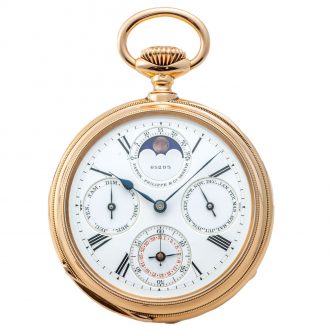
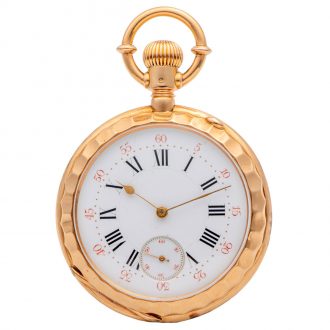
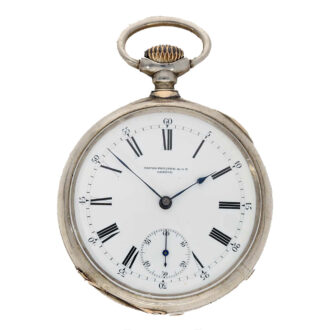
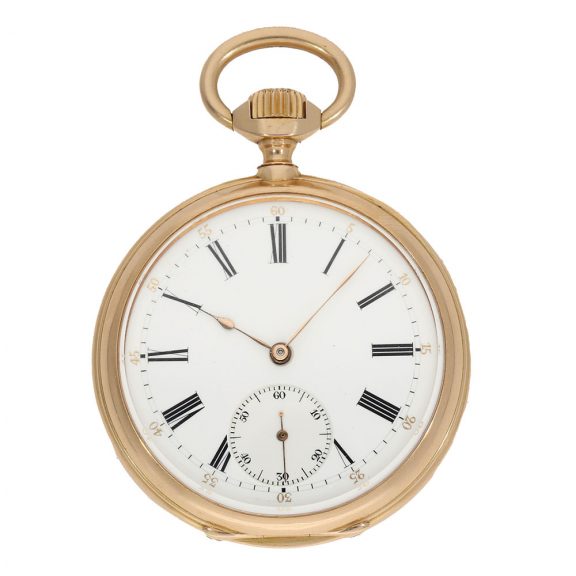
Swiss 18 carat gold exquisite pocket chronometer Circa 1885
- Kenmerk
- HC1288
- Diameter
- 50 mm
- Estimate
- € 2.500 - 6.000
- Price sold
- € 3.100
Observatory chronometer with double Geneva seal
–
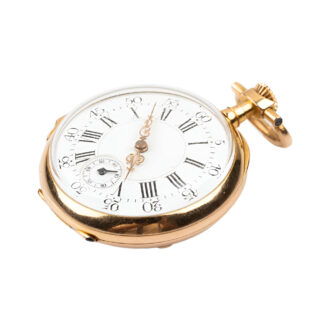
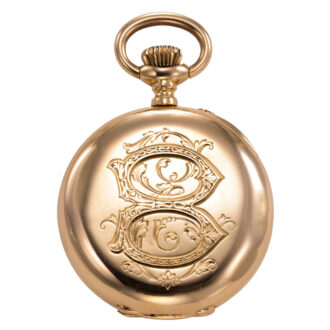
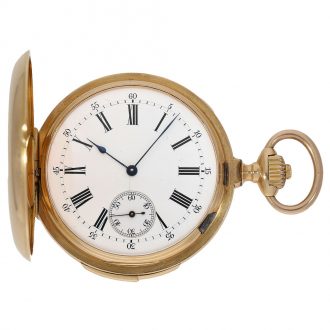
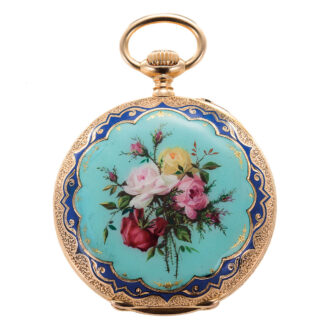
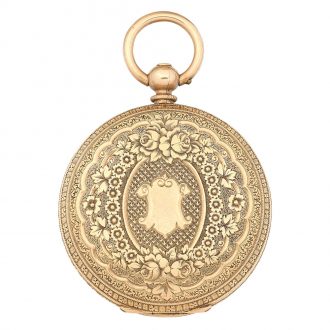
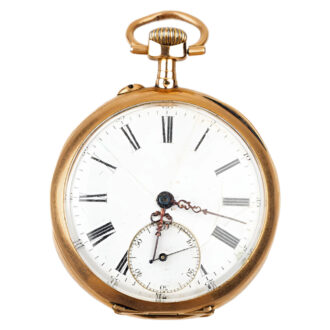
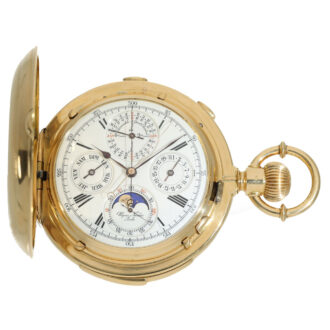
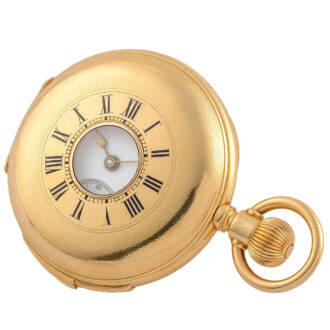
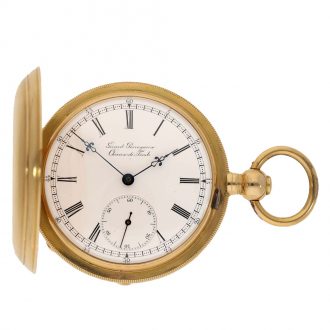
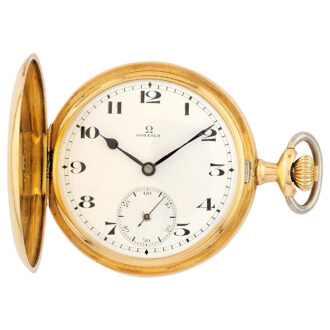
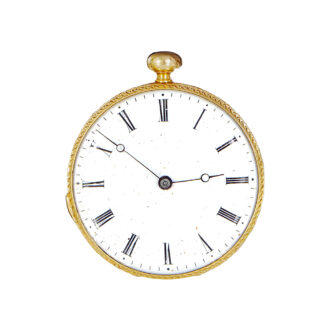
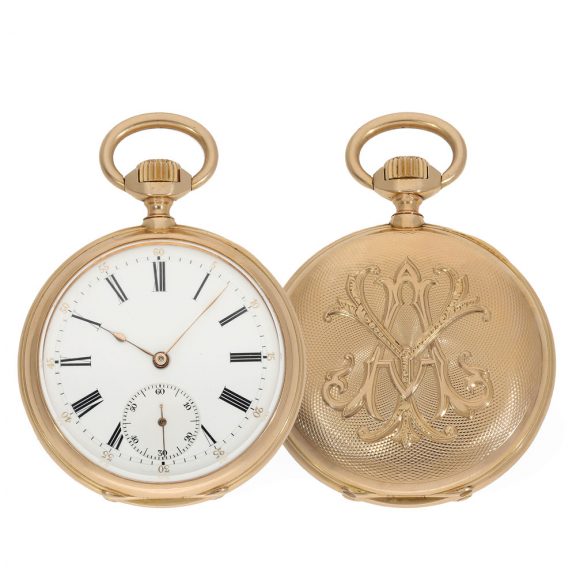
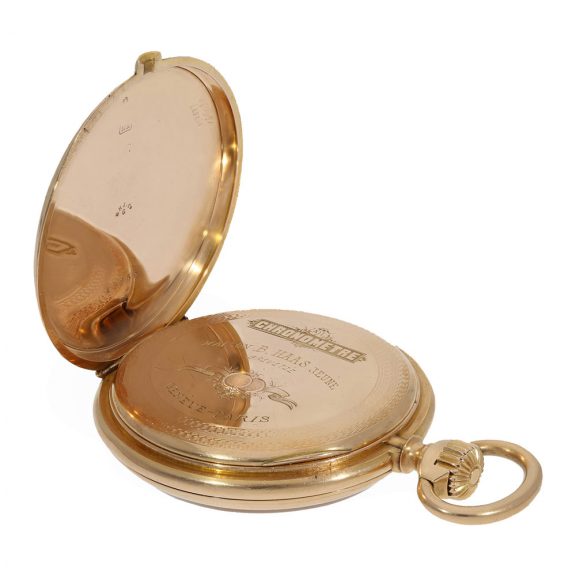
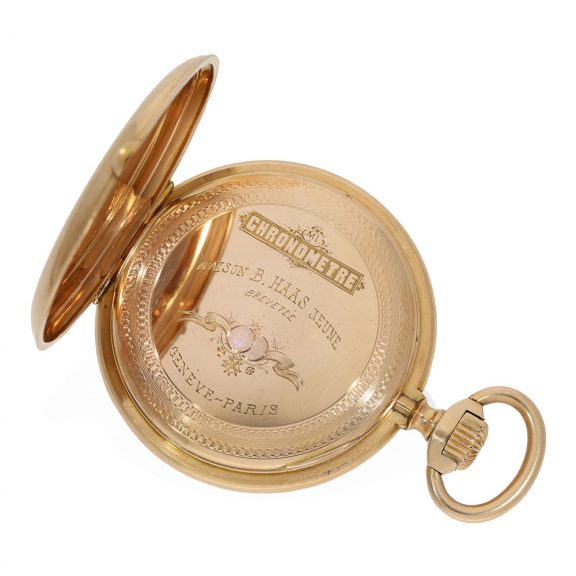
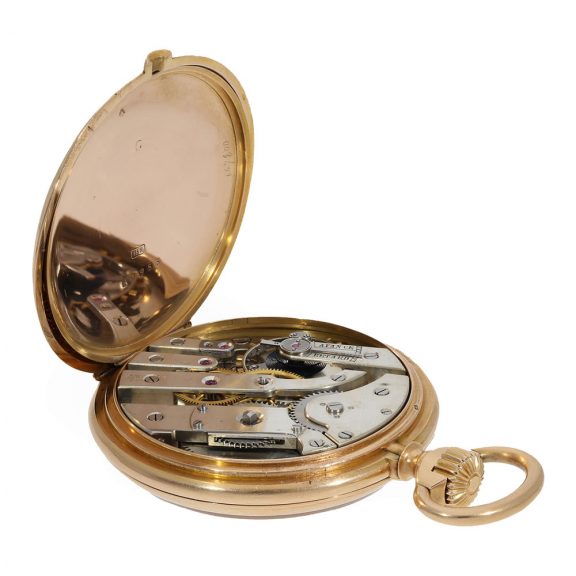
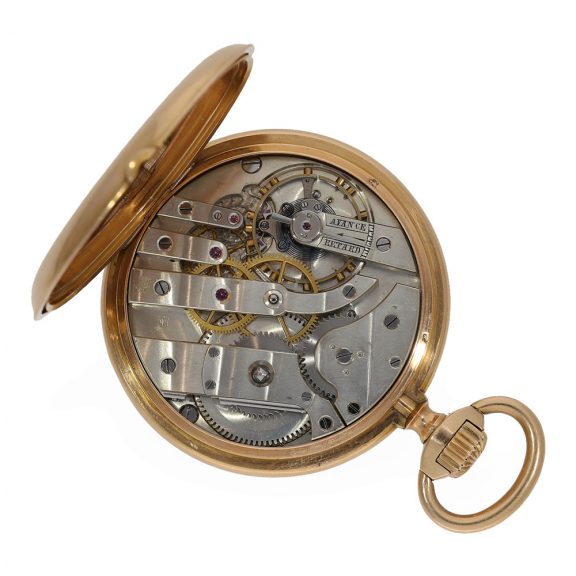
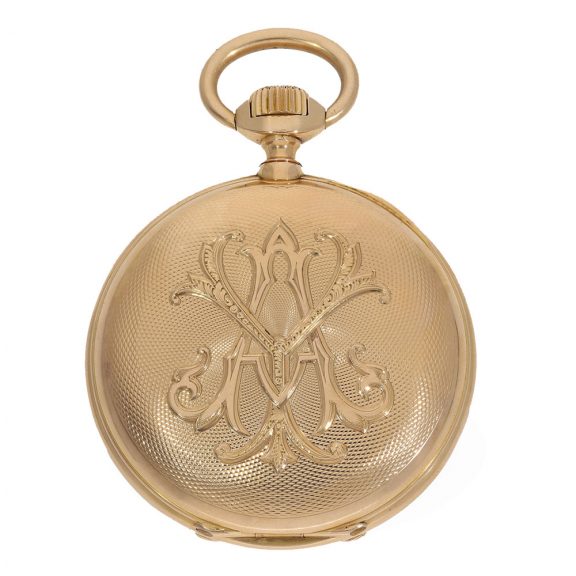
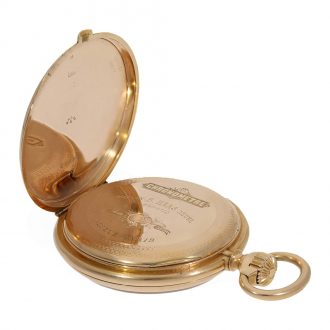
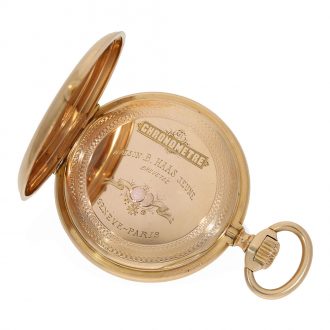
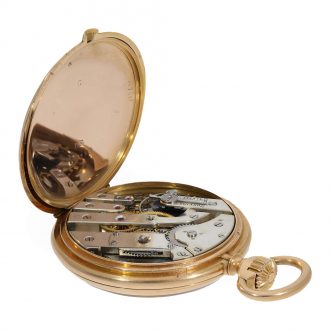
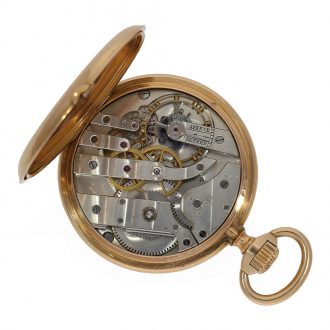
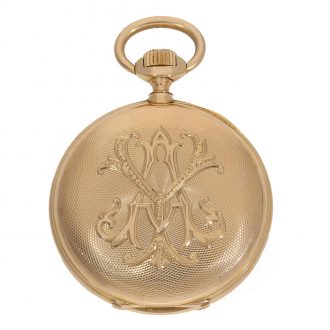
An exquisite pocket and observatory chronometer, made by Benjamin Haas in Genève, Switzerland, circa 1885. The case of this à goutte pocket watch was crafted from 18 carat gold has a cuvette inscribed Chronomètre Breveté (patented chronometer), the Haas Geneva punch and a monogram on the back lid. The white enamel dial has gold Arabic five minute- and Roman hour numerals, a subsidiary seconds dial at 6 o’clock and gold hands. The movement has a top quality Geneva anker chronometer escapement, a double Geneva seal, a chronometer balance, a moustache lever according to Patek Philippe, wolf’s toothing and Geneva striping decoration.
The cuvette is signed.
–
Diameter: 50 mm
–
Weight: 88 g
–
Signed: Maison B. Haas jeune, Genève – Paris
–
The chronometer has all the characteristics of a fine Geneva Observatory chronometer, especially the Geneva seal on the plate and bridge. The quality is quite comparable to chronometers by Patek Philippe.
–
Maison Haas
The house was founded in Geneva in 1848 by the brothers Léopold Haas (1827-1915) and Benjamin Haas (1828-1925), later becoming “Ancienne Maison B. Haas Jeune”, then “Haas Neveux & Co.” is one of the oldest Swiss watch manufacturers. The Haas signature has always been one of the most sought after, thanks to the company’s impeccable standards. Haas gained a reputation as a manufacturer of fine chronometers, chronographs, and highly complicated watches. Among their most notable creations was the “remontoir perpétuel à décrochement” (1867 and 1873), a perpetual calendar (1872) and later the first ultra-thin watch movement (circa 1896). Benjamin Haas patented a winding mechanism by closing the cover, “remontoir perpétuel à décrochement.”
In 1867, Benjamin Haas patented an interesting winding mechanism by closing the cover, which transmits the power via two levers to a ratchet wheel on the barrel arbour with a safety device disengaging the mechanism when fully wound. The design was quite successful, and Haas employed it in some of his best watches, mostly with horological complications. The initial idea was progressively improved, and the one used in the 1890s is a well-developed system with a 36-hour power reserve generated by only twelve closings. Haas changed the going train to add an additional wheel, which allowed him three hours winding by a single closing. He also designed a safety device disengaging the mechanism when fully wound, which was necessary to prevent damage to the cover.
Signed: Maison B. Haas jeune, Genève – Paris
Share this page: