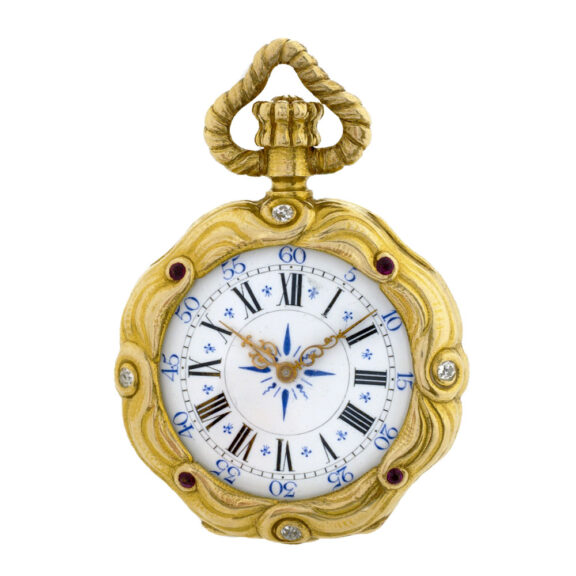
Swiss 18k yellow gold Belle Epoque pendant watch Circa 1885
- Kenmerk
- TA2822
- Diameter
- 38 mm
- Estimate
- € 5.000 - 10.000
- Price sold
- € 7.350
Gold, diamond and ruby lady’s watch
–
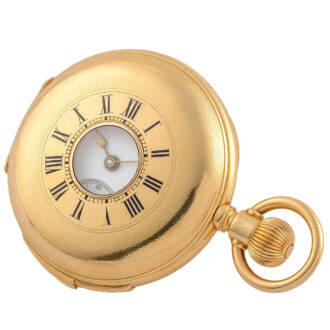
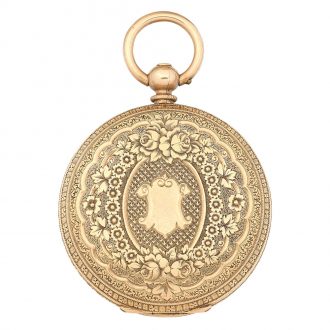
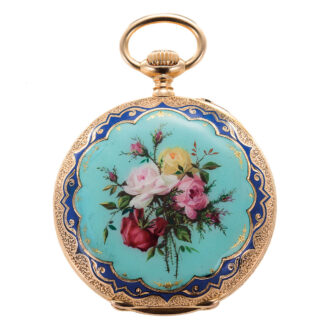
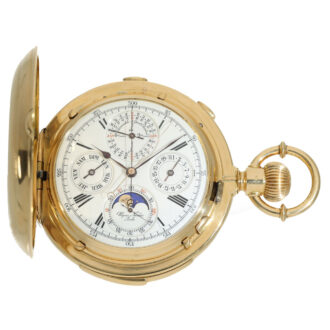
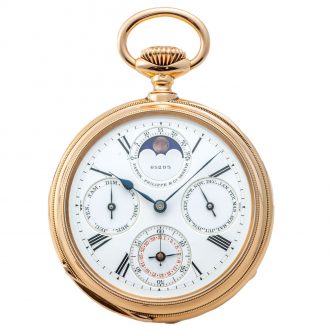
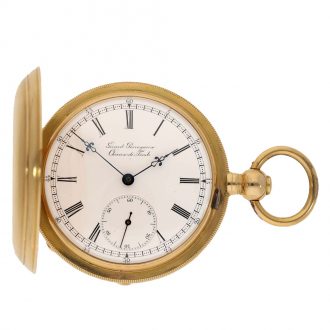
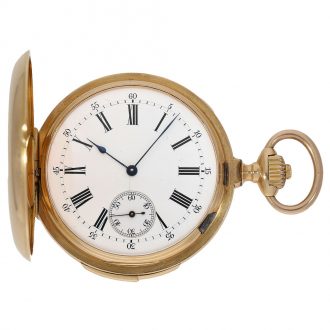
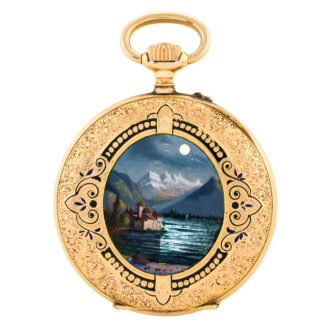
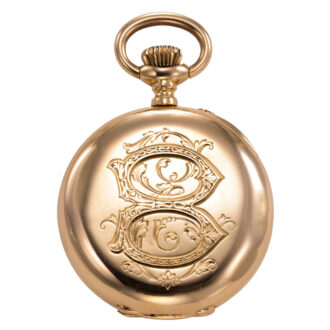
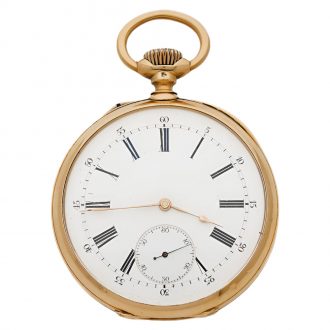
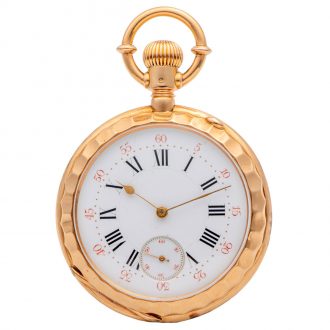
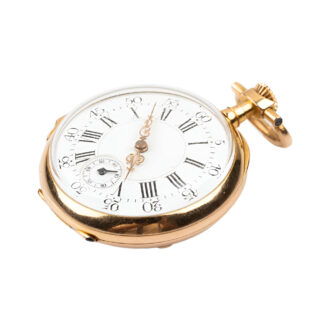
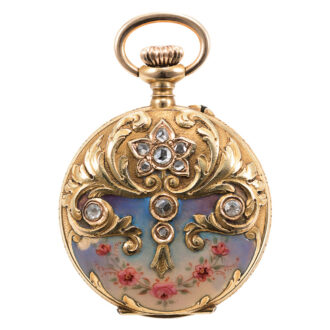
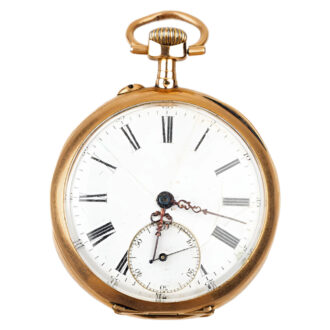
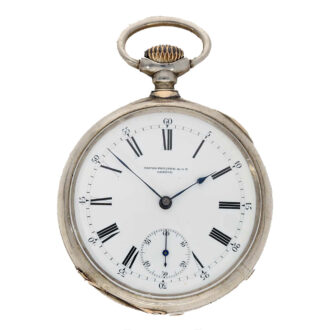
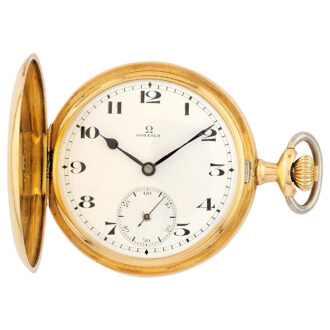
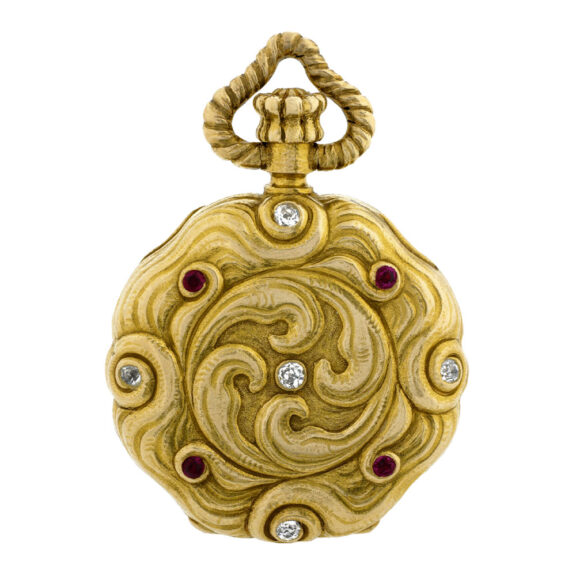
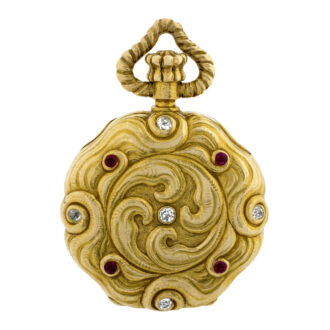
A very elegant Swiss, 18K yellow gold, diamond and ruby, Belle Epoque keyless pendant watch, circa 1885. Accompanied by the Extract from the Archives. The bezel is set with diamonds and rubies engraved as waves, the back set with diamonds and rubies engraved as waves, the bow engraved as rope and the crown engraved as a flower, hinged case back with a hinged cuvette. White enamel dial with black radial Roman indexes, black minute track and blue Arabic painted five-minute numerals, with decorations in blue throughout. Yellow gold Louis XV hands. Lever escapement, bimetallic balance, blued steel flat balance spring, index regulator.
–
Diameter: 38 mm
–
Signed: Patek Philippe Genève
–
The Extract from the Archives confirms that the movement, dial and hands were made and sold in 1885. The case, very unusual, intricate and heavy, was added later. It is difficult to identify the origin of the case, which has many features of a French-made piece, although without any French assay marks. This suggests that it is either Swiss or Italian and was possible, due to the excellent design and craftsmanship, made for the 1889 World Exhibition.
A very elegant Swiss, 18K yellow gold, diamond and ruby, Belle Epoque keyless pendant watch, circa 1885. Accompanied by the Extract from the Archives. The bezel is set with diamonds and rubies engraved as waves, the back set with diamonds and rubies engraved as waves, the bow engraved as rope and the crown engraved as a flower, hinged case back with a hinged cuvette. White enamel dial with black radial Roman indexes, black minute track and blue Arabic painted five-minute numerals, with decorations in blue throughout. Yellow gold Louis XV hands. Lever escapement, bimetallic balance, blued steel flat balance spring, index regulator.
–
Diameter: 38 mm
–
Signed: Patek Philippe Genève
–
The Extract from the Archives confirms that the movement, dial and hands were made and sold in 1885. The case, very unusual, intricate and heavy, was added later. It is difficult to identify the origin of the case, which has many features of a French-made piece, although without any French assay marks. This suggests that it is either Swiss or Italian and was possible, due to the excellent design and craftsmanship, made for the 1889 World Exhibition.
Signed: Patek Philippe Genève
Share this page: