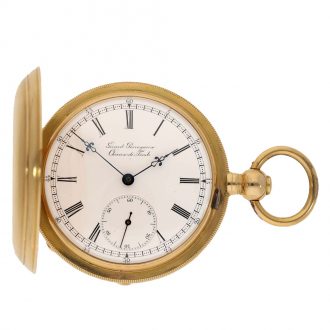
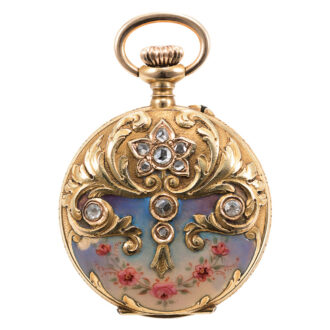
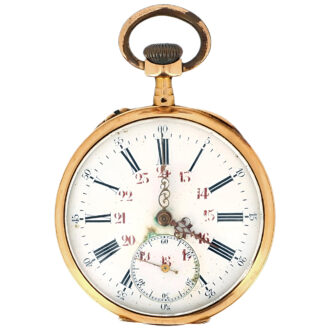
Swiss technically highly interesting seconde morte watch Circa 1885
- Kenmerk
- HC0666
- Diameter
- 50 mm
- Estimate
- € 2.500 - 5.000
- Price sold
- € 2.800
Gold open faced lever watch
–
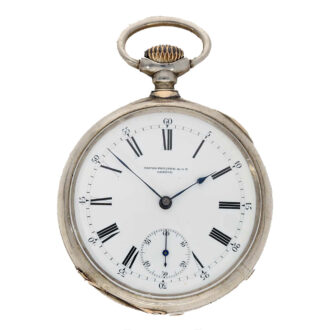
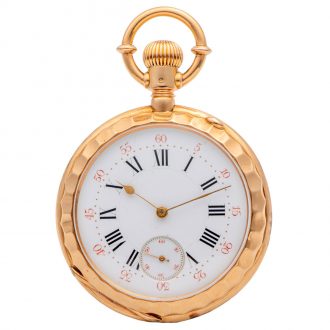
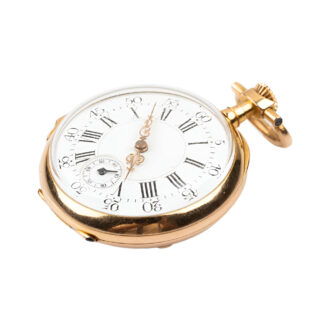
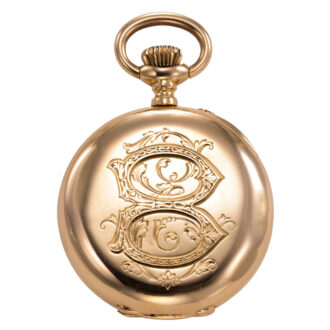
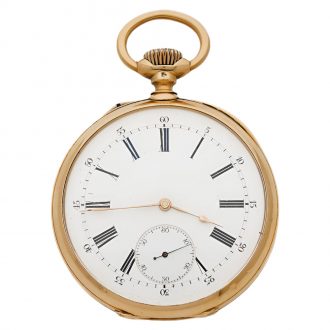
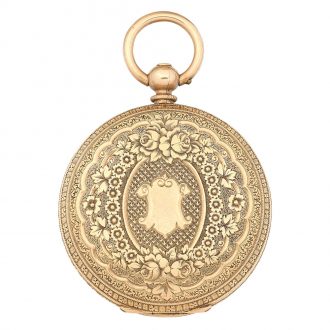
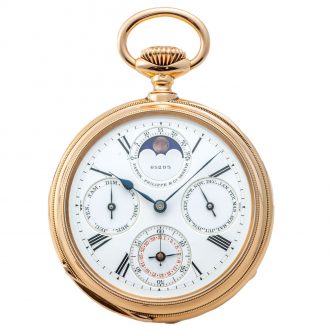
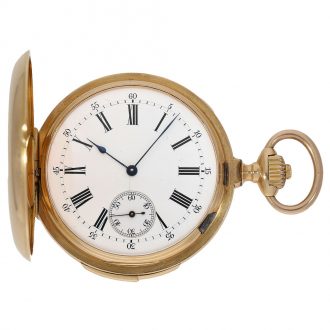
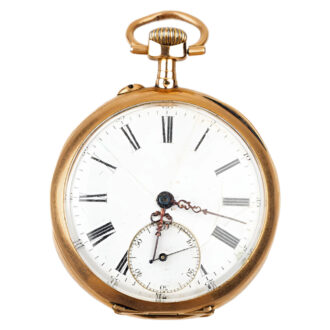
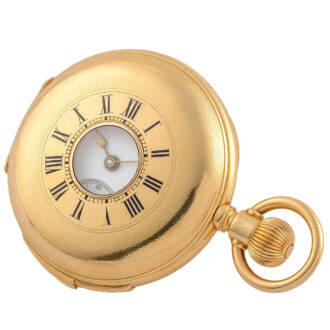
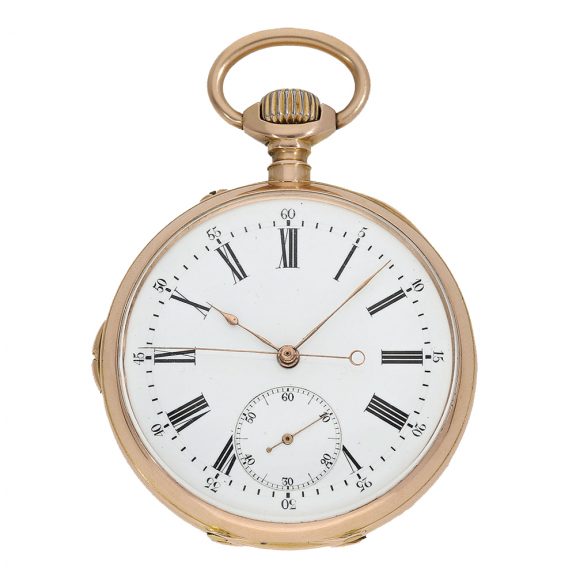
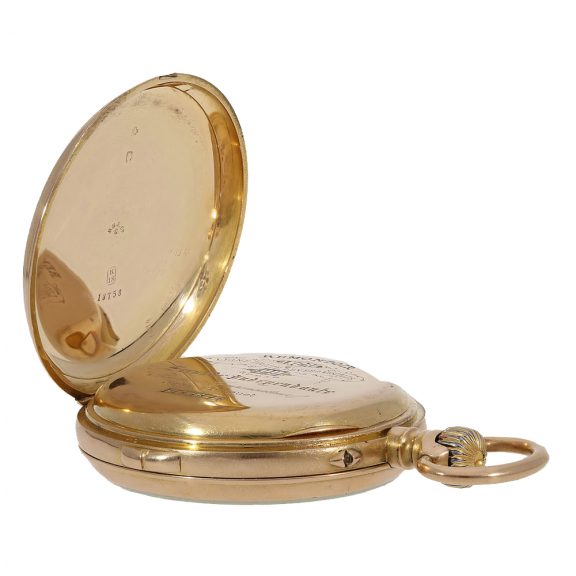
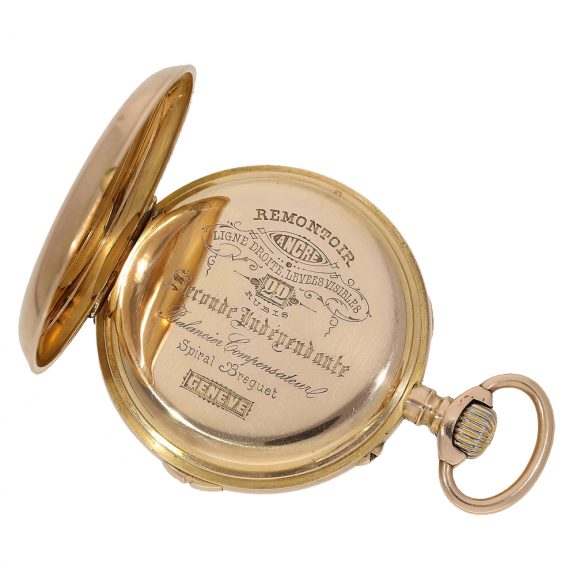
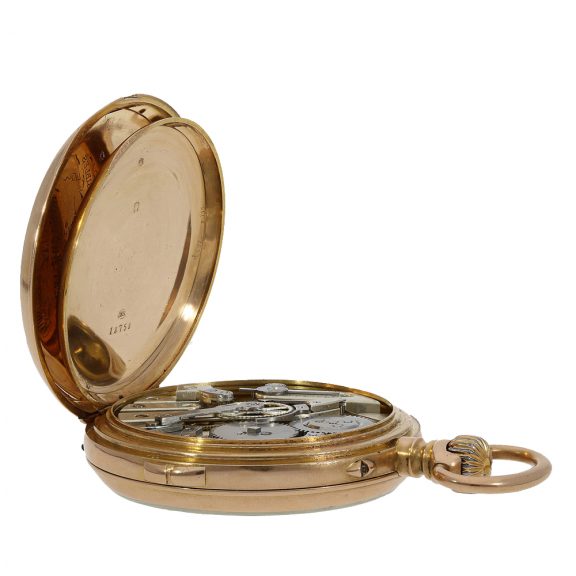
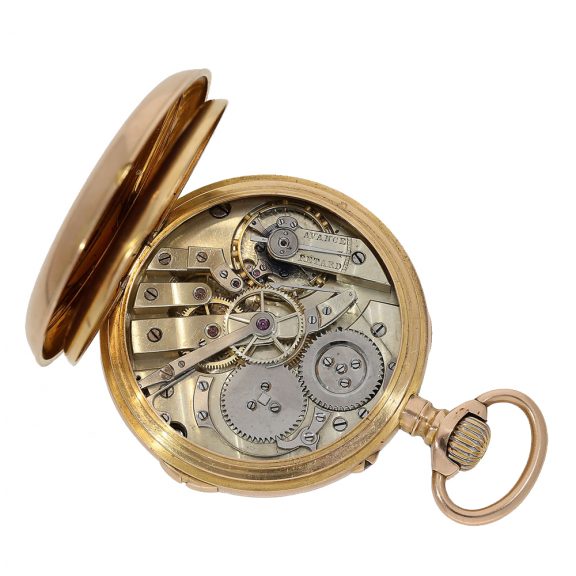
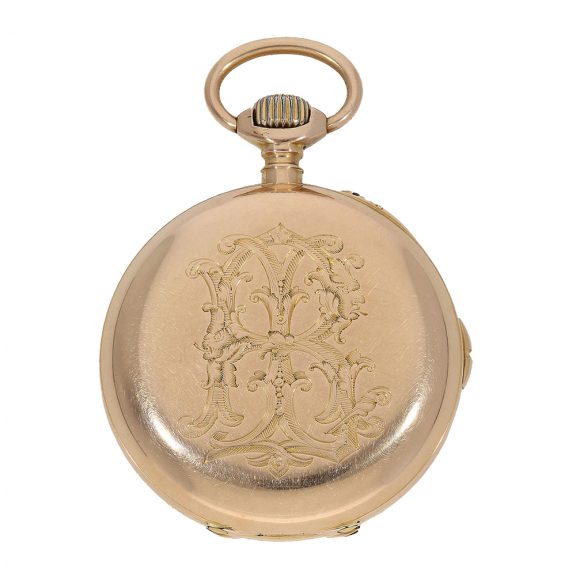
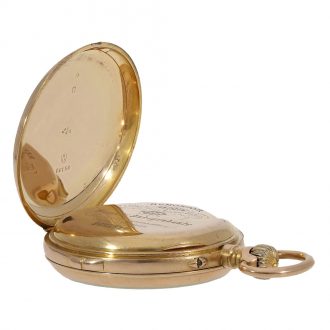
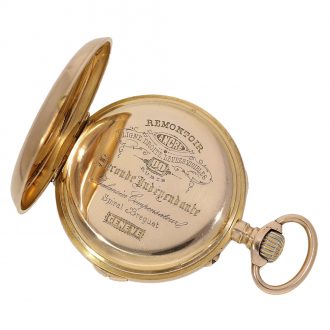
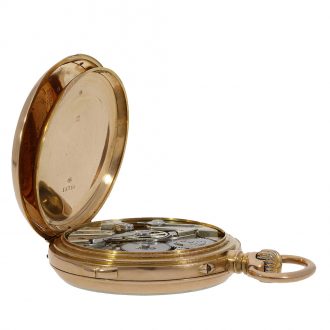
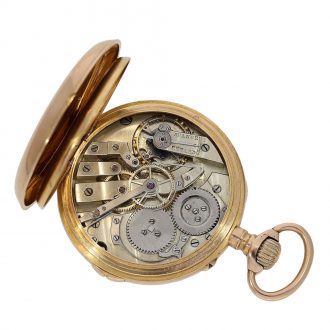
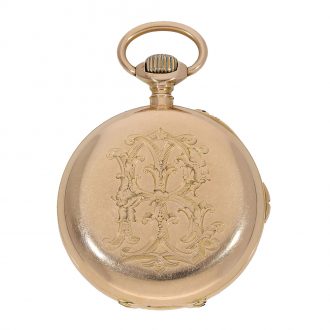
A technically highly interesting Swiss numbered 18 carat seconde morte lever pocket watch, circa 1885. The open faced case is crafted from 18 carat pink gold, an elaborate monogram with Renaissance motifs on the back, carries the Geneva maker’s mark of B. Haas Jeune & Co. and the cuvette is engraved with the technical details of the watch. The white enamel dial has an outer ring with black Arabic and inner Roman numerals for, respectively, the minutes and the hours, has a subsidiary seconds dial at 6 o’clock and pink gold hand. The very fine and technically interesting calibre has wolf’s toothing, a very rare stop mechanism for the independent seconds, lever escapement, 22 rubies and compensated balance.
–
Diameter: 49.5 mm
–
Weight: 90 g
–
Signed: No name
–
B. Haas Jeune & Co.
The house founded in Geneva in 1848 by the brothers Léopold Haas (1827-1915) and Benjamin Haas (1828-1925) is one of the oldest Swiss watch manufacturers. Later renamed Ancienne Maison B. Haas Jeune, then Haas Neveux & Co. The Haas signature has always been one of the most sought-after, thanks to the impeccable standards of the company. They gained a reputation as a manufacturer of fine chronometers, chronographs and highly complicated watches. Among their most notable creations was the ‘remontoir perpétuel à décrochement’ (perpetual winding crown) in 1867 and 1873, a perpetual calendar in 1872 and later the first ultra-thin watch movement in circa 1896.
–
Seconde morte
The seconde morte, also known as dead beat seconds, is a complication of a mechanical movement in which the second hand moves every second. This is in contrast to the usual ‘running’ of the second hand. This complication is rare and was seen in the years before the quartz revolution, the 1970’s and 1980’s, but it died a silent death because of the same quartz revolution. The reason for this was that the second hand moves per second in almost the same way as quartz watches, which ultimately also use a frequency of 1Hz. With that, the ‘running’ second hand became the distinction between mechanical watches and quartz watches. Incidentally, that external similarity only applies to the second hand jumping per second, the underlying mechanism of the dead seconds complication is of course of a completely different order.
Share this page: