Swiss gilt silver duplex made for Chinese market Circa 1860
- Kenmerk
- DT0126
- Diameter
- 63 mm
- Estimate
- € 22.000 - 35.000
- Price sold
- € 25.000
Gilt enamel and half pearl set pocket watch
–
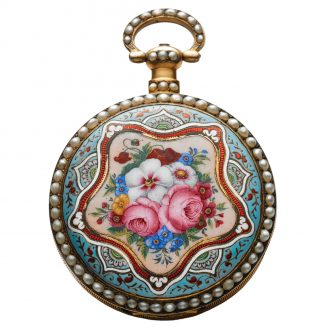
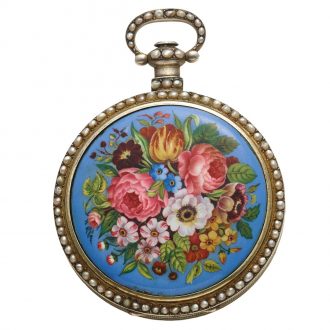
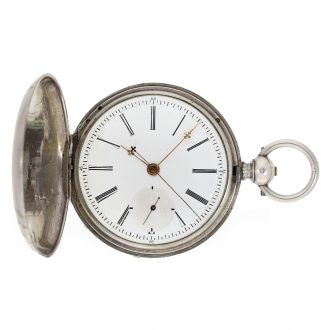
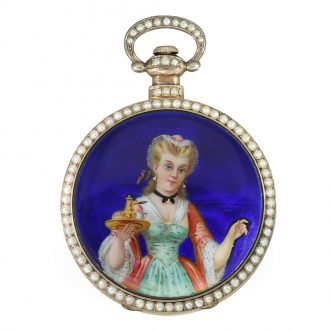
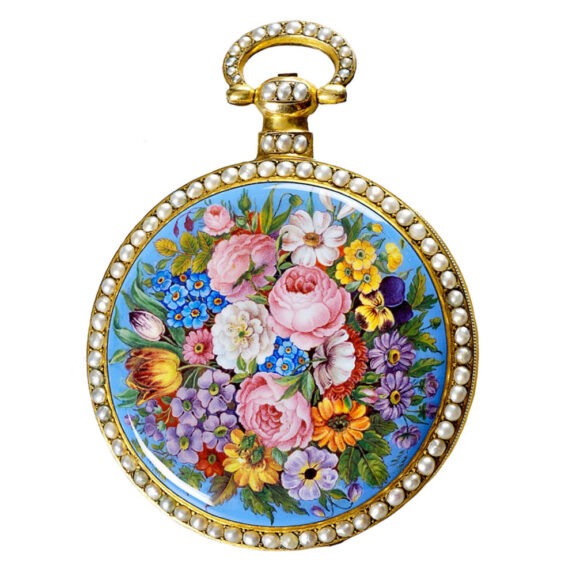
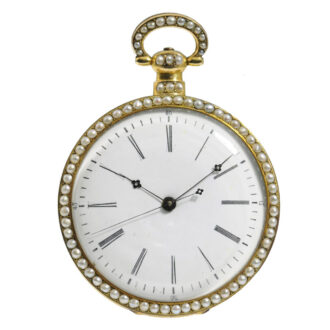
An extremely rare Swiss gilt silver, enamel and half pearl set open faced duplex pocket watch, Bouquet of Spring Flowers, made for the Chinese market, circa 1860.
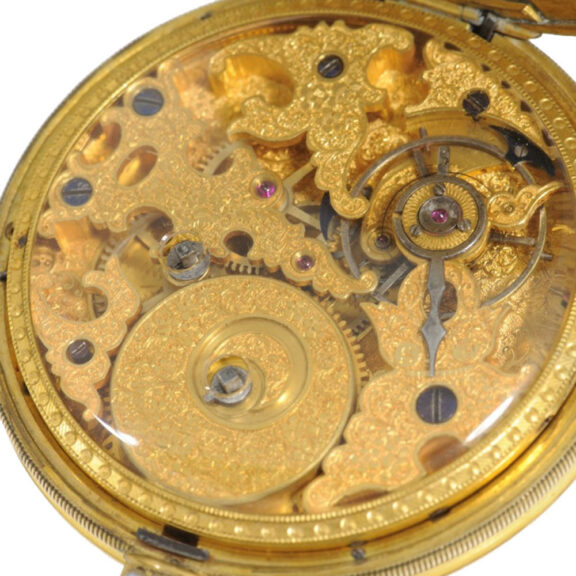
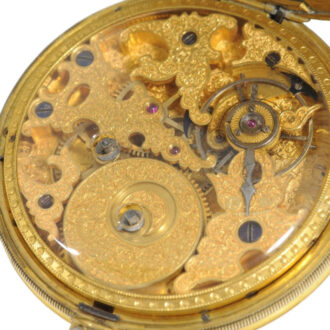
Glazed and engraved bridge movement, Tixier caliber, key winding, standing barrel, Chinese duplex escapement, monometallic balance with blued steel weights.
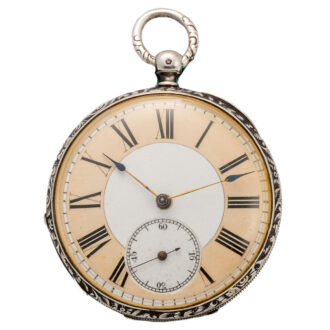
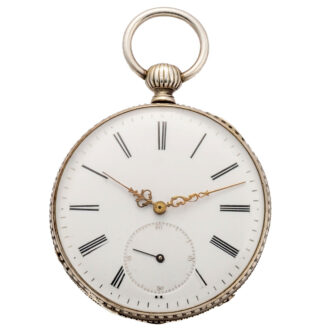
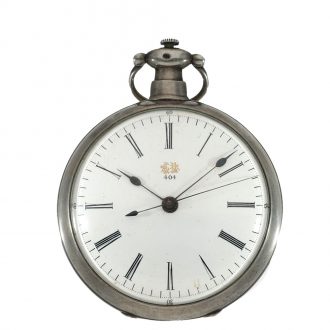
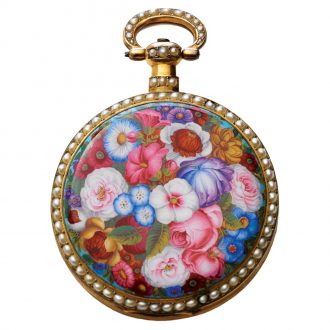
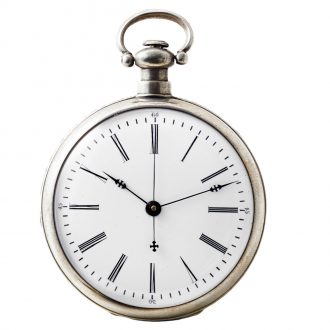
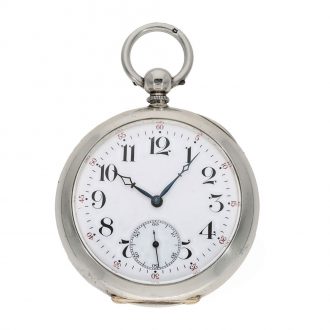
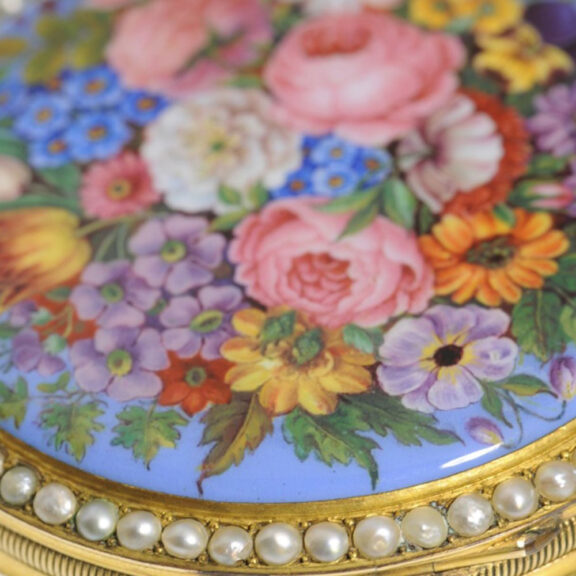
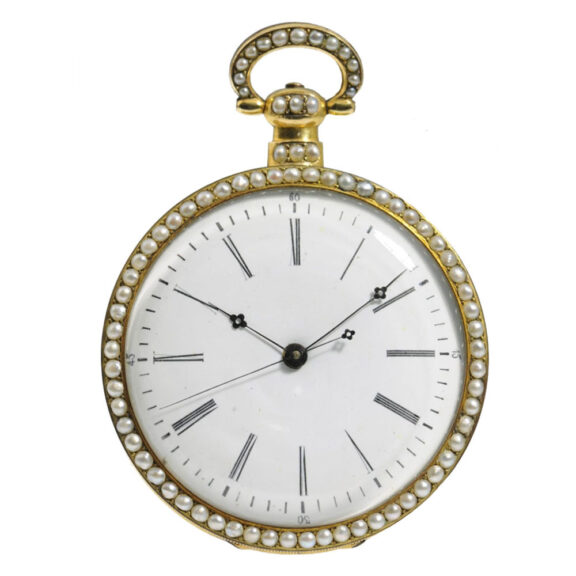
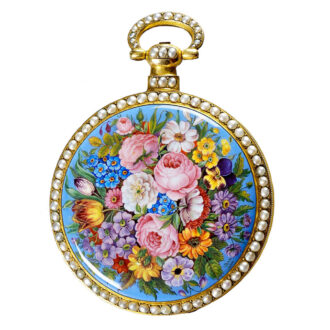
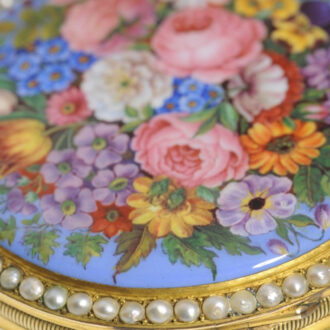
White enamel dial with Roman hours, outer minute divisions and Arabic quarter hours. The case back with very fine polychrome enamel medallion showing a beautiful flower arrangement with roses, dahlias, tulips, violets, forget me nots and other spring flowers on an azure ground, the bezels on both sides as well as the pendant and the bow are studded with half pearls.
–
Diameter: 63 mm
–
An extremely rare Swiss gilt silver, enamel and half pearl set open faced duplex pocket watch, Bouquet of Spring Flowers, made for the Chinese market, circa 1860.
Glazed and engraved bridge movement, Tixier caliber, key winding, standing barrel, Chinese duplex escapement, monometallic balance with blued steel weights.
White enamel dial with Roman hours, outer minute divisions and Arabic quarter hours. The case back with very fine polychrome enamel medallion showing a beautiful flower arrangement with roses, dahlias, tulips, violets, forget me nots and other spring flowers on an azure ground, the bezels on both sides as well as the pendant and the bow are studded with half pearls.
–
Diameter: 63 mm
–
Weight: 161 g
–
Signed: Bovet Fleurier
–
This pocket watch impresses because of its extraordinary size and condition.
–
To the best of our knowledge, there are only a few other watches with Tixier calibre left.
–
Edouard Bovet was born in Fleurier, Switzerland in 1797, as the son of a local master watchmaker, Jean-Frédéric Bovet. Edouard had four brothers, Frédéric, Alphonse, Gustave, Charles-Henri and a sister, Caroline. In 1814 Edouard Bovet is against Neuchâtel’s return to Prussian rule after the fall of Napoleon. After his apprenticeship, he leaves Fleurier with Alphonse and Frédéric to work as a watchmaker in London, then the centre of Europe’s watch trade and manufacture. 1818 Edouard Bovet’s employer, the Magniac company, sends him to Canton, the only Chinese port open to Western trade. He leaves England on the East India merchantman, Orwell, on April 20, arriving in Canton via the Cape of Good Hope on August 16. Delighted, he wrote to his brother in Switzerland, enthusing about the market potential and asking him to send more watches, but only of the very best quality, since this was where the demand lay and there was no difficulty with payment. Since 1822 Bovet, now living in Canton, founds a partnership company for the China watch trade with his two brothers in London, Alphonse and Frédéric, and his third brother Gustave, watchmaker in Fleurier. The charter of the company is drawn up in London on May 1. Business booms and the company quickly transfers production to Fleurier.
–
Jean Tixier was born in France and came to Fleurier around 1850 where he became an important figure to produce goods for the Chinese market. It was due to his influence that the design of the movements for this market changed quite considerably. Tardy lists the name Jean Tixier – and we can assume that the entry refers to this Tixier – for a village watchmaker at Clermont-Ferrand. He is recorded to have worked there from 1840 to 1854, then the Frenchman presumably moved to Fleurier. In Fleurier, he was soon involved in the production of goods for the Chinese market and made important changes to the movements designed for this customer group. Tixier used a symmetrically laid-out movement and updated the existing so-called “Chinese” calibre with a 3/4-plate. He created a number of calibres, some with an 8-day power reserve. His calibre was also used when in 1858 Pelaz, a maker from Geneva decided to enamel movements for the Chinese market.
Weight: 161 g
–
Signed: Bovet Fleurier
–
This pocket watch impresses because of its extraordinary size and condition.
–
To the best of our knowledge, there are only a few other watches with Tixier calibre left.
–
Edouard Bovet was born in Fleurier, Switzerland in 1797, as the son of a local master watchmaker, Jean-Frédéric Bovet. Edouard had four brothers, Frédéric, Alphonse, Gustave, Charles-Henri and a sister, Caroline. In 1814 Edouard Bovet is against Neuchâtel’s return to Prussian rule after the fall of Napoleon. After his apprenticeship, he leaves Fleurier with Alphonse and Frédéric to work as a watchmaker in London, then the centre of Europe’s watch trade and manufacture. 1818 Edouard Bovet’s employer, the Magniac company, sends him to Canton, the only Chinese port open to Western trade. He leaves England on the East India merchantman, Orwell, on April 20, arriving in Canton via the Cape of Good Hope on August 16. Delighted, he wrote to his brother in Switzerland, enthusing about the market potential and asking him to send more watches, but only of the very best quality, since this was where the demand lay and there was no difficulty with payment. Since 1822 Bovet, now living in Canton, founds a partnership company for the China watch trade with his two brothers in London, Alphonse and Frédéric, and his third brother Gustave, watchmaker in Fleurier. The charter of the company is drawn up in London on May 1. Business booms and the company quickly transfers production to Fleurier.
–
Jean Tixier was born in France and came to Fleurier around 1850 where he became an important figure to produce goods for the Chinese market. It was due to his influence that the design of the movements for this market changed quite considerably. Tardy lists the name Jean Tixier – and we can assume that the entry refers to this Tixier – for a village watchmaker at Clermont-Ferrand. He is recorded to have worked there from 1840 to 1854, then the Frenchman presumably moved to Fleurier. In Fleurier, he was soon involved in the production of goods for the Chinese market and made important changes to the movements designed for this customer group. Tixier used a symmetrically laid-out movement and updated the existing so-called “Chinese” calibre with a 3/4-plate. He created a number of calibres, some with an 8-day power reserve. His calibre was also used when in 1858 Pelaz, a maker from Geneva decided to enamel movements for the Chinese market.
Signed: Bovet Fleurier
Share this page: